The Architect of Virtual Worlds: Raph Koster’s Five-Year Retrospective on Game Design and the Metaverse
By [Journalist Name/Agency]
In the rapidly evolving landscape of interactive entertainment, few voices carry as much weight as that of Raph Koster. A veteran designer whose credits include the seminal Ultima Online and the ambitious Star Wars Galaxies, Koster has long been regarded as the "philosopher king" of Massively Multiplayer Online (MMO) games. Recently, Koster released a comprehensive curation of his work spanning the last five years—a period marked by a global pandemic, the rise and fall of "Metaverse" hype, and his own return to active development with his studio, Playable Worlds.
This curated collection serves as more than just a blog update; it is a vital repository of industry wisdom, technical critique, and a manifesto for the next generation of virtual spaces. As the industry grapples with the transition from static content to dynamic, player-driven ecosystems, Koster’s insights provide a roadmap for the future of digital interaction.
Main Facts: A Half-Decade of Design Evolution
Raph Koster’s latest update organizes his prolific output into several key pillars: game design theory, the business of development, historical postmortems, and a rigorous technical analysis of the Metaverse. The update marks the first time in over five years that Koster has restructured his site’s "recommended" reading list, signaling a shift in his focus toward the upcoming title Stars Reach.
The core of the update focuses on the transition from "games as products" to "games as living systems." Koster’s work during this period has been defined by a skepticism toward modern buzzwords—particularly those surrounding blockchain and NFTs—favoring instead a return to the fundamentals of database architecture, social engineering, and emergent gameplay.
Key highlights of the retrospective include:
- The Publication of Postmortems: A 700-page historical tome detailing the development of virtual worlds.
- The "Metaverse Madness" Series: A technical deconstruction of why modern Metaverse attempts often fail to understand the lessons of the 1990s and 2000s.
- The "Riffs by Raph" Collection: A series of design manifestos that double as the philosophical foundation for Playable Worlds’ new project, Stars Reach.
Chronology: From Legacy Worlds to Playable Worlds
To understand the significance of Koster’s recent work, one must view it through the lens of his career trajectory.
The Foundational Era (1990s–2000s)
Koster rose to prominence as the lead designer of Ultima Online (1997), the game that arguably defined the MMO genre. He followed this with Star Wars Galaxies (2003), a title famous for its complex social systems and player-driven economy. In the mid-2000s, he experimented with "Metaplace," a platform that sought to democratize the creation of virtual worlds—a precursor to modern concepts of the Metaverse.
The Reflective Period (2010s)
For much of the 2010s, Koster focused on consulting and writing. His book, A Theory of Fun for Game Design, became a standard text in university courses worldwide. During this time, he documented the "tribal knowledge" of the industry, fearing that the lessons learned during the early days of MUDs (Multi-User Dungeons) were being forgotten by new developers.
The Modern Era (2019–2024)
The last five years have seen Koster transition back into a leadership role. In 2019, he co-founded Playable Worlds, securing significant venture capital to build a new kind of cloud-native MMO. This period coincided with a massive influx of "Metaverse" investment from companies like Meta (formerly Facebook) and various Web3 startups. Koster’s blog became a crucial "reality check" for the industry during this time, as he used his decades of experience to point out the technical and social fallacies of the hype cycle.
Supporting Data: The Technical and Social Pillars of Design
Koster’s curated posts are categorized into distinct disciplines, each supported by data and historical precedent.
1. The Metaverse and the "Data Point of View"
Perhaps Koster’s most influential recent work is his critique of the Metaverse. While many proponents focused on 3D graphics or blockchain-based ownership, Koster argued that a true Metaverse is a matter of data portability and simulation logic.
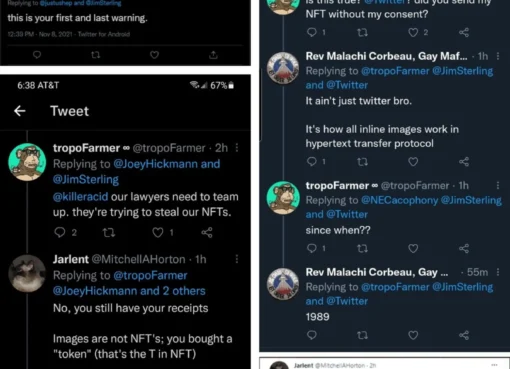
He famously debunked the idea that blockchains solve the "interoperability" problem. Koster points out that while a blockchain can prove you "own" a digital sword, it cannot force two different games to agree on what that sword does. Without a shared simulation engine or a standardized "grammar" for objects, true interoperability remains a pipe dream. His data-driven approach highlights that the bottleneck for the Metaverse isn’t graphics; it’s the lack of a unified way to handle state and logic across different server architectures.
2. Multiplayer Dynamics and Social Engineering
Koster’s retrospective emphasizes that multiplayer games are not just software; they are societies. He provides extensive documentation on:
- Governance: How to manage player behavior without resorting to authoritarian moderation.
- Economy: The dangers of hyper-inflation in virtual worlds (a lesson learned from Ultima Online).
- Ecology: The "Living Trees" concept, where the environment reacts to player presence in a meaningful, non-scripted way.
3. The Business of Development
Koster also addresses the "Missing Middle" of the games industry—the gap between small indie teams and massive AAA conglomerates. His analysis suggests that as development costs for high-fidelity games skyrocket, the industry must pivot toward "systemic depth" rather than "graphical fidelity" to remain sustainable.
Official Responses: The Playable Worlds Manifesto
While the blog serves as a personal archive, it also acts as the "Official Response" from his studio, Playable Worlds, to the current state of the industry. Through his "Riffs by Raph" series, Koster outlines the strategy for their upcoming game, Stars Reach.
The studio’s stance is that the "World" in "Virtual World" has been neglected for too long. Most modern MMOs, Koster argues, are "theme parks"—static environments where players follow a pre-written script. Playable Worlds is officially positioning Stars Reach as a "sandbox," where the physics, chemistry, and biology of the world are simulated.
In his "Riffs," Koster states:
"We are building worlds where things matter because they are part of a system, not because a designer wrote a quest about them. If you cut down a forest, it should change the atmosphere. If you build a city, it should change the economy. The players are the ones who should write the history."
This shift in philosophy has been met with significant interest from investors, as Playable Worlds has raised over $25 million to date, positioning itself as a leader in the "cloud-native" gaming space.
Implications: Why Koster’s Curation Matters Now
The timing of Koster’s retrospective is significant. The games industry is currently in a state of flux, facing mass layoffs, the plateauing of mobile gaming growth, and the cooling of the NFT/Metaverse bubble. Koster’s work offers a "return to sanity" for developers and players alike.
For Developers
The implication for developers is clear: Systems over Scripts. Koster’s documentation provides a blueprint for building resilient, emergent games that can last decades rather than months. By focusing on deep simulation and robust social tools, developers can create "sticky" communities that don’t rely on the constant treadmill of expensive content updates.
For the Metaverse
Koster’s technical breakdown effectively kills the "Ready Player One" fantasy of a single, unified VR world in the near future. Instead, he points toward a more fragmented but "inter-linkable" web of virtual spaces. The implication is that the "Metaverse" will look less like a single game and more like a set of protocols—similar to the HTTP protocols that govern the current internet.
For the Player Experience
For players, Koster’s vision promises a return to the "wild west" of early online gaming, but with modern polish. It suggests a future where player agency actually matters—where your actions can permanently alter the game world for everyone else.
Conclusion: The Enduring Legacy of the Theory of Fun
Raph Koster’s decision to curate his last five years of work is a service to an industry that often suffers from a short memory. By linking the lessons of the 1970s MUDs to the 2024 cloud-native simulations, he provides a bridge across generations of design.
As Koster prepares to launch Stars Reach, his blog stands as a testament to the idea that games are the most complex art form ever created—not because of their pixels, but because of the humans who inhabit them. In an era of AI-generated content and corporate-driven "Metaverses," Koster’s voice remains a necessary reminder that at the heart of every great virtual world is a well-designed system, a fair economy, and a "Theory of Fun" that respects the player’s intelligence.
For those looking to understand where the next decade of gaming is headed, Koster’s "recommended reading" list isn’t just a collection of blog posts; it is the foundation of the next digital frontier.