The Modern Myth: Analyzing Christopher Nolan’s Polarizing Masterpiece ‘The Odyssey’
Main Facts: The Intersection of Epic Poetry and Blockbuster Ambition
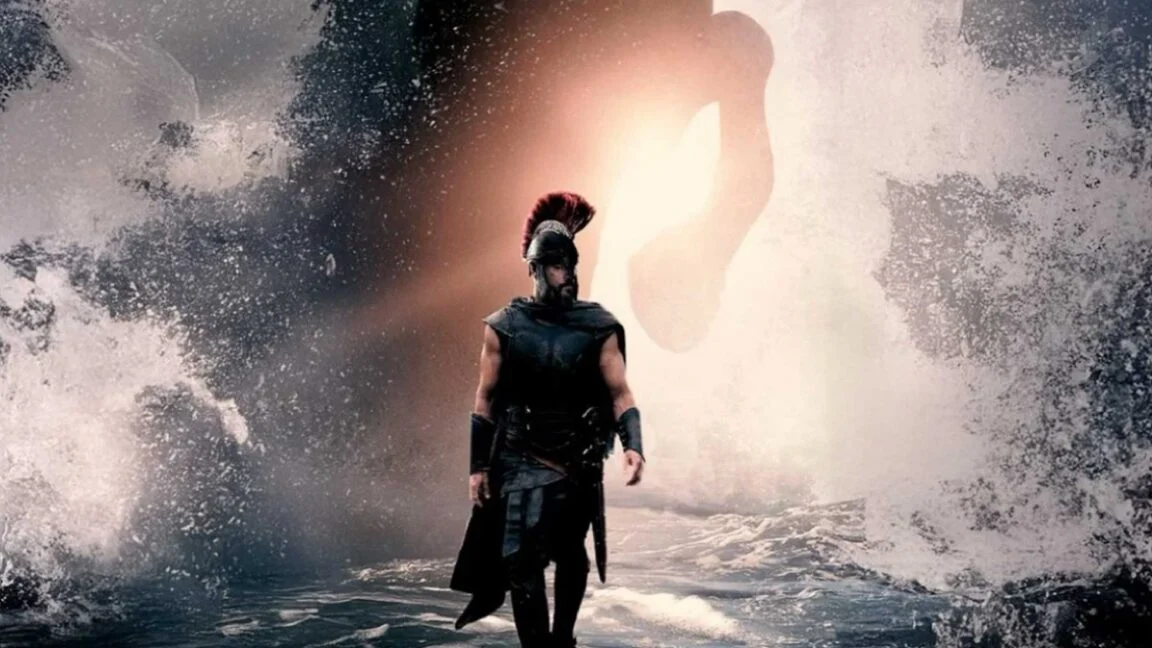
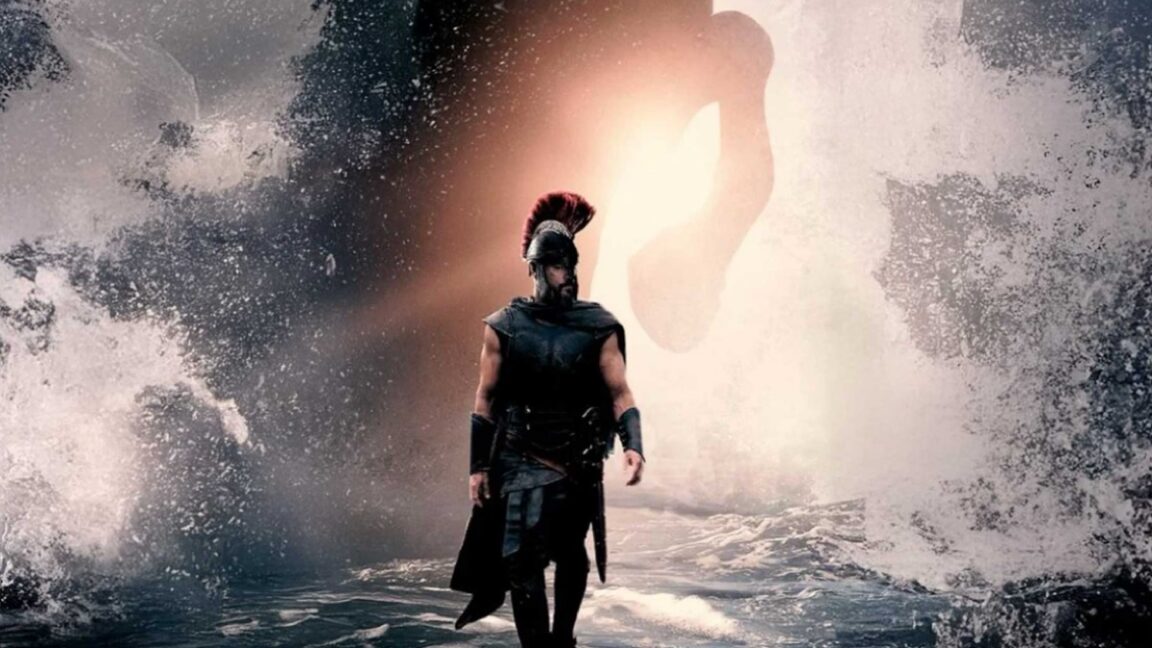
In the summer of 2026, the cinematic landscape was irrevocably altered by the release of Christopher Nolan’s The Odyssey. A massive, $250 million production from Universal Pictures, the film represents an impressionistic, nonlinear remix of Homer’s foundational 8th-century BCE epic. Rather than a traditional "swords-and-sandals" adaptation, Nolan delivered a three-hour psychological meditation on trauma, memory, and the "complicated man" at the heart of Western literature.
Starring Matt Damon as Odysseus, the legendary King of Ithaca, the film explores the hero’s grueling decade-long journey home following the fall of Troy. The narrative is structured around the "fractured memories" of a protagonist suffering from what modern audiences would recognize as PTSD, exacerbated by the hallucinogenic effects of the lotus fruit on the island of Ogygia.
Despite—or perhaps because of—its high-concept approach, the film has become a massive commercial success, grossing over $700 million globally. It has also sparked a fierce intellectual firestorm, pitting classical scholars against cinephiles and reigniting debates over casting, historical fidelity, and the ethics of modernizing ancient myths. Featuring a powerhouse ensemble including Anne Hathaway, Tom Holland, Charlize Theron, and Samantha Morton, The Odyssey is as much a technical marvel (being the first blockbuster shot entirely on IMAX cameras) as it is a cultural lightning rod.
A Chronology of Controversy: From Development to the "Wilson Affair"
The journey of Nolan’s The Odyssey to the silver screen was marked by high-profile milestones and recurring public debates.
- February 2025: The Design Reveal. The first production stills, featuring a rugged, weathered Matt Damon and minimalist Greek architecture, were met with skepticism by historians who questioned the film’s "anachronistic" visual language.
- May 2026: Casting Backlash. The announcement of Lupita Nyong’o in the dual roles of Helen of Troy and Clytemnestra triggered a wave of online discourse regarding race-neutral casting in adaptations of European classics. Nolan remained silent, letting the production speak for itself.
- May 15, 2026: The Trailer Debut. The first full-length trailer, featuring a haunting score and the voice of Travis Scott as the "Bard," signaled that this would not be a standard action epic, but a "Nolan-esque" psychological thriller.
- July 2026: The Release. The film opened to massive numbers, quickly surpassing Nolan’s previous hit, Oppenheimer. It dominated the box office for six weeks, fueled by the necessity of the IMAX experience.
- Late July 2026: The Scholarly Duel. Renowned classicist Emily Wilson published a scathing critique in the London Review of Books (LRB), titled "An Uncomplicated Man." This prompted a secondary wave of media coverage as novelists like Joyce Carol Oates and other academics stepped in to defend the film’s artistic license.
Supporting Data: Technical Innovation and Narrative Structure
Nolan’s The Odyssey is defined by its refusal to follow a linear path, mirroring the structure of Homer’s original poem but through a modern cinematic lens.
The IMAX Scale and Visual Language
The film utilized 15/70mm IMAX cameras for 100% of its runtime. This technical choice was not merely for spectacle; it served the film’s "intimate epic" feel. By using the massive frame for close-ups of characters like Samantha Morton’s Circe, Nolan forced the audience into a claustrophobic proximity with the characters’ internal states. The "Lotus Eaters" sequence, in particular, used high-frame-rate photography and color saturation shifts to simulate the intoxicating, memory-erasing effects of the fruit.
Performance and Character Utility
Critics have noted that while the cast is filled with A-list talent, many appear only briefly. This was a deliberate narrative choice to reflect Odysseus’s "fractured memories."
- Zendaya as Athena: Appearing only in dream-like sequences, her role is symbolic rather than literal. She represents Odysseus’s conscience, her expressions shifting from neutrality to horror as the atrocities of the Trojan War are revealed.
- Elliot Page as Sinon: A character pulled from Virgil’s Aeneid rather than Homer, Sinon serves as the "innocent victim" of Odysseus’s cleverness, providing the moral weight for the hero’s eventual reckoning.
- Samantha Morton as Circe: In a departure from the "seductress" trope, Morton’s Circe is a survivor of male violence. Her transformation of men into swine is depicted as a defensive psychological reaction, a visceral manifestation of her trauma.
Financial Performance
With a global haul exceeding $700 million, the film proved that "difficult" or "intellectual" blockbusters still have a massive market. It outperformed Oppenheimer in several key European and Asian markets, suggesting that the universality of the Odysseus myth transcends cultural boundaries, even when filtered through a Western auteur’s lens.
Official Responses: The Clash of the Titans
The most significant "official" response came from the academic world, specifically from Emily Wilson, whose 2017 translation of The Odyssey is considered a modern masterpiece.
The Wilson Critique
In her LRB essay, Wilson was unapologetically harsh. She criticized Nolan for "centering" Odysseus’s perspective to the detriment of the poem’s female characters and victims of war. She famously stated, "I would be ashamed to have written any part of this script," referring to what she perceived as clunky, "family-friendly" dialogue. Wilson also raised ethical concerns regarding the film’s production in Western Sahara, an occupied territory, calling the choice "unethical" in the context of a film ostensibly about the horrors of war and displacement.
The Nolan Defense
In interviews with Time and Ars Technica, Nolan defended his "remix" approach. He argued that the gods in his version were meant to be seen through "natural phenomena"—the wind, the sea, and human intuition—rather than as literal beings appearing in the clouds. "I wanted to find the man behind the myth," Nolan stated. "To do that, you have to strip away the certainty of the divine and replace it with the uncertainty of the human mind."
Industry Support
Novelists and other scholars have rallied to the film’s side. Joyce Carol Oates defended Nolan’s right to "re-envision" foundational texts, noting that every translation—including Wilson’s—is an act of interpretation. Fellow classicist Theo Nash pointed out that Wilson’s own use of iambic pentameter was a "departure from the original dactylic hexameter," suggesting that artistic "tradeoffs" are a necessary part of keeping ancient stories alive for modern audiences.

Implications: The Future of the "Nolanized" Epic
The success and subsequent debate surrounding The Odyssey carry significant implications for the future of the film industry and the study of the humanities.
1. The Democratization of Myth
Nolan has successfully moved The Odyssey from the "required reading" list of high schoolers into the center of the global pop-culture conversation. While purists may bemoan the "simplification" of the text, the film has led to a measurable spike in sales of Homer’s poem and Wilson’s translation, suggesting a symbiotic relationship between blockbuster cinema and classical literature.
2. The "Auteur as Historian" Trend
Following Oppenheimer and now The Odyssey, Nolan has solidified a new genre: the "Revisionist Intellectual Epic." This trend suggests that audiences are hungry for films that challenge them with nonlinear timelines and complex moral themes, provided they are delivered with high-octane visual spectacle.
3. The Ethics of Location Scouting
Wilson’s critique of the Western Sahara filming location has opened a broader conversation in Hollywood about "ethical production." As studios seek out exotic, cost-effective locations for epics, the political and humanitarian status of those regions will likely face increased scrutiny from activists and academics alike.
4. The Resilience of the "Big Screen"
Finally, The Odyssey serves as a powerful argument for the continued relevance of the theatrical experience. By making the film "essential" to see in IMAX, Nolan has provided a blueprint for how cinema can compete with the convenience of streaming: by offering a sensory and intellectual immersion that simply cannot be replicated at home.
In conclusion, while The Odyssey may not be the "One True Take" on Homer’s work, its existence as a "contemporary remix" ensures that the story of the "complicated man" remains as relevant in 2026 as it was in the 8th century BCE. Whether viewed as a masterpiece or a "grandiosely superficial" experiment, the film has achieved the one thing every artist craves: it has made us look at an old story with entirely new eyes.