Embracing the Everyday: Why Consciously Engaging with Folklore Can Enrich Modern Life
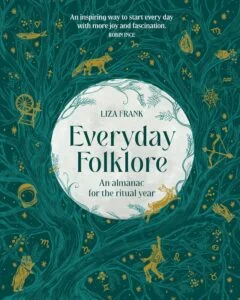
London, UK – In a world increasingly defined by rapid change and digital distraction, the ancient practices of folklore might seem like quaint relics, confined to academic texts or niche cultural events. Yet, a growing movement suggests that far from being an anachronism, actively integrating folklore into daily life can offer profound benefits, fostering mindfulness, celebration, creativity, and a deeper connection to the rhythms of the natural world. This compelling argument lies at the heart of Liza Frank’s new book, Everyday Folklore: An Almanac for the Ritual Year, which challenges readers to move beyond passive observation and actively engage with the traditions that shape our existence.
For many, folklore conjures images of historical curiosities: the antler-wearing men of Abbotts Bromley, the archaic practice of wart charming, or perhaps a simple childhood lullaby. It’s often dismissed as "flim flam," a narrative device, or a commercial tool for fandoms. Even those who dabble with familiar customs—decorating Christmas trees, exchanging birthday cards, or debating the jam-first-or-cream-first scone ritual—rarely perceive these actions as active engagements with a living tradition. But as Frank posits, folklore is an omnipresent force, a subtle yet powerful framework of rituals, traditions, and customs that subtly guides our lives, even down to the simple act of brewing a cup of tea.
Frank’s journey into this immersive understanding began with a personal challenge. Between St Distaff’s Day in 2020 and Twelfth Night in 2021, she committed to practicing ritual year folklore every single day. This intensive, year-long immersion formed the experiential bedrock for Everyday Folklore, a practical guide designed to empower anyone to engage with the ritual year. Published on the Folklore Thursday website, this article serves as a direct invitation to those with even a passing interest in folklore to consider a more active role. Frank believes that everyone stands to benefit from consciously incorporating these traditions, urging readers to "feel the folklore fear and do it anyway."
The Chronology of Engagement: A Year of Living Folklorishly
Liza Frank’s Everyday Lore Project, which spanned a full ritual year from St Distaff’s Day (January 7th) 2020 to Twelfth Night (January 6th) 2021, was not merely an academic exercise but a deeply personal experiment in lived tradition. Motivated by a desire to understand the practical application and contemporary relevance of folklore, Frank embarked on a daily practice of observing and participating in a vast array of rituals, customs, and beliefs tied to the seasonal calendar.
This immersive chronology saw her meticulously track and engage with the ebb and flow of the year, from ancient agricultural rites to modern civic celebrations. Each day presented a new opportunity to connect with a tradition, whether it was counting fogs in August to predict winter snowfalls, engaging in wassailing ceremonies in January to bless apple harvests, or exploring lesser-known regional customs. The project was a deliberate effort to break free from the passive consumption of folklore, transforming it from a subject of study into a dynamic, lived experience.
Frank documented her findings, challenges, and epiphanies, meticulously recording how these daily engagements altered her perception of time, community, and personal well-being. This rigorous, hands-on approach revealed that folklore is not a static collection of historical facts but a vibrant, adaptable system that continues to shape human experience. The insights gleaned from this continuous, year-long commitment ultimately coalesced into Everyday Folklore, a testament to the transformative power of active participation in the ritual year. Her personal chronology demonstrates that with intention and curiosity, anyone can uncover and integrate these enriching practices into their own lives, moving folklore from the periphery to the very heart of their daily existence.
Supporting Data: Five Compelling Reasons to Embrace Everyday Folklore
Frank’s immersive project and subsequent book highlight five compelling reasons why conscious engagement with folklore is not just a whimsical pursuit but a practical pathway to a more grounded, joyful, and intellectually stimulating life.
1. Folklore as a Timeless Anchor: Slowing Down the Pace of Life
In an age characterized by relentless acceleration, the first and perhaps most profound benefit of engaging with folklore is its capacity to slow down time, or more accurately, to deepen our experience of it. While folklore cannot literally stop the clock, its seasonal and calendrical practices offer a powerful antidote to the sensation of days blurring into weeks and weeks into months. By tying personal actions to specific dates, months, or seasons, individuals become more attuned to the natural rhythms of the year.
Consider the act of wassailing in January, a tradition of singing to apple trees to ensure a bountiful harvest. This isn’t merely a quaint custom; it’s an act of participation that gives one a tangible "stake" in the agricultural cycle, fostering a sense of connection to the land and its produce. Similarly, counting fogs in August to predict winter snowfalls transforms a meteorological observation into a playful, predictive ritual, encouraging mindful awareness of environmental cues. Engaging with lunar plantings, observing the gradual transformation of hedgerows from barrenness to fecundity, or marking the solstices and equinoxes, all serve to punctuate the year with meaning. These practices compel us to pause, observe, and appreciate the subtle shifts around us. The more we consciously engage with these markers, the more our internal pace slows, opening us to greater possibilities, wonder, and a deeper appreciation for the present moment. This deliberate deceleration fosters a form of practical mindfulness, grounding individuals in the continuous, cyclical unfolding of time.
2. The Abundance of Joy: Cultivating a Culture of Celebration
Beyond the established holidays and personal milestones, the ritual year presents an astonishingly diverse tapestry of occasions for celebration. Folklore is a boundless repository of reasons to gather, rejoice, and mark the passage of time with exuberance. Frank points out that there are days dedicated to virtually everything imaginable, transforming mundane dates into opportunities for collective or personal joy.
From dedicated days for celebrating trees and specific animals to entire festivals honoring anatomical curiosities like belly buttons in June and July, the ritual year offers an endless supply of unique festivities. For those who appreciate a good tipple, specific days are earmarked for raising a glass to wine (August 19th), gin (the second Saturday of June), and rum (July 31st). Even contemporary popular culture has woven itself into this fabric, with designated days for Back to the Future, Star Trek, and Star Wars ("May the Fourth be with you").
Folklore also provides reasons to celebrate the absence of an event, such as the famous St Swithin’s Day, where a dry day promises 40 more days of sunshine. Or, it offers opportunities for personal triumphs, like the fulfillment of a wish after successfully counting seven stars on seven consecutive nights. These myriad celebrations, whether ancient or modern, global or hyper-local, collectively enrich the social calendar, providing regular excuses for gathering, feasting, performing, and experiencing shared moments of delight. They remind us that life is not just about major events but also about finding and creating joy in the everyday.
3. Banishing Boredom: Folklore as an Antidote to Ennui
In a society grappling with widespread feelings of boredom and ennui, actively engaging with folklore emerges as a powerful remedy. Frank’s year of "living folklorishly" underscored the endless possibilities for creative and participatory activities that these traditions offer. Far from being passive observances, many folk customs are dynamic, challenging, and often delightfully absurd.
Consider the innovative uses for leftover Christmas cake: in Manitou Springs, Colorado, January sees the spirited Great Fruitcake Toss, a testament to turning a culinary surplus into a community spectacle. The ritual year is also a culinary adventure, inviting individuals to recreate historical recipes like "Heg Peg Dumps," "Harvest shot," or "knotting-sowins." Even simpler acts, like baking a large batch of scones for National Cream Tea Day, transform everyday cooking into a celebratory act. Frank humorously recounts her own culinary misadventures with "plum duffs," proving that even failed attempts contribute to the richness of the experience.
For those with a penchant for performance or costume, folklore provides ample opportunity. Becoming the "King for a weekend" at the Porthcawl Elvis Festival in September or dressing as a badger to celebrate St Piran’s Day in March transforms personal expression into cultural participation. And for the truly adventurous, events like the Cooper’s Hill Cheese-Rolling in May or the Dorking Wife Carrying Race in March offer exhilarating, if eccentric, tests of daring and endurance. Even solitary, introspective acts like conducting an exorcism at midnight by spitting black beans and walking backwards, as practiced during Lemuralia, demonstrate the vast range of engaging activities folklore provides. These practices actively combat boredom by injecting novelty, creativity, and a sense of purpose into daily routines.
4. The Intellectual Bounty: Winning Pub Quizzes and Expanding Knowledge
Folklore is a treasure trove of fascinating, often bizarre, and endlessly surprising facts that can not only win you a pub quiz but also broaden your understanding of the world. Venturing down the "folklore rabbit hole" reveals unexpected connections across history, science, and culture.
For instance, who knew that orb-weaving spiders reportedly prefer classical music to techno? This seemingly whimsical fact, backed by scientific study, can even have practical implications for arachnophobes during March, when an uptick of indoor spiders is believed to augur rain. Such nuggets of information transcend mere trivia; they illuminate the intricate ways humans have observed and interpreted the natural world, often with surprising accuracy.
Modern folklore offers equally compelling insights. The tradition of Baikonur cosmonauts watching The White Sun of the Desert, a 1970 Russian Civil War comedy, before every space mission since the early 1970s, illustrates the enduring human need for ritual and luck in high-stakes endeavors. This practice, a form of contemporary occupational folklore, reveals the universal impulse to mitigate risk and seek assurance through tradition.
Moreover, delving into folklore can overturn common misconceptions. While bats often carry the reputation of being the Devil’s messenger, they are also crucial pollinators of agave plants. This scientific fact, often overlooked, means that without these winged wonders, our margaritas would be replaced by Manhattans, underscoring the vital ecological roles played by creatures often demonized in popular lore. These examples demonstrate that folklore is not just about quaint stories; it’s a pathway to understanding complex cultural, historical, and even scientific interconnections, fostering intellectual curiosity and providing an endless supply of conversational gems.
5. Crafting Personal Narratives: The Enduring Power of Tales to Tell
Perhaps one of the most enduring rewards of actively engaging with folklore is the acquisition of unique and compelling stories. Some folk practices are undeniably "bonkers," as Frank cheerfully admits, but this inherent eccentricity is precisely what makes them so memorable and fertile ground for personal anecdotes. Frank is quick to add that this observation in no way invalidates the beliefs of those who practice these traditions; indeed, she embraces those who would stalk a Leicestershire churchyard on June 1st to see if St Wistan’s hair sprouts amongst the headstones as "my kind of people."
The more one participates, the more unusual experiences accumulate, forming a rich tapestry of personal narratives. Imagine recounting the time you thought you caught a whiff of demonic sulphur while a-nutting in September, or swearing that a cabbage leaf miraculously reduced a boil on your neck. These are not just events; they are personal myths in the making, woven into the fabric of your own life story.
The pursuit of love, a universal human quest, also finds expression in folklore. Frank humorously recounts her own vision of Mark Hamill after slipping a sprig of rosemary and a crooked sixpence under her pillow on St Luke’s Eve – though she notes, with a touch of wry wit, that "He’s not rung though." Such experiences, whether resulting in profound revelations or amusing disappointments, become indelible memories. However, Frank offers a pragmatic word of advice: while one might find their failure to detect vampire activity in gardening implements impressive, such anecdotes might be best reserved for a second date, lest they overwhelm potential companions. Ultimately, these tales are more than just stories; they are shared experiences, fostering connection, laughter, and a deeper understanding of human eccentricity and resilience. They are the currency of conversation and the building blocks of personal and communal identity.
Official Responses and Academic Resonance: The Evolving Landscape of Folklore Studies
The call to actively engage with folklore resonates deeply within contemporary academic and cultural discourse. While traditionally studied as historical artifacts, there is a growing recognition within the field of folklore studies that folklore is a living, evolving entity, continuously shaped and reshaped by individuals and communities. Scholars like G.E. Warshaver have discussed "Postmodern Folklore," highlighting how traditions adapt and persist in new contexts, emphasizing that folklore is not static but a dynamic process of meaning-making in modern life. Frank’s Everyday Lore Project and subsequent book perfectly embody this contemporary understanding, shifting the focus from mere collection and analysis to active participation and personal application.
The academic footnotes provided in Frank’s original article, while seemingly disparate—ranging from spider acoustics to bat ecology and cosmonaut rituals—collectively illustrate the multidisciplinary nature of folklore. They demonstrate how traditional beliefs and practices often intersect with scientific observation, psychological needs, and cultural continuity. For instance, the study on orb-weaving spiders’ reactions to sound provides a scientific underpinning to human observations about natural phenomena, which have historically been integrated into folk wisdom. Similarly, the study on tequila bats’ role as pollinators connects a creature often steeped in folklore with critical ecological functions, underscoring the practical and environmental knowledge often embedded within traditional narratives.
Frank’s work is therefore not an isolated endeavor but contributes to a broader movement within applied folklore. This field seeks to understand how folklore functions in society, how it can be utilized for community development, cultural preservation, and individual well-being. By providing a practical almanac, Frank empowers individuals to become active participants in this living tradition, transforming theoretical understanding into tangible experience. Her approach aligns with calls for public folklore initiatives that make academic insights accessible and relevant to everyday life, reinforcing the idea that folklore is a vital resource for navigating the complexities of the modern world.
Implications: A Call to Re-Enchantment
In conclusion, Liza Frank’s Everyday Folklore: An Almanac for the Ritual Year serves as a powerful and timely invitation to re-enchant our lives through conscious engagement with tradition. The implications of embracing this perspective are far-reaching, extending beyond individual enrichment to broader societal benefits.
By integrating folklore, we reclaim a sense of connection—to the natural world, to our communities, and to the deep historical currents that have shaped human experience. This active participation fosters mindfulness, acting as an antidote to the pervasive hurriedness of modern existence. It provides a rich tapestry of reasons to celebrate, cultivating joy and strengthening social bonds. It offers a wellspring of creative and practical activities, effectively combating boredom and stimulating personal growth. Furthermore, it expands our intellectual horizons, revealing surprising facts and interconnected narratives that enrich our understanding of culture, history, and even science. Finally, it empowers us to craft our own compelling stories, building personal mythologies that add depth and meaning to our lives.
Frank’s message is a resonant call to curiosity, experimentation, and the courageous embrace of new traditions. While she wisely notes that January 19th is often the day resolutions falter, the ritual year’s multitude of "New Year’s Days" offers an encouraging safety net. Should one falter, there are countless opportunities throughout the year to recommit, renew, and restart the journey of living folklorishly. In a world yearning for meaning and connection, actively engaging with folklore is not just a whimsical pastime; it is a profound pathway to a richer, more vibrant, and deeply human existence. The almanac is out now, ready to guide those who dare to feel the folklore fear and do it anyway.