The Evolution of Stars Reach: Raph Koster Unveils a Massive Visual and Systemic Overhaul
In the high-stakes world of Massively Multiplayer Online (MMO) development, few names carry as much weight as Raph Koster. As the lead designer behind seminal titles like Ultima Online and Star Wars Galaxies, Koster has long championed the concept of the "living world"—a digital ecosystem where player agency and systemic simulation take precedence over scripted content. His latest project, Stars Reach, developed by his studio Playable Worlds, has recently reached a significant milestone. In a detailed technical update, Koster revealed a comprehensive visual overhaul that seeks to marry deep simulation with modern aesthetic standards, moving the project from a functional prototype into a visually striking "stylized realism."
Main Facts: A Total Visual Reconstruction
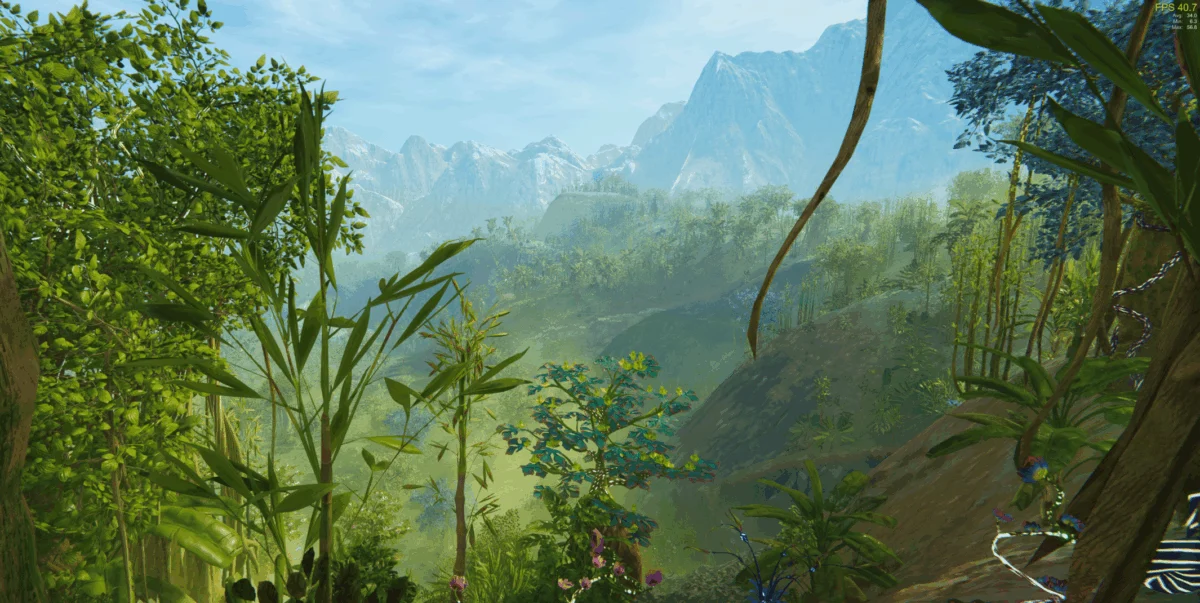
The recent update from Playable Worlds marks the culmination of months of intensive labor focused on elevating the game’s graphical fidelity without sacrificing its core promise: a fully simulated environment. The overhaul is not merely a "skin" applied to the existing world; it is a fundamental re-engineering of how the game renders its universe.
Shaders and Asset Retouching
The development team has systematically redone nearly every shader in the game. This technical transition allowed them to go back and retouch every single asset, starting with the game’s vast library of flora. In a world where biomes are not pre-designed but emerge from environmental data, this required re-evaluating hundreds of individual plant assets to ensure they interacted correctly with the new lighting and weather systems.
The Emergent Biome System
Unlike traditional MMOs that use static "zones" with fixed scenery, Stars Reach utilizes a dynamic simulation to determine where life flourishes. The game tracks a dozen different soil types, temperature gradients, and humidity levels. Plants do not simply exist; they grow, propagate via seed-dropping, react to the passage of seasons, and succumb to environmental hazards like fire or frost.
Dynamic Terrain and Physics
Perhaps the most ambitious aspect of the update is the confirmation of fully modifiable terrain. Players are not limited to building structures; they can reshape the world itself. The update showcases mountains that can be flattened for road construction and cliff faces that can be melted into lava or coated in ice. This level of interactivity extends to the physics engine, where pouring water on a cold surface creates ice that players can physically skate upon.
Chronology: The Journey from 2021 to 2025
The development of Stars Reach has been an exercise in transparency, with Koster frequently sharing early-stage builds that prioritized systems over aesthetics. This journey, as documented in the latest update, shows a clear trajectory of iterative improvement.
- 2021: The Foundation: Early screenshots from four years ago show a rudimentary world. The focus during this era was on the "Simulation Engine"—the invisible math that handles soil nutrients, atmospheric pressure, and plant growth. Visually, the game was functional but lacked the depth and texture of a modern commercial product.
- 2022–2023: Lighting and Texture Iteration: During this middle period, the team began experimenting with terrain shaders. The world started to gain more distinct color palettes and better shadows, but the "stylized" look was still in its infancy. The community offered significant feedback during this phase, with many expressing concerns that the visuals were too simplistic for a high-profile MMO.
- 2024: The Jungle Prototype: By late 2024, the team had successfully integrated a more complex flora system. Screenshots of jungle environments showed a marked increase in density and verticality, proving that the simulation could handle hundreds of thousands of individual, growing entities simultaneously.
- 2025: The Visual Leap: The current update represents the "big overhaul." With the transition to improved global illumination and volumetric fog, the game has moved toward a "paperback sci-fi" aesthetic—reminiscent of 1970s and 80s book covers—that distinguishes it from the sea of photorealistic competitors.
Supporting Data: The Technical Pillars of Stars Reach
To understand the scale of the Stars Reach overhaul, one must look at the technical data points that drive the simulation. Playable Worlds is attempting to solve the "static world" problem that has plagued MMOs for three decades.
Soil and Environment Variables
The game tracks 12 distinct soil types. Each type influences the growth rate and health of specific flora. When a player introduces water or heat to these soils, the simulation recalculates the viability of the surrounding life. This is why "seeds fall and grow into trees" in real-time rather than being placed by a level designer.
Optimization and Performance
A common pitfall for simulation-heavy games is a plummeting framerate. However, Koster notes that this visual update comes bundled with "significant optimizations." By re-engineering the shaders and asset-handling pipelines, the team has achieved smoother performance even with the added complexity of volumetric effects.
The Physics of Change
The terrain system is fully "volumetric" in a sense, allowing for state changes in matter.
- Combustion: Plants have a "burn" state, allowing forest fires to sweep through a player-created settlement or a natural forest.
- Cryogenics: Water interacts with temperature to create ice surfaces with unique friction properties.
- Phase Shifts: High-heat interactions can turn solid rock into liquid lava, a feature rarely seen in a persistent, multiplayer environment.
Official Responses: Addressing the Community and the Market
Raph Koster’s blog post served as both a progress report and a direct response to long-standing community feedback regarding the game’s graphics.
On Initial Graphics Pushback
Koster acknowledged that when the game was first announced, the "functional" look of the graphics led to public skepticism. "When we first announced and got pushback on the graphics, we said we would keep working on it," Koster wrote. "Well, iteration takes time. But I think it’s really cool to see the incremental steps forward over time."
On the "Photorealistic" Trend
In a move that signals a strategic market positioning, Koster explained why Stars Reach is avoiding the industry trend of ultra-photorealism. He noted that the current market is "chock full of photorealistic games that are indistinguishable from one another." By choosing a "stylized realism" look, Playable Worlds aims to give the game a timeless quality and a unique visual identity that mirrors the imaginative sci-fi art of the past.
On the State of Gameplay
Addressing the inevitable question of "when can we play?", Koster highlighted that while this update focused on visuals, the underlying game is already feature-rich. He confirmed that player-run shops, banks, and combat updates are already live in the current builds. "Multiple player cities have been built and destroyed this year so far, and we have even blown up a few entire planets," Koster stated, emphasizing that the game is very much in an active, playable state for testers.
Implications: A New Benchmark for the MMO Genre?
The implications of the Stars Reach overhaul extend far beyond just a "prettier game." If Playable Worlds successfully delivers a world that is both visually modern and systemically deep, it could represent a paradigm shift for the MMO genre.
The Death of the "Static Zone"
For decades, MMOs have relied on the "theme park" model, where the world is an immutable backdrop for player actions. Stars Reach suggests a future where the world is a participant in the gameplay. If a group of players decides to build a road by flattening a mountain, that change is persistent. If they over-farm a specific soil type, that ecosystem may collapse. This creates a level of "emergent gameplay" that scripted quests cannot replicate.
Accessibility vs. Complexity
By using a stylized aesthetic, Playable Worlds is also making a bet on accessibility. Photorealistic games often require top-tier hardware, which can limit the player base of an MMO. A stylized look, combined with the mentioned performance optimizations, suggests that Stars Reach could run on a wider variety of machines, including mobile devices or lower-end PCs, without losing its visual appeal.
Player-Driven Governance
Looking ahead, the team is preparing to roll out "player governments." In a world where players can literally reshape the terrain and destroy planets, the need for social and political structures becomes a gameplay necessity rather than a roleplaying flourish. The visual overhaul provides the necessary immersion to make these high-stakes player interactions feel "real."
Conclusion
The latest update for Stars Reach is a testament to the power of iterative development. By refusing to compromise on the underlying simulation while simultaneously answering the call for higher visual standards, Raph Koster and Playable Worlds are carving out a unique niche in the gaming landscape. As the team moves from environment assets to redoing characters and creatures, the industry will be watching closely to see if this "stylized living world" can finally deliver the true sandbox experience that MMO fans have been dreaming of since the days of Ultima Online.