Unlocking the Alien Mind: "City of Six Moons" Challenges Players with Untranslatable Rules
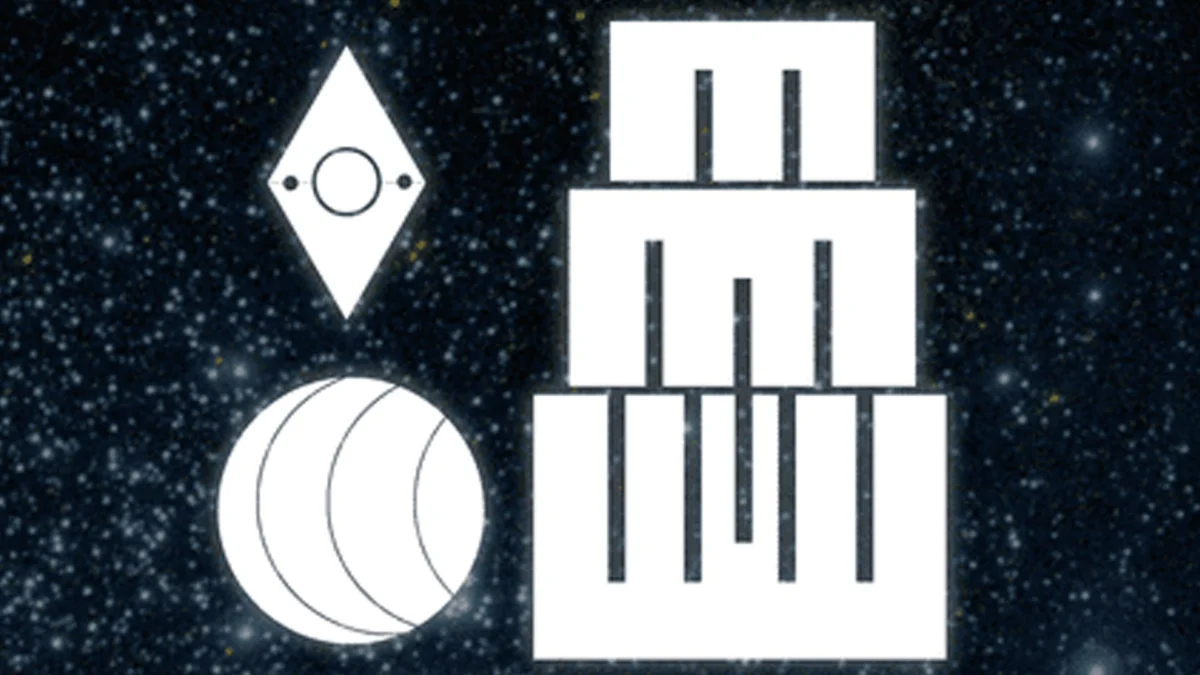
A groundbreaking new solo board game, "City of Six Moons," is poised to redefine the player experience by presenting its entire rulebook in an alien language, thrusting players into a profound linguistic and cultural puzzle before they can even begin to play. Designed by Amabel Holland and published by Hollandspiele, this audacious title offers no definitive answers, no official clarifications, and a deliberate ambiguity that promises to leave a lasting impression on those brave enough to attempt its decipherment.
The concept, as radical as it is intriguing, positions "City of Six Moons" not merely as a game about guiding an extraterrestrial civilization, but as an artifact from one. Players are tasked with interpreting a rulebook composed entirely of unknown icons, glyphs, and symbols, a challenge that transcends typical gameplay to become an exercise in semiotics, cultural anthropology, and pure deduction. The most provocative aspect? Designer Amabel Holland openly states that players will never truly know if their interpretation is perfectly correct, and she will steadfastly refuse to answer any rules questions, making the journey of understanding an intensely personal and potentially perpetual one.
This intentional opaqueness sets "City of Six Moons" apart in a market often characterized by increasingly streamlined rulebooks and extensive designer support. It dares players to embrace uncertainty, to grapple with the unknown, and to confront the inherent limitations of human interpretation when faced with a truly alien construct. The game is slated for release next month, promising a unique intellectual odyssey for solo board game enthusiasts.
Main Facts: A Game Beyond Language
"City of Six Moons" is an upcoming single-player board game from Hollandspiele, the independent publishing house co-owned by Amabel Holland and Mary Holland. The game’s core innovation lies in its rulebook, which is not written in any human language but rather in a meticulously crafted alien script of icons, glyphs, and symbols. This design choice is not merely a stylistic flourish but a fundamental pillar of the game’s identity.
Designer Amabel Holland describes the title as a dual experience: players will navigate the fate of an alien civilization while simultaneously engaging with a game designed as if it were an actual product of that very alien civilization. This meta-narrative collapses the distinction between the game’s lore and its physical manifestation, making the act of translation an integral, non-optional component of the gameplay itself.
The challenge presented to players is multifaceted. Beyond the sheer cognitive load of deciphering an unknown symbolic system, players are expected to leverage their existing cultural assumptions while simultaneously recognizing and accounting for the profound differences that would characterize an alien culture. This requires a delicate balance of pattern recognition, inductive reasoning, and a willingness to shed anthropocentric biases.
Crucially, the designer has declared a policy of absolute non-intervention. Amabel Holland will not provide clarifications, hints, or definitive answers regarding the "correct" interpretation of the rules. This deliberate absence of an authoritative voice forces players to rely solely on their own deductions, fostering a unique sense of ownership over their understanding of the game. The community, as a result, will be left to grapple with potential ambiguities and differing interpretations, adding another layer to the game’s social dynamic, even for a solo experience.
Despite the inherent difficulties, Holland confirms that "City of Six Moons" is intended to be a "functional, replayable game" for those who successfully navigate its linguistic labyrinth. However, she also anticipates a profound emotional arc: once the rules are understood (or sufficiently understood to play), the initial mystery and the arduous journey of discovery will inevitably fade. This "loss," she suggests, is an intended part of the experience, a lingering sentiment she wants players to feel, reinforcing the idea that the process of deciphering is as much the game as the gameplay itself.
Chronology: From Ancient Puzzles to Modern Meta-Games
The concept of presenting information in an obscure or undecipherable format, challenging the recipient to unlock its meaning, has deep roots in human history and culture, extending from ancient enigmas to contemporary artistic and gaming experiences. "City of Six Moons" draws upon a rich tradition of intellectual puzzles, albeit with a unique, self-contained twist.
Historical Precedents in Decipherment
Throughout history, humanity has faced the challenge of unlocking lost languages and cryptic texts. The Rosetta Stone, discovered in 1799, provided the key to understanding Egyptian hieroglyphs by presenting the same decree in three scripts: hieroglyphic, Demotic, and ancient Greek. This multi-lingual approach allowed scholars like Jean-François Champollion to make groundbreaking progress. Similarly, the decipherment of Linear B, an ancient Mycenaean Greek script, by Michael Ventris in the 1950s, relied on painstaking statistical analysis and an educated guess about its underlying language family.
Then there are the enduring mysteries, like the Voynich Manuscript, a medieval codex written in an unknown writing system, filled with botanical, astronomical, and anatomical illustrations. Despite centuries of scrutiny, its language remains undeciphered, standing as a testament to the profound challenge of unlocking a system without a known key or cultural context. "City of Six Moons" directly taps into this primal human fascination with the unknown and the desire to uncover hidden truths.
Gaming’s Embrace of Cryptography and Mystery
Within the realm of gaming, the use of coded messages, puzzles, and hidden narratives has long been a staple. Early adventure games often featured cryptic clues or even rudimentary ciphers. More recently, video games like Myst (1993) famously immersed players in a world where environmental puzzles and cryptic journals were the primary means of progression, demanding observational skills and logical deduction. The indie platformer Fez (2012) took this a step further, embedding an entire fictional alphabet and number system within its world, requiring players to decipher it to fully understand the game’s lore and secrets.
Beyond commercial titles, the internet age has given rise to elaborate Alternate Reality Games (ARGs) such as Cicada 3301, which presented a series of complex puzzles involving cryptography, steganography, literature, and philosophy, attracting a global following of amateur codebreakers. These examples demonstrate a clear appetite within the gaming community for challenges that extend beyond traditional gameplay mechanics.
Hollandspiele’s Distinctive Publishing Ethos
Hollandspiele, established by Amabel and Mary Holland, has carved out a niche in the board gaming industry by consistently publishing titles that prioritize unique thematic integration, historical accuracy (particularly in their wargames), and often, a certain intellectual rigor. While not known for intentionally obfuscating rules, their catalog frequently features games that are deep, complex, and demand careful study and strategic thinking from their players. "City of Six Moons" represents a bold new frontier for the publisher, pushing their experimental tendencies to an unprecedented level. It signals a willingness to challenge conventional notions of what a board game can be, moving beyond mere entertainment to engage players on a philosophical and linguistic level.
The Genesis of "City of Six Moons"
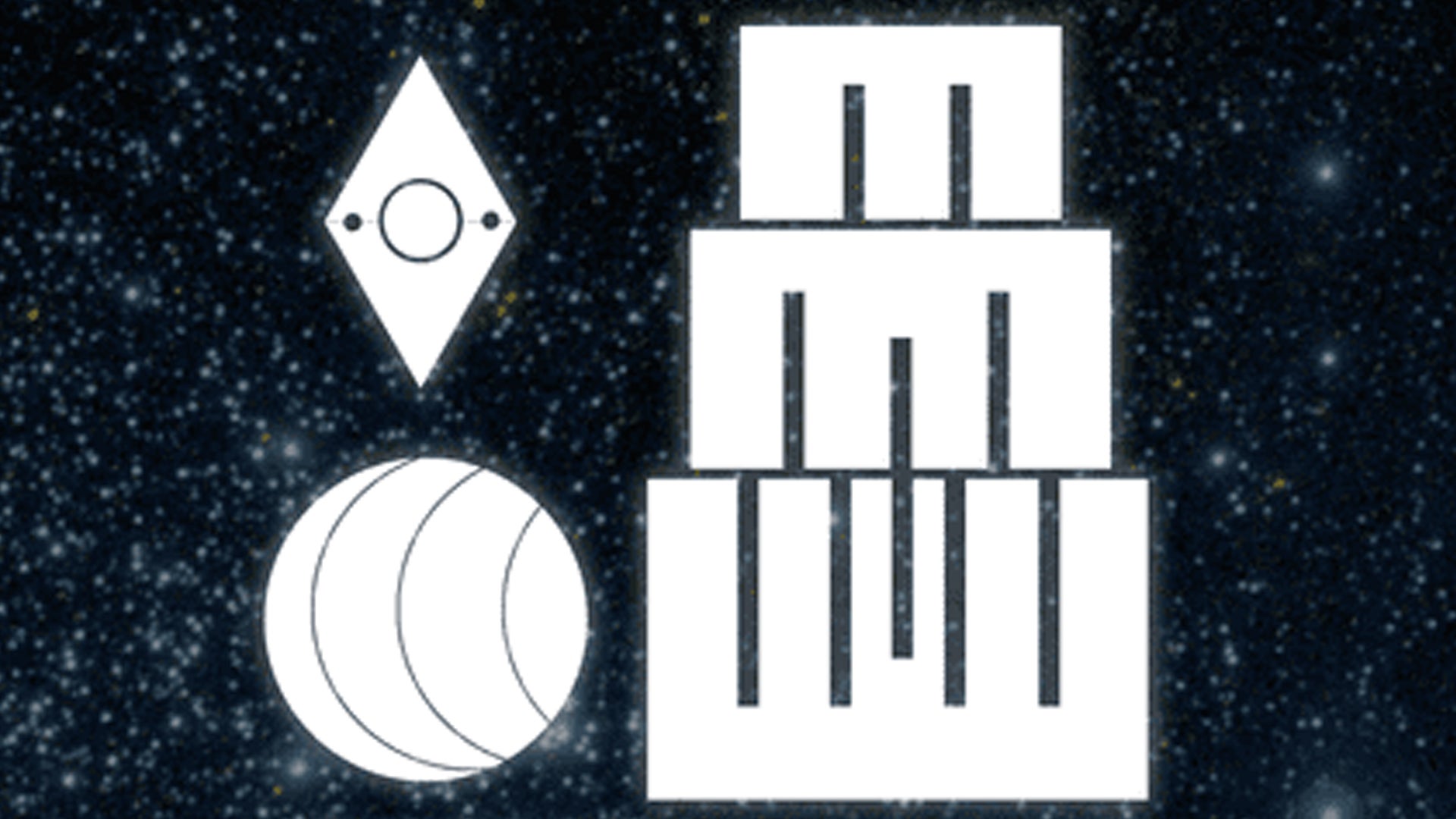
While the specific genesis of "City of Six Moons" isn’t detailed in public announcements, it can be inferred that Amabel Holland’s design philosophy likely led to this unique concept. Her statements on Bluesky and via various gaming media outlets suggest a deliberate and thoughtful approach to creating an experience where the act of decipherment is paramount. The initial revelation, likely disseminated through gaming news sites like Dicebreaker and discussion forums like BoardGameGeek, immediately sparked conversation due to its sheer novelty. The announcement was accompanied by striking cover artwork, which, tantalizingly, might itself contain the first clues to the game’s enigmatic language. The rapid progression from announcement to a "next month" release suggests a project that has been under careful development, with the alien language rulebook being a foundational element rather than a last-minute addition. This project embodies a growing trend in independent game design to explore the boundaries of interaction and narrative, often prioritizing artistic statement over commercial accessibility.
Supporting Data: The Psychology and Philosophy of Decipherment
The design choice behind "City of Six Moons" is more than a gimmick; it’s a profound exploration of human cognition, cultural interpretation, and the intrinsic allure of unsolved mysteries. Understanding the game requires delving into the psychology of puzzle-solving and the philosophical implications of communication across vast cultural divides.
The Allure of the Unsolved Puzzle
Humans possess an innate drive to find patterns, make sense of chaos, and solve puzzles. This cognitive impulse is deeply rooted in our evolutionary history, where understanding our environment was crucial for survival. When confronted with an unknown language or code, our brains instinctively seek structure, repetition, and potential meaning. The "aha!" moment of cracking a cipher or understanding a new concept triggers a release of dopamine, providing a powerful sense of reward and accomplishment.
"City of Six Moons" exploits this psychological mechanism directly. The initial frustration of encountering an undecipherable text will likely be intense, but it is precisely this struggle that will make any subsequent breakthroughs so rewarding. The absence of a definitive solution, however, introduces a fascinating layer of meta-cognition: players must not only solve the puzzle but also come to terms with the possibility that their solution is imperfect, forcing them to engage with ambiguity on a deeper level.
Designing for Alienness: A Thought Experiment
Amabel Holland’s ambition to design a game as if an alien civilization made it is a sophisticated thought experiment. It forces players to confront their own anthropocentric biases. How would an alien culture represent concepts like victory, defeat, resource management, or even the passage of time? Their logic, their metaphors, their underlying philosophical assumptions could be fundamentally different from our own.
Consider the challenges faced by linguists attempting to understand truly dead languages, where not only the script is unknown but also the cultural context, belief systems, and even the fundamental ways of thinking of its speakers are lost to time. "City of Six Moons" simulates this experience, creating a void of familiar context that players must fill through inference and imaginative leaps. The game becomes a crucible for testing one’s ability to empathize with an entirely foreign mindset.
The Meta-Game of Interpretation
Beyond the literal act of translation, "City of Six Moons" introduces a powerful meta-game centered on interpretation. Players are not just decoding symbols; they are constructing a coherent narrative and a functional system of rules from fragments of perceived meaning. This process is inherently subjective. Two players might arrive at two different, yet equally "functional" interpretations of the rules, leading to entirely different gameplay experiences.
This phenomenon is reminiscent of how different scholars interpret ancient texts or philosophical treatises. There is often no single "correct" reading, but rather a spectrum of plausible interpretations, each shedding light on different facets of the original work. In "City of Six Moons," this becomes an active, playable element, making the discussion and comparison of individual rule interpretations as much a part of the game as the physical movement of components.
Contrast with Traditional "Difficult" Games
It’s important to distinguish the challenge of "City of Six Moons" from that of other notoriously complex or difficult-to-learn board games. Many wargames or highly intricate Eurogames (e.g., Twilight Imperium, Pax Pamir, Food Chain Magnate) are difficult due to their sheer volume of rules, intricate interactions, or steep learning curves. However, their rulebooks are written in plain language, with diagrams and examples intended to clarify. The difficulty lies in mastering the rules, not in understanding them in the first place.
"City of Six Moons" inverts this. The initial barrier is linguistic and conceptual. Once that barrier is overcome (to whatever extent a player manages), the underlying game mechanics might be relatively straightforward, or they might reveal a deeper, equally complex system. The primary hurdle is access, not necessarily inherent mechanical complexity. This makes it a unique proposition in the landscape of difficult games.
Official Responses: Designer Intent and Unwavering Vision
The clarity of Amabel Holland’s vision for "City of Six Moons" is paramount to understanding its unconventional design. Her statements, though limited by the very nature of the game’s premise, underscore a deliberate artistic choice rather than a simple oversight or an experiment for experiment’s sake.
Amabel Holland’s Uncompromising Stance
The most striking "official response" is Amabel Holland’s explicit refusal to answer any rules questions. This is not a matter of poor customer service but a core tenet of the game’s design. By withdrawing the designer as an ultimate authority, Holland empowers players to embrace their own interpretations and to live with the inherent uncertainty. This decision places the burden of understanding entirely on the player, transforming what might typically be a source of frustration into a fundamental aspect of the game’s philosophical core. It forces a radical self-reliance that few other games dare to demand.
Her statement on Bluesky, confirming that the game will be "functional, replayable" for those who decipher its rules, is crucial. It reassures potential players that their efforts will lead to a playable experience, not just an unsolvable puzzle. This distinction is vital: the game isn’t designed to be impossible, but rather to make the path to possibility incredibly challenging and personally rewarding.
The Deliberate "Loss"
Perhaps the most poignant aspect of Holland’s design philosophy for "City of Six Moons" is her contemplation of the "loss" players will feel once they have deciphered the rules. "That loss is a thing I want you to feel; I want it to linger," she stated. This reveals a sophisticated understanding of the player’s emotional journey. The arduous process of discovery, the thrill of revelation, the intellectual struggle – these are all experiences that, by their very nature, are transient. Once a mystery is solved, it ceases to be a mystery.
Holland is not just designing a game; she is designing an experience with a distinct emotional arc, one that acknowledges the bittersweet nature of understanding. This "loss" is not a flaw but an intended outcome, a testament to the power of the initial, enigmatic encounter. It suggests that the true "game" is less about the mechanics themselves and more about the transformative journey of engaging with the unknown.
Hollandspiele’s Embrace of Experimentation
Hollandspiele, as a publisher, has consistently demonstrated a willingness to back innovative and unconventional designs. While their catalog is diverse, a common thread often involves pushing boundaries in terms of theme, complexity, or player interaction. "City of Six Moons" fits squarely within this adventurous spirit. It represents a significant departure even for them, venturing into an area where the game’s primary challenge is existential and linguistic rather than purely strategic or tactical. This commitment to experimental game design reinforces Hollandspiele’s reputation as a publisher for discerning players seeking unique and thought-provoking experiences. The release of "City of Six Moons" reaffirms their position at the vanguard of independent board game innovation.
Implications: Reshaping the Landscape of Board Gaming
"City of Six Moons" is poised to have several significant implications, from challenging industry norms to fostering unique community dynamics and potentially influencing the future of experimental game design.
Impact on the Board Game Industry and Design Trends
This game could serve as a powerful case study for what happens when a designer radically challenges established conventions. In an industry increasingly focused on accessibility, clear onboarding, and comprehensive rules support, "City of Six Moons" stands as a defiant counter-narrative. If it finds success, even within a niche, it could inspire other designers to explore unconventional barriers to entry, pushing the boundaries of what constitutes "gameplay." It might spark a subgenre of "meta-puzzle" games where the act of understanding the game itself is the primary challenge. Conversely, if the barrier proves too high for most, it could solidify the perception that such extreme experimentation remains strictly for the most adventurous of players.
Accessibility and Inclusivity Concerns
While "City of Six Moons" offers a unique intellectual challenge, its design inherently raises questions about accessibility. Players who struggle with pattern recognition, abstract thinking, or simply lack the patience for such a daunting initial task may find themselves entirely excluded from the experience. Unlike games with high mechanical complexity that can be learned incrementally or with community help, the fundamental requirement to decipher an unknown language without assistance creates a significant barrier to entry. This is a deliberate design choice, but it also means the game will appeal to a very specific demographic, intentionally alienating others. It underscores the ongoing tension between artistic vision and broad appeal in game design.
The Rise of Collaborative Decipherment and Community Engagement
Despite being a solo game, "City of Six Moons" is almost guaranteed to foster an intense level of community engagement. Given the designer’s refusal to provide answers, online forums (such as BoardGameGeek, Reddit, and dedicated Discord servers) will likely become crucibles for collaborative decipherment. Players will share their interpretations, debate the meaning of glyphs, propose theories about the alien culture, and collectively attempt to construct a functional rule set. This communal effort will create a "meta-game" around the game itself, where the social interaction of interpretation becomes as compelling as the solo experience. This could lead to multiple "official" community-sanctioned rule sets, each derived from different interpretations, further enhancing the game’s unique replayability and intellectual depth.
The Future of Experimental Game Design
"City of Six Moons" positions itself at the forefront of experimental game design, where the game is not just the components and rules, but the entire process of engagement, from unboxing to intellectual struggle to eventual understanding (or lack thereof). This approach blurs the lines between game, art installation, and linguistic puzzle. It suggests a future where games can intentionally frustrate, challenge, and provoke thought in ways that extend far beyond traditional notions of fun or entertainment. It encourages a deeper, more reflective engagement with the medium itself, pushing players to consider the very nature of communication and understanding.
Long-Term Legacy: A Landmark or an Anomaly?
The long-term legacy of "City of Six Moons" will depend on how the board gaming community ultimately receives and engages with it. Will it be remembered as a groundbreaking experiment that redefined the possibilities of interactive storytelling and puzzle design? Or will it be regarded as a curious, perhaps overly ambitious, anomaly? Its success may not be measured in sales figures alone but in the intellectual discourse it generates, the innovative approaches it inspires, and the lasting impression it leaves on those who dare to venture into its alien linguistic landscape. Regardless of its ultimate reception, "City of Six Moons" is poised to be a landmark title, challenging players not just to play a game, but to unlock a universe.