GodotHub Emerges as a Polished and Powerful Launcher for the Open-Source Game Engine
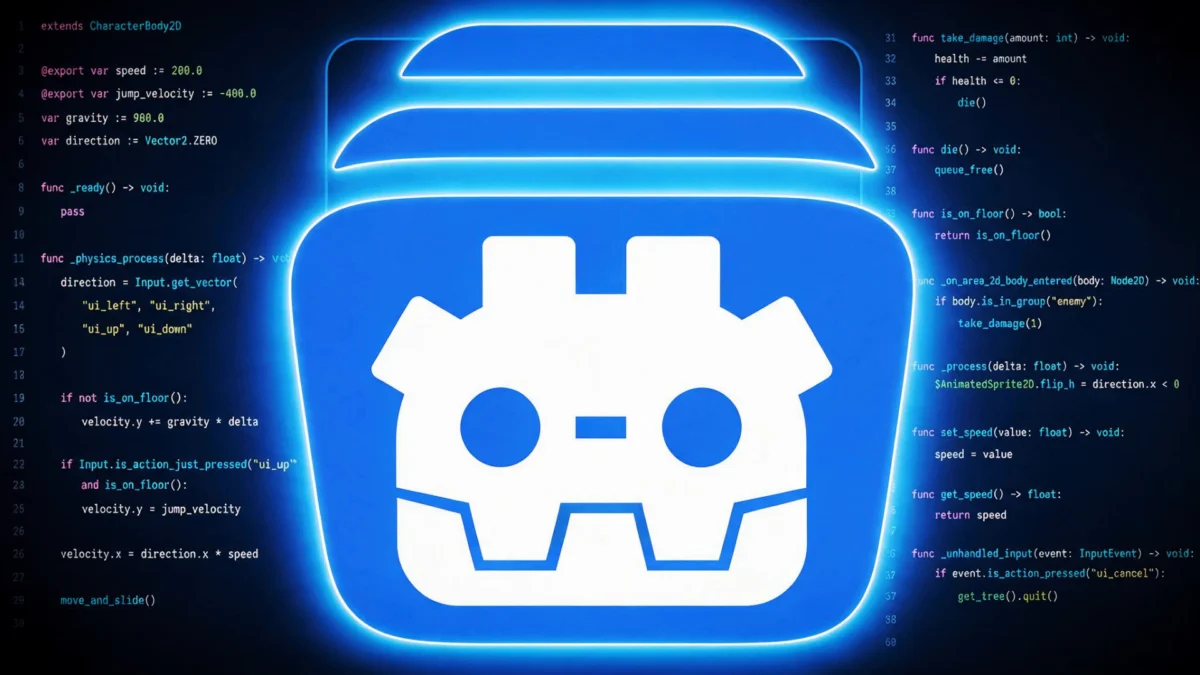
A comprehensive new tool streamlines the Godot Engine experience for developers, offering robust version management, project organization, and seamless access to community resources.
[City, State] – [Date] – In the rapidly evolving landscape of game development, efficiency and accessibility are paramount. For creators leveraging the power of the open-source Godot Engine, a new contender has emerged, promising to revolutionize how developers interact with their tools and projects. GodotHub, a free and open-source cross-platform launcher, has been meticulously crafted to provide a feature-rich and remarkably polished experience, catering to both seasoned professionals and aspiring game makers.
GodotHub addresses a common pain point for Godot users: managing multiple engine versions, organizing disparate projects, and easily accessing supplementary resources. The application, available for Windows, macOS, and Linux, offers a centralized hub for all these critical functions, acting as an indispensable companion for any serious Godot developer. While entirely optional, its intuitive design and extensive capabilities make it a compelling addition to any development workflow.
The Genesis and Evolution of GodotHub
The journey of GodotHub began with a clear vision: to create a tool that simplifies the Godot development lifecycle. Developed by [Developer Name/Team Name, if available – if not, phrase as "a dedicated developer"], the project has steadily grown, incorporating feedback and refining its features to achieve its current state of polish.
The initial iteration of GodotHub likely focused on addressing the fundamental need for robust version management. Developers often find themselves working on projects that require specific engine versions due to compatibility or feature sets. Manually downloading, extracting, and configuring these different versions can be a time-consuming and error-prone process. GodotHub’s one-click installation and seamless switching capabilities directly tackle this challenge.
As the project matured, its scope expanded to encompass project management. The ability to scan, organize, and launch all Godot projects from a single interface offers a significant organizational advantage. Assigning specific engine versions to individual projects ensures that developers can jump back into their work without worrying about compatibility issues.
Furthermore, the integration of a template and asset library access marks a significant leap forward. This feature taps into the vibrant Godot community, allowing users to quickly import community-created templates, plugins, and starter assets. This dramatically accelerates the prototyping and initial setup phases of new projects, fostering creativity and reducing boilerplate work.
The inclusion of custom engine support is a testament to GodotHub’s understanding of the advanced needs of some developers. Those who compile their own Godot builds, perhaps for specific optimizations or experimental features, can easily integrate these custom binaries into GodotHub, treating them with the same ease of management as official releases.
The commitment to cross-platform compatibility underscores GodotHub’s ambition to be a universal solution. By offering a consistent experience across Windows, macOS, and Linux, it removes a significant barrier for developers who may work on different operating systems or collaborate with others who use different platforms.
Finally, the emphasis on being lightweight and fast is a crucial design choice. In a field where every second counts, an application that opens instantly and operates without bogging down system resources is highly valued. This focus on performance, combined with a clean and user-friendly interface, ensures that GodotHub enhances, rather than hinders, the development workflow.
Core Functionality: A Deeper Dive
GodotHub’s strength lies in its comprehensive suite of features, each meticulously designed to enhance the developer’s experience.
H2: Streamlined Version Management: The Foundation of Flexibility
One of the most impactful features of GodotHub is its sophisticated version management system. Developers often juggle multiple projects, each potentially requiring a different version of the Godot Engine. This could stem from the need to maintain compatibility with older projects, experiment with the latest beta features, or utilize specific builds.
H3: Effortless Downloads and Installations
GodotHub eliminates the tedious manual process of downloading zip files from the official Godot website, extracting them, and manually configuring paths. With a few clicks, users can browse and download official Godot releases directly within the application. This one-click installation ensures that the engine is correctly placed and ready for use, significantly reducing setup time and potential errors.
H3: Side-by-Side Management
The ability to install and manage multiple Godot versions concurrently is a game-changer. Developers can have the latest stable release, a recent beta build, and even older versions installed side-by-side. This allows for immediate switching between these versions without any conflicts. For instance, a developer might be working on a new project using the latest stable release while simultaneously maintaining an older project that requires a specific, older version of the engine. GodotHub makes this transition seamless, ensuring that the correct engine is launched for each project.
H3: Custom Build Integration
For advanced users, GodotHub offers the capability to integrate custom-compiled Godot binaries. This is invaluable for developers who are actively contributing to the Godot Engine’s development, experimenting with engine modifications, or working with highly specialized builds. By allowing these custom versions to be managed alongside official releases, GodotHub provides a unified environment for all engine-related activities.
H2: The Centralized Project Hub: Your Development Command Center
Beyond engine management, GodotHub acts as a central command center for all your Godot projects. This unified interface streamlines the process of locating, launching, and managing your game development endeavors.
H3: Effortless Project Organization
With GodotHub, developers can scan directories for existing Godot projects, automatically importing them into a centralized list. This eliminates the need to remember the specific location of each project folder. The interface provides a clear overview of all projects, making it easy to find and select the one you want to work on.
H3: Project-Specific Engine Assignments
A critical aspect of project management is ensuring that each project opens with the correct engine version. GodotHub allows developers to assign a specific Godot Engine version to each individual project. This means that when you click to open a project, GodotHub automatically launches it with the pre-assigned engine, guaranteeing a consistent and compatible development environment for that particular project. This feature is particularly useful for teams where different members might be working on the same project but have different engine versions installed.
H3: Quick Project Launching
Once projects are organized and engine versions are assigned, launching them becomes a swift and straightforward process. Instead of navigating through file explorers and manually opening the Godot executable, developers can simply select a project from the GodotHub interface and launch it directly. This simple yet effective feature saves valuable time and reduces friction in the daily development routine.
H2: Accelerating Development with Templates and Asset Access
GodotHub recognizes the importance of community contributions and aims to integrate them seamlessly into the development workflow.
H3: Community Template Integration
New projects often benefit from pre-built structures and boilerplate code. GodotHub provides access to a library of community-created templates, allowing developers to quickly import these starter kits into their new projects. Whether it’s a 2D platformer template, a UI framework, or a specific game genre starter, these templates can significantly accelerate the initial stages of development, allowing creators to focus on unique game mechanics and content.
H3: Plugin and Asset Marketplace
Beyond templates, GodotHub also facilitates access to plugins and assets shared by the Godot community. Developers can search for and import these resources directly into their projects, enhancing functionality or adding visual elements without the need for manual downloads and installations. This fosters a more collaborative and interconnected development ecosystem, empowering creators with readily available tools and resources.
H2: Universal Reach: Cross-Platform Compatibility
In today’s globalized development environment, ensuring tools work across different operating systems is crucial. GodotHub excels in this regard.
H3: Seamless Experience on All Major Platforms
GodotHub is built to be fully compatible with Windows, macOS, and Linux. This means that developers can enjoy the same streamlined experience regardless of their preferred operating system. This consistency is invaluable for individual developers who may switch between machines or for teams working collaboratively, ensuring everyone is on the same page with their development tools.
H2: Performance and User Experience: Designed for Developers
GodotHub’s design philosophy emphasizes efficiency and ease of use.
H3: Lightweight and Responsive
The application is engineered to be lightweight, meaning it consumes minimal system resources. This translates to near-instantaneous startup times and a responsive user interface that does not impede the development workflow. Developers can launch GodotHub, manage their engines and projects, and then quickly return to their coding and design without experiencing any noticeable slowdowns.
H3: Intuitive and Clean Interface
The user interface has been carefully designed with game developers in mind. It is clean, uncluttered, and intuitive, making it easy for both new and experienced users to navigate and utilize its features. The focus is on providing the necessary tools without overwhelming the user, ensuring that the application serves as a helpful assistant rather than a complex piece of software.
The Optional Nature: A Key Design Principle
It is important to reiterate that GodotHub is designed to be an optional tool. The developers behind GodotHub understand that many users may have their preferred workflows and existing methods for managing their Godot installations and projects. The "completely optional" nature of GodotHub is a deliberate design choice that respects user autonomy and avoids imposing a rigid structure.
This approach has several key benefits:
- No Vendor Lock-in: Users are not forced to adopt GodotHub. They can continue to manage their Godot installations and projects manually if they prefer.
- Flexibility: Developers can integrate GodotHub into their existing workflows as a supplementary tool, using it for specific tasks like version management or project organization while still relying on other tools for different aspects of their development.
- Empowerment: By being optional, GodotHub empowers users to choose the tools that best suit their individual needs and preferences. It aims to be a helpful enhancement, not a mandatory requirement.
This optionality, combined with its extensive feature set and polished execution, makes GodotHub a compelling choice for any Godot developer looking to enhance their productivity and streamline their workflow.
Future Prospects and Community Impact
The emergence of GodotHub signals a positive trend within the Godot ecosystem: the development of community-driven tools that enhance the core engine experience. As the Godot Engine continues to grow in popularity, so too will the need for robust supporting infrastructure.
H3: Potential for Further Integration
While GodotHub is already feature-rich, there is potential for even deeper integration with the Godot ecosystem. Future updates could include more advanced asset management features, direct integration with Godot’s export templates, or even a more sophisticated community plugin marketplace.
H3: Fostering Collaboration and Accessibility
By making it easier to manage different engine versions and access community resources, GodotHub can foster greater collaboration within the Godot development community. It lowers the barrier to entry for new developers by simplifying the initial setup and providing access to helpful resources.
H3: Open-Source Ethos
As an open-source project, GodotHub benefits from the transparency and collaborative spirit of the open-source movement. Developers can contribute to its development, suggest new features, and report bugs, ensuring that the tool evolves in line with the needs of its users.
Conclusion
GodotHub represents a significant step forward in the usability and accessibility of the Godot Engine. Its thoughtful design, comprehensive feature set, and unwavering commitment to a polished, user-friendly experience make it an invaluable tool for developers of all levels. By simplifying version management, centralizing project organization, and providing seamless access to community resources, GodotHub empowers creators to focus on what they do best: building amazing games. Its optional nature further solidifies its position as a respectful and highly beneficial addition to the Godot development toolkit.
Key Links:
- GodotHub GitHub Repository: https://github.com/RykoTheDev/GodotHub
- Demonstration Video: https://youtu.be/ntStEGRfWb8