Found Family at the End of the World: The Revolutionary Legacy of Rachel Pollack’s Doom Patrol
The history of transgender women in the comic book industry is long and rich, yet when narrowed specifically to the "Big Two" publishers—DC and Marvel—and their superhero staples, that history becomes significantly more sparse. For decades, the contributions of trans creators were often relegated to the fringes or obscured by the heteronormative standards of the "Capes" genre. This historical context makes Rachel Pollack’s tenure on Doom Patrol, which began in 1993 and concluded in 1995, not merely a curiosity of the Vertigo era, but an improbable and essential landmark in the evolution of the medium.
Rachel Pollack, who passed away in 2023, was never defined solely by her work in panels and speech bubbles. She was a celebrated fantasy novelist, a Nebula and World Fantasy Award winner, and perhaps most prominently, one of the world’s foremost authorities on Tarot. Her seminal work, Seventy-Eight Degrees of Wisdom, remains the "gold standard" for Tarot practitioners globally. However, her twenty-five-issue run on Doom Patrol (#64–87) represents a singular moment where high-concept mysticism, trans-feminist theory, and raw emotional vulnerability collided within the pages of a mainstream superhero book.
Main Facts: A Shift from the Absurd to the Interior
When Rachel Pollack took the reins of Doom Patrol from the legendary Grant Morrison in 1993, she inherited a title that had already been redefined as the "weirdest" book in DC’s roster. Morrison’s run had been a psychedelic explosion of Dadaism, linguistic philosophy, and surrealist horror. While Pollack maintained the series’ commitment to the bizarre, she executed a radical pivot in tone. Where Morrison focused on the metaphysical and the conceptual, Pollack focused on the visceral and the interpersonal.
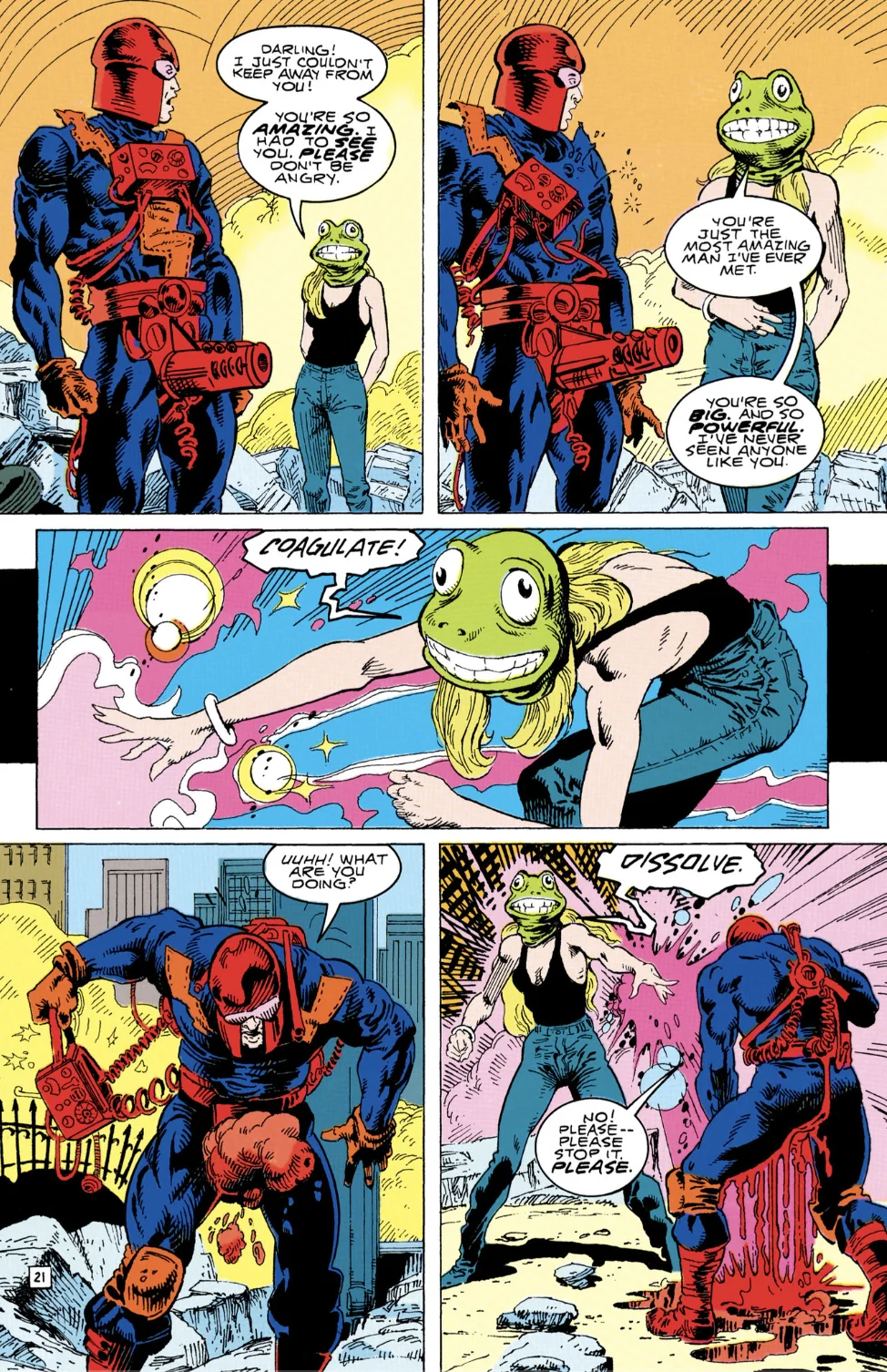
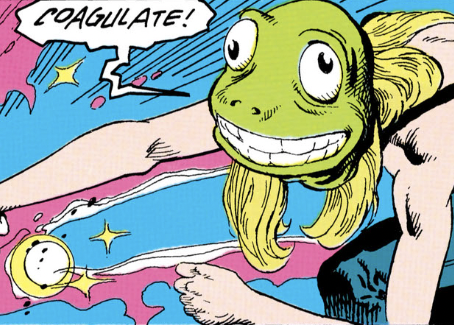
The hallmark of Pollack’s run was the introduction of Kate Goodwin, also known as Coagula. Kate was a former sex worker with the ability to dissolve and solidify matter, but more importantly, she was the first out transgender superhero in the history of DC Comics. Through Kate, Pollack explored themes of gender identity, body dysmorphia, and the search for community with a level of nuance that was decades ahead of its time. Pollack’s Doom Patrol was less about saving the world from external threats and more about the "found family" of outcasts trying to survive a world that refused to understand them.
Chronology: From Silver Age Freaks to Vertigo Outcasts
To understand the weight of Pollack’s contribution, one must trace the lineage of the Doom Patrol.
The Silver Age Origins (1963–1968)
Created by writers Bob Haney and Arnold Drake alongside artist Bruno Premiani, the original Doom Patrol debuted in My Greatest Adventure #80. They were marketed as the "World’s Strangest Heroes." Unlike the Justice League, these characters—Robotman (Cliff Steele), Negative Man (Larry Trainor), and Elasti-Girl (Rita Farr)—did not view their powers as a gift. They were victims of horrific accidents, led by the manipulative genius Niles Caulder (The Chief). The series was darker and more alienated than its contemporaries, eventually ending with the shocking (and at the time, permanent) death of the entire team.
The Morrison Reinvention (1989–1992)
After a brief and unremarkable revival in the 1980s, Grant Morrison took over the title, leaning into the "freak show" aspect of the original run. Morrison introduced characters like Crazy Jane (a woman with 64 personalities, each with a different power) and Danny the Street (a sentient, cross-dressing street). Morrison’s run was an intellectual tour de force that questioned the nature of reality, but as Pollack herself noted, it often left the characters’ emotional lives as "second fiddle" to the grand philosophical experiments.
The Pollack Era (1993–1995)
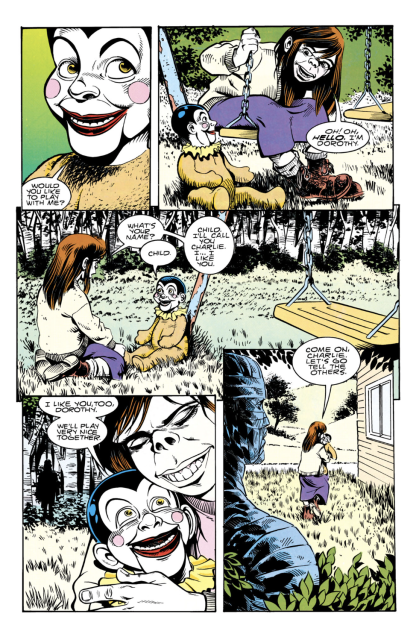
Pollack assumed control with issue #64. Her first major move was to ground the team in a community, moving them to Rhinebeck, New York. She shifted the focus to Dorothy Spinner—a young girl with facial deformities and the power to bring imaginary friends to life—and introduced the aforementioned Coagula. Pollack’s run coincided with the official launch of the Vertigo imprint, allowing her to explore "mature" themes of sexuality, menstruation, and radical politics that would have been censored under the standard DC banner.

Supporting Data: The Architecture of Pollack’s Narrative
Pollack’s run is structurally defined by four major story arcs, each serving as a thematic counterpoint to the work that preceded her.
1. The Master Cleaner and Fatal Order
Pollack’s first major antagonist was the Master Cleaner, a cosmic entity obsessed with "purifying" the universe by reducing everything to its linguistic definition. If Morrison’s villains (like the Brotherhood of Dada) sought ultimate chaos, Pollack’s villain sought ultimate, fatal order. This served as a potent allegory for the "cleaning" of queer identities—the attempt by society to categorize and sanitize individuals into rigid, manageable definitions.
2. The Fox and the Crow
In this arc, Pollack reimagined the "war between worlds" trope. While Morrison’s cosmic battles were often detached and alien, Pollack’s war was a "lovers’ spat" between ancient deities connected to the sun and moon. The conflict played out through human proxies: an army of senior citizens versus an army of wild children. This arc showcased the art of Linda Medley, whose pencils brought a punk-pagan aesthetic to the book, emphasizing the feral beauty of the characters’ emotional outbursts.
3. The Tiresias War
This arc represented the peak of Pollack’s trans-centric storytelling. Named after the blind prophet of Greek myth who lived as both a man and a woman, the story introduced the "Tiresiae"—a race of omnigendered beings. The plot involved a fascist military organization attempting to enforce "normalcy" on reality. To defeat them, Kate Goodwin (Coagula) and Cliff Steele (Robotman) had to meld their bodies and spirits in a ritual of sex-magic, literally "queering" the language of reality to prevent a cosmic catastrophe.
4. The Tree of Life and Jewish Mysticism
Pollack’s final arc drew heavily from her expertise in the Kabbalah. It featured an ancient, corrupted rabbi using the "Tree of Life" to reshape the world. Dorothy Spinner was forced to confront her traumas and choose to embrace the world in all its flawed, wounded beauty rather than escaping into a perfected, artificial reality.
Official Responses and the Controversy of Collection
For nearly thirty years, Rachel Pollack’s Doom Patrol occupied a strange limbo in the publishing world. While Morrison’s run was perpetually in print and celebrated as a masterpiece, Pollack’s issues were never collected in trade paperback or hardcover format.
This omission did not go unnoticed by the comics community. Many critics and fans viewed the lack of collected editions as a "quiet erasure" of one of the few trans-authored runs in Big Two history. The argument was that because Pollack’s work was "unapologetically horny," deeply feminist, and centered on trans identity, it was deemed less "marketable" than the more abstract weirdness of Morrison.
In a long-awaited reversal, DC Comics finally published the Doom Patrol by Rachel Pollack Omnibus in October 2022. This massive volume collected her entire run, allowing a new generation of readers to discover her work. Sadly, Pollack passed away just six months later, in April 2023, at the age of 77. Following the success of the Omnibus, DC announced a "DC Finest" paperback edition of her run, scheduled for release in late 2024, ensuring her work remains accessible in more affordable formats.
Implications: The Enduring Impact of "Coagula"
The implications of Rachel Pollack’s work on Doom Patrol extend far beyond the 1990s. Today, as the comic book industry continues to grapple with issues of representation and diversity, Pollack’s run stands as a blueprint for how to integrate marginalized identities into superhero narratives without reducing them to mere tokens.
Kate Goodwin was not a "trans hero" because her gender was her only trait; she was a hero who happened to be trans, whose experiences as a sex worker and a woman of trans experience informed her worldview, her politics, and her bravery. She challenged the "moral purity" often demanded of superheroes, choosing to remain a sex worker on her own terms even while saving the world.
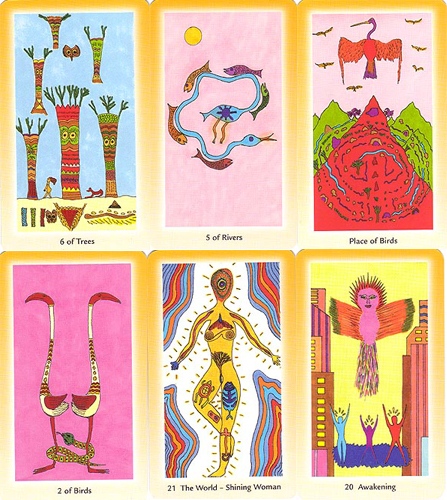
Furthermore, Pollack’s use of "real-world" mysticism—grounded in actual Tarot and Kabbalistic practice—elevated the book from generic fantasy to a work of "semiotic magic." She demonstrated that the superhero genre could be a vessel for profound spiritual and ontological exploration.
In the final assessment, Pollack’s Doom Patrol is a testament to the power of empathy. By shifting the focus from the "what" of the superpowers to the "who" of the people wielding them, she created a narrative space where the broken, the weird, and the "unnatural" were not just tolerated, but celebrated. She taught readers that even at the end of the world, there is a place for found family, and that the most powerful magic of all is the courage to be oneself in a world that demands order.