Deathbringer Unleashed: A Grim New Chapter for Tabletop RPGs Launches on Backerkit, Featuring a Star-Studded Creative Conclave
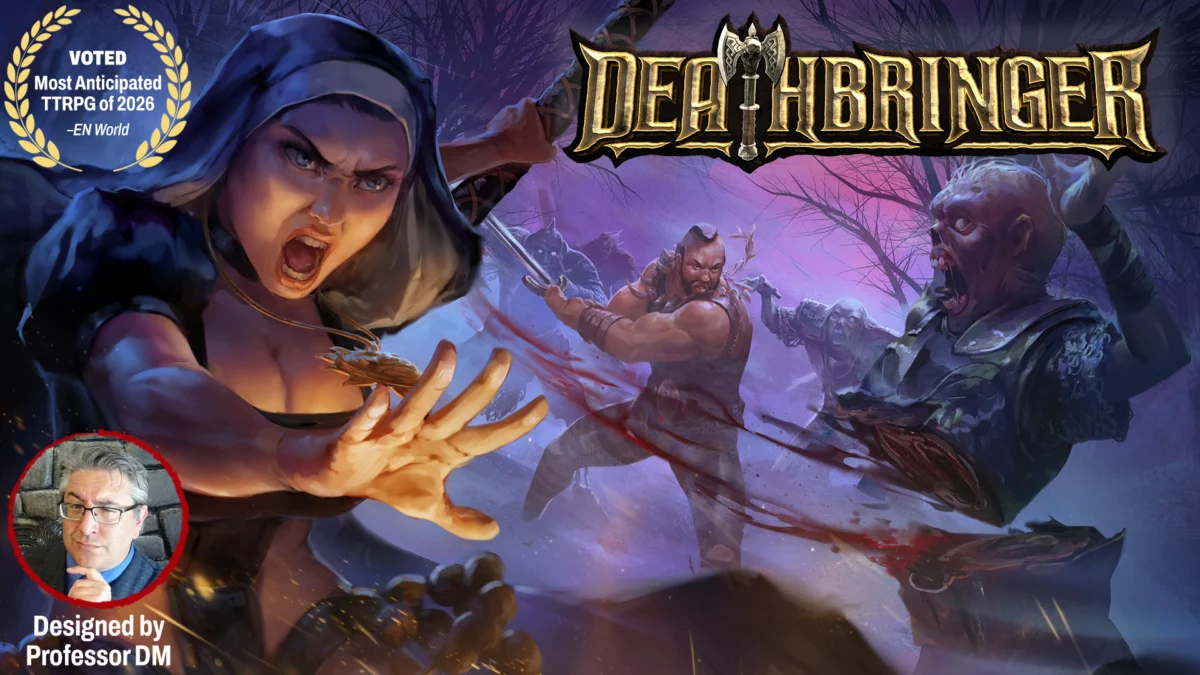
[CITY, STATE] – [DATE] – The highly anticipated tabletop role-playing game (TTRPG), Deathbringer, a brainchild of renowned game designer Dan De Fazio (known to the community as Professor DM) and Roll For Combat, has officially launched its crowdfunding campaign on Backerkit. Heralded as EN World’s Most Anticipated TTRPG of 2026, Deathbringer promises a brutal, fast-paced, and profoundly impactful gaming experience, distinguishing itself with a unique philosophy where death is not merely an end, but an intrinsic and meaningful part of the unfolding narrative.
The campaign’s launch marks a pivotal moment for a game that has been generating significant buzz within the TTRPG community. Deathbringer is designed to be fully compatible with Shadowdark and seamlessly integrate into any Old School Revival (OSR) system, offering a fresh yet familiar approach to grim fantasy adventures. Its core tenets — "Combat is fast. Victories are earned. Death is real." — encapsulate a design ethos aimed at delivering visceral thrills and genuine consequences.
Adding to the game’s formidable appeal, Professor DM has assembled a "dark conclave" of celebrated adventure writers to contribute to Deathbringer‘s inaugural modules. Among these esteemed creators is Justin Alexander, a highly respected voice in TTRPG design known for his work on The Alexandrian Remix and his incisive commentary on adventure structure. Alexander, who expressed his profound excitement about joining the project, will be penning an adventure for the game, lending his narrative expertise to its dark tapestry.
Main Facts
Deathbringer Unleashed: A New Era of Brutal TTRPG Combat
Deathbringer, the brainchild of Dan De Fazio, widely recognized as Professor DM, in collaboration with the publishing powerhouse Roll For Combat, has officially opened its doors to backers on the crowdfunding platform Backerkit. This launch culminates months of escalating anticipation, which saw the game crowned EN World’s Most Anticipated TTRPG of 2026, a testament to its compelling premise and the reputation of its creators.
At its heart, Deathbringer is conceived as a brutal new entry into the tabletop RPG landscape, prioritizing savage combat and high stakes. The game’s design philosophy deliberately eschews the typical TTRPG approach to character demise, instead weaving death into the very fabric of the player’s journey. This innovative perspective promises to transform moments of defeat from frustrating endings into significant narrative developments, imbuing each character’s struggle and eventual fate with profound weight.
The game’s broad compatibility is another key feature, designed to appeal to a wide spectrum of players. By being fully compatible with Shadowdark and easily adaptable to virtually any OSR system, Deathbringer lowers the barrier to entry for veterans of these beloved genres while offering a fresh mechanical and thematic experience. This cross-compatibility ensures that existing collections of modules and player knowledge can be leveraged, making Deathbringer an attractive addition rather than a complete overhaul for many gaming groups.
Professor DM has further elevated the project by inviting a diverse and talented group of adventure writers to contribute. This "dark conclave" includes industry luminaries and rising stars, ensuring a rich variety of storytelling voices within the Deathbringer universe. Justin Alexander, whose contributions to TTRPG theory and adventure design are widely respected, stands out among these collaborators. His involvement signals a commitment to not only innovative mechanics but also deeply engaging and well-crafted narrative experiences, promising adventures that will challenge players both strategically and emotionally. The collective expertise of this writing team is poised to deliver a game world that is as meticulously crafted as it is unforgiving, establishing Deathbringer as a significant force in the evolving landscape of brutal fantasy TTRPGs.
Chronology
From Concept to Campaign: The Genesis of Deathbringer
The journey of Deathbringer from a nascent idea to a fully-fledged crowdfunding phenomenon is a narrative steeped in the passion and vision of its creator, Dan De Fazio, known universally as Professor DM. De Fazio, a prominent figure in the TTRPG content creation sphere, has cultivated a dedicated following through his engaging online presence, offering insights into game design, dungeon mastering techniques, and a distinctive, no-nonsense approach to role-playing. His reputation for crafting challenging, memorable encounters and his advocacy for games that demand player ingenuity and tactical prowess laid the groundwork for a project like Deathbringer.
The initial whispers of Deathbringer began circulating within the TTRPG community several months prior to its official announcement. These early teasers, often subtle hints dropped during Professor DM’s streams or social media interactions, quickly ignited curiosity. Fans familiar with his design philosophy speculated about a game that would truly embody the "grim and perilous" aesthetic, pushing boundaries beyond conventional fantasy tropes. This pre-launch buzz was carefully managed, building an organic sense of anticipation as details slowly emerged, painting a picture of a game that promised to be both familiar in its OSR roots and revolutionary in its approach to player agency and consequence.
The project gained significant momentum when Roll For Combat, a well-regarded publisher known for their high-quality production and commitment to innovative TTRPGs, officially partnered with Professor DM. This collaboration lent immediate credibility and production muscle to Deathbringer. Roll For Combat’s track record of successful campaigns and polished products assured potential backers that the ambitious vision of Deathbringer would be realized with professional execution. Their involvement signaled a serious investment in the game’s development, from art direction to mechanical refinement, transforming it from a promising concept into a tangible, impending release.
The pinnacle of this escalating anticipation arrived with the announcement that Deathbringer had been crowned EN World’s Most Anticipated TTRPG of 2026. This prestigious accolade, voted upon by a broad swathe of the TTRPG community, served as a powerful validation of the game’s potential. It elevated Deathbringer from a niche project to a mainstream contender, signaling to the wider TTRPG audience that something truly significant was on the horizon. The award not only confirmed the community’s excitement but also amplified it, drawing in new eyes and solidifying expectations for a game that promised to redefine brutality and consequence in the genre.
With the stage meticulously set by Professor DM’s foundational vision, Roll For Combat’s developmental expertise, and the undeniable endorsement of the TTRPG community, the crowdfunding campaign for Deathbringer officially launched on Backerkit. This transition from a highly anticipated concept to an active funding drive marks the most crucial phase in the game’s lifecycle, inviting players to directly contribute to its realization and become part of its brutal, unforgiving world from the very beginning.
Supporting Data
Mechanics of Mayhem: Diving Deep into Deathbringer‘s Core Systems
Deathbringer is built upon a foundation of mechanics designed to deliver its promise of fast, savage combat where death holds genuine meaning. Unlike many TTRPGs where character death is often a frustrating reset or a rare, catastrophic event, Deathbringer integrates it as a core narrative driver, a rite of passage, or even a source of power.
At the heart of its brutal combat system is a streamlined initiative and action economy that keeps players engaged and decisions impactful. Combat rounds are designed to be quick, minimizing downtime and maximizing the tension of each exchange. Damage output is generally higher, and character hit points (HP) are often lower or more volatile than in traditional systems, leading to a constant sense of peril. The game may introduce a "Wound System" where critical hits or severe damage don’t just reduce HP but inflict lasting, debilitating injuries that can accrue, affecting stats, actions, or even leading to permanent disabilities if not properly addressed. This means even surviving a battle can leave a character scarred, physically and mentally, adding depth to their journey.
The most distinctive aspect is the "Death is Part of the Journey" philosophy. This is not simply a euphemism for frequent character demise; it implies a deeper mechanical and narrative integration. When a character falls in Deathbringer, it might trigger a "Reaper’s Bargain" mechanic. Instead of instant oblivion, the character might have a chance to strike a deal with a shadowy entity or cosmic force, granting them a temporary reprieve, a burst of supernatural power, or a crucial moment to complete a task, but always at a terrible, long-term cost – perhaps a permanent physical corruption, a debt owed, or a dark pact that influences their future and the fate of their companions.
Alternatively, death could lead to a "Legacy System." A fallen hero’s final actions, their sacrifices, or even their lingering spirit could bestow boons or curses upon the surviving party members or even the next character the player creates. This ensures that a character’s death contributes to the ongoing narrative and party progression, making each demise a significant event rather than a mere character sheet replacement. For players who prefer quicker re-entry into the action, Deathbringer will likely feature extremely fast and intuitive character generation rules, allowing players to roll up a new adventurer and rejoin the fray with minimal interruption, maintaining the game’s high pace. Furthermore, the game might explore "Undying" mechanics, where characters who die under specific circumstances might return as partially undead, gaining new, grim powers at the cost of their former humanity, or even evolving into different forms of monstrous beings, blurring the lines between player and foe.
OSR Compatibility & Shadowdark Integration
Deathbringer‘s design ethos consciously embraces the principles of the Old School Revival (OSR) movement: player skill over character power, emergent gameplay, high lethality, and a focus on exploration and problem-solving. Its compatibility with Shadowdark, a modern OSR darling known for its minimalist rules and focus on dangerous dungeon crawls, ensures a seamless transition for a significant portion of its target audience. This means players can easily port over their understanding of core mechanics, monster stats, and adventure structures from Shadowdark or other OSR systems, allowing them to dive straight into Deathbringer‘s unique themes without a steep learning curve. The game likely utilizes familiar dice mechanics and attribute systems, while introducing its distinctive combat and death mechanics as an overlay, enriching rather than replacing the OSR experience. This approach provides a solid, accessible foundation for the game’s brutal innovation.
Art and Aesthetics
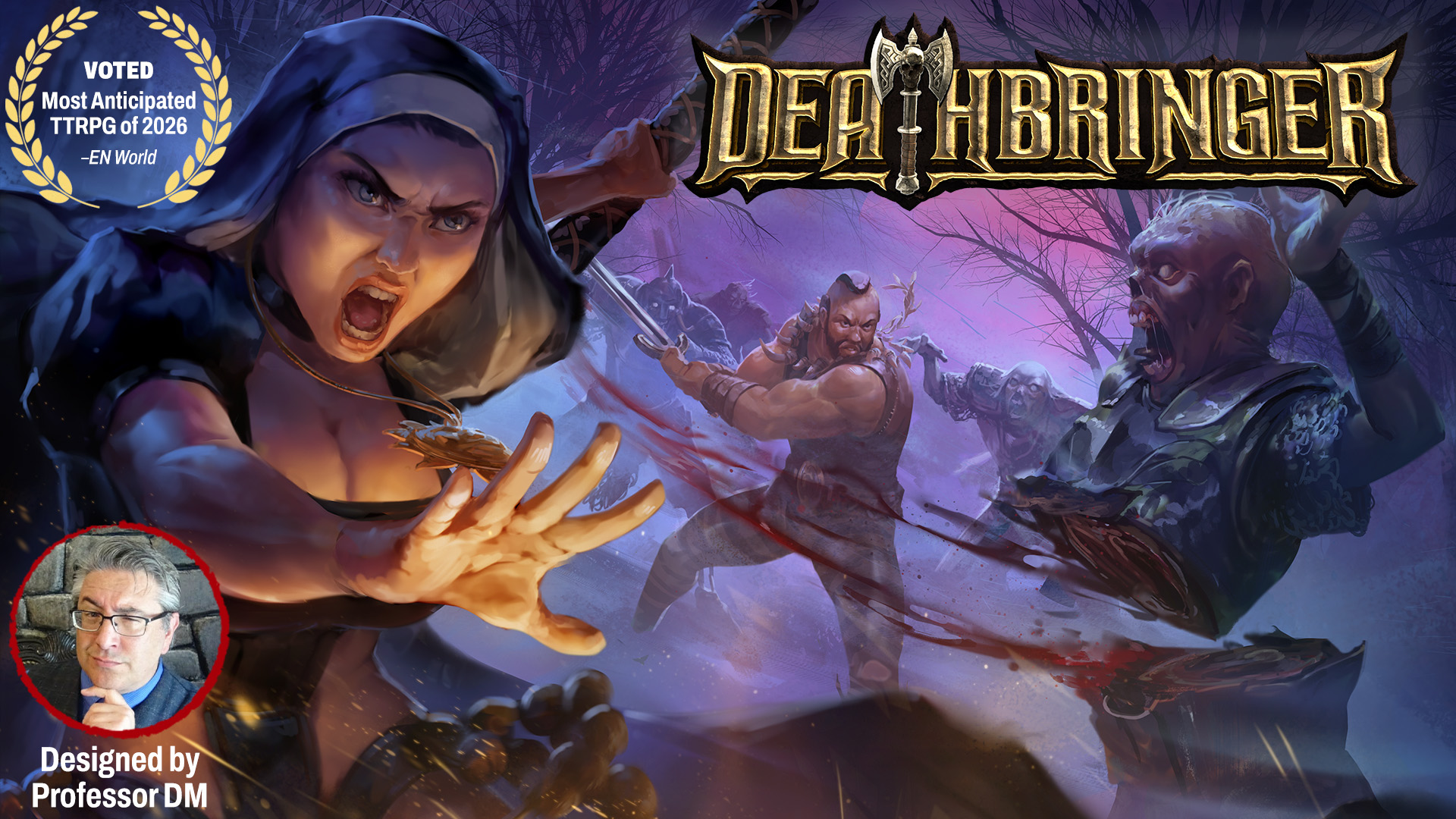
The visual identity of Deathbringer, as hinted by the campaign imagery, leans heavily into a grimdark, visceral aesthetic. Images like the "Witch Hunter" and the general "Deathbringer" artwork evoke a world steeped in gothic horror and gritty fantasy. Expect stark contrasts, shadowy figures, and expressions of grim determination or raw agony. The art likely features characters clad in practical, battle-worn armor, wielding heavy, unrefined weapons, against backdrops of desolate landscapes, ancient ruins, and foreboding dungeons. This visual language reinforces the game’s themes of brutality, survival, and the ever-present shadow of death, immersing players in a world where every victory is hard-won and every defeat leaves a scar.
The "Dark Conclave" of Writers
The involvement of a "dark conclave" of adventure writers is a significant draw, promising a diverse array of challenges and narratives for Deathbringer.
-
Justin Alexander: His inclusion is a major coup. Alexander is renowned for his analytical approach to adventure design, exemplified in The Alexandrian Remix blog, where he dissects and reconfigures published modules to enhance player agency and emergent gameplay. His adventures are often lauded for their intricate plotting, interconnected elements, and emphasis on robust sandboxes. For Deathbringer, Alexander is expected to craft an adventure that is not only challenging but also structurally sophisticated, providing multiple avenues for player interaction and consequences, aligning perfectly with the game’s high-stakes philosophy. His unique talent for creating dynamic scenarios will ensure that players face not just monsters, but complex situations where their choices truly matter, especially in the face of death.
-
Elara Vance: Known for her work in psychologically intense horror TTRPGs and grimdark fantasy, Vance brings a unique talent for crafting narratives that delve into the moral ambiguities and psychological tolls of a brutal world. Her adventures often feature intricate cults, ancient evils, and scenarios that test the characters’ sanity as much as their combat prowess. For Deathbringer, Vance is expected to contribute a module that explores the darker facets of the game’s world, perhaps dealing with the consequences of "Reaper’s Bargains" or the corrupting influence of the game’s unique death mechanics, pushing players to confront not just physical threats but also existential dread.
-
Marcus "The Butcher" Thorne: A veteran of the old-school dungeon crawl, Thorne is celebrated for his intricate, deadly dungeon designs and his no-holds-barred approach to monster encounters. His adventures are often sprawling, labyrinthine affairs filled with cunning traps, environmental hazards, and formidable foes that demand tactical thinking and careful resource management. Thorne’s contribution to Deathbringer is anticipated to be a quintessential, unforgiving dungeon delve, packed with lethal encounters and secrets that reward careful exploration and punish recklessness, truly embodying the "victories are earned" motto.
-
Seraphina "The Raven" Night: Seraphina has made a name for herself by blending evocative prose with challenging encounters, creating adventures that feel both epic and deeply personal. Her modules often explore themes of lost civilizations, forgotten magic, and the tragic heroes who navigate such worlds. For Deathbringer, Night could contribute an adventure that highlights the "death is part of the journey" aspect, perhaps a quest where the characters must guide the soul of a fallen hero, confront the consequences of a past death, or even delve into a realm where the lines between life and death are blurred, offering a more nuanced exploration of the game’s central theme.
This diverse lineup ensures that Deathbringer will offer a rich tapestry of adventures, each challenging players in different ways, from tactical combat and intricate dungeon crawling to psychological horror and profound narrative choices.
Backerkit Campaign Highlights
The Backerkit campaign for Deathbringer is structured to engage a wide range of TTRPG enthusiasts, offering various pledge levels designed to cater to different budgets and desires. Initial funding goals are set to secure the core rulebook’s production, covering layout, editing, and final art. Beyond this, a series of ambitious stretch goals have been outlined, promising to expand the Deathbringer universe significantly. These potential unlocks include:
- Expanded Monster Manuals: Introducing a wider array of brutal creatures, unique adversaries, and terrifying entities to populate the world.
- New Character Classes and Archetypes: Offering more ways for players to carve their niche in the unforgiving world, potentially including classes directly tied to the unique death mechanics (e.g., a "Reaper-Bound" or "Undying Ascendant").
- Lore Compendiums: Diving deeper into the grim history, forgotten empires, and dark deities of the Deathbringer setting.
- Digital Tools and VTT Integration: Providing assets for virtual tabletop platforms, including tokens, maps, and digital character sheets.
- Custom Dice Sets: Exclusive Deathbringer-themed dice, featuring unique iconography.
- Hardcover Adventure Anthologies: Compiling the adventures from the "dark conclave" writers into a premium physical book.
Pledge levels typically start with digital access to the core rules, escalating to physical copies, limited edition versions, and bundles that include all unlocked stretch goals and exclusive merchandise. Early backer incentives, such as discounted prices or unique digital bonuses, are also expected to reward those who jump in early, fueling the initial momentum of the campaign. The success of the campaign will not only fund the initial vision but also unlock a wealth of supplementary content, ensuring Deathbringer grows into a comprehensive and deeply immersive TTRPG experience.
Official Responses
Voices from the Crypt: Creators and Collaborators Speak Out
The launch of Deathbringer on Backerkit has elicited enthusiastic responses from its core creators and esteemed contributors, each voice adding a unique perspective to the excitement surrounding this grim new TTRPG.
Dan De Fazio (Professor DM), the visionary behind Deathbringer, shared his profound satisfaction at seeing his long-held concept come to fruition: "This is a dream realized, years in the making. Deathbringer is more than just a game; it’s a philosophy. It’s about earning your victories, facing genuine consequences, and understanding that the narrative doesn’t end when a character falls. In fact, that’s often when the most compelling stories truly begin. The community’s response has been overwhelming, and the EN World award was an incredible validation. We’re not just making a game; we’re crafting an experience that challenges players to think differently about heroism, sacrifice, and the very nature of death in a fantasy world. I can’t wait for everyone to delve into the brutality."
A spokesperson from Roll For Combat emphasized the publisher’s commitment to delivering a high-quality product that lives up to the hype: "Partnering with Dan on Deathbringer has been an exhilarating journey. We recognized the immense potential in his vision from the outset, and our team has been dedicated to bringing that vision to life with the highest production values. The game’s unique mechanics, combined with its robust OSR compatibility, make it a truly special project. We believe Deathbringer will resonate deeply with players who crave a more impactful, visceral, and genuinely challenging TTRPG experience. We’re incredibly proud of what we’re building and excited to support the community through this campaign and beyond."
Justin Alexander, whose inclusion in the "dark conclave" is a significant highlight, expressed his personal enthusiasm for the project: "I’ve been looking forward to Deathbringer for a long time now, and so I was absolutely thrilled when Dan invited me to join the party! It’s an incredible honor to be invited to join these creators. Professor DM’s approach to game design, particularly his embrace of consequence and the inherent drama of high stakes, aligns perfectly with my own philosophy. I’m excited to contribute an adventure that not only challenges players but also leverages Deathbringer‘s unique mechanics to tell a truly memorable and impactful story. This game has the potential to shake things up in a fantastic way."
Elara Vance, acclaimed for her grimdark narrative modules, shared her perspective on the game’s thematic depth: "What drew me to Deathbringer was its unflinching gaze into the abyss. It’s not just about fighting monsters; it’s about the psychological and moral toll of living in a world where death is a constant, meaningful presence. My adventure aims to explore the shadows cast by the Reaper’s Bargain, forcing players to confront their own darkness and the difficult choices that define true survival."
Marcus "The Butcher" Thorne, the veteran dungeon designer, highlighted the game’s dedication to challenging gameplay: "Finally, a game that doesn’t pull its punches! Deathbringer is a breath of fresh, albeit deadly, air for those of us who appreciate genuine challenge. My contribution will be a dungeon designed to test every ounce of a player’s wit, tactics, and courage. There are no easy victories here, only earned triumphs, and the occasional glorious, meaningful demise."
Seraphina "The Raven" Night, known for her evocative storytelling, spoke to the narrative possibilities of Deathbringer‘s unique premise: "The concept of death being a ‘journey’ rather than an end opens up incredible narrative pathways. It allows for stories of profound sacrifice, redemption, and even transformation. My adventure will delve into the echoes left by the fallen, exploring how a character’s ultimate fate can shape the destiny of others, long after they’ve drawn their last breath. It’s a powerful, resonant theme, and I’m thrilled to explore it within Deathbringer."
These collective statements underscore a shared vision for Deathbringer as a groundbreaking TTRPG that prioritizes impactful gameplay, deep narrative engagement, and a refreshing commitment to consequence, promising an unforgettable experience for all who dare to enter its brutal world.
Implications
Reshaping the Landscape of OSR and Beyond
The launch of Deathbringer carries significant implications for the tabletop role-playing game landscape, particularly within the burgeoning Old School Revival (OSR) movement and the broader fantasy TTRPG community. Its bold assertion that "death isn’t the end – it’s part of the journey" directly challenges conventional TTRPG design, where character death is often treated as a failure state to be avoided at all costs. By integrating death as a narrative catalyst and mechanical opportunity, Deathbringer could inspire a new wave of TTRPGs that explore consequence and player legacy in more profound ways.
For the OSR scene, Deathbringer represents a potent evolution. While OSR games are already known for their lethality, Deathbringer refines this by making death meaningful rather than merely punitive. Its compatibility with Shadowdark and other OSR systems positions it as a bridge between established preferences and innovative mechanics. It could invigorate OSR play by offering a fresh thematic lens and a new set of tools for GMs to create truly memorable, high-stakes campaigns. This blend of familiarity and novelty could attract both seasoned OSR veterans seeking new challenges and players new to the movement, drawn by the intriguing premise.
Beyond OSR, Deathbringer might signal a broader trend towards TTRPGs that embrace difficulty and genuine risk. In an industry often dominated by power fantasies and heroic sagas, a game that celebrates earned victories and the profound weight of sacrifice stands out. It could encourage designers to experiment more with mechanics that tie character progression and world state directly to the consequences of player actions, including the ultimate consequence of death. This could lead to richer, more emotionally resonant gaming experiences across the board.
The involvement of a "dark conclave" of established and respected writers, including Justin Alexander, also sets a precedent. It demonstrates a commitment to not just mechanical innovation but also high-quality adventure design from diverse creative voices. This collaborative approach could become a model for future TTRPG projects seeking to offer a wide array of narrative styles within a unified game system, ensuring longevity and replayability.
Commercially, the success of the Deathbringer Backerkit campaign will be a strong indicator of the market’s appetite for games that push boundaries. A well-funded campaign, particularly one that unlocks numerous stretch goals, would solidify Deathbringer‘s position as a major new player. Its strong reception as EN World’s Most Anticipated TTRPG of 2026 suggests a high likelihood of commercial success, potentially translating into a vibrant player community eager to share their brutal tales, create fan-made content, and engage in actual play streams that showcase the game’s unique dynamics.
Looking ahead, Deathbringer‘s long-term vision could include a rich ecosystem of expansions: new lore books detailing the grim realms and their inhabitants, additional character options, and perhaps even digital adaptations or tie-in fiction that further explore its unique themes. The game has the potential to become a foundational text for a new subgenre of brutal fantasy TTRPGs, fostering a community that values grit, narrative consequence, and the profound journey that unfolds when death is truly real.
In conclusion, Deathbringer is poised to do more than just launch a crowdfunding campaign; it is set to unleash a new philosophy of play that challenges players, enriches narratives, and potentially reshapes the very definition of success and failure in the world of tabletop role-playing games. The crypt has opened, and a new era of brutal, meaningful adventure awaits.