
The Architecture of Metamorphosis: Kate Meissner’s Radical Exploration of the Maternal Body at Lyles & King
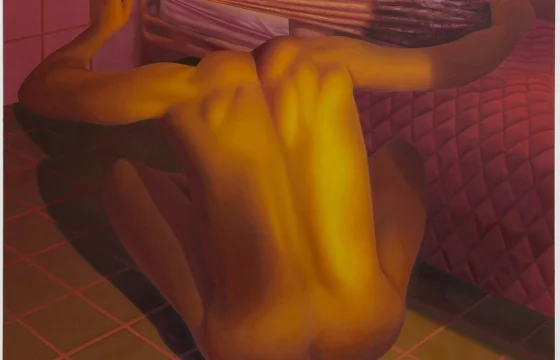
NEW YORK — In the evolving landscape of contemporary figurative painting, few subjects remain as visceral and politically charged as the transformation of the human form through the lens of biological labor. Lyles & King, a gallery renowned for its commitment to boundary-pushing contemporary art, has announced a solo presentation of new works by Los Angeles-based artist Kate Meissner. On view in the gallery’s project space through April 4, the exhibition marks a significant milestone for Meissner, offering a profound meditation on the elasticity of the human body and the primal, often overlooked, mammalian realities of childbearing.
Main Facts: A New Vision of Biological Transformation
The exhibition features a series of new paintings that serve as a direct response to Meissner’s personal journey through pregnancy and the subsequent birth of her first child in the past year. Eschewing the traditional, often idealized depictions of motherhood that have permeated art history for centuries, Meissner focuses on the "elasticity" of the physical self—the body’s ability to stretch, distort, and eventually reform.
Central to the exhibition is the concept of "metamorphosis." Meissner’s work posits that the pregnant body is not merely a vessel, but a site of radical physiological change that bridges the gap between the human and the animal. In her artist statement, Meissner emphasizes the "underlying animalistic and mammalian nature" of the birthing process, a theme that challenges the sterilized, clinical narratives often associated with modern obstetrics.
The exhibition is hosted at Lyles & King’s New York location, a gallery that has historically championed artists who engage with the body, identity, and the complexities of the human condition. By placing Meissner’s work in their project space, the gallery provides an intimate environment for viewers to engage with the raw, often unsettling beauty of her canvases.
Chronology: From Sacramento to the Global Stage
To understand the weight of Meissner’s current exhibition, one must look at the rapid ascent of her career over the last decade. Born in 1995 in Sacramento, California, Meissner’s early environment provided a backdrop of West Coast light and expansive geography that would later influence her sense of scale and color.
- 2013–2017: Formative Years and Early Education
Meissner’s academic journey began with a rigorous focus on the fundamentals of painting. During her undergraduate years, she developed a keen interest in the history of the grotesque and the sublime, exploring how the human figure can be distorted to convey emotional and psychological depth. - 2018–2020: The Yale MFA and Stylistic Refinement
The most pivotal chapter in Meissner’s chronology is her tenure at Yale University. As a graduate student in one of the most prestigious MFA programs in the world, she was immersed in a culture of high-level critical discourse. It was at Yale that her work began to shift toward a more nuanced exploration of the body as a topographical landscape. Her graduation coincided with a burgeoning interest from international collectors and institutions. - 2021–2023: Institutional Recognition and Relocation
Following her MFA, Meissner relocated to Los Angeles, a city whose vibrant contemporary art scene allowed her to expand the physical dimensions of her work. During this period, her paintings were acquired by several major institutions, including the Denver Art Museum and the Xiao Museum of Contemporary Art in Rizhao, China. This era was defined by her transition from a "rising star" to an established voice in the international art dialogue. - 2023–2024: Motherhood and the "Metamorphosis" Series
The birth of her first child last year served as the catalyst for the current body of work on view at Lyles & King. This period represents a departure from her previous abstract-leaning figures toward a more grounded, yet still surreal, exploration of biological reality.
Supporting Data: Institutional Pedigree and Market Presence
Meissner’s significance in the current art market is backed by a robust portfolio of institutional acquisitions and global representation. Despite her relatively young age, her work has crossed borders, finding homes in diverse cultural contexts.
Permanent Collections and Global Reach
The artist’s work is currently held in several high-profile permanent collections, which serves as a metric for her long-term cultural value:
- Denver Art Museum (Denver, CO): A major American institution that has recently focused on diversifying its contemporary figurative holdings.
- Xiao Museum of Contemporary Art (Rizhao, CN): Highlighting Meissner’s appeal in the Asian market, particularly among institutions looking for Western artists who bridge the gap between abstraction and figuration.
- The Mer Collection (Madrid, ES): One of Spain’s most prestigious private collections, known for its rigorous selection of contemporary masters.
- Abroms-Engel Institute for the Visual Arts (Birmingham, AL): A leading university-affiliated museum that focuses on innovative and experimental contemporary art.
The Yale Influence
The "Yale MFA" designation remains one of the most significant data points in the contemporary art world. Graduates of the program often see a 40–60% higher rate of gallery representation within two years of graduation compared to other MFA programs. Meissner’s inclusion in this cohort, combined with her representation by Lyles & King—a gallery known for its presence at major fairs like Art Basel and Frieze—positions her at the top tier of emerging painters.
Official Responses: The Artist’s Perspective and Gallery Vision
In her written reflections for the exhibition, Meissner provides a rare glimpse into the psychological framework behind the paint. She describes the work as a "meditation on physiological transformation." This language suggests a process that is as much about internal processing as it is about external observation.
"These works are an exploration of the human body’s elasticity and capacity to metamorphose," Meissner writes. "Informed by my own experience of pregnancy… these paintings are a meditation on physiological transformation and the body’s underlying animalistic and mammalian nature."
Critics have noted that Meissner’s approach aligns with a broader "Maternal Turn" in contemporary art, where artists are reclaiming the narrative of birth from the male-dominated gaze of the past. By focusing on the "mammalian" aspect, Meissner strips away the sentimentality often forced upon images of motherhood, replacing it with a sense of raw power and biological inevitability.
Lyles & King’s decision to feature Meissner in their project space is an "official response" to the growing demand for art that tackles the complexities of the body. The gallery has stated that their project space is reserved for "focused presentations" that allow for a deep dive into specific thematic concerns, indicating that they view Meissner’s exploration of the maternal body as a critical conversation for the current moment.
Implications: The Future of the Maternal Body in Art
The implications of Meissner’s exhibition extend far beyond the walls of the Lyles & King project space. Her work contributes to a vital and ongoing shift in how society views the female body and the labor of reproduction.
1. Challenging the "Aesthetic of the Ideal"
For centuries, the "Madonna and Child" archetype dominated the depiction of motherhood, emphasizing purity and stillness. Meissner’s work implies a rejection of this stillness. By focusing on "elasticity," she highlights the movement, the pain, and the radical reshaping of the self. This has implications for how future generations of artists will approach the body, moving toward an aesthetic of "honest biology" rather than "idealized form."
2. The Intersection of Art and Biology
Meissner’s focus on the "mammalian" nature of birth bridges the gap between art and science. It suggests that the human experience is inextricably linked to our animal origins—a concept that gains more traction as we navigate a world increasingly dominated by digital and artificial experiences. Her paintings remind the viewer of the "analog" reality of our existence: we are flesh, we stretch, and we transform.
3. Market Trends and the Value of the "Female Gaze"
The success of artists like Meissner, supported by institutional acquisitions and high-profile gallery shows, indicates a permanent shift in the art market. There is a growing "collector appetite" for work that offers an authentic, female-centric perspective on life’s major transitions. As Meissner’s career continues to evolve, she is likely to become a central figure in the dialogue surrounding the "New Figurative" movement, where the body is used as a tool to explore complex psychological states.
Conclusion
Kate Meissner’s exhibition at Lyles & King is more than a display of new paintings; it is a profound statement on the resilience and mutability of the human form. By leaning into the "animalistic" and "mammalian" aspects of her own experience, Meissner has created a body of work that is both deeply personal and universally resonant. As the exhibition continues through April 4, it stands as a testament to the power of painting to capture the most fleeting and transformative moments of human existence. For the art world, Meissner remains an artist to watch—a painter who is not afraid to look into the raw, stretching reality of what it means to bring life into the world.




Leave a Comment