Talisman Reborn: Avalon Hill Unveils Streamlined 5th Edition of Fantasy Classic
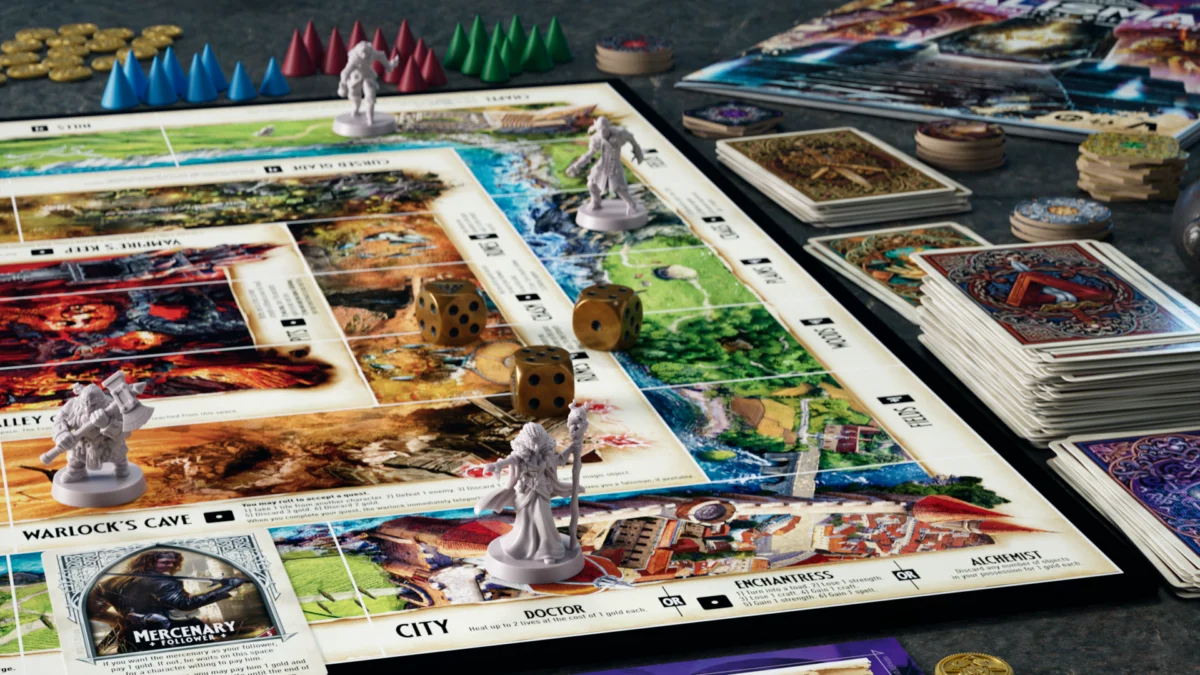
The iconic fantasy adventure board game, Talisman, is set to embark on a new quest with the announcement of its 5th Edition, officially titled Talisman: The Magical Quest Board Game – 5th Edition. Published by Avalon Hill, a studio renowned for titles like Betrayal at House on the Hill, this new iteration promises a revitalized experience for both veteran adventurers and newcomers alike. Slated for release on August 1st with a retail price of $60 (£47), the game aims to blend its cherished legacy with contemporary accessibility, featuring updated artwork, components, and a "streamlined" approach to its classic gameplay.
A New Chapter Begins: Talisman 5th Edition Announced
The anticipation among the board gaming community is palpable following the revelation of Talisman: The Magical Quest Board Game – 5th Edition. This announcement signals a significant moment for one of the genre’s most enduring titles, which has captivated players for over four decades with its unique blend of exploration, character progression, and competitive fantasy adventure. Avalon Hill, stepping into the esteemed shoes of previous publishers, is poised to inject new life into the beloved franchise, ensuring its continued relevance in an ever-evolving market.
The Core Quest: A Race for the Crown of Command
At its heart, Talisman has always been about a grand, perilous journey towards ultimate power. Two to six players embody a diverse cast of fantasy archetypes, each with unique strengths and weaknesses, as they traverse a multi-ringed game board. Their ultimate objective: to reach the perilous center of the board and claim the mythical Crown of Command. This quest is far from simple, demanding strategic choices, successful skill checks, and often, brutal confrontations with monstrous foes and rival players. As adventurers move across the board, they encounter a myriad of events, acquire potent equipment, learn powerful spells, gather loyal allies, and engage in skirmishes that shape their destiny. The core loop of enhancing one’s character, overcoming challenges, and outmaneuvering opponents remains the magnetic force that has drawn players back to the world of Talisman for generations.
Streamlined for a New Generation
One of the most intriguing promises of the 5th Edition is its "streamlined" gameplay. While details remain somewhat sparse, this suggests a concerted effort by Avalon Hill to refine the ruleset, making the game more approachable without sacrificing its inherent depth or the classic Talisman feel. In an era where board games can often be perceived as overly complex or intimidating for casual players, a streamlined approach could be the key to broadening Talisman’s appeal. This could manifest in clearer rules explanations, simplified combat resolutions, or a more intuitive progression system, all designed to reduce friction and enhance the flow of play, allowing players to focus more on the narrative and strategic decisions rather than getting bogged down in intricate mechanics.
A Journey Through Time: The Legacy of Talisman
Talisman’s journey is a rich tapestry woven through the annals of board game history, reflecting changes in design philosophy, publishing trends, and player expectations. Its longevity is a testament to the fundamental appeal of its premise and mechanics.
The Genesis with Games Workshop (1983-2008)
The story of Talisman begins in 1983 with its original publication by Games Workshop, the now-legendary company behind the Warhammer and Warhammer 40,000 miniature wargames. Designed by Robert Harris, the first edition of Talisman quickly established itself as a cornerstone of fantasy adventure gaming. Released during a boom period for tabletop role-playing games like Dungeons & Dragons, Talisman offered a more structured, board-game-centric approach to fantasy exploration and character development.
The original game captured the imagination of players with its vibrant, often unforgiving, world. Choosing from iconic characters such as the Warrior, the Monk, or the Sorceress, players would embark on a perilous journey across the Outer, Middle, and Inner Regions of the board, each presenting increasingly difficult challenges. The reliance on dice rolls and card draws for encounters introduced a significant element of chance, leading to unpredictable and often dramatic outcomes. This blend of simple rules, emergent narrative, and competitive player interaction quickly garnered a dedicated following.
Games Workshop supported Talisman with numerous expansions throughout its tenure, introducing new characters, spells, objects, and regions, significantly expanding the game’s scope and replayability. These expansions, such as The Dungeon, The City, and The Dragon, became highly sought after, solidifying Talisman’s reputation as a game with immense depth and a vast, unfolding world. The game’s straightforward objective – reaching the Crown of Command – was juxtaposed with a rich variety of paths and encounters, ensuring that no two games felt entirely alike. For many, the first edition of Talisman served as a gateway into the broader world of fantasy gaming, leaving an indelible mark on their formative years.
Fantasy Flight Games’ Era of Expansion (2008-Present)
In 2008, the publishing rights for Talisman transitioned to Fantasy Flight Games (FFG), a company celebrated for its high-quality components, intricate designs, and expansive narratives, notably behind the popular Star Wars Unlimited trading card game. FFG’s acquisition marked a new chapter for Talisman, beginning with the release of a revised Fourth Edition. This edition meticulously refined the rules, updated the artwork, and significantly enhanced the production quality, bringing the game up to modern board gaming standards while remaining faithful to the original spirit.
FFG’s tenure was characterized by an ambitious release schedule of expansions, echoing and often surpassing the scope of Games Workshop’s earlier efforts. Expansions like The Reaper, The Frostmarch, The Sacred Pool, and The Dragon revisited classic themes and introduced entirely new mechanics, characters, and regions. These additions broadened the strategic possibilities, deepened the lore, and introduced new ways to interact with the game world and other players. FFG’s commitment to robust component quality, including detailed miniatures and lavish card art, further elevated Talisman’s aesthetic appeal and immersive qualities.
Under FFG, Talisman also successfully ventured into the digital realm, with several video game adaptations bringing the classic experience to new platforms and audiences. These digital versions, developed by Nomad Games, proved popular, allowing players to enjoy the game solo or with friends online, further cementing Talisman’s place in contemporary gaming culture. Fantasy Flight Games played a crucial role in sustaining Talisman’s popularity and introducing it to a new generation of board gamers, demonstrating the enduring appeal of Robert Harris’s original vision.
The Enduring Appeal of a Classic
The continuous evolution and successive editions of Talisman underscore its fundamental appeal. It’s a game that taps into universal fantasies of adventure, heroism, and the pursuit of power. The blend of simple movement mechanics with unpredictable card draws creates a narrative arc that feels organic and player-driven. Each character’s journey is unique, shaped by the encounters they face, the allies they recruit, and the treasures they unearth. The competitive nature, where players can directly challenge and hinder each other, adds a layer of tension and excitement. Talisman remains a beloved classic because it consistently delivers an engaging, narrative-rich experience that is both accessible in its core concept and endlessly replayable through its vast array of characters and encounters.
Deep Dive into the Fifth Edition: What’s New?
The announcement of Talisman: The Magical Quest Board Game – 5th Edition naturally sparks curiosity about the specific changes and enhancements players can expect. Avalon Hill, known for its attention to detail and ability to craft engaging experiences, appears to be approaching this update with a focus on modernization while respecting the game’s venerable heritage.
Avalon Hill Takes the Helm
The choice of Avalon Hill as the publisher for the 5th Edition is a significant one. While the company is perhaps best known in recent times for the highly popular cooperative horror game series Betrayal at House on the Hill, its history stretches back much further, making it one of the oldest and most respected names in board gaming, particularly for its strategic wargames. This dual legacy—both historical strategy and modern narrative-driven games—positions Avalon Hill uniquely to handle Talisman. Their experience with complex systems (from their wargame roots) combined with their proven ability to create thematic, accessible experiences (like Betrayal) suggests a publisher capable of delivering a Talisman that is both strategically sound and captivatingly immersive. This could imply a focus on balancing the traditional elements of Talisman with refinements that enhance its narrative and player interaction, potentially drawing on their expertise in creating memorable, story-rich gameplay moments. The partnership with Wizards of the Coast, as indicated by image credits, further solidifies the pedigree and potential production values of this new edition.
Character Roster: Old Favorites and Fresh Faces
A core element of Talisman’s replayability lies in its diverse roster of playable characters. The 5th Edition will feature 12 distinct characters, including classic archetypes such as a Thief, a Monk, a Warrior, a Ghoul, and a Sorceress. Each character traditionally possesses unique starting statistics (Strength, Craft, Lives, Gold) and special abilities that profoundly influence their playstyle and strategic approach.
For instance, a Warrior might excel in direct combat, relying on high Strength to defeat monsters and challenge other players, while a Sorceress might leverage high Craft to cast powerful spells and navigate challenges with magic. The inclusion of a Ghoul suggests a character with a more unconventional, perhaps even morally ambiguous, path to victory, potentially thriving in darker regions or through unique forms of interaction. This variety ensures that players can experiment with different strategies and provides significant replay value, as the game experience changes dramatically depending on the chosen character. The artwork for these characters, alongside updated miniatures or standees, will undoubtedly be a key factor in drawing players into their roles.
Art and Components: A Visual Refresh
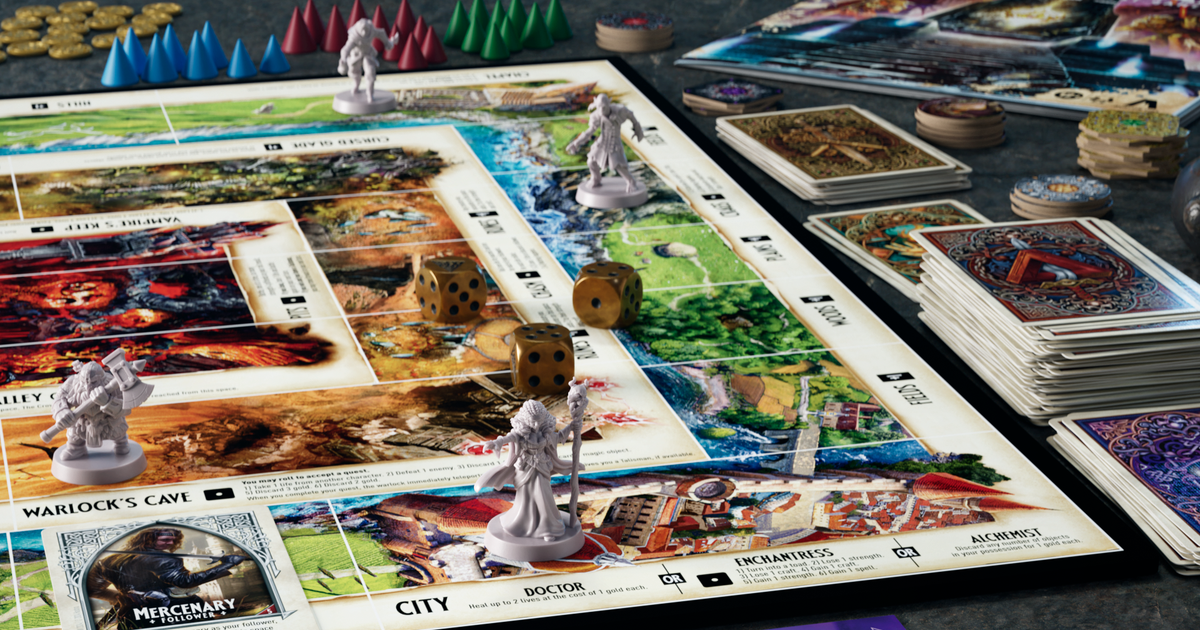
The visual presentation of a board game plays a crucial role in its immersion and appeal. The 5th Edition promises "brand new artwork and updated components," a welcome upgrade for a game that has seen many iterations over the years. This means new illustrations across the entire game, including the board itself, character cards, spell cards, object cards, and, notably, the 100 different adventure cards players will encounter.
High-quality, contemporary artwork can significantly enhance the thematic experience, drawing players deeper into the fantastical world of Talisman. It can make encounters more vivid, treasures more alluring, and the journey more epic. Updated components likely include more durable cards, possibly higher-quality dice, and potentially more detailed character pieces, whether they be standees or miniatures. These aesthetic and tactile improvements are not merely cosmetic; they contribute to the overall enjoyment and perceived value of the game, making the experience more engaging and visually appealing for a modern audience accustomed to high production standards.
The Promise of Accessibility: "Streamlined" Gameplay
The most significant and anticipated change mentioned is the "streamlined" gameplay, aimed at making the game "more accessible to less experienced players." While specific mechanics are yet to be detailed, this could encompass several areas:
- Rule Clarity: Simplifying complex rule interactions, providing clearer examples, and potentially reducing the number of edge cases or exceptions that can bog down gameplay.
- Faster Play: Optimizing turns, combat, or movement to reduce downtime between players, making the overall game flow smoother and quicker. This might involve re-evaluating certain steps of a turn or simplifying decision points.
- Intuitive Progression: Making the path to power and the Crown of Command more intuitive, perhaps by clarifying the requirements for entering inner regions or explaining how different character builds contribute to success.
- Reduced Complexity Creep: Older editions, particularly with numerous expansions, could become quite complex. A streamlined version might aim to distill the core fun of Talisman without the burden of excessive rules overhead, making it easier for new players to learn and teach.
The challenge for Avalon Hill will be to achieve this accessibility without alienating long-time fans who appreciate the strategic depth and sometimes brutal randomness of earlier editions. The balance between simplification and retaining the game’s signature charm and challenge will be key to its success.
Strategic Depth and Random Encounters
Despite the promise of streamlining, the core loop of strategic decision-making and unpredictable encounters is expected to remain intact. Players will still navigate the board’s rings, from the relatively safer Outer Region to the treacherous Inner Region, culminating in the Portal of Power that grants access to the Crown of Command. Along the way, they will face a "rogue’s gallery of monsters," engage in skill checks using their character’s statistics, and potentially challenge other players in combat.
The acquisition of equipment, spells, and allies is crucial for character progression, enabling players to overcome increasingly difficult obstacles. The "Talisman quest" requirement to enter the inner world remains a pivotal objective, demanding players to complete specific tasks before attempting the final ascent. Player-versus-player combat, where losing players are forced to retreat, adds a direct competitive edge, ensuring that interaction between players is not just passive but often confrontational. The first player to reach the Crown of Command gains the ability to eliminate all other players, securing victory in a dramatic showdown. These elements ensure that while the packaging may be new and the rules refined, the heart of Talisman’s strategic depth and adventurous spirit will beat strong.
Official Voices and Anticipation
The launch of a new edition for such a celebrated game naturally brings with it a mix of excitement and scrutiny. While direct quotes from Avalon Hill or Wizards of the Coast regarding the Talisman: The Magical Quest Board Game – 5th Edition are not yet extensively public, the very act of announcing a new edition speaks volumes about their vision and goals.
Publisher’s Vision: Balancing Tradition and Innovation
Avalon Hill, operating under the umbrella of Wizards of the Coast (a subsidiary of Hasbro), is likely approaching this project with a dual objective: to honor the rich legacy of Talisman while simultaneously making it relevant and appealing to a contemporary audience. Their vision would undoubtedly involve preserving the core identity that has captivated millions—the sense of grand adventure, character progression, and competitive player interaction—while addressing areas that might benefit from modern game design principles.
This involves a delicate balance. On one hand, veteran players cherish the classic mechanics and the nostalgic elements of Talisman. On the other, the board game market has evolved significantly since 1983, with new design philosophies emphasizing clarity, balance, and often, reduced playtime. Avalon Hill’s decision to "streamline" the gameplay suggests a commitment to welcoming new players who might find older editions daunting. This strategic move aims to expand the game’s reach, ensuring that Talisman continues to be a vibrant part of the board gaming landscape for years to come. One can infer a desire to create a definitive edition that serves as an ideal entry point, potentially paving the way for future expansions that build upon this refined foundation.
Community Reaction: Hopes and Concerns
The announcement has naturally stirred the diverse Talisman community. Long-time fans express a mix of excitement for new content and a cautious optimism regarding the changes. Hopes are high for improved components, fresh artwork, and a polished ruleset that retains the game’s core charm without unnecessary bloat. Many anticipate a more balanced and engaging experience, particularly if the "streamlining" leads to quicker gameplay and fewer ambiguous rules interpretations.
However, there are also inevitable concerns. Some veterans worry that "streamlined" might translate to oversimplified, potentially diluting the strategic depth or the unique, sometimes chaotic, randomness that defines Talisman for them. There’s a strong attachment to the game as it has existed through its previous iterations, and any deviation from beloved mechanics is met with scrutiny. Questions arise about compatibility with previous expansions (though unlikely for a new edition), the fidelity of the new artwork to the established aesthetic, and whether the essence of the game’s challenging and often cutthroat player interaction will be preserved. The ultimate success of the 5th Edition will hinge on Avalon Hill’s ability to satisfy these diverse expectations, delivering a game that feels both fresh and fundamentally familiar to its dedicated fanbase.
The Broader Implications for the Board Game Landscape
The release of Talisman: The Magical Quest Board Game – 5th Edition is more than just another game launch; it carries significant implications for the board game industry, reflecting broader trends and shaping market dynamics.
Reinvigorating a Veteran Franchise
Talisman, despite its enduring popularity, has been in print for decades, and while Fantasy Flight Games did an admirable job with the Fourth Edition and its expansions, a complete new edition signals a major revitalization. This move by Avalon Hill and Wizards of the Coast demonstrates a belief in the long-term viability and potential growth of the Talisman brand. It suggests an investment in bringing the game to a wider, potentially younger audience, ensuring that a new generation discovers the magic of its fantasy quest. Reinvigorating such a veteran franchise can also serve as a blueprint for other publishers looking to update their own classic titles, proving that old games can learn new tricks and find new life.
The Trend of Modernizing Classics
The board game industry has seen a growing trend of modernizing classic games. Publishers are increasingly looking back at beloved titles from past decades, not just reprinting them, but actively redesigning, re-theming, or "legacy-fying" them for contemporary tastes. Talisman 5th Edition fits squarely into this trend. It acknowledges the strengths of its predecessors while attempting to address perceived weaknesses (such as complexity or dated aesthetics) to make the game more competitive in today’s crowded market. This approach allows publishers to tap into existing nostalgia and a proven game concept while simultaneously appealing to new players accustomed to modern design sensibilities. It’s a testament to the idea that great game mechanics can transcend generations with the right packaging and refinements.
Competing in a Crowded Market
The board game market of 2020s is vastly different from the one Talisman entered in the 1980s. It’s a vibrant, diverse, and highly competitive landscape, saturated with thousands of new releases each year across every conceivable genre. For Talisman 5th Edition to succeed, it must stand out not only against its own previous editions but also against a plethora of other fantasy adventure games, dungeon crawlers, and thematic experiences. The "streamlined" gameplay and updated aesthetics are crucial weapons in this battle for shelf space and player attention. It needs to offer a compelling reason for players to choose it over other established or emerging titles. Its brand recognition is a significant advantage, but sustained success will depend on its ability to deliver a genuinely fresh and engaging experience that justifies its existence as a new edition.
Economic Impact and Accessibility
The retail price of $60 (£47) positions Talisman 5th Edition as a mid-range board game in terms of cost. This price point, combined with the promise of accessibility, makes it an attractive option for both seasoned gamers and those new to the hobby. An accessible game at a reasonable price can significantly lower the barrier to entry, encouraging more casual players or families to invest. This economic accessibility, coupled with a potentially faster and smoother gameplay experience, could lead to increased sales and broader adoption, reinforcing Talisman’s status as a gateway game to the fantasy adventure genre. The decision by Avalon Hill to price it competitively also reflects an understanding of the market and the desire to make the game widely available.
Conclusion: The Quest Continues
The announcement of Talisman: The Magical Quest Board Game – 5th Edition marks a thrilling new chapter for a venerable classic. With Avalon Hill at the helm, promising streamlined gameplay, updated artwork, and enhanced components, the stage is set for a revitalized adventure. From its humble beginnings with Games Workshop to its expansive era under Fantasy Flight Games, Talisman has consistently delivered on the promise of an epic fantasy journey.
As the August 1st release date approaches, anticipation will undoubtedly build among players eager to claim the Crown of Command once more. Whether a long-time veteran or a curious newcomer, the call to adventure in the magical land of Talisman continues to resonate, proving that some quests are truly timeless. The 5th Edition stands as a testament to the enduring power of classic game design, skillfully updated for a new generation of adventurers ready to embark on their own magical quest.