David C. Smith’s Attluma: A Deep Dive into a Lost World of Sword & Sorcery
FOR IMMEDIATE RELEASE
[City, State] – [Date] – In the vibrant tapestry of Sword & Sorcery literature, few creators have woven worlds as distinctive and enduring as David C. Smith. While his contributions to the storied Robert E. Howard Universe are widely recognized, it is his original saga of Attluma that often elicits the most fervent admiration from connoisseurs of the genre. As chronicled by author and genre enthusiast Charles Gramlich, Smith’s Attluma series, featuring the iconic warrior Oron, stands as a testament to imaginative world-building and compelling character development, evoking a spirit reminiscent of the legendary Atlantis while forging its own unique identity.
Gramlich, a respected voice within the Sword & Sorcery community and administrator of The Swords & Planet League group on Facebook, recently underscored the profound impact of Smith’s Attluma tales, asserting them as the author’s paramount achievement. This assessment highlights a series that, through its original novels and subsequent short stories, has captivated readers for decades, establishing a rich mythology and a cast of memorable characters that transcend conventional genre tropes.
Main Facts: Unveiling the World of Attluma
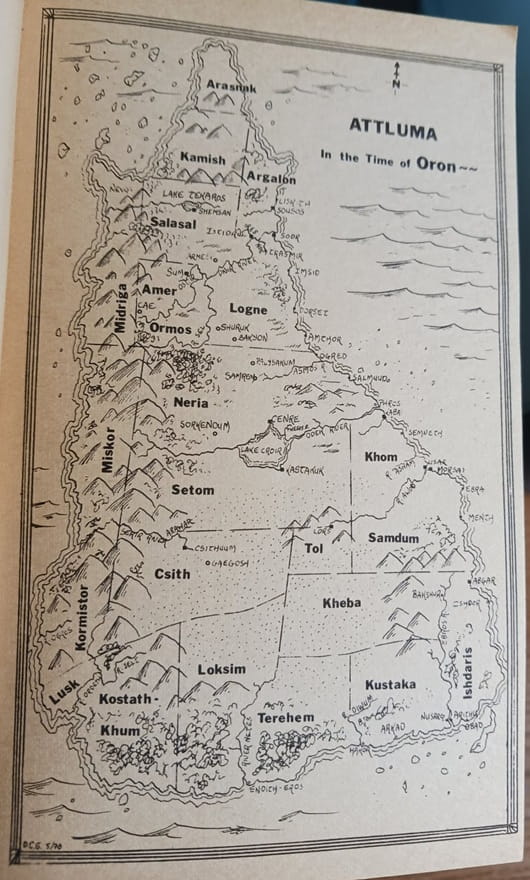
David C. Smith carved a significant niche in the Sword & Sorcery landscape, particularly during its resurgence in the late 1970s and early 1980s. While adept at navigating established universes, his true visionary prowess shines brightest in his proprietary creation: Attluma. This fantastical island continent is not merely a backdrop but a character in itself, imbued with the mystical aura and ancient grandeur often associated with the mythical Atlantis. Smith’s commitment to his world was so profound that he personally drafted a map of Attluma, a crucial piece of lore that first appeared in the inaugural book of the series, Oron, grounding readers firmly within its intricate geography.
The heart of Attluma beats through the adventures of Oron, a protagonist who defies simple categorization. Unlike many of his contemporaries in the Sword & Sorcery genre, Oron is portrayed as a powerful warrior, yet one who possesses a notably introspective nature. This nuance distinguishes him from mere "Conanesque" imitators, offering readers a hero who grapples with internal conflicts as much as external foes. His struggles and triumphs unfold within a "fully realized" world, where ancient sorcery, formidable beasts, and complex civilizations intertwine to create a setting ripe for epic sagas.
Beyond Oron, the Attluma saga introduced other compelling figures, such as Akram, the hero of The Sorcerer’s Shadow. Gramlich’s personal preference for this particular volume and its protagonist underscores the depth and versatility of Smith’s creations, proving that the world of Attluma could sustain narratives beyond its titular character. The series is further enriched by a remarkable array of cover art, featuring contributions from renowned fantasy illustrators such as Clyde Caldwell, Doug Beekman, Tom Kidd, and Neal McPheeters, whose visuals became synonymous with the adventurous spirit of Attluma.
Chronology of Attluma’s Literary Journey
The literary journey of Attluma spans several decades, marked by an initial burst of activity, a period of dormancy, and a subsequent revival driven by dedicated publishers and editors.
The Original Zebra Series (1980-1983)
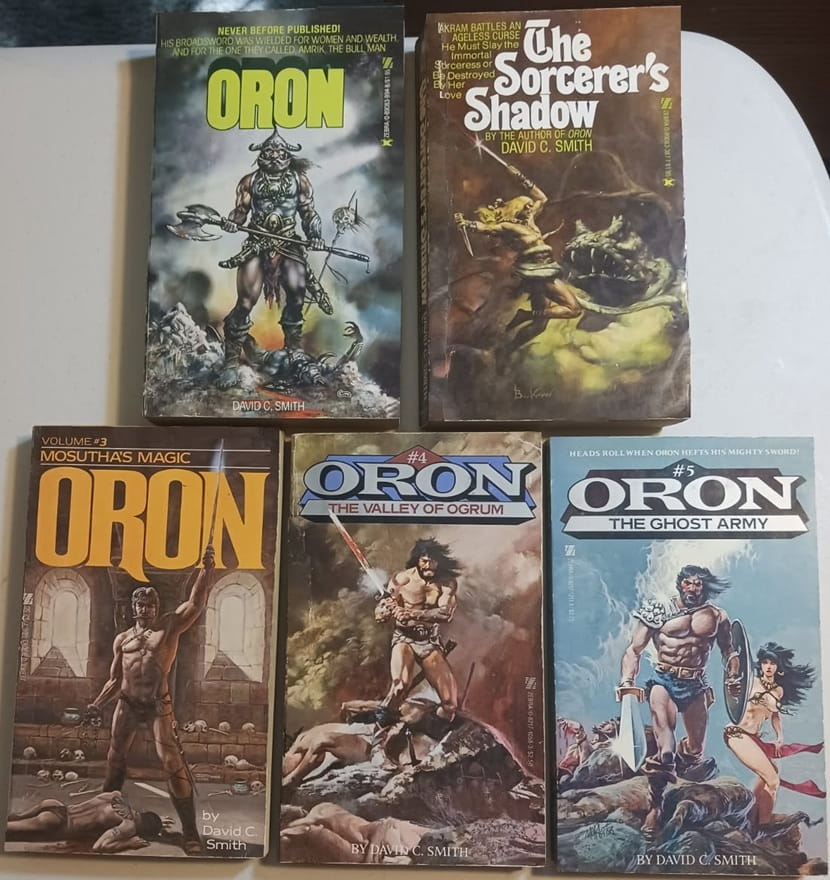
The genesis of the Attluma saga lay with Zebra Books, which published five interconnected novels between 1980 and 1983. These books introduced readers to Oron and the sprawling, ancient world he inhabited, quickly establishing David C. Smith as a formidable voice in the Sword & Sorcery genre.
- Oron (June 1978, cover by Clyde Caldwell): The inaugural volume, this book served as many readers’ first exposure to Attluma. Caldwell’s iconic cover art, often characterized by its dynamic action and heroic figures, perfectly encapsulated the adventurous spirit of the series, drawing readers into a world of myth and magic.
- The Sorcerer’s Shadow (September 1978, cover by Doug Beekman): This volume holds a special place for Gramlich, not only for its compelling narrative but also for introducing Akram, an original hero distinct from Oron. Beekman’s cover, known for its atmospheric detail and dramatic composition, is highlighted as a personal favorite, further emphasizing the visual artistry integral to the series.
- Mosutha’s Magic (1982, cover by Tom Kidd): Appearing later in the series, this book continued to expand the lore of Attluma, delving deeper into its arcane elements and the mystical forces at play. Tom Kidd’s cover art, often celebrated for its intricate detail and fantastical elements, undoubtedly contributed to the book’s allure.
- The Valley of Ogrum (1982, cover artist unknown): This entry further cemented the world-building of Attluma, guiding readers through perilous landscapes and encounters. Despite the unknown artist for its cover, the narrative continued to engage fans with its blend of adventure and dark fantasy.
- The Ghost Army (1983, cover by Neal McPheeters): The concluding volume of the original Zebra series, this book brought the initial arc of Attluma’s tales to a thrilling climax. Neal McPheeters’ cover likely captured the epic scale and supernatural undertones implied by the title, leaving a lasting impression on readers.
Revival and Expansion: Modern Attluma Tales
After a hiatus, the world of Attluma experienced a welcome resurgence, with new stories emerging from dedicated independent presses, testifying to the enduring appeal of Smith’s creation.
- "The Shadow of Dia-Sust" in The Mighty Warriors (Ulthar Press, May 13, 2018): Edited by Robert M. Price with cover art by Bruce Timm, this new Oron story was a significant event for long-time fans. Its publication provided a pleasant return to the original series’ spirit, bridging the gap between the classic novels and contemporary genre anthologies. Ulthar Press, known for its commitment to Lovecraftian and Sword & Sorcery fiction, proved an ideal home for this revival.
- "Born of the Serpent" in Savage Scrolls Volume 1 (Pulp Hero Press, November 21, 2020): Edited by Jason Ray Carney, this story further expanded the Oron mythos. Its inclusion in Savage Scrolls, a publication dedicated to the raw energy of pulp fiction, underscored the timeless nature of Smith’s storytelling. Unfortunately, as Gramlich notes, this particular volume has faced "out of print" status on Amazon, highlighting the challenges of accessibility for niche genre works, even those highly sought after. Pulp Hero Press has been instrumental in keeping classic pulp and Sword & Sorcery alive, making this a significant addition.
Beyond Oron: The Wider World of Attluma
David C. Smith’s vision for Attluma extended beyond the adventures of its primary hero, with several collections and standalone works enriching the continent’s history and diverse inhabitants.
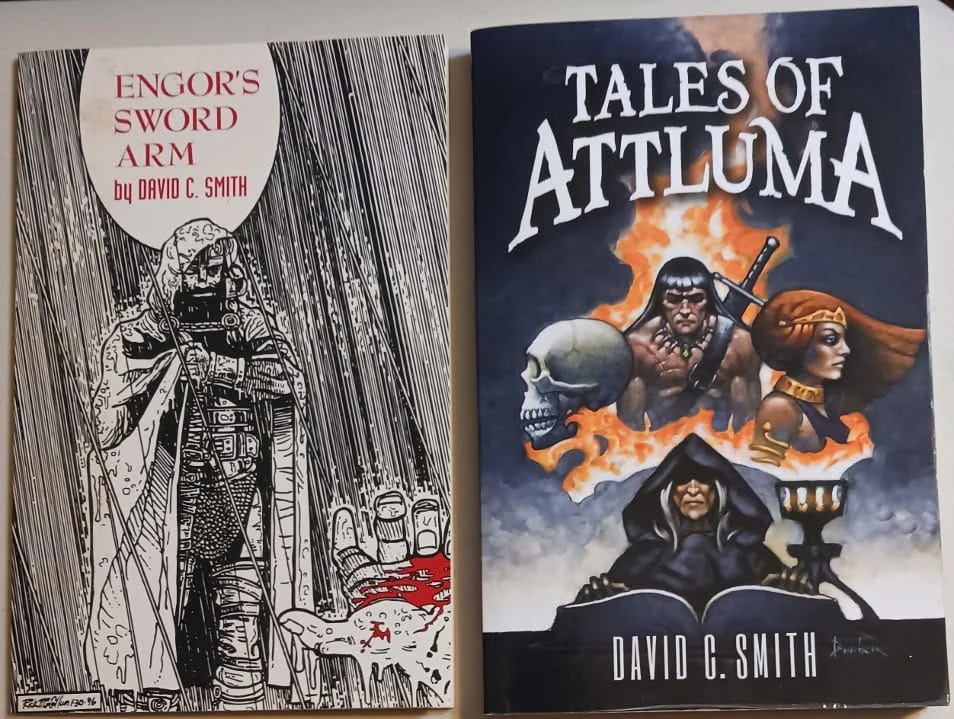
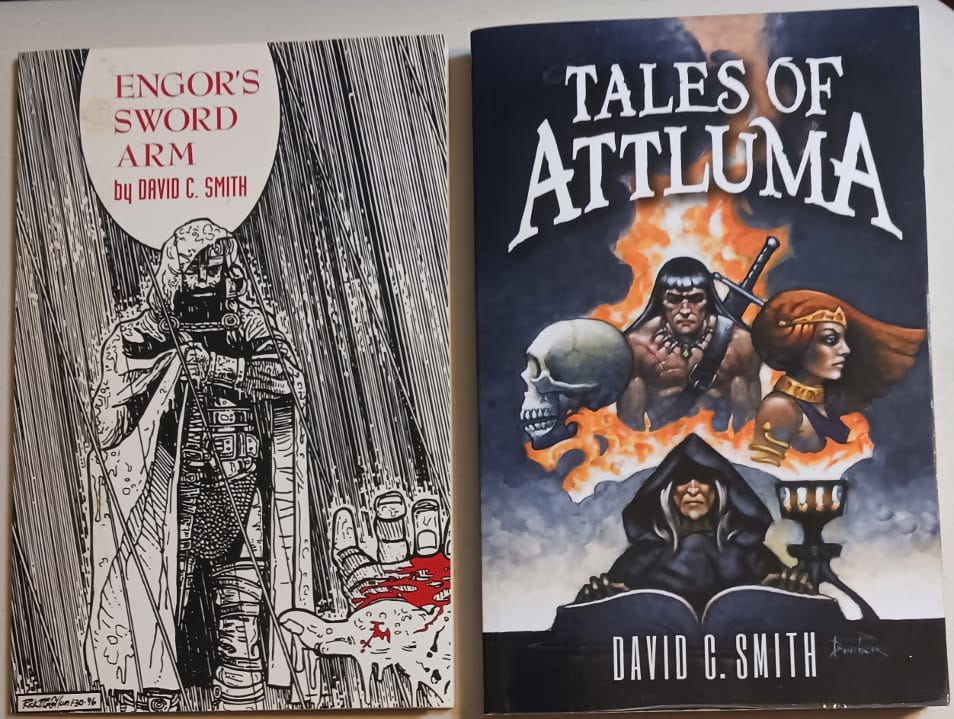
- Tales of Attluma (Pulp Hero Press, April 23, 2020, cover by Tom Barber): This collection served as a vital repository for many non-Oron stories set in Attluma. Many of these tales had previously appeared in obscure small magazines during the 1980s, making their compilation by Pulp Hero Press a significant act of preservation and accessibility for a new generation of readers. The possibility of revision suggests Smith’s continued engagement with his earlier works. Tom Barber’s cover art added a contemporary touch to these classic stories.
- Sometime Lofty Towers (Pulp Hero Press, January 29, 2021, cover by Tomas Aranda): Another key release from Pulp Hero Press, this volume further expanded the Attluma canon, demonstrating the publisher’s deep commitment to showcasing the breadth of Smith’s work. Tomas Aranda’s distinctive cover art ensured a fresh visual identity for these new explorations of the ancient continent.
- Engor’s Sword Arm (Forgotten Ages, 1991): Described by Gramlich as a "particularly cool little item," this booklet stands out for its unique presentation. Published by Forgotten Ages Press, a brainchild of Morgan Holmes, this work is celebrated for its exquisite cover and copious interior illustrations by Rick McCollum. Gramlich’s enthusiastic praise for McCollum’s "incredible" work suggests a talent that, perhaps unjustly, remains less widely known. The association with Holmes and the REHupa group highlights the interconnectedness of the Sword & Sorcery fan and creative community.
Navigating the Timeline
A characteristic shared with many foundational Sword & Sorcery sagas, including Robert E. Howard’s Conan tales, is that the Attluma books and stories were not published in their chronological order. This often adds a layer of mystery and discovery for readers as they piece together the overarching narrative. Recognizing this, resources like Seth E. Lindberg’s "excellent article" on Black Gate, which provides a timeline of the Attluma tales, become invaluable guides for those wishing to experience the saga in its intended narrative sequence.
Supporting Data: The Artistic and Editorial Landscape
The enduring appeal of David C. Smith’s Attluma series owes much to the collaborative efforts of talented artists, dedicated editors, and specialized publishers who have championed the work through various eras.
The Visual World: Illustrators and Cartography
From the outset, the Attluma series benefited immensely from its visual presentation. David C. Smith’s self-drawn map of Attluma was more than just an illustration; it was a foundational piece of world-building that immediately immersed readers in the geography and scale of his creation. This personal touch underscored the author’s deep investment in his secondary world.
The various cover artists – Clyde Caldwell, Doug Beekman, Tom Kidd, Neal McPheeters, Bruce Timm, Tom Barber, and Tomas Aranda – each brought their distinctive styles to the series. These artists, many of whom are legends in the fantasy art world, were crucial in shaping reader expectations and drawing new eyes to the books. Their work transformed the textual adventures into vivid visual spectacles, making the books collectible items in their own right. Doug Beekman’s cover for The Sorcerer’s Shadow, singled out by Gramlich, exemplifies how powerful and memorable these artistic interpretations could be, contributing significantly to the book’s identity.
Rick McCollum’s work for Engor’s Sword Arm is another prime example of art elevating the text. Gramlich’s effusive praise for McCollum’s "incredible" and "famous-worthy" illustrations suggests an artist whose talent is perhaps underappreciated, yet whose contributions are deeply valued by those within the genre’s inner circles. This highlights the crucial role of interior illustrations, often overlooked, in enriching the reading experience.
The Architects of Revival: Publishers and Editors
The journey of Attluma from Zebra Books to modern independent presses like Ulthar Press, Pulp Hero Press, and Forgotten Ages Press, reflects a broader trend in genre fiction. These smaller, often fan-driven, presses play an indispensable role in preserving and reintroducing works that might otherwise fade into obscurity. Their commitment is not merely commercial but often driven by a genuine passion for the material.
Editors such as Robert M. Price and Jason Ray Carney have been instrumental in curating and presenting new Attluma stories. Their expertise and dedication ensure that the new material aligns with the spirit and quality of Smith’s original vision, while also introducing it to new audiences through thoughtfully assembled anthologies. This editorial stewardship is vital for maintaining the integrity and continuity of extended fictional universes.
The Fan Community: REHupa and Beyond
The mention of the REHupa group (Robert E. Howard United Press Association) provides critical context for understanding the enduring life of Sword & Sorcery. This long-standing fanzine organization, comprising dedicated scholars, writers, and fans of Robert E. Howard and related genre fiction, has served as a vital nexus for discussion, publication, and preservation of classic pulp and fantasy. Charles Gramlich, Morgan Holmes, and Rick McCollum’s long association with REHupa underscores the deep roots of this community. It is within such dedicated circles that works like Engor’s Sword Arm found their initial audience and where the passion for authors like David C. Smith continues to thrive, often bridging the gap between official publications and enthusiast-driven content.
Official Responses: Critical Reception and Publisher Commitment
While "official responses" in the traditional sense of critical reviews from major publications may vary for a series of this vintage and niche, Charles Gramlich’s article itself serves as a significant "official response" from a prominent voice within the Sword & Sorcery community. His unequivocal praise for Smith’s original Attluma stories positions them as essential reading and a benchmark for quality within the genre.
Critical Acclaim and Enduring Appeal
Gramlich’s assertion that Smith’s Attluma tales are his "best creations" highlights a deep appreciation for the series’ imaginative scope and character development. The description of Oron as "powerful warrior but somewhat more introspective than most S&S heroes and anti-heroes" and "certainly Conanesque but is no Clonan" points to a nuanced understanding of genre archetypes. This critical evaluation suggests that Attluma offers more than just visceral action; it provides a hero with depth and a world with complexity, qualities that contribute to its lasting appeal. The fact that fans and critics continue to engage with and debate the merits of such characters decades after their initial publication is a testament to their enduring power. The sustained conversation around Smith’s work suggests a robust, albeit specialized, critical appreciation.
Publisher’s Commitment
The continued efforts of publishers like Ulthar Press and Pulp Hero Press to release new Attluma stories and compile older, hard-to-find material speak volumes about the perceived value and demand for David C. Smith’s work. Despite the challenges, such as books going "out of print," these presses demonstrate a clear commitment to keeping the legacy alive. Their actions are a direct response to the persistent interest from a dedicated readership, often operating on the principle of preserving important genre contributions for future generations. This commitment ensures that even as the mainstream publishing landscape shifts, classic Sword & Sorcery finds a home and a renewed audience.
Implications: The Legacy of Attluma
The ongoing celebration and re-publication of David C. Smith’s Attluma series carry several significant implications for the Sword & Sorcery genre and the broader landscape of classic fantasy literature.
Impact on Sword & Sorcery
David C. Smith’s Attluma series stands as a prime example of how to build a rich, distinct world within the established conventions of Sword & Sorcery. While drawing inspiration from the "spirit of Atlantis" and featuring a "Conanesque" hero, Smith skillfully avoided mere imitation, instead crafting a setting and characters with unique identities. Oron’s introspective nature, for instance, adds a layer of psychological depth often absent in more action-oriented heroes, demonstrating the genre’s capacity for evolution and nuanced characterization. The introduction of other heroes like Akram further showcases the potential for diverse narratives within a single fantastical realm. Attluma enriches the genre by proving that originality can thrive even within familiar tropes, providing a blueprint for aspiring writers on how to create a "fully realized" fantasy world.
The Future of Classic Fantasy
The sustained interest in works like Oron and the Attluma tales, particularly their revival through independent presses, highlights a crucial dynamic in the literary world: the enduring power of classic fantasy. In an era dominated by new releases, the continued demand for older, quality genre fiction underscores a readership that values foundational works and rich storytelling over fleeting trends. Independent publishers and dedicated fan communities are the lifeblood of this phenomenon, acting as custodians of literary history. Their efforts ensure that valuable contributions to fantasy literature do not vanish but remain accessible, allowing new readers to discover them and fostering a deeper appreciation for the genre’s roots. This trend suggests a healthy future for classic fantasy, driven by passion and preservation.
Author’s Perspective: Gramlich’s Role
Charles Gramlich’s series of articles on David C. Smith, including this deep dive into Attluma, is more than just a review; it is an act of literary advocacy. As an author and a community leader within the Sword & Sorcery sphere, Gramlich plays a vital role in shining a spotlight on deserving creators and works. His personal connection to the material, as evidenced by his detailed insights and personal preferences, lends authenticity and passion to his commentary. By chronicling Smith’s diverse contributions, from his Robert E. Howard pastiches to his original Attluma creations, Gramlich helps to solidify Smith’s place in the pantheon of fantasy authors, ensuring his legacy is recognized and celebrated by both long-time fans and new generations of readers exploring the vibrant world of Sword & Sorcery.