Rida Altaf on "Judar of the Island": A Profound Exploration of Ethics, Privilege, and Global Complicity
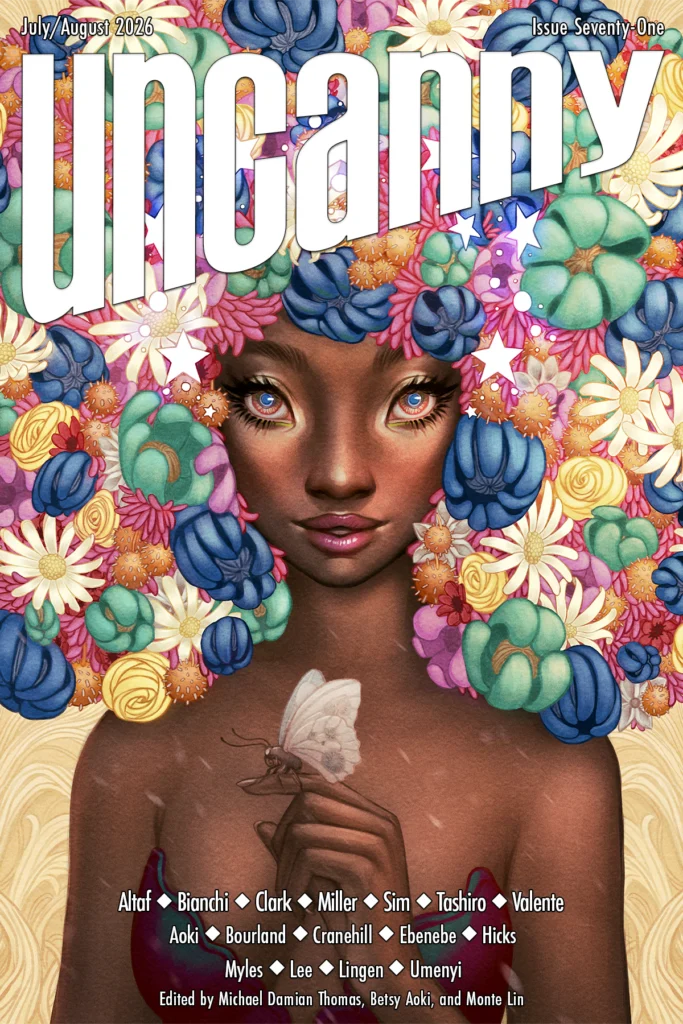
Karachi, Pakistan – In the bustling landscape of contemporary speculative fiction, a new and compelling voice has emerged from Karachi, Pakistan. Rida Altaf, a Fulbright scholar with a Master’s degree in comparative literature, is quickly gaining recognition for her unique blend of the fantastical and the deeply human. Her debut in Uncanny Magazine, "Judar of the Island: A Story Told in Four Feasts," has captivated readers with its potent narrative of magic, stark privilege, and vivid, often unsettling, culinary descriptions. The story, structured around four meticulously detailed feasts, serves as a poignant ethical inquiry into human nature, hypocrisy, and the uncomfortable truths of global desensitization.
Altaf, whose interests span the curious realms of djinn, black holes, and "all kinds of weird natural and supernatural stuff," brings a distinct intellectual curiosity and a keen observational eye to her craft. A graduate of the prestigious Clarion West Workshop in 2025, she has already seen her short fiction published in Tasavvur and with a forthcoming piece in Tales & Feathers. Beyond her literary pursuits, Altaf is known for her obsessive reading, her love for copious mugs of chai, and a penchant for watching "random videos about unsettling physics theories," a blend of passions that clearly informs the rich tapestry of her imaginative work.
The Genesis of "Judar": Echoes of Ancient Tales and Modern Realities
The inspiration for "Judar of the Island" is as multifaceted as its narrative. Altaf reveals that the story, though recently penned, had been gestating "for many years, but only in my brain, and not necessarily consciously." A significant catalyst was her immersive reading of the unabridged Penguin Classics version of The Thousand and One Nights—a monumental 2000-plus page undertaking as part of her degree. Within Shahrazad’s iconic tales, the character of Judar resonated profoundly, not merely for his acquisition of a magical ring, but for his initial, almost mundane, use of it.
"Judar’s character, however, stood out—not because he acquired a magical ring, but because immediately after he acquired one, he used it to conjure up a bag from which he could extract an endless amount of food," Altaf explains. This initial impulse, to address a fundamental human need, intrigued her. While the original tale quickly shifts Judar towards the more conventional hero’s journey—using the ring to build a castle—Altaf found herself "linger[ing] in the moment before the tale swerves into its typical shape." This lingering led to a pivotal "what if" question: "What if, I asked myself, someone acquired a magical ring and only used it for food? What kind of character would they be?" This seemingly simple deviation from the classic narrative opened a profound avenue for exploring human desires, moral choices, and the corrupting influence of limitless abundance.
A Mirror to Modern Desensitization: The Sisters’ Story
While Judar’s magical ring offered a fantastical premise, the story’s other central characters—the sisters—sprang from Altaf’s stark observations of the contemporary world. Her writing often serves as a direct commentary on the increasingly violent and desensitized global landscape. "The sisters came from my observation of the world over the past few years, as things are increasingly becoming more violent, and we are increasingly becoming more desensitized," she states, drawing a direct link between her fiction and pressing societal issues.
Altaf candidly reflects on her own experiences with digital media, where the stark juxtaposition of suffering and triviality has become a disturbing norm. "On my own feed, I scroll past videos of mutilated and malnourished children, begging for help, only to be met with videos of viral recipes in the same breath," she describes. This jarring contrast fuels a persistent, uncomfortable question: "What is this world we are living in, I keep asking myself."
Crucially, Altaf acknowledges her own position within this paradigm of privilege and perceived helplessness. "I acknowledge that I am in the same position as the sisters. Privileged enough that it doesn’t directly affect me. That I can ignore it on the pretext of helplessness." Yet, she quickly challenges this self-justification, fearing that this "pretext of helplessness" is, in fact, "a selfish excuse." The story, then, became a vital outlet for these internal conflicts, a space where she could "put them all down" and confront the complexities of her own complicity and observation. This deeply personal yet universally resonant struggle forms the ethical core of "Judar of the Island," inviting readers to examine their own engagement with global suffering.
Crafting the Narrative: Structure, Collaboration, and Unbidden Truths
The journey of bringing "Judar of the Island" to fruition was not without its structural challenges, particularly under the demanding schedule of the Clarion West workshop. Altaf recounts that "deciding how to tell the story was the most difficult part." With characters firmly in mind but a plot still in nascent stages, the pressure of a looming deadline during the intense week one of Clarion West pushed her creative boundaries.
It was during this critical period that she was introduced to the "four-act structure by Henry Lien," a framework that offered a non-conventional approach to storytelling. Bouncing ideas off her Clarion West classmates, Kehkashan Khalid and Aishatu Ado—to whom she offers a heartfelt shoutout for their invaluable feedback and workshopping—Altaf landed on a pivotal decision. Despite her self-professed weakness in descriptions, she realized that "painstakingly describing food is really key to the story here." Once this structural and thematic linchpin was identified, the creative floodgates opened. "After that, it all just flew out of me. I wrote it in one sitting," she marvels, illustrating the power of finding the right narrative vehicle.
Moments of Unbidden Truth: Character Revelation
For Altaf, some of the most rewarding moments in writing occur when a character’s thought materializes "unbidden," surprising even her with its unexpected accuracy and depth. She points to a specific instance in "Judar of the Island" involving Somaiya, one of the sisters, as a prime example. "I think I felt that way when Somaiya is watching her sister burn and thinks to herself: Who was the burning man? I should have tried to save him."
This singular thought, in its chilling brevity, serves as a powerful revelation. Altaf dissects its significance: "I think that moment just reveals a lot about Somaiya’s character in few words, but also a lot about human nature, how we don’t think of things deeply unless they affect us directly, and I think that is also part of the larger theme of the story." It underscores the story’s central critique: the human tendency towards self-preservation and selective empathy, where suffering only truly registers when it breaches the walls of personal comfort and direct impact. Such moments of profound character insight, arising organically from the narrative flow, are a hallmark of Altaf’s intuitive writing process.
The Unfolding Climax: An Intuitive Ending and its Call to Reflection
Altaf confesses to not being "a big plotter," describing her endings as entities that "arrive themselves, at my doorstep, if the writing is going well." In the case of "Judar of the Island," the culmination felt inherently right, a natural outgrowth of themes that had long resided in her subconscious. This intuitive approach means that articulating a singular "right" answer for the ending’s genesis is challenging. Instead, she prefers to empower her readers.
A Call to Action for the Reader
For Altaf, the impact of "Judar of the Island" extends beyond mere narrative enjoyment. She hopes the story acts as a catalyst for introspection and critical self-examination. "I think I just want readers to think and arrive at their own conclusions," she states, emphasizing the importance of individual engagement. More specifically, she challenges readers to "investigate their own helplessness." This is not an accusation, but an invitation to confront the uncomfortable realities of modern life.
Ultimately, Altaf aims for a broader, more collective awakening: "And I want readers to think about what all of us are complicit in, as a global audience to the suffering of all the oppressed people on the earth." This powerful sentiment encapsulates the ethical thrust of "Judar of the Island," transforming a fantastical tale into a urgent call for global consciousness and accountability. It positions speculative fiction not as an escape, but as a mirror reflecting the most pressing issues of our time.
Culinary Canvas: The Art of the Feast and Postcolonial Commentary
Given the story’s structure around "four feasts" and its "vivid descriptions of food," the selection of the dishes themselves plays a crucial role. Altaf admits that the choices were "pretty random for the most part," a delicious amalgamation of her recent experiences. Having moved to the US for her degree, she encountered a diverse array of cuisines, many of which "seeped into my writing." This organic absorption of new culinary landscapes enriched the sensory experience of the story’s feasts.
Reverse Appropriation and Postcolonial Commentary
However, a closer look reveals a deliberate, playful subversion embedded within the seemingly random choices. Altaf highlights a particular instance: "You will notice that I purposefully messed up the English breakfast options though, because it felt like a fun little reverse appropriation to do, especially considering Judar had had a run-in with postcolonial theory as well." This seemingly minor detail carries significant thematic weight, injecting a subtle yet pointed layer of postcolonial commentary into the narrative. It’s a clever twist, where the act of "muddling" a traditional Western meal becomes a symbolic act of reclaiming and reinterpreting cultural dominance. Altaf, with a touch of self-deprecating humor, notes that this wasn’t entirely premeditated but "just ended up happening, and then I gave it an explanation," underscoring her intuitive approach to weaving complex ideas into her work.
Literary Echoes: Influences and Recent Discoveries
Every writer stands on the shoulders of giants, and Rida Altaf is no exception. The Thousand and One Nights is, of course, a foundational influence, a literary wellspring from which "Judar of the Island" directly draws. But beyond this ancient epic, Altaf finds contemporary resonance and inspiration in other voices.
Foundational and Contemporary Voices
She expresses a strong admiration for the work of Saad Z. Hossain, a Bangladeshi author known for his unique blend of fantasy, satire, and social commentary. "I am really taken by Saad Z. Hossain’s work," Altaf shares, noting that "he also writes about djinn and his writing has a comedic flair and a kind of cynicism that I think is reflected somewhat in my story." She highly recommends his titles Djinn City and Kundo Wakes Up, suggesting that readers looking for a similar blend of the supernatural and the wryly critical would find much to enjoy. Hossain’s ability to infuse fantastical elements with a sharp, cynical wit clearly aligns with Altaf’s own narrative sensibilities in "Judar."
Recent Reads: A Meditation on Grief
Beyond direct influences, Altaf remains an avid reader, constantly discovering new works that resonate. She recently finished Anne de Marcken’s It Lasts Forever Then It’s Over, describing it as "more of a no plot, just vibes, sort of novella, but the prose is so beautiful, it aims straight for the heart." The novella, which plays on "some zombie tropes," offered her an "excellent meditation on grief," showcasing her appreciation for works that explore deep human emotions through unconventional lenses. This appreciation for evocative prose and thematic depth, even in narratives with a looser plot, speaks volumes about the kind of nuanced storytelling Altaf aspires to.
Beyond "Judar": A Dive into the Cosmic and the Personal
Looking ahead, Rida Altaf is embarking on an ambitious new project: a novel that promises to push her creative boundaries even further. "I am working on a novel and it’s completely out of my wheelhouse because it’s Sci-Fi and I barely studied science as a kid," she reveals, highlighting the adventurous spirit of her literary exploration. This new venture has led her down a fascinating rabbit hole of scientific inquiry, as she enjoys "reading a bunch of physics books, and learning more and more about black holes and quantum mechanics at the moment." She playfully admits that much of this scientific delving is "just an excuse to nerd out," yet it underscores her commitment to thorough research and her willingness to tackle complex concepts in her fiction.
The Core of the New Narrative
Despite the scientific veneer, the novel retains Altaf’s signature blend of the fantastical and the intimately human. "At its very essence, this story too is about djinn and sisters," she confirms, indicating a thematic continuity with "Judar of the Island." However, the focus shifts: "although its focus is less on revolution, and more on interpersonal relationships, the gaps in communication, our obsessions with things, people, the outside word, and the persistent and sometimes futile quest for meaning in an apocalyptic world." These themes—the intricacies of human connection, the pervasive influence of obsessions, and the universal search for purpose amidst impending doom—promise a deeply resonant and thought-provoking narrative.
Currently, the novel remains "very much in vague blob-like form," a testament to the organic, intuitive process Altaf favors. Yet, she holds a hopeful vision for its development: "hopefully, Insha Allah, once it has marinated enough in my head, it will come out unbidden, and startle me into a powerful ending." This desire for an ending that emerges naturally, rather than being forced, speaks to her trust in the creative process and her belief in the story’s inherent direction.
The Broader Significance: Speculative Fiction as a Mirror
Rida Altaf’s work, exemplified by "Judar of the Island," stands as a powerful testament to the enduring relevance of speculative fiction in addressing the most complex issues of our time. By weaving together elements of magic, ancient folklore, and contemporary societal observations, she creates narratives that are both enchanting and profoundly challenging. Her exploration of ethics, privilege, and global complicity through the lens of fantasy offers readers a unique perspective, prompting introspection and a re-evaluation of their own roles in a desensitized world.
As a rising voice from Pakistan, Altaf contributes to the growing diversity within speculative fiction, enriching the genre with fresh cultural perspectives and urgent social commentary. Her commitment to exploring the "weird natural and supernatural," alongside the deeply human, ensures that her stories resonate on multiple levels. With "Judar of the Island" making such a strong impression, and a promising Sci-Fi novel on the horizon, Rida Altaf is undoubtedly a writer to watch, poised to continue startling readers with her powerful insights and captivating narratives. Her journey, marked by intellectual curiosity and a profound ethical conscience, promises to leave a lasting impact on the literary landscape.