The High Cost of Candor: Decoding Tina Fey’s Viral Warning on the Dangers of Celebrity Authenticity
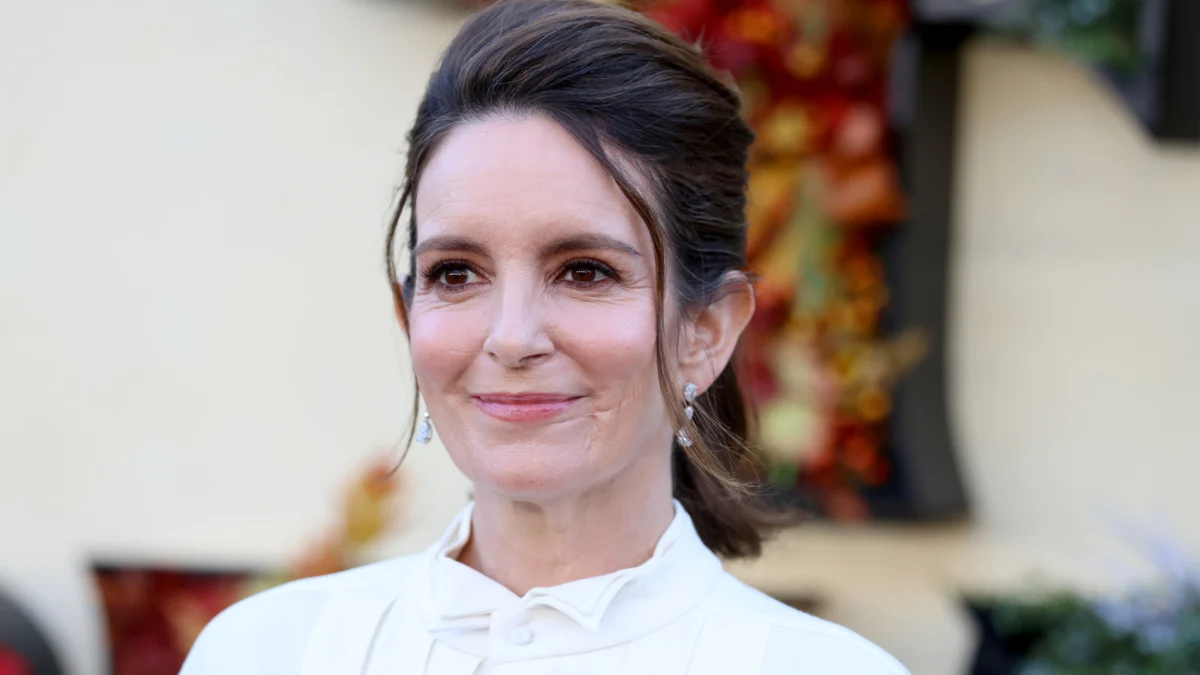
In the landscape of modern American comedy, few figures command as much respect—or wield as much influence—as Tina Fey. The Upper Darby, Pennsylvania native, who rose from the writers’ room of Saturday Night Live to become the first female head writer in the show’s history, has spent three decades navigating the treacherous waters of public life. From the sharp-witted satire of 30 Rock to the cultural phenomenon of Mean Girls, Fey has built a career on observational brilliance.
However, it was during a February 2024 appearance on the popular pop-culture podcast Las Culturistas that Fey delivered what many are calling her most profound piece of industry wisdom to date. In a segment that has since gone viral, Fey warned her younger colleagues that in the age of digital permanence and hyper-connected professional circles, "authenticity is dangerous and expensive."
The Core Revelation: "I Don’t Think So, Honey"
The quote emerged during a closing segment of Las Culturistas titled "I Don’t Think So, Honey," a high-energy tradition where hosts Bowen Yang and Matt Rogers, along with their guest, are given 60 seconds to air a "niche grievance" against a specific element of culture. While the segment is usually reserved for lighthearted complaints about things like slow walkers or overpriced lattes, Fey used her minute to deliver a sobering "state of the union" address for modern celebrities.
Addressing Bowen Yang directly, Fey declared:
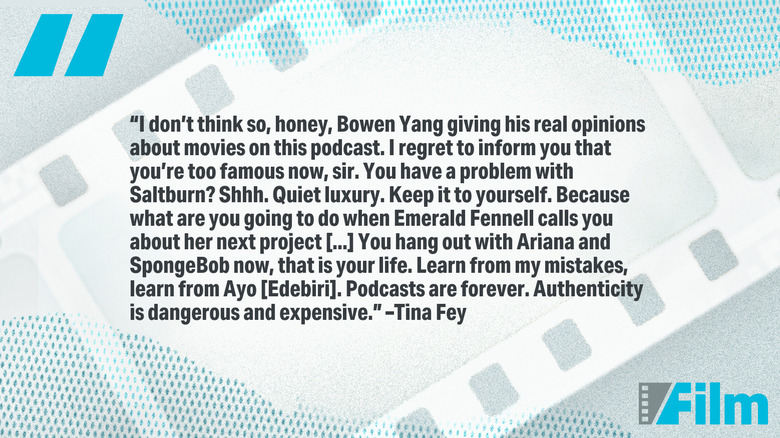
"I don’t think so, honey: Bowen Yang giving his real opinions about movies on this podcast. I regret to inform you that you’re too famous now, sir. What’s going to happen? You have a problem with Saltburn? Shhh. Quiet luxury. Keep it to yourself. Because what are you going to do when Emerald Fennell calls you about her next project where you play Carey Mulligan’s coworker in the bridal section of Harrod’s, and then Act 3 takes a sexually violent turn, and you have to pretend to be surprised by that turn? You hang out with Ariana and SpongeBob now. That is your life. Okay? And Matt Rogers, I can tell you, you got about one year left. Learn from my mistakes, learn from Ayo. Podcasts are forever. Authenticity is dangerous and expensive. I don’t think so, honey."
The audience’s reaction was immediate, but the quote’s longevity proved even more significant. By the time the 2024 Las Culturistas Culture Awards arrived in June, the quote had been elevated to the status of a "Pledge of Allegiance," with Rogers and Yang leading a theater full of fans in a word-for-word recitation of Fey’s warning.
Chronology of a Viral Moment: From Recording to Cultural Canon
The timeline of Fey’s "authenticity" warning illustrates how quickly a casual podcast remark can transform into a definitive cultural thesis.
- February 2024: Fey appears on Las Culturistas to promote her various projects, including the Mean Girls musical movie and her Netflix series The Four Seasons. The episode drops, and the "I Don’t Think So, Honey" segment is immediately clipped for TikTok and Instagram.
- March 2024: The industry begins to digest the "Ayo" reference within the quote. Ayo Edebiri, the breakout star of The Bear, had recently hosted SNL alongside musical guest Jennifer Lopez. The awkwardness of the pairing—stemming from a 2020 podcast comment Edebiri made about Lopez’s singing ability—became the primary case study for Fey’s "authenticity is expensive" argument.
- June 2024: At the Las Culturistas Culture Awards at Lincoln Center, Fey’s speech is officially canonized. It is no longer just a joke; it is viewed as a survival guide for the "new" Hollywood.
- Present Day: The quote is frequently cited in media trade publications as the definitive end of the "Relatable Celebrity" era, marking a return to a more guarded, old-school form of stardom.
Supporting Data: Decoding the Shorthand
To understand why Fey’s quote resonated so deeply, one must unpack the specific industry references she used to illustrate the "dangers" of being real.
The Ayo Edebiri / Jennifer Lopez Incident
Fey’s mention of "Ayo" refers to a 2020 episode of the podcast Scam Goddess, where Ayo Edebiri joked that Jennifer Lopez’s career was "one long scam" and questioned her vocal contributions to her own albums. Four years later, Edebiri became an A-list star. When she hosted SNL in early 2024, the musical guest was Lopez. The internet immediately unearthed the old podcast audio, forcing Edebiri to address the comments in a sketch and leading to a weekend of intense PR management. This is the "expense" Fey spoke of: the cost of a three-minute joke can be years of professional awkwardness or lost opportunities.
The Emerald Fennell / Saltburn Factor
Fey used Saltburn director Emerald Fennell as a stand-in for the "small world" of Hollywood power players. Her point was pragmatic: if an actor pans a movie on a podcast, they are essentially burning a bridge with a director who might have hired them for a career-defining role later. In Fey’s view, the "danger" of authenticity is the accidental self-sabotage of one’s future filmography.
The "Ariana and SpongeBob" Context
Fey’s reference to "Ariana and SpongeBob" (Ariana Grande and Ethan Slater) pointed to Bowen Yang’s role in the Wicked films. By becoming part of a massive, multi-billion-dollar franchise, Yang’s personal brand became tethered to corporate interests. Fey’s advice was clear: once you are "in the tent" with global superstars, the luxury of having a "hot take" is gone.
The Philosophical Shift: From Transparency to "Quiet Luxury"
Fey’s use of the term "Quiet Luxury"—usually a fashion term referring to understated, expensive clothing—was a brilliant linguistic pivot. In her context, "Quiet Luxury" refers to the privilege of privacy. She suggests that the ultimate sign of status in Hollywood is no longer sharing your life with fans, but rather having the discipline to keep your opinions to yourself.
This marks a sharp departure from the mid-2010s, where celebrities were encouraged to be "authentic" and "relatable" on social media to build a following. Fey, a veteran who has seen the rise and fall of various media trends, is signaling that the pendulum has swung back. In a world where "the internet is written in ink" (a nod to the famous line from The Social Network), any deviation from a curated, professional persona is a financial and social risk.
Official Responses and Industry Reception
While there has been no "official" response from the targets of Fey’s jokes (Emerald Fennell or Jennifer Lopez), the comedy community has largely embraced Fey’s thesis as a hard truth.
Critics have noted that Fey is uniquely qualified to deliver this message. Throughout her career, she has faced her own "authenticity" backlashes. Her show Unbreakable Kimmy Schmidt was criticized for a plotline involving Jane Krakowski’s character having Native American heritage, and Fey famously told Net-a-Porter in 2015 that she was "opting out" of the culture of apologizing for jokes.
Furthermore, Fey was ahead of the curve in using her "authenticity" to signal industry rot. Long before Hannibal Buress’s stand-up set went viral and led to the downfall of Bill Cosby, Fey was embedding jokes about Cosby’s reputation into scripts for 30 Rock. She understands that "speaking truth" has a time and a place, and that doing it on a casual podcast might be the least effective—and most expensive—way to do it.
Broader Implications: The Death of the Celebrity Podcast?
The most significant implication of Fey’s viral quote is what it means for the future of media. For the last decade, podcasts have been the final frontier of celebrity candidness. They were the places where actors and writers went to "let their hair down."
If Fey’s philosophy becomes the industry standard, we may see the end of the "honest" celebrity interview. If "authenticity is dangerous," publicists will tighten their grip on podcast appearances, ensuring that guests stick to pre-approved talking points.
Fey’s warning suggests that we are entering an era of "The Opaque Celebrity." In this new landscape:
- Professionalism Outweighs Personality: The ability to move through the industry without friction is more valuable than having a "viral" opinion.
- The Digital Archive is a Minefield: Celebrities must treat every recorded word as a potential future liability.
- The "Circle of Trust" Shrinks: Real opinions will be reserved for private dinners, while public discourse remains strictly "on-brand."
Conclusion
Tina Fey’s "I Don’t Think So, Honey" was more than a comedic riff; it was a pragmatic autopsy of the modern fame machine. By labeling authenticity as "dangerous and expensive," she highlighted the reality that in a hyper-connected, digital-first world, the cost of being "real" is often higher than the rewards. As Bowen Yang and Matt Rogers continue their ascent into the upper echelons of Hollywood, Fey’s "Pledge of Allegiance" serves as a constant reminder: in the business of show, sometimes the most expensive thing you can own is your silence.