"Human Best Friend" Divides Audiences: Star Trek: Strange New Worlds’ Latest Comedy Episode Faces Scrutiny
Starfleet’s penchant for diverse storytelling has long been a hallmark of the Star Trek franchise, yet the latest installment of Star Trek: Strange New Worlds, "Human Best Friend" (Season 4, Episode 3), has ignited a fervent debate among critics and fans alike. While lauded by some as a charming character study for Lieutenants Ortegas and Scotty, the episode has drawn significant criticism for its perceived narrative inconsistencies, forced comedic elements, and a contentious use of legacy characters. This review delves into the polarized reception, exploring the specific critiques leveled against the episode’s plot, humor, and character development, all within the broader context of Strange New Worlds‘ ongoing narrative experimentation.
The Nuance of Fan Reception: A Shifting Standard
The Star Trek fandom is renowned for its passionate engagement, often dissecting episodes with a level of scientific, philosophical, and canonical rigor rarely seen in other franchises. This inherent critical lens means that what "bugs" one viewer might be readily accepted by another, creating a dynamic and often unpredictable landscape of reception. Over its impressive run, Star Trek: Strange New Worlds has frequently navigated these waters, presenting a diverse array of episode styles that challenge conventional Trek expectations.
Previous Episodes: "Valles Marineris" and "The Griffin Incident"
Just weeks prior to "Human Best Friend," the Strange New Worlds episode "Valles Marineris" faced its own share of scrutiny. Some viewers expressed discomfort with its "imperfect science," pointing to factual inaccuracies or improbable scientific scenarios within the narrative. Yet, for many, including this reviewer, these scientific liberties were overshadowed by the episode’s engaging, albeit "pulp-y," storyline and strong character work, which felt true to the adventurous spirit of Trek. The narrative prowess and character depth were enough to allow for a suspension of disbelief regarding scientific details.
Similarly, "The Griffin Incident" sparked contention among its audience due to its pronounced horror elements and graphic content, particularly the "gore" associated with a hallucinated death sequence. Furthermore, the episode’s deliberate ambiguity regarding the source of the supernatural events, eschewing a clear "rationalist" explanation often favored by Trek, unsettled a segment of the fanbase. While acknowledging Trek‘s general inclination towards rational explanations, even for seemingly supernatural occurrences, this reviewer found "The Griffin Incident" to be a powerful examination of three central characters, allowing the thematic resonance to override the genre departure and the lack of immediate scientific resolution. The focus on psychological depth and character vulnerability proved compelling enough to justify the narrative choices.
These examples illustrate a recurring pattern: Strange New Worlds frequently pushes boundaries, and fan acceptance often hinges on whether the core Trek tenets – exploration, character, philosophy – are perceived to be upheld, even if other elements deviate from tradition.
"Human Best Friend": A Divergence in Opinion
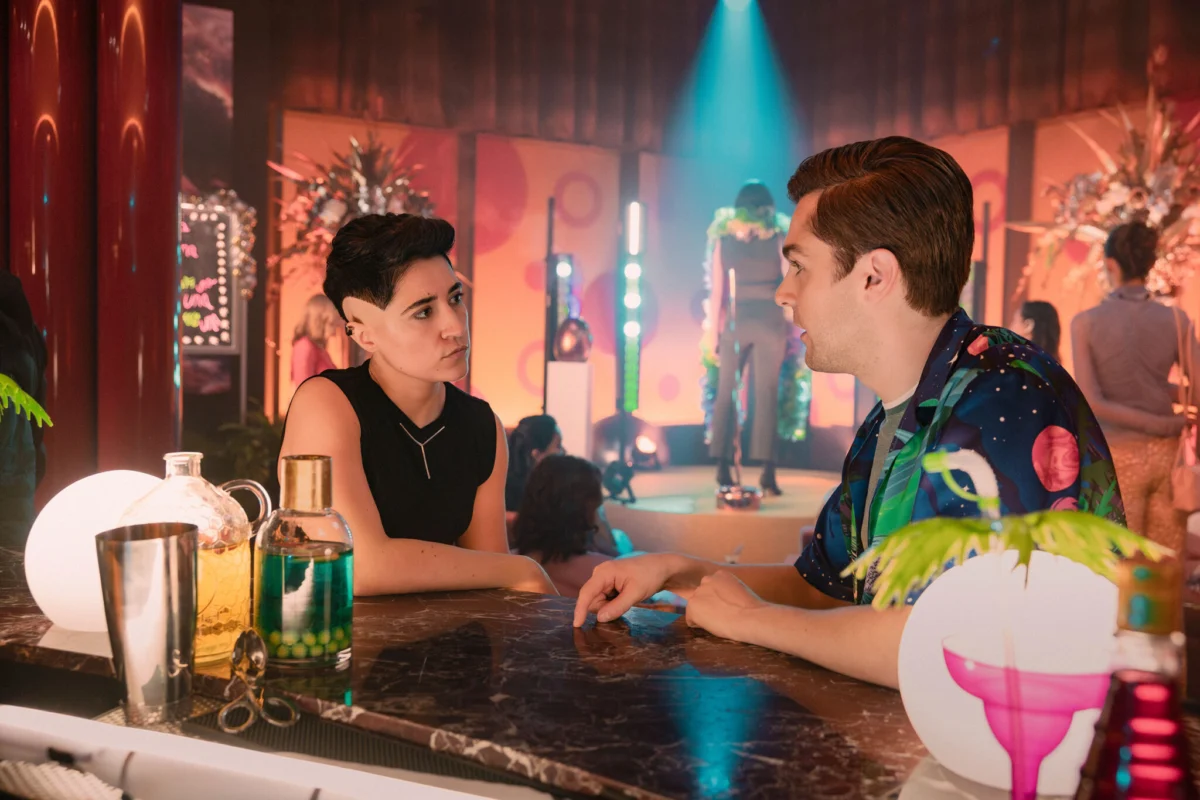
Against this backdrop of varied critical tolerance, "Human Best Friend" emerges as a significant point of divergence. Presented as a dedicated comedy episode, the premise involves the Enterprise crew visiting a resort where the atmospheric composition induces a mild, temporary intoxication without lasting negative effects. While some viewers have embraced the episode for its lighthearted tone and potential as a "good character study" for Ortegas and Scotty, this particular installment proved to be a critical misstep for the reviewer, highlighting a perceived breakdown in narrative coherence and thematic purpose. Despite the undeniable talent of actors Melissa Navia (Ortegas) and Martin Quinn (Scotty), the episode failed to land its intended impact, prompting a re-evaluation of what constitutes effective Star Trek comedy.

Critiquing the Comedy and Narrative Framework
The primary criticisms levied against "Human Best Friend" revolve around its execution of humor and its overall narrative structure. The episode’s comedic beats, while clearly intentional, often felt "forced and not particularly enlightening," failing to offer the deeper character insights or thematic weight typically associated with successful Star Trek storytelling, even in its lighter moments.
The "Drunk Crew" Trope Revisited: A Shift in Context
The concept of Starfleet personnel experiencing impaired states is not new to the franchise. Both Star Trek: The Original Series‘ "The Naked Time" and Star Trek: The Next Generation‘s "The Naked Now" explored similar scenarios, where a mysterious contagion or phenomenon caused crew members to exhibit uninhibited, often drunken, behavior. These episodes, while not universally acclaimed for their quality (especially "The Naked Now"), at least framed the impairment as a critical problem to be solved, a threat to the ship and its mission. "The Naked Time," in particular, offered early, significant insights into Spock’s struggle with his human emotions, making it a pivotal moment for his character development.
"Human Best Friend," however, fundamentally shifts this premise. Instead of facing an unexpected and dangerous impairment, the crew voluntarily subjects themselves to an intoxicating atmosphere on a resort planet. This deliberate choice immediately raises questions about Starfleet protocol, responsibility, and the core ethos of exploration and readiness. The episode’s humor largely derives from the exaggerated antics of the impaired crew, which, while performed admirably by the cast, often feels superficial.
Forced Humor and Lack of Illumination
The episode’s comedic set pieces, such as Una performing Klingon karaoke to the tune of "Total Eclipse of the Heart" or Uhura throwing a "stoned" party, rely heavily on broad strokes and situational absurdity. While these moments might elicit a chuckle, they largely fail to "enlighten" the audience about the characters in any meaningful way. Unlike the vulnerability revealed in "The Naked Time," the behaviors exhibited in "Human Best Friend" feel more like caricatures than genuine extensions of their personalities under duress. The humor, therefore, becomes an end in itself rather than a vehicle for deeper character exploration or thematic commentary, leading to a sense of unfulfilled potential.
The overarching plot, described as "Star Trek does The Hangover," further compounds this issue. The narrative follows Ortegas and Scotty as they wake up with no memory of the previous night, missing their shuttlecraft, and tasked with finding a heavily tattooed Captain Pike. This quest-like structure, while a staple of comedic films, reduces the Enterprise crew’s vacation to a series of contrived obstacles and slapstick scenarios, ultimately detracting from the potential for genuine character moments or substantive plot progression. The emphasis on uncovering "what happened last night" prioritizes situational comedy over narrative depth.

Breaches in Starfleet Logic and Protocol
Perhaps the most significant point of contention for "Human Best Friend" lies in its perceived disregard for fundamental Star Trek logic and Starfleet operating procedures. The decision to allow the crew of a military vessel to be intentionally impaired, even on leave and off-ship, strikes a dissonant chord with the established principles of the organization.
Voluntary Impairment: A Question of Starfleet Ethos
Starfleet, by its very nature, is a disciplined organization dedicated to exploration, defense, and maintaining peace. Its officers are expected to maintain a high level of readiness and judgment, even during periods of shore leave. While individual crew members might choose to consume intoxicants voluntarily during off-duty hours, the atmospheric intoxication of the resort planet affects everyone without their active consent or choice to partake in a specific beverage. This raises serious questions about the safety protocols of such a destination and the wisdom of Starfleet allowing its personnel to visit a location where their faculties are involuntarily compromised.
The premise that the intoxication has "no ill effects after you leave" and enables relaxation "while you’re there" attempts to mitigate these concerns, but it doesn’t fully resolve the inherent conflict with Starfleet’s commitment to readiness. A military vessel’s crew, even on leave, operates under an implied expectation of being capable of responding to emergencies. Deliberately entering a state of universal impairment, regardless of its transient nature, appears to contradict the very tenets of their service and the vigilance required of explorers in unknown space. This logical leap proved too great for some viewers to reconcile with their understanding of the Star Trek universe.
Universal Intoxication: A Biological Improbability?
Adding to the logical inconsistencies is the premise that the intoxicating atmosphere affects "every species the same way." The Star Trek universe is rich with diverse alien biologies, metabolisms, and neurological systems. The idea that a single atmospheric compound could induce a uniform state of intoxication across such a vast spectrum of physiological differences strains credulity, even within the flexible scientific parameters of science fiction. While Star Trek has often used "universal translators" and other conveniences for narrative ease, a blanket biological effect across all species for an intoxicant feels like a simplification that undermines the franchise’s own commitment to biological diversity and scientific speculation. This inconsistency is particularly jarring when juxtaposed with the reviewer’s acceptance of "imperfect science" in "Valles Marineris," where the story’s pulp sensibilities and character work provided sufficient compensation. In "Human Best Friend," the lack of compelling narrative justification for these logical leaps makes them harder to overlook.
Character Development: Missed Opportunities
Despite the episode being framed as a "character study" for Ortegas and Scotty, much of the supporting cast’s involvement in "Human Best Friend" feels underdeveloped and fails to contribute meaningfully to their ongoing arcs. The potential for genuine insight, often a strength of Strange New Worlds, was largely squandered amidst the comedic chaos.

Uhura, Number One, and La’an: Superficiality Over Insight
Uhura, a character whose development has been a highlight of SNW, is depicted throwing a raucous party and exhibiting "very very very stoned" behavior. While entertaining, this portrayal offers little new insight into her character beyond a demonstration of her capacity for revelry under the influence. It doesn’t deepen our understanding of her emotional state, her aspirations, or her vulnerabilities, which previous episodes have so effectively explored.
Similarly, Number One (Una Chin-Riley) engages in Klingon karaoke, performing a Klingon-language rendition of Bonnie Tyler’s "Total Eclipse of the Heart." While a humorous and visually striking moment, it serves more as a comedic spectacle than a revelation of Una’s inner world. Her character, with her intricate backstory and strict adherence to Starfleet ideals, could have offered a fascinating contrast to the planet’s intoxicating effects, but the episode opts for a simpler, more superficial gag.
La’an Noonien-Singh, whose character arc often grapples with her genetic heritage and her struggle with emotional expression, is shown taking charge of a "biker gang." While this might subtly connect to her underlying issues of control and perhaps her capacity for channeling aggression or a lack of feeling pain, the connection feels tenuous and doesn’t significantly advance our understanding of her complex psychological landscape. It presents a fleeting, exaggerated aspect of her personality rather than a nuanced exploration.
Pike’s Tattoo: A Fleeting Gag
Captain Christopher Pike, usually a beacon of moral authority and thoughtful leadership, is reduced to a comedic figure sporting numerous face tattoos, which he later seeks to have removed by Dr. M’Benga. While the image itself is visually striking and humorous, the entire subplot offers no substantial character development for Pike. It’s a temporary gag, immediately reversed, that fails to tap into the deeper anxieties or aspirations that define his character. The fact that he must stumble through a first-contact situation while still visibly tattooed underscores the episode’s prioritization of comedy over the gravitas often associated with a Starfleet Captain.
Spock and the Unnecessary Kirk Cameo

The Spock subplot, initially promising, ultimately falters. Spock, usually resistant to emotional displays, is depicted as convinced he is "completely bonkers off his ass" due to the atmosphere, while behaving entirely logically, even hallucinating chess with Jim Kirk. This setup brilliantly leverages Ethan Peck’s portrayal of Spock’s internal struggle with emotional control, a theme SNW has consistently developed. It highlights Spock’s innate desire for logic and his aversion to involuntary emotional states, a precursor to his later dedication to pure logic in The Original Series.
However, the effectiveness of this plot thread is undermined by the reveal that Jim Kirk is actually present at the resort, physically replacing the hallucination. This narrative choice, while providing a convenient resolution for Spock’s transport dilemma, feels forced and unnecessary. It negates the psychological depth of Spock’s hallucination and transforms a potentially insightful character moment into another opportunity for a Kirk cameo.
The Perils of Persistent Cameos: Jim Kirk’s Recurring Role
The frequent appearances of James T. Kirk in Star Trek: Strange New Worlds have become a recurring point of discussion and even a "meme" within the fandom. While some cameos have been justifiable within the show’s timeline and narrative (e.g., "Subspace Rhapsody," where Paul Wesley’s musical talent was utilized), the sheer regularity and often coincidental nature of his appearances have begun to strain credulity.
In "Human Best Friend," Kirk’s presence at the same obscure resort as the Enterprise crew feels particularly egregious. The random chance of their paths crossing in such a specific, non-mission-related context stretches the bounds of believable narrative coincidence to its breaking point. It contributes to a perception that Kirk’s inclusion is less about organic storytelling and more about fan service, shoehorning a beloved legacy character into situations where he doesn’t genuinely belong. This particular instance drew strong criticism, suggesting that Kirk’s ubiquity is transforming him from an iconic figure into a narrative contrivance, potentially bordering on "stalker" levels of improbable encounters, a sentiment echoed by many long-time fans.
Behind the Scenes: The Creative Intent
While this review offers a critical perspective, it’s important to consider the broader creative philosophy behind Star Trek: Strange New Worlds. The show has, from its inception, aimed to embrace the episodic variety and genre-bending nature of The Original Series. This includes dedicated comedy episodes, musical episodes, horror episodes, and more traditional exploration narratives. The intention is often to showcase the versatility of the cast and the richness of the Star Trek universe, proving that Trek can excel in various narrative modes.
"Human Best Friend" likely represents a deliberate attempt to lean into broad comedy, offering a lighthearted respite from more serious storylines. The creative team may have prioritized the comedic premise and the opportunity to highlight Ortegas and Scotty, believing that the entertainment value would outweigh any minor logical inconsistencies. The choice to include Kirk, despite its narrative awkwardness, could also stem from a desire to continue building connections to the established Original Series canon, even if those connections feel forced in individual instances. The perceived "official response" or underlying creative intent, therefore, seems to be a commitment to genre experimentation, which, while laudable in principle, can sometimes lead to uneven execution.
Ortegas and Scotty: A Glimmer of Success
Despite the numerous criticisms, "Human Best Friend" does achieve some success in its intended purpose as a vehicle for Lieutenants Ortegas and Scotty. The episode effectively capitalizes on the running gag of Scotty’s complaints about Ortegas’s piloting skills, providing a culmination point for their contentious dynamic.

The episode delves into their respective personal histories, revealing that Scotty’s "twerp-ish" younger persona is influenced by his complex relationships with numerous siblings, mirroring Ortegas’s own experiences with her brother Beto (a character previously seen in the series). This exploration of their sibling-like dynamic, marked by rivalry and eventual understanding, offers genuine character insight. Melissa Navia and Martin Quinn deliver strong performances, effectively portraying the evolution of their characters’ relationship from bickering colleagues to something resembling camaraderie. The episode also features a charming guest appearance by Dave Foley as the resort’s proprietor, whose explanation for creating such a unique destination provides a moment of genuine thematic reflection amidst the comedic chaos. These elements, though not enough to redeem the episode for all viewers, represent the strongest aspects of "Human Best Friend."
Implications for Strange New Worlds and its Audience
"Human Best Friend" serves as a microcosm of the ongoing tension within Star Trek: Strange New Worlds‘ ambitious episodic structure. While the show’s commitment to genre variety is often celebrated, episodes like this highlight the risks involved. When the comedic elements feel forced, the logical inconsistencies become too glaring, and character development feels superficial, the experiment can backfire, alienating segments of the audience who prioritize narrative rigor and canonical consistency.
The polarized reception of "Human Best Friend" underscores the challenge of balancing diverse storytelling with the core expectations of a long-standing franchise. For fans who value character depth and adherence to Starfleet’s rationalist ethos, the episode may represent a step too far in the pursuit of pure entertainment. For others, its lighthearted approach and focus on specific characters may be a welcome diversion. Ultimately, the episode serves as a reminder that even within a show celebrated for its willingness to experiment, the fundamentals of compelling narrative and character development remain paramount. The debate surrounding "Human Best Friend" will undoubtedly contribute to the ongoing discourse about Strange New Worlds‘ legacy and its place within the broader Star Trek canon.
Conclusion
"Human Best Friend" from Star Trek: Strange New Worlds is an episode that, while showcasing strong performances from its lead actors and attempting a lighthearted comedic tone, ultimately struggles to resonate with all viewers. Its reliance on broad humor, significant logical inconsistencies regarding Starfleet protocol and alien biology, and a lack of meaningful character development for much of the main cast proved to be significant stumbling blocks. While the episode succeeds in furthering the relationship between Ortegas and Scotty, these isolated successes are insufficient to overcome the broader criticisms of its narrative choices and its perceived departure from fundamental Star Trek principles. In the evolving landscape of Strange New Worlds‘ genre experimentation, "Human Best Friend" stands out as a polarizing installment, a reminder that even in the pursuit of fun, a careful balance of humor, logic, and character depth remains crucial for maintaining the integrity of the Star Trek universe.