The Toba Myth Unraveled: Why the Greatest Eruption in Human History Failed to Trigger an Apocalypse
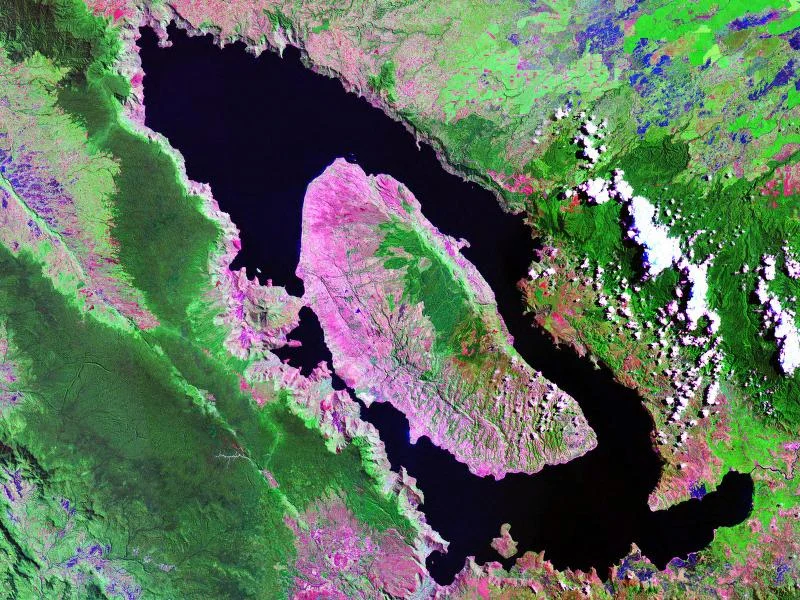
For decades, the story of the Mount Toba eruption has served as a cornerstone of paleoanthropology—a terrifying "what if" that supposedly brought our species to the brink of extinction. Approximately 74,000 years ago, a super-eruption on the island of Sumatra released thousands of cubic kilometers of magma, an event so massive it was believed to have plunged the Earth into a decade-long volcanic winter. According to the "Toba Catastrophe Theory," this climate collapse created a genetic bottleneck, reducing the human population to a mere few thousand individuals.
However, a groundbreaking study published in Science Advances (2026) by geoscientist Jinheum Park and his colleagues at Johannes Gutenberg University challenges this narrative. By analyzing ultra-high-resolution sediment cores from a "stopwatch lake" in East Africa, the team has discovered that the climate impact of the Toba eruption was far more muted than previously feared. Rather than a decade of freezing temperatures, the planet experienced a cooling of just 0.5 degrees Celsius, lasting less than two years.
Main Facts: A Super-Eruption Under the Microscope
The Mount Toba eruption remains the largest volcanic event of the last 2.6 million years. To grasp its scale, one must compare it to modern disasters. The 1991 eruption of Mount Pinatubo in the Philippines, which caused a measurable dip in global temperatures, was a mere fraction of Toba’s power; Toba was roughly a thousand times more explosive.
Despite this unimaginable release of energy, the new research suggests that the laws of atmospheric physics prevented the eruption from becoming a global killer. The study’s primary findings include:
- Minimal Cooling: The regional temperature drop in East Africa—a critical habitat for early humans—was approximately 0.5°C, well within the range of natural climate variability.
- Brief Duration: The "volcanic winter" lasted roughly 18 months, not the decades suggested by earlier computer models.
- The "Aerosol Paradox": Because the eruption was so massive, the sulfate aerosols it injected into the stratosphere were larger and heavier than those of smaller eruptions. These heavier particles fell back to Earth quickly, limiting their ability to reflect sunlight over a long period.
- Seasonal Timing: The eruption occurred in the southern summer (January or February), which influenced how the volcanic haze was distributed across the hemispheres, further mitigating its impact on human populations in Africa.
Chronology of the Cataclysm: 18 Months of "Mild" Disaster
Through the meticulous examination of lake sediments, Park’s team was able to reconstruct a month-by-month timeline of the eruption’s aftermath.
The Lead-Up (260 Years Prior)
The 260 years preceding the eruption were characterized by a stable, warm, and wet climate in East Africa. The sediment layers (varves) from Lake Chala show a consistent pattern of annual deposition, suggesting a predictable cycle of rains and dry seasons.
The Event (Month 0)
The eruption occurred during the southern summer. Ash—invisible to the naked eye but detectable as microscopic glass shards—began to settle across the Indian Ocean and into Africa. In Lake Chala, this ash formed a layer just 0.3 millimeters thick, thinner than a sheet of paper.
The Immediate Aftermath (Months 1–6)
As the ash fell, the sky dimmed. The researchers identified two distinct "green films" within the sediment, only a few hundredths of a millimeter thick. These are interpreted as a stress response from diatoms (microscopic algae). Deprived of adequate sunlight for photosynthesis due to the sulfate haze, the diatoms secreted a protective or stress-induced material, marking the peak of the atmospheric veil.
The Peak Cooling (Months 6–12)
The first dry season following the eruption saw an unusually large diatom bloom. The cooling of the lake’s surface caused the water to mix more deeply than usual, bringing nutrients up from the bottom. This suggests a chilled surface, but the mixing was not deep enough to disrupt the lake’s permanent stratification, indicating the cooling was moderate.
The Recovery (Months 12–18)
By the second year after the eruption, the rains returned, albeit weakly. The Indian Ocean, slightly cooled by the haze, sent less moisture inland. However, by the third year, the sediment layers in Lake Chala returned to their pre-eruption thickness and composition. The "catastrophe" was over.
Supporting Data: The "Stopwatch" of Lake Chala
The precision of this study relies on the unique geology of Lake Chala, a steep-walled crater lake on the flank of Mount Kilimanjaro. Unlike most lakes or ocean floors, where currents and burrowing animals mix the mud—effectively "blurring" the geological record—Lake Chala is anoxic (oxygen-starved) at its depths.
The Role of Varves
The lake deposits sediments in annual couplets called "varves." A light-colored layer, rich in silica from diatoms, forms during the windy mixing season (June to September). A dark-colored layer of silt and clay forms during the calmer, rainy months. "It works just like tree rings," Jinheum Park explains. This allowed the team to count individual years and even seasons with near-perfect accuracy.
Elemental Ratios
To quantify the temperature drop, the team measured specific chemical signatures:
- Silicon-to-Aluminum (Si/Al): This ratio tracks the intensity of diatom blooms. A massive spike indicates deep lake mixing caused by surface cooling.
- Manganese-to-Iron (Mn/Fe): This ratio measures how much oxygen reached the lake bottom. Since oxygen is carried down by surface water during cooling events, this served as a secondary thermometer.
By comparing these ratios to the dramatic shifts seen during the last Ice Age, the team determined that Toba’s impact was only about 25% of the threshold required to cause a major environmental regime shift.
Official Responses and Scientific Context
The "Toba Catastrophe Theory" was first popularized in the late 1990s by anthropologist Stanley Ambrose. He argued that the timing of the eruption coincided with a known period of low genetic diversity in humans, suggesting that the volcanic winter had killed off all but a few thousand Homo sapiens.
However, Jinheum Park’s findings align with a growing chorus of skeptics. "People thought it might have caused massive cooling of the planet, and hence threatened the survival of our ancestors," Park noted. His research provides the most direct evidence to date that the climate response was insufficient to cause such a cull.

Geoscientists not involved in the study have praised the use of Lake Chala’s high-resolution records. While previous studies relied on computer simulations—which are only as good as the data fed into them—Park’s team used "ground truth" evidence. The discrepancy between old models and new data lies in the "sulfate output." Earlier models assumed the sulfur would stay in the air for years; Park’s data proves the atmosphere "cleansed" itself much faster due to the weight of the particles.
Implications: Human Resilience and the Path Forward
The implications of this study for human evolution are profound. If Toba did not cause the genetic bottleneck, scientists must look elsewhere for the cause—or reconsider if a single "event" was responsible at all. It is possible that the low genetic diversity of humans is the result of multiple smaller migrations out of Africa, rather than a singular near-extinction event.
A Story of Resilience
The study paints a picture of early humans as remarkably resilient. At the time of the eruption, Homo sapiens in East Africa were already navigating a long-term transition from a warm, wet climate to a cooler, drier one. The Toba eruption was a "blip" on this larger trajectory. "Our study shows that the magnitude of cooling and drying after Toba was much smaller, and within the natural range of variation… Humans had already experienced and survived that," says Park.
Future Research
While Lake Chala provides a high-resolution snapshot of East Africa, Park acknowledges the study’s limitations. "It records the regional climate signals in eastern Africa, but it doesn’t show the impact on the whole globe," he explains. To confirm these findings, scientists need to find similar "stopwatch lakes" in other regions where Toba ash is present, such as India or Southeast Asia.
The team also hopes to apply this "stopwatch" methodology to other super-eruptions, such as Los Chocoyos in Guatemala (approx. 75,000 years ago) and the Oruanui eruption in New Zealand (26,000 years ago). By refining our understanding of these past cataclysms, we gain a clearer picture of the Earth’s climate sensitivity—and the incredible durability of the human lineage in the face of geological fury.
Reference:
Park, J., et al. (2026). "The minimal climate impact of the Toba super-eruption on East African environments." Science Advances. DOI: 10.1126/sciadv.adv6851.