Abner Doubleday: Unraveling a Hero’s True Legacy Amidst Myths
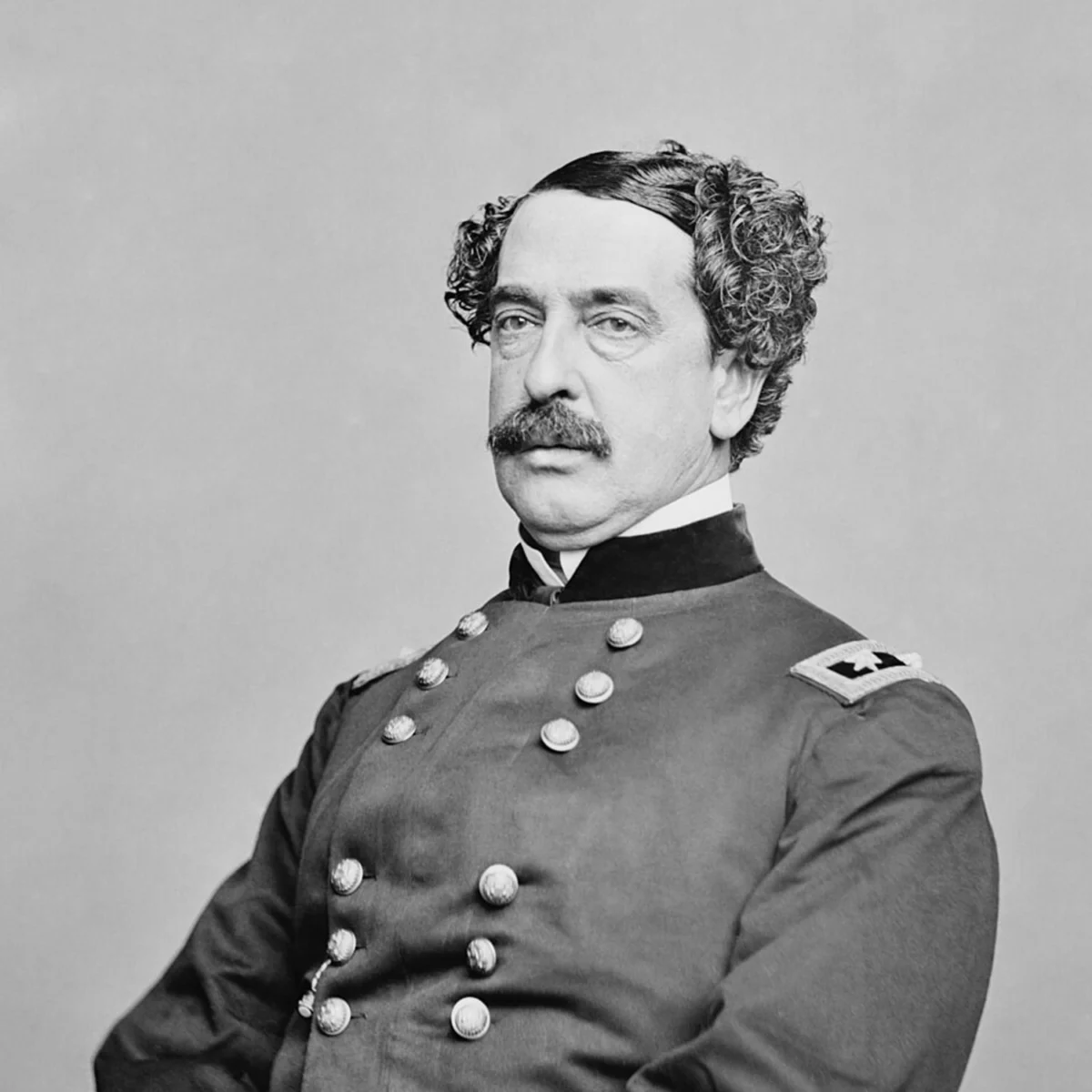
Abner Doubleday stands as a figure etched into American history, revered for his service during the Civil War. Yet, his legacy is often clouded by persistent myths that overshadow his genuine contributions. Contrary to popular belief, Doubleday neither fired the first shot at the Battle of Fort Sumter nor invented baseball. His true story, particularly his critical role in the opening salvos of the Civil War, offers a far more compelling narrative than the fictions that have long been attributed to him.
This article delves into Doubleday’s actual experiences at Fort Sumter, drawing heavily from his own meticulously documented memoirs, Reminiscences of Forts Sumter and Moultrie in 1860-`61, and his essay "I Aimed the First Gun." It aims to separate fact from folklore, celebrating the real hero while dispelling the legends that have, perhaps unintentionally, diminished his true historical significance.
Main Facts: A Soldier’s True Distinction
Abner Doubleday’s historical significance rests on two undeniable pillars: his pivotal involvement at the genesis of the American Civil War and his distinguished service throughout the conflict. While the popular narrative credits him with firing the first shot at Fort Sumter, the truth is more nuanced. Doubleday, then a Captain, meticulously aimed the first gun from the Union side in response to the Confederate bombardment on April 12, 1861. The actual soldier who pulled the lanyard and discharged that cannon was James Gibbons. This distinction, though subtle, is crucial for historical accuracy, yet the "fired the first gun" claim continues to circulate in various publications and online platforms.
Even more pervasive is the myth that Doubleday invented baseball. This widely accepted but entirely baseless claim was concocted by the Mills Commission in 1907. This committee, formed two years prior with the express purpose of establishing baseball as an unequivocally American invention, sought a "founding father" for the sport. Their choice of Doubleday was largely opportunistic and symbolic: as a celebrated Union Civil War hero, he embodied an "all-American" ideal. The commission’s decision was based almost entirely on a dubious letter from one Abner Graves, who claimed to have played a rudimentary form of the game with Doubleday in Cooperstown, New York, in 1839, when Doubleday was actually a cadet at West Point Military Academy. Doubleday himself never made such a claim, nor was he ever near Cooperstown during the alleged period of invention.
Instead, Doubleday is rightfully celebrated for his conduct on the first day of the Battle of Gettysburg on July 1, 1863, where his leadership helped stabilize the Union lines against fierce Confederate assaults. His comprehensive memoirs, Reminiscences of Forts Sumter and Moultrie in 1860-`61, published in 1876, offer invaluable primary source material for understanding the tense prelude to the Civil War and the dramatic events at Charleston Harbor. A reworked portion of this book later became the article "From Moultrie to Sumter," published in Century Magazine circa 1885, and subsequently retitled "I Aimed the First Gun" in the four-volume anthology, Battles and Leaders of the Civil War (1887-1888). These writings affirm his genuine accomplishments, making any fictitious embellishments unnecessary.
Chronology: Eyewitness to the Opening Salvo
Abner Doubleday’s personal account provides an extraordinary window into the escalating tensions in Charleston Harbor during the crucial months leading up to the Civil War. His narrative, characterized by a soldier’s precision and a keen eye for detail, chronicles the precarious existence of Union forces amidst a rapidly seceding South.
The Eve of Conflict: Fort Moultrie’s Perilous Position
In 1860, Captain Doubleday was the senior captain of the 1st Regiment of United States Artillery, stationed at Fort Moultrie, one of three federal installations in Charleston Harbor. Fort Sumter was unfinished and unoccupied, and Castle Pinckney was overseen by a single ordnance sergeant. Fort Moultrie itself was alarmingly vulnerable. Described by Doubleday as "merely a sea battery" with walls "about the height of an ordinary room," it was never designed for defense against an attack from land by American citizens. The sand had drifted so high against its walls that, astonishingly, "cows would actually scale the ramparts."
The Union garrison consisted of a mere 65 men from two companies, plus a band, totaling 73 personnel. Despite applications to have the fort properly fortified, the Quartermaster-General, Joseph E. Johnston (later a prominent Confederate general), dismissed the requests, stating the matter did not pertain to his department. This bureaucratic indifference was compounded by a broader disbelief in the North that secession was imminent, despite growing alarm among officers on the ground.
In November 1860, Major Robert Anderson of Kentucky, a regular army officer, assumed command. Anderson, initially a staunch Unionist, found himself in an impossible position. He immediately recognized Moultrie’s indefensibility and sought to strengthen it, but his efforts were consistently undermined. The Secretary of War, John B. Floyd of Virginia, seemed to be actively working against the Union forces, fabricating a pretext of war with England over Mexico to justify putting Charleston Harbor’s defenses in order – ostensibly to be handed over to Confederate forces. Reinforcements were denied, ammunition was scarce, and even attempts to retrieve supplies from the Charleston arsenal were met with obstruction from an increasingly hostile local populace.
The situation grew dire. Doubleday noted that the surrounding houses on Sullivan’s Island overlooked Moultrie, providing perfect positions for enemy riflemen. A rumor even circulated that 2,000 riflemen were being detailed to shoot them down from these rooftops. Doubleday proposed a pre-emptive strike to burn the dwellings, but Anderson, wary of provoking a conflict the North was still unwilling to acknowledge, refused. The garrison’s isolation was profound; they believed they would receive no support from the North, where many Democrats opposed Lincoln’s election and sympathized with the Southern cause. Adding to their despair, their ostensible "father" figure, the Secretary of War, appeared to be orchestrating their demise.
A Covert Operation: The Move to Fort Sumter
The only viable option was a clandestine move to the more defensible Fort Sumter. Anderson, initially hesitant due to his assignment to Moultrie, eventually recognized the necessity. The plan was executed with remarkable secrecy and ingenuity. On December 24, 1860, Doubleday requested wire for an entanglement around Moultrie, to which Anderson replied with a "peculiar smile" that he would have a mile of it. This seemingly innocuous exchange was a cover for a far more critical operation.
Anderson then summoned the post quartermaster, Hall, binding him to secrecy. Hall was instructed to charter three schooners and several barges, ostensibly to transport the officers’ and men’s families, along with six months’ provisions, to Fort Johnson. If secessionist patrols questioned the activity, he was to explain that the families were being sent North as they were "in the way." This plausible excuse allowed the crucial vessels to be gathered without raising alarm.
The move itself occurred on the evening of December 26, the day after Christmas. Doubleday vividly recalled the "startling and unexpected" order from Anderson: "Captain, in twenty minutes you will leave this fort with your company for Fort Sumter." The urgency was palpable. Doubleday rushed to prepare his men, informed his wife of potential fighting, and escorted her to safety behind the sand-hills.
The companies, led by Doubleday and Captain Truman Seymour, marched a quarter-mile through the town of Moultrieville at sunset, a fortunate hour for the Union soldiers as the Charleston militia were taking their afternoon nap. They reached a low seawall where boats, typically used by workmen, awaited. Doubleday’s party of thirty men embarked first, rowing towards Sumter in the gathering dusk. To evade a secessionist guard-boat, Doubleday instructed his men to remove their coats and cover their muskets, while he himself exposed his uniform to appear as an officer overseeing laborers. The ruse worked; the guard ship inspected them but concluded they were harmless and passed on.
Doubleday’s party was the first to reach Fort Sumter. They ascended the wharf steps into a volatile scene of "excited band of secession workmen, some of whom were armed with pistols." Angrily questioning the soldiers’ presence, the workmen were quickly subdued by Doubleday’s order to "charge bayonets." He secured the guard room, and within minutes, Seymour and the rest of the troops, along with Major Anderson, arrived. A cannon was fired to signal their arrival to the quartermaster at Fort Johnson, who then brought the schooners with families and stores to Sumter. The secessionist workmen were promptly sent back ashore.
The next morning, Charleston erupted in fury. Messengers spread the news, and the governor’s aides demanded the Union forces return to Moultrie. Anderson’s resolute reply, heard by Doubleday, was clear: "he was a Southern man, but that he had been assigned to the defense of Charleston Harbor and intended to defend it."
The First Shots: Doubleday’s Role in the Battle
From December 26, 1860, until April 12, 1861, the Union garrison at Fort Sumter and the Confederate forces surrounding them engaged in a tense standoff, both sides feverishly preparing for the inevitable conflict. Anderson, still hoping for a political compromise that might "save slavery and the Union together," seemingly resisted reinforcements, enduring numerous hostile acts from the secessionists.
The attack on Fort Sumter began at 4:30 AM on April 12, 1861. It was in response to this bombardment that Doubleday played his legendary, albeit misremembered, role. He unequivocally states: "I aimed the first gun on our side in reply to the attack on Fort Sumter." This act of aiming, a precise and critical component of artillery fire, placed him at the very heart of the conflict’s commencement for the Union. After a leisurely breakfast of "pork and water," taken amidst the ongoing bombardment, the Union soldiers fully manned their guns.
The bombardment continued relentlessly. A shot from Sullivan’s Island struck near the magazine lock, bending its copper door and cutting off access to precious cartridges. Officers, under a shower of shells, frantically worked to cut away dangerous woodwork near the magazine. The situation was desperate, but the Union soldiers held their ground until Anderson, out of ammunition and with the fort engulfed in flames, was forced to surrender on April 13.
Aftermath and Return: A Nation Galvanized
Following the surrender, the Union garrison was granted the honor of a hundred-gun salute to their flag before marching out. However, this ceremonial act turned tragic. Due to the recent conflagration, fire and sparks surrounded the cannon. During the salute, some fire flakes entered the muzzle of one gun after it was sponged. When the gunner attempted to ram a cartridge down, it exploded prematurely, instantly killing Private Daniel Hough and severely wounding five other men as a pile of cartridges detonated. The salute was curtailed to fifty guns.
With their banners flying and drums beating "Yankee Doodle," the Union soldiers marched aboard a transport to the steamship Baltic, anchored outside the bar. Their journey to New York marked a profound shift in the nation’s mood.
Doubleday observed a dramatic transformation: "With the first shot against Sumter, the whole North became united." Mobs in New York compelled newspapers and private houses to display the Stars and Stripes, signifying a newfound patriotism and resolve. Upon their arrival in New York, the Fort Sumter garrison received a "royal reception." The streets were adorned with banners, and enthusiastic crowds lifted officers and men onto their shoulders. Merchants, refusing compensation, offered goods freely to the heroes of Sumter. The events at Fort Sumter, and the valiant defense led by Anderson and his officers like Doubleday, had ignited a national fervor, cementing the North’s commitment to preserving the Union.
Supporting Data: The Construction of a Myth
The Myth of Baseball: A Search for American Origins
The myth of Abner Doubleday inventing baseball is not merely an error but a deliberate historical construction driven by a powerful cultural imperative. In the late 19th and early 20th centuries, as baseball solidified its position as America’s "national pastime," there was a strong desire to establish its origins as purely American, distinct from European bat-and-ball games like rounders or cricket.
This desire led to the formation of the Mills Commission in 1905, chaired by Albert G. Spalding, a former baseball star and sporting goods magnate. The commission’s stated goal was to determine "the origin of baseball and prove it was an American invention." Its members, prominent figures in baseball and business, were predisposed to finding an American genesis.
Their "investigation" was deeply flawed, relying heavily on anecdotal evidence and a singular, highly questionable letter. This letter came from Abner Graves, a mining engineer who, in his old age, claimed to have witnessed Doubleday invent baseball in Cooperstown, New York, in 1839. Graves described a game with four bases, nine innings, and nine players, attributing its creation to Doubleday. The commission, eager for a definitive answer and a heroic figure, embraced Graves’s account despite its numerous inconsistencies and the complete lack of corroborating evidence.
The choice of Doubleday was strategic. He was a Union Civil War hero, a figure whose "all-American" credentials were unquestionable. Attaching the invention of baseball to such a revered military leader lent the sport an air of patriotic legitimacy and intrinsic American identity. The commission published its findings in 1907, officially declaring Doubleday the "Father of Baseball," a narrative that quickly became enshrined in popular culture.
However, historical scholarship has long since debunked this claim. Doubleday was a cadet at West Point from 1838 to 1842, making his presence in Cooperstown in 1839 impossible. More importantly, baseball did not spring fully formed from a single invention. It evolved gradually from earlier folk games. The "Knickerbocker Rules," codified by Alexander Cartwright in 1845 for the New York Knickerbocker Base Ball Club, are widely recognized as the foundational rules that transformed earlier bat-and-ball games into what we would recognize as modern baseball. Cartwright and his club established many of the game’s core tenets, including the diamond-shaped infield, tagging players out, and the concept of three strikes.
Historical Context: Charleston on the Brink
The events at Fort Sumter unfolded against a backdrop of profound national crisis. Abraham Lincoln’s election in November 1860, on an anti-slavery platform, triggered immediate secessionist fervor in the South. South Carolina, long a hotbed of states’ rights and pro-slavery sentiment, was the first to secede on December 20, 1860. This act set off a chain reaction, with other Southern states following suit, leading to the formation of the Confederate States of America in February 1861.
Charleston Harbor, a strategically vital port, became a flashpoint. Federal installations like Fort Moultrie, Fort Sumter, and Castle Pinckney were seen by secessionists as symbols of an unwanted Union presence. The political maneuvering described by Doubleday, particularly the actions of Secretary of War John B. Floyd, illustrates the deep divisions within the federal government itself. Floyd, a Virginian who would later join the Confederacy, actively sought to weaken federal positions in the South, including denying reinforcements and supplies to loyal Union officers like Anderson. His actions were a clear betrayal of his oath and further inflamed tensions.
Major Robert Anderson, a Kentuckian with Southern sympathies but unwavering loyalty to the Union, found himself in an unenviable position. His decision to move his beleaguered garrison from the indefensible Fort Moultrie to the more formidable Fort Sumter was a bold and calculated risk. It was an act of self-preservation for his men and a defiant assertion of federal authority in the face of secession. This move, executed with such secrecy and precision, infuriated Charlestonians, who viewed it as an act of aggression and a violation of their sovereignty. The period between the move to Sumter and the attack was a tense stalemate, with both sides consolidating their positions and the nation holding its breath.
Official Responses: The Mills Commission’s Fabrication
The "official response" concerning Abner Doubleday’s role in baseball’s origins comes directly from the Mills Commission itself. In 1907, following two years of "investigation," the commission issued its report, unequivocally stating that "Baseball had its origin in Cooperstown, New York, in 1839, and the author of it was Abner Doubleday." This pronouncement, though devoid of credible evidence, was presented as the definitive truth and was widely accepted by the public and sports enthusiasts for decades.
The commission’s report served a specific cultural and nationalistic purpose. By officially declaring baseball an American invention with a specific American founder, it reinforced a sense of national pride and cultural independence. Doubleday, a decorated Civil War general, provided the perfect patriotic figurehead. The report became the bedrock of the "Doubleday myth," propagated through school textbooks, popular histories, and the Baseball Hall of Fame in Cooperstown, which was later established on the premise of Doubleday’s invention.
It is important to note that this "official response" was not a product of rigorous historical inquiry but rather a successful exercise in myth-making. The baseball community and the wider American public embraced this narrative because it resonated with their desire for a uniquely American origin story for their beloved sport. The commission’s findings, while "official" in their time, have since been thoroughly discredited by professional historians and baseball researchers, who point to the sport’s evolutionary development and the absence of any credible evidence linking Doubleday to its creation.
Regarding Fort Sumter, the official military reports and subsequent historical accounts consistently acknowledge Doubleday’s role as a key artillery officer. His actions were praised for their professionalism and bravery under extreme duress. While the "fired the first shot" claim became a popular misattribution, his actual conduct, including "aiming the first gun," was officially recognized as a significant contribution to the Union’s initial response. The widespread enthusiasm in the North upon the garrison’s return to New York served as an unofficial but powerful affirmation of their courageous stand.
Implications: Preserving History’s Integrity
The story of Abner Doubleday and the myths surrounding him carries significant implications for how we understand and preserve history.
Firstly, it underscores the fragility of historical truth and the ease with which compelling narratives can supplant factual accounts. The desire for simple, heroic origin stories, whether for a nation’s defining sport or a pivotal military event, can lead to the widespread acceptance of unsubstantiated claims. This phenomenon highlights the critical importance of rigorous historical research and primary source analysis in constructing accurate narratives.
Secondly, Doubleday’s case demonstrates the power of narrative in shaping collective memory. The Mills Commission successfully crafted a powerful myth that served a nationalistic purpose, enduring for generations despite its factual inaccuracies. This illustrates how history is not merely a collection of facts but also a constructed narrative, influenced by cultural, political, and social needs of a given time.
Thirdly, it emphasizes the importance of distinguishing between popular legend and documented fact. While myths can sometimes serve to inspire or unify, they can also obscure the genuine achievements of historical figures. By focusing on Doubleday’s actual contributions – his steadfastness at Fort Sumter, his tactical acumen at Gettysburg, and his invaluable memoirs – we gain a deeper and more authentic appreciation for his legacy. His true actions, from the tense covert move to Sumter to his direct role in the first Union artillery response, are inherently heroic and deserve to be remembered accurately.
Finally, the perpetuation of these myths reminds us of the ongoing responsibility of journalists, historians, and educators to challenge misinformation and uphold the integrity of the historical record. In an age of instant information, the temptation to repeat catchy but false claims is ever-present. Doubleday’s story serves as a potent reminder that true heroism and historical significance are often found not in manufactured legends, but in the verified details of a life lived with courage and commitment. His real accomplishments are more than enough for his name to be remembered without the need for additional, and fictitious, ornamentation.