Ancient Heresy Unearthed: The Chilling Lore of Gellasatrac Threatens Cosmic Order
IMPERIAL CITY, AETHELBURG – A recent, clandestine archaeological excavation in the forgotten catacombs beneath the Whispering Peaks has yielded a discovery of profound and disturbing significance: an ancient lorebook detailing the horrific veneration of a hitherto obscure entity known as Gellasatrac. This manuscript, provisionally titled "The Tome of Blighted Flesh" by Imperial Collegium scholars, offers an unprecedented and terrifying glimpse into the primal chaos that underpins the cosmos, potentially reshaping theological understanding and igniting fears of an impending epoch of dissolution.
The lorebook, bound in what appears to be petrified skin and inscribed with symbols that writhe disturbingly in certain lights, chronicles the existence and "sacrifice" of Gellasatrac, referred to chillingly as the "Martyr of the Galchutt." Its contents speak of divine betrayal, monstrous transformation, and a gruesome legacy intended to unleash a force capable of unmaking reality itself. The implications of this text, currently under intense scrutiny by the combined forces of the Imperial Collegium of Arcane Studies and the Ordo Hereticus, are sending ripples of apprehension through academic and ecclesiastical circles alike.
The Main Facts: A Glimpse into the Abyss
The core of the discovery revolves around Gellasatrac, a figure described not merely as a deity, but as a victim and an instrument of profound cosmic horror. The lorebook presents Gellasatrac as "the dead god whose flesh was of our flesh; whose will is of our will; whose power shall be of our power." This entity is paradoxically described as one who "shall Sleep not, nor Walk not," suggesting a state of perpetual, agonizing existence beyond conventional life and death.
Central to the narrative is a horrific act of "divine betrayal" committed by Gellasatrac’s peers. Before entering a slumber, these unnamed divine beings "fell upon one of their beloved named Gellasatrac, shredding him completely so that one future day their servants could feast upon his flesh and his blood and be changed." This dismemberment was not an act of malice, but a calculated, ritualistic sacrifice designed to empower their future servants. Specifically, "Gellasatrac’s ebon hand would bring blessed mutation and lovely transformation, granting those who dared partake the power to free the masters once and for all."
This chilling revelation suggests a cosmic conspiracy, a deliberate sowing of the seeds of chaos by powerful entities, with Gellasatrac as the unwilling, yet instrumental, martyr. The lorebook functions as a guide for cultists, detailing the means by which followers can harness Gellasatrac’s fragmented essence to achieve grotesque apotheosis and hasten a prophesied "Night of Dissolution."
Chronology of a Cosmic Martyrdom
The "Tome of Blighted Flesh" presents a fragmented, yet disturbing, chronology of Gellasatrac’s existence, tracing a path from divine disciple to cosmic sacrifice.
The Disciple of Jessuk and Twister of Flesh
Before his dismemberment and subsequent veneration as the "Maggot of Chaos," Gellasatrac is identified with two key epithets: "Disciple of Jessuk" and "Twister of Flesh." This connection to Jessuk is particularly noteworthy. According to other fragments of lore curated by the Collegium, Jessuk is a formidable entity within the pantheon of Demon Gods, holding a position above the dreaded Galchutt. This places Gellasatrac within a higher, more ancient echelon of cosmic power, suggesting a deliberate integration of the Galchutt into a broader, more terrifying hierarchy.
As the "Disciple of Jessuk," Gellasatrac was presumably an agent or apprentice to a greater power, indicating his initial role within the cosmic order, albeit one aligned with chaotic forces. However, it is the title "Twister of Flesh" that hints at his inherent, horrifying abilities even prior to his ultimate sacrifice. The text declares, "Where his touch writhed, so were our mortal frames transformed and our souls the flames of crucibles." This description paints Gellasatrac as a progenitor of mutation, a being whose very presence warped and reshaped organic matter, not as a destructive force, but as a transformative one. It suggests that Gellasatrac was always intrinsically linked to the concept of physical alteration, a trait that would become central to his posthumous cult.
The Martyr of the Galchutt
The transition from "Disciple" to "Martyr" marks the pivotal moment in Gellasatrac’s narrative. The lorebook asserts that Gellasatrac was "shredded completely" by his peers, a sacrifice intended to create a future source of power for their servants. This act of "divine betrayal" is described with chilling detachment, highlighting the alien morality of these cosmic entities. Gellasatrac’s fragmentation was not an end, but a beginning, transforming him into the "Martyr of the Galchutt."
This martyrdom serves a specific, sinister purpose: to provide "flesh and blood" that could be consumed by mortals, granting them "blessed mutation and lovely transformation." The explicit goal was to empower these servants to "free the masters once and for all," implying that the Galchutt or their overseers are currently constrained or awaiting release. Gellasatrac’s sacrifice, therefore, is depicted as a long-term strategic maneuver in a cosmic struggle, transforming him into a living, albeit dismembered, weapon of chaos.
Supporting Data: The Manifestations of Gellasatrac’s Power
The "Tome of Blighted Flesh" meticulously details the various aspects of Gellasatrac’s influence, from the direct physical corruption wrought by his touch to the ritualistic consumption of his essence.
The Touch of Gellasatrac: Architects of Abominations
The lorebook elaborates significantly on the power inherent in "The Touch of Gellasatrac." This section paints a vivid, terrifying picture of the physical and spiritual transformations induced by his influence. Those "gifted" by Gellasatrac experienced not merely superficial changes, but a fundamental re-sculpting of their very being. "Where his touch writhed, so were our mortal frames transformed and our souls the flames of crucibles." This suggests a process of agonizing yet purposeful alteration, where the individual’s soul is subjected to an infernal forging process, preparing them for a new, monstrous existence.
The purpose of these mutations was not random devastation. Gellasatrac "raised up great, slavering hordes of chaos-touched malformities and fed the armies of the Galchutt with their misshapen, empowered bodies." This confirms Gellasatrac’s role as a biological weapon, a living forge for the monstrous legions of the Galchutt. His touch created not just grotesque aberrations, but functionally empowered entities, designed to serve as shock troops in a larger, cosmic conflict. The transformations granted them not just physical prowess but also, presumably, a twisted loyalty to the Galchutt and their masters.
The Hand of Gellasatrac: Harbinger of Dissolution
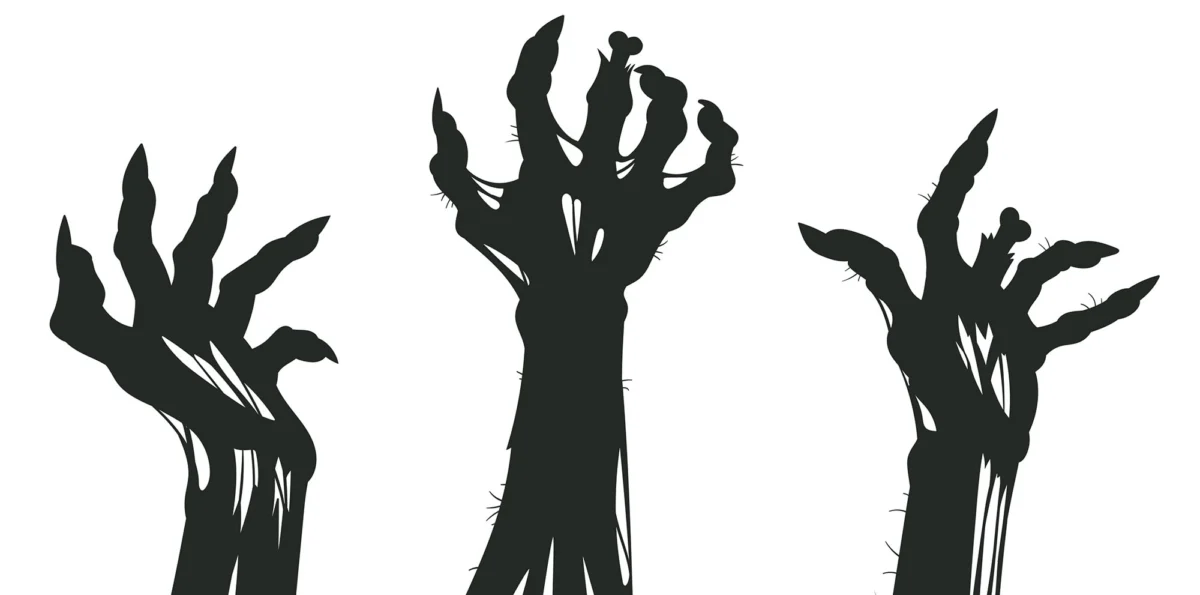
Beyond the general "touch," the lorebook places particular emphasis on "The Ebon Hand of Gellasatrac." This artifact, whether literal or symbolic, holds immense eschatological significance. "And in those times when the powers of chaos shall wax and the Night of Dissolution shall come, the Ebon Hand of Gellasatrac shall return unto those true of their faith and so shall his legacy be fulfilled."
This passage elevates the Hand to a central role in a prophecy of cosmic upheaval. The "Night of Dissolution" is a concept found in other ancient texts, often interpreted as the ultimate triumph of chaos, where the fabric of reality unravels. The return of the Ebon Hand is explicitly linked to this catastrophic event, implying it serves as a catalyst, a rallying point, or even a key to unlocking the final stages of the dissolution. It suggests a tangible focus for cultic devotion, an object or symbol through which Gellasatrac’s power can be channelled most effectively to usher in the end times.
The Legacy of Gellasatrac: Rituals of Unholy Communion
Perhaps the most disturbing section of the lorebook outlines the rituals necessary to truly embrace "The Legacy of Gellasatrac." This involves a direct, visceral communion with the fragmented essence of the dead god. "Let his blue blood be drunk into the pores of the soul. Let his black bile be vomited from the slit-wound of the mouth. And so shall he live in your flesh."
These instructions describe a dual, horrifying ritual. The consumption of "blue blood" suggests a form of spiritual ingestion, where Gellasatrac’s vital essence permeates the very soul of the devotee, inducing internal transformation. The subsequent "vomiting" of "black bile from the slit-wound of the mouth" is even more grotesque, implying a purging of mortal impurities and the emergence of a new, mutated physiology, perhaps even a new means of communication or attack. The phrase "slit-wound of the mouth" itself is deeply unsettling, hinting at physical alteration as a prerequisite or consequence of the ritual.
The ultimate promise is that Gellasatrac "shall live in your flesh." This is not mere imitation or devotion, but a terrifying symbiotic possession, where the devotee becomes a living vessel for the fragmented consciousness and power of the "Maggot of Chaos." This promises not only mutation but a form of immortality or rebirth through the dead god’s essence, making the devotee an extension of Gellasatrac’s will and power.
Official Responses and Scholarly Dissection
The discovery of the "Tome of Blighted Flesh" has triggered an unprecedented collaborative effort between the Imperial Collegium of Arcane Studies and the Ordo Hereticus, the Empire’s primary institution for identifying and eradicating existential threats.
Archivist-General Theron Vail of the Imperial Collegium described the manuscript as "a Rosetta Stone for understanding the deeper machinations of the Galchutt and their progenitors. It’s a horrific text, certainly, but its academic value in clarifying the true hierarchy of cosmic chaos is immense." He emphasized the lorebook’s "setting weaving," noting how it integrates the Galchutt into the larger "Demon Court" pantheon through Jessuk. "For years, the Galchutt were seen as an apex evil. This text, alongside ‘Lore of the Demon Court,’ shows them as but one tier in a far more complex and terrifying cosmic structure, with figures like Jessuk, and by extension Gellasatrac, playing crucial intermediary roles."
However, the Collegium’s academic enthusiasm is tempered by the grim realities presented by the Grand Inquisitor Seraphina Vane of the Ordo Hereticus. "This isn’t merely academic curiosity; it’s a blueprint for apocalypse," Inquisitor Vane stated in a rare public address. "The text provides explicit instructions for cultic practice, detailing how to invoke and embody the very essence of chaos. Our primary concern is the potential for this knowledge to fall into the wrong hands, or worse, to be actively sought out by existing cults of the Ebon Hand or other malefic sects."
Indeed, preliminary investigations have already linked the lorebook to fragments of other texts, particularly "Touch of the Ebon Hand," which described a cult dedicated to Gellasatrac. The "Tome of Blighted Flesh" acts as a foundational document for such cults, providing the theological underpinning and practical guidance for their abhorrent rituals. "It’s a natural companion piece," noted Vail, "each lorebook offering unique, yet complementary, revelations that deepen the overall understanding of this insidious faith."
The Ordo Hereticus has already initiated a widespread intelligence gathering operation, attempting to identify any groups that might already possess similar knowledge or be actively seeking it. Enhanced surveillance of known heretical cells and unusual biological mutations reported in remote regions has been ordered. The sheer audacity of the rituals described, particularly the consumption of bodily fluids and the deliberate self-mutilation, has shocked even veteran Inquisitors.
Implications: A Shadow Over the Empire
The discovery of the "Tome of Blighted Flesh" carries profound implications, not just for theological scholars but for the very stability of the Empire and the wider world.
Resurgence of Chaos Cults
The most immediate and pressing concern is the potential for a resurgence, or indeed an intensification, of chaos cults. The lorebook offers not just an ideology but a tangible path to power and transformation, however horrific. For desperate, nihilistic, or power-hungry individuals, the promise of "blessed mutation and lovely transformation" and the ability to "free the masters" might be an irresistible draw. The Ordo Hereticus fears that the detailed instructions for consuming Gellasatrac’s essence could embolden existing cults, allowing them to perform more potent rituals and create more formidable "chaos-touched malformities." The rise of such empowered creatures would pose an unprecedented threat to public safety and Imperial authority.
Theological Upheaval
For millennia, the established faiths of the Empire have presented a relatively ordered cosmos, even with the presence of malevolent entities. The revelation of Gellasatrac’s "divine betrayal" and his role as a sacrificed deity for the benefit of the Galchutt’s masters fundamentally challenges this understanding. It suggests that even the gods themselves are entangled in a horrifying, multi-layered conflict, capable of unspeakable acts against their own. This could lead to a crisis of faith, questioning the benevolence or even the ultimate power of the established divine order. If gods can be shredded and their essence consumed for evil, what hope is there for mortals?
The Prophecy of the Night of Dissolution
The explicit mention of "the Night of Dissolution" and the return of "The Ebon Hand of Gellasatrac" has ignited eschatological fears. While prophecies of the world’s end are not uncommon, this lorebook offers a specific mechanism and an active agent for its initiation. If the "powers of chaos shall wax" as foretold, the Empire could be facing not just a military or political threat, but an existential cosmic unraveling. The implications for Imperial defense strategies, long focused on external threats and internal heresy, would need to expand to encompass the very fabric of reality.
Biological and Arcane Warfare
The concept of Gellasatrac as the "Twister of Flesh" and the progenitor of "chaos-touched malformities" suggests a new front in potential conflict: biological and arcane warfare. Should cults succeed in creating empowered monstrous hordes, conventional military forces might prove inadequate. The Collegium is already re-evaluating known magical countermeasures and exploring potential weaknesses of these "mutated" beings, should they ever manifest on a significant scale. The ethical dilemmas surrounding the study of such abhorrent biological processes are also being fiercely debated.
In conclusion, the discovery of the "Tome of Blighted Flesh" is far more than an academic curiosity. It is a stark warning, a grim prophecy, and a chilling instruction manual for cosmic horror. As scholars painstakingly decipher its every twisted word and Inquisitors hunt for its potential adherents, the shadow of Gellasatrac – the martyr, the twister, the maggot – looms large over the future of the Empire, threatening to plunge it into a "Night of Dissolution" from which there may be no return. The true legacy of Gellasatrac, it seems, is only just beginning to unfold.