The New Frontier of Wearable AI: How Even Realities is Challenging Meta’s Dominance
The landscape of wearable technology is undergoing a seismic shift. While the tech world has spent the last decade focused on the "black mirrors" in our pockets, a new battleground has emerged directly in front of our eyes. Even Realities, a Shenzhen-based startup, has recently ascended to unicorn status with a $1 billion valuation, signaling a major disruption in the smart glasses sector. However, the most compelling aspect of this story is not just the valuation, but the company’s paradoxical market strategy: it is a Chinese-funded, Chinese-manufactured entity that is finding its primary foothold in the United States, positioning itself as the most significant challenger to Meta’s hardware ambitions.
Main Facts: The Rise of a Privacy-First Unicorn
Even Realities has achieved what many hardware startups fail to do in their first decade: securing a billion-dollar valuation while carving out a distinct niche in a market dominated by a trillion-dollar titan. The company’s flagship product, the G2 smart glasses, represents a fundamental departure from the current industry standard set by Meta’s Ray-Ban collaboration.
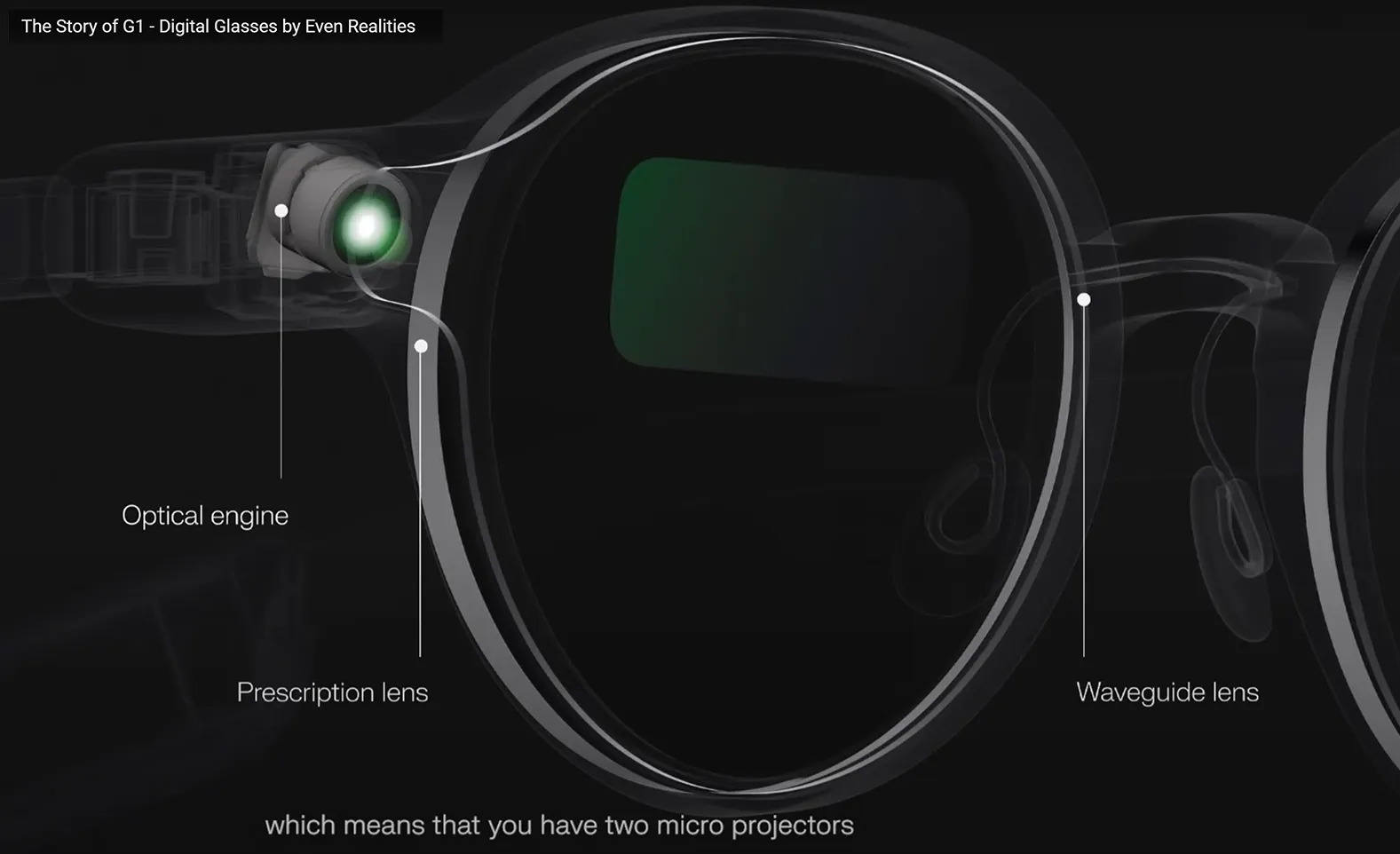
The defining characteristic of Even Realities’ strategy is its "camera-free" philosophy. While Meta, Snap, and various Chinese competitors have integrated cameras for content creation and spatial mapping, Even Realities has opted for a privacy-first, information-centric approach. The G2 glasses focus on a sophisticated Heads-Up Display (HUD) that delivers notifications, real-time navigation, instant translation, and AI-driven prompts without the social friction or privacy concerns associated with integrated cameras.
Perhaps most surprising is the company’s demographic footprint. Despite its roots in Shenzhen—the world’s hardware manufacturing capital—Even Realities is not currently prioritizing the Chinese domestic market. Instead, over 50% of its user base is located in the United States. Furthermore, an estimated 80% of its developer community is U.S.-based, indicating that the intellectual and creative ecosystem surrounding the hardware is firmly planted in the West. This puts Even Realities in direct competition with Meta on its home turf, utilizing Chinese capital and manufacturing efficiency to challenge the Ray-Ban Meta glasses.
Chronology: From "Glassholes" to AI Integration
To understand the emergence of Even Realities, one must look at the turbulent history of smart eyewear.
- 2013–2015: The Google Glass Era. The initial attempt at smart glasses failed largely due to "social rejection." The integrated camera led to the derogatory term "Glasshole," as bystanders felt uncomfortable being recorded. This era taught the industry that social etiquette is as important as technical specifications.
- 2016–2021: The Pivot to Audio and Niche AR. During this period, companies like Bose and Amazon experimented with audio-only glasses, while Magic Leap and Microsoft HoloLens focused on high-end enterprise AR. Smart glasses remained a niche product for enthusiasts and industrial workers.
- 2023: The Meta-Ray-Ban Breakthrough. Meta’s partnership with EssilorLuxottica changed the narrative. By making smart glasses look like iconic fashion pieces, Meta proved that consumers would wear technology on their faces if it looked "normal."
- Early 2024: The AI Explosion. The rise of Large Language Models (LLMs) provided the "killer app" for smart glasses. Instead of just taking photos, glasses could now "see" (via cameras) or "hear" (via microphones) and provide intelligent feedback.
- Mid-2026: The Emergence of Even Realities. As the market matured, Even Realities identified a fatigue with constant surveillance. They launched the G2, betting that a significant portion of the market wanted the benefits of AI and a HUD without the liability of a camera. By July 2026, the company hit its $1 billion valuation, marking the arrival of the first major "camera-free" competitor in the high-end consumer space.
Supporting Data: A Market in Hyper-Growth
The smart glasses market is no longer a speculative venture; it is a high-volume consumer category. Recent data from the International Data Corporation (IDC) highlights the sheer scale of the opportunity and the challenge facing new entrants.
Market Share and Growth
In the first quarter of 2026, global smart glasses shipments reached 2.25 million units. This represents a staggering 167% increase year-over-year. Meta remains the undisputed leader, controlling nearly 70% of the global market. This dominance is attributed to its aggressive pricing, massive marketing budget, and the prestige of the Ray-Ban brand.

The Pricing Barrier
Even Realities is positioning itself as a premium alternative. The pricing structure for the G2 reflects this:
- Base Model: Starts at $599 (excluding tax).
- Prescription Lenses: Can add $150–$300 to the cost.
- R1 Ring Peripheral: An additional accessory for gesture control, which can push the total package price toward the $1,000 mark.
In contrast, the Ray-Ban Meta glasses start at approximately $299. Even Realities is betting that users will pay a 100% premium for a heads-up display and enhanced privacy—features Meta’s current display-less AI glasses lack.
Geographic Distribution
While the manufacturing happens in China, the revenue is coming from:
- United States: >50% of users.
- Japan & South Korea: High adoption of HUD-based navigation and translation.
- Europe & Middle East: Emerging markets with strict privacy regulations (GDPR) where a camera-free option is highly attractive.
Official Strategy: The "Privacy-First" Philosophy
While official corporate statements from Even Realities emphasize "seamless integration," the underlying strategy is a calculated response to the limitations of current AR hardware.
The company’s leadership has indicated that the decision to omit the camera was both technical and philosophical. Technically, removing a camera reduces power consumption and heat, allowing for a thinner, more "normal" looking frame. Philosophically, it positions the G2 as a tool for the wearer, rather than a tool for capturing others.
Even Realities’ spokesperson has noted that their goal is to move away from the "phone-tethered" lifestyle. By providing a HUD for navigation and translation, they aim to reduce "screen time" on smartphones. The company is also heavily investing in its developer API, encouraging U.S. developers to create "Glances"—micro-apps that provide information in under three seconds. This focus on the developer community in the U.S. is a strategic move to ensure the glasses have a rich ecosystem of Western apps, making them a viable alternative to Meta’s integrated suite.
Implications: A Geopolitical Tech Race on the Face
The rise of Even Realities carries significant implications for the future of the tech industry, ranging from geopolitical competition to the evolution of human-computer interaction.

1. The Manufacturing vs. Brand Paradox
Even Realities represents a new breed of Chinese startup. Unlike previous generations that focused on the massive Chinese domestic market first, Even is using China’s superior supply chain and venture capital to build a brand that appeals specifically to Western sensibilities regarding privacy and minimalism. This suggests that the next wave of global tech giants may be "geographically fluid"—funded in the East but cultured in the West.
2. The Privacy Advantage in a Regulated World
As the U.S. and EU continue to tighten privacy laws, Meta’s camera-equipped glasses may face increasing regulatory hurdles in public spaces. Even Realities is effectively "future-proofing" its hardware against such regulations. If "no-camera" zones become more common in offices, schools, or hospitals, Even Realities could become the default choice for professionals who need AI assistance without violating privacy protocols.
3. The End of the Smartphone Era?
The success of both Meta and Even Realities suggests that the industry is finally moving toward "Ambient Computing." If a pair of glasses can handle 80% of a user’s quick interactions—checking a text, following a map, or translating a menu—the smartphone becomes a secondary device, used only for heavy lifting. Even Realities is betting that the "interface of the future" isn’t a screen you hold, but a layer of information over the world you see.
4. The Challenge of Scale
Despite its unicorn status, Even Realities faces an uphill battle. Meta has the advantage of "platform lock-in" with Instagram, WhatsApp, and Facebook. For Even Realities to survive, it must prove that its hardware is so superior—and its "camera-free" niche so valuable—that users are willing to leave the Meta ecosystem. The next two years will determine if the G2 is a sustainable platform or a high-end novelty for the privacy-conscious elite.
In conclusion, Even Realities has turned the smart glasses market into a high-stakes chess match. By focusing on the U.S. market and prioritizing privacy over photography, they have forced Meta to look over its shoulder. Whether this Shenzhen-born unicorn can maintain its momentum against the social media giant remains the most watched story in wearable tech.