The Hidden Ledger of Tortuga: Unearthing Disney’s Forgotten ‘Pirates of the Caribbean’ Prequel
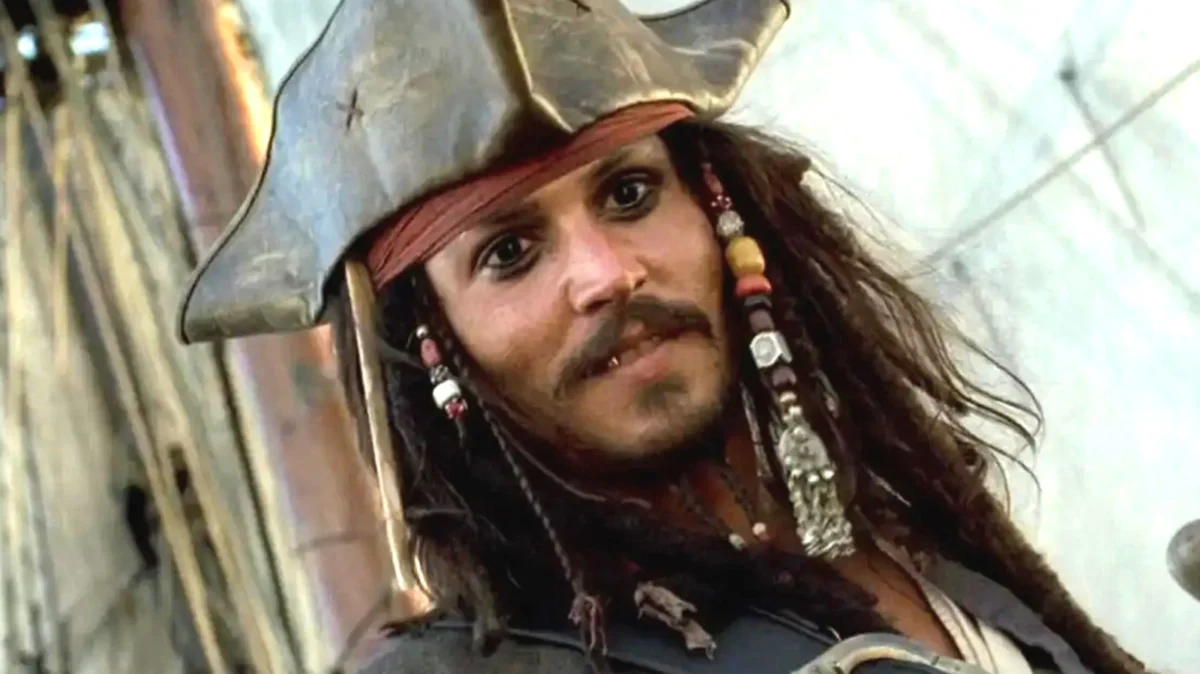
In the annals of modern cinematic history, few franchises have navigated the treacherous waters of global box-office expectations as successfully—or as turbulently—as Disney’s Pirates of the Caribbean. What began in 2003 as a high-risk gamble based on a 1967 theme park attraction evolved into a $4.5 billion juggernaut that redefined the "swashbuckler" genre for the 21st century. However, tucked away within the massive trove of sequels, spin-offs, and merchandise lies a piece of official canon that has remained largely invisible to the general public: a 10-minute prequel titled Pirates of the Caribbean: Tales of the Code: Wedlocked.
This short film, released quietly in 2011, serves as a curious artifact of a time when Disney was attempting to expand the Pirates lore through experimental, short-form media. Directed by James Ward Byrkit and featuring recurring minor characters from the main films, Wedlocked offers a window into the "Pirate Code" that governs the franchise’s chaotic world, while simultaneously highlighting the studio’s efforts to sustain momentum between billion-dollar theatrical releases.
Main Facts: The Genesis of ‘Wedlocked’
Pirates of the Caribbean: Tales of the Code: Wedlocked is an official live-action short film that serves as a direct prequel to the 2003 film The Curse of the Black Pearl. While most fans are familiar with the five feature-length outings of Captain Jack Sparrow, Wedlocked exists as a niche supplement, originally included only in the 15-disc "Four-Movie Collection" Blu-ray box set released in late 2011.
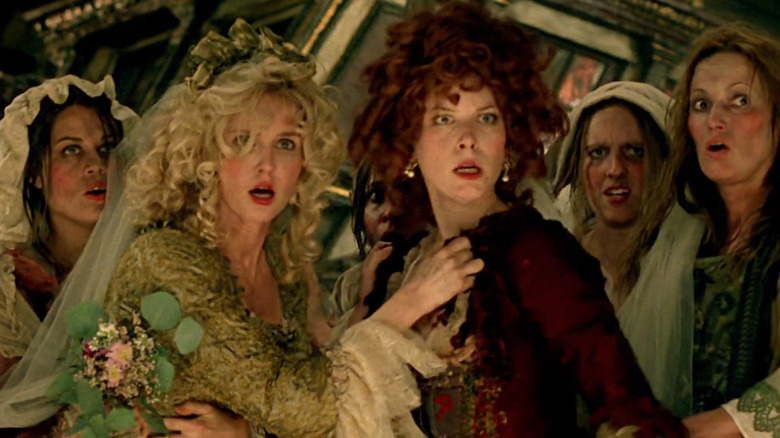
The short was directed by James Ward Byrkit, a frequent collaborator of original trilogy director Gore Verbinski. Byrkit, who would later gain cult fame for directing the mind-bending sci-fi thriller Coherence (2013), brought a distinct, albeit more comedic, sensibility to the project. Unlike the sprawling, VFX-heavy spectacles of the main films, Wedlocked is a contained, dialogue-driven piece that focuses on two characters who became a running gag in the franchise: Scarlett (Lauren Maher) and Giselle (Vanessa Branch).
In the theatrical films, Scarlett and Giselle are the two Tortuga residents who famously slap Jack Sparrow across the face for his various romantic betrayals. Wedlocked provides the "origin story" for these slaps, detailing a chaotic auction and a misunderstanding involving the Pirate Code that leaves both women jilted and furious.
Chronology: A Franchise in Flux (2003–2011)
To understand why Wedlocked exists, one must look at the timeline of the franchise’s meteoric rise and its subsequent attempts at diversification.
2003–2007: The Verbinski Era
The franchise launched with The Curse of the Black Pearl (2003), a film that defied industry skepticism to earn $654 million. Disney immediately commissioned two sequels, filmed back-to-back: Dead Man’s Chest (2006) and At World’s End (2007). These films were massive undertakings; At World’s End alone cost an estimated $300 million, making it the most expensive film ever made at the time. Despite their "bloated" runtimes and complex plotting, they were financial triumphs, with Dead Man’s Chest becoming only the third film in history to gross over $1 billion.
2011: The Transition and the Short
By 2011, the franchise was at a crossroads. Gore Verbinski had departed, and Rob Marshall took the helm for the fourth installment, On Stranger Tides. It was during this production cycle that Wedlocked was conceived and produced. Released alongside the fourth film’s home media cycle, the short was intended to bridge the gap between the original trilogy and the new direction of the series.
The Production Window
The filming of Wedlocked was a feat of industrial efficiency. It was shot over the course of just three days. To maintain the high production value associated with the brand on a fraction of the budget, Byrkit utilized the massive, pre-existing sets built for At World’s End at the Universal Studios backlot and other locations. These sets were scheduled for demolition, and the production of Wedlocked essentially "recycled" the artistry of the main films to create a high-fidelity short at a minimal cost.
Supporting Data: The Economics of Piracy
The Pirates of the Caribbean franchise is a study in escalating stakes. The financial data highlights why Disney felt the need to experiment with smaller "canonical" additions like Wedlocked to keep the brand’s lore alive in the minds of consumers.
| Film Title | Release Year | Budget (Estimated) | Global Box Office |
|---|---|---|---|
| The Curse of the Black Pearl | 2003 | $140 Million | $654.3 Million |
| Dead Man’s Chest | 2006 | $225 Million | $1.066 Billion |
| At World’s End | 2007 | $300 Million | $960.9 Million |
| On Stranger Tides | 2011 | $378 Million | $1.045 Billion |
| Dead Men Tell No Tales | 2017 | $230 Million | $794.9 Million |
While the box office numbers remained high, critical reception began to wane after the first film. Critics often pointed to the "overstuffed" nature of the sequels. Wedlocked, by contrast, was an attempt at a lean, 10-minute narrative. However, even with its shorter runtime, the short struggled to capture the lightning-in-a-bottle charm of the 2003 original. It relied heavily on "overacting" and slapstick humor, a departure from the witty, character-driven subversion that Johnny Depp initially brought to the role of Jack Sparrow.
Official Responses and Creative Vision
The creative impetus behind Wedlocked was not merely to provide "bonus features" for a Blu-ray set, but to test the waters for a potential anthology series.
In a 2011 interview with The Washington Post, director James Ward Byrkit revealed that he had envisioned a much larger project. "I envisioned something based on the Pirate Code Book," Byrkit stated, "because that implied a device that could tie other stories in later."
The "Pirate Code"—or the Pirata Codex—had become a fan-favorite element of the lore after its prominent role in At World’s End, where Keith Richards made a cameo as Captain Teague, the Keeper of the Code. Byrkit’s vision was to create a series of "Tales of the Code" that would explore the absurd legalistic loopholes of the pirate world.
However, the response to Wedlocked was muted. While fans appreciated the return of minor characters like the auctioneer (played with theatrical flair by John Vickery), the short was criticized for lacking the presence of the franchise’s main stars. Johnny Depp does not appear in the short, though his character is the catalyst for the plot. This absence highlighted a recurring problem for Disney: the Pirates brand was, for better or worse, inextricably tied to the persona of Jack Sparrow.
Implications: The Future of the Franchise
The existence of Wedlocked carries several implications for the past and future of Disney’s franchise management.
1. The Prototype for the "Expanded Universe"
Wedlocked was an early attempt at what is now standard practice for major studios: the creation of "connective tissue" content. This strategy is now seen in the Marvel Cinematic Universe "One-Shots" or the various Star Wars shorts on Disney+. At the time, however, the infrastructure for streaming did not exist to support such a venture, leading Wedlocked to be buried in a physical media release.
2. The Narrative Limits of the "Pirate Code"
The short proved that while the lore of the Pirate Code was an interesting world-building tool, it was perhaps not substantial enough to carry a standalone series without the gravitational pull of the franchise’s A-list stars. The "wit" of the short—such as the realization that "owners" are responsible for the actions of their "property"—offered a glimpse into the satirical potential of the series, but it was never fully realized.
3. A Franchise in Limbo
Today, the Pirates of the Caribbean franchise sits at a dead end. With the legal and public relations controversies surrounding Johnny Depp, Disney has struggled to find a path forward. Projects involving Margot Robbie have been rumored and subsequently stalled, and the prospect of a sixth film remains a subject of intense speculation rather than concrete planning.
Conclusion
Pirates of the Caribbean: Tales of the Code: Wedlocked remains a fascinating footnote. It represents a moment of creative ambition where a director tried to use the "scraps" of a $300 million blockbuster to build something new. While it may not have succeeded in launching a new era of Pirates storytelling, it serves as a reminder of the franchise’s peak—a time when the world of Tortuga was so vast and its pockets so deep that even the minor characters were given a chance to step into the spotlight, if only for ten minutes, before the sets were finally torn down. For the completionist, it is a mandatory watch; for the casual fan, it is a curious relic of a bygone era of high-seas adventure.