The Architect of the Omniverse: The Life, Legacy, and Systematic Genius of Mark Gruenwald

In the high-stakes, multi-billion-dollar landscape of modern entertainment, the concept of a "cinematic universe" is a household term. However, long before the Marvel Cinematic Universe (MCU) dominated global box offices, the intricate, interlocking gears of the Marvel Comics continuity were maintained by a single, tireless individual: Mark Gruenwald. A writer, editor, and self-appointed "continuity cop," Gruenwald’s life was a testament to the belief that comic books were not merely disposable entertainment, but a modern mythology requiring the rigor of a historian and the soul of a fan.
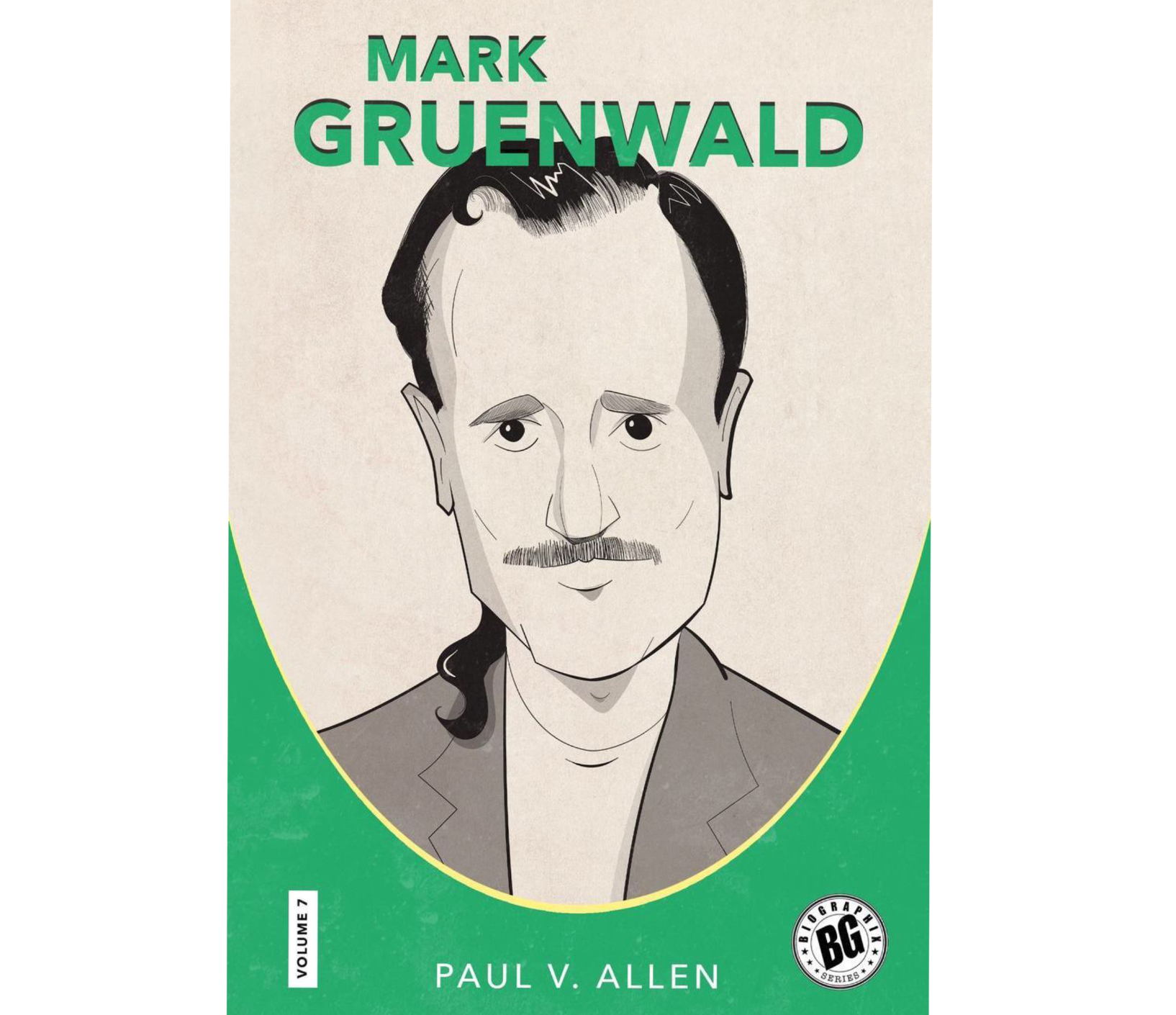
The recent publication of Paul Allen’s biography of Gruenwald provides a deep, scholarly dive into a man who served as the backbone of Marvel Comics for nearly two decades. Gruenwald’s story is one of boundless imagination, corporate upheaval, and a tragic, premature end that signaled the closing of an era in the comic book industry.
Main Facts: The Man Behind the Marvel Bible
Mark Gruenwald joined Marvel Comics in 1978, eventually rising to the position of Executive Editor. While he was a prolific writer—penning a decade-long run on Captain America and the seminal maxiseries Squadron Supreme—his most enduring contribution was his role as the architect of the Marvel Universe’s internal logic.
In 1982, Gruenwald spearheaded the creation of the Official Handbook of the Marvel Universe. This was not merely a promotional pamphlet; it was a 15-issue, 330-page encyclopedia that codified the heights, weights, power levels, and biographical histories of every character in the Marvel canon. To Gruenwald, these characters were not fictional constructs but entities whose lives followed a consistent, if alternate, reality.
His career was defined by a unique editorial philosophy: he viewed himself and his fellow creators as "transcribers" of events happening in another dimension. If a story contradicted a previous one, it wasn’t just a writing error; it was a "mistake in transcription" that required a logical, in-universe explanation. This dedication to consistency turned Marvel into a cohesive "Omniverse"—a term Gruenwald popularized to describe the totality of all possible realities.
Chronology: From Oshkosh to Park Avenue South
The Early Years and the Treehouse Motif
Gruenwald’s journey began in Oshkosh, Wisconsin. Unlike the stereotypical image of the isolated, socially awkward comic book fan, Gruenwald was a charismatic and multi-talented youth. He excelled in academics, starred in rock operas, and fostered a tight-knit circle of friends.
The central motif of his childhood was a custom-built clubhouse above his family’s garage. This space served as the headquarters for his "JLA Club," where he and his friends would imitate the heroes of the Justice League. This clubhouse would later be immortalized in the pages of his Quasar series, symbolizing a sanctuary where imagination and reality blurred—a theme that would persist throughout his professional life.
The Rise of the "Omniverse" (1970s)
In the mid-1970s, Gruenwald began making waves in the "fanzine" community. He published Omniverse, a journal dedicated to the technical aspects of comic book continuity. He even authored a pseudo-doctoral thesis titled A Treatise on Reality in Comic Literature (TORICL). These works caught the attention of Jim Shooter, Marvel’s then-Editor-in-Chief, who saw in Gruenwald the systematic mind needed to bring order to Marvel’s increasingly chaotic storylines.
The Golden Era of the Handbook (1980s)
By 1982, Gruenwald had established a literal "fort" inside his Marvel office on Park Avenue South. Constructed from requisitioned furniture and fueled by consecutive all-nighters, this "secret headquarters" became the birthplace of the Official Handbook of the Marvel Universe. Alongside colleagues like Mike Carlin and Eliot Brown, Gruenwald worked with a religious fervor to ensure that every "fact" about the Marvel Universe was documented. The project was a massive commercial success, proving that fans craved the same level of detail and consistency that Gruenwald did.
The "Marvelution" and the End of an Era (1990s)
The 1990s brought tectonic shifts to the industry. Marvel was acquired by Revlon magnate Ron Perelman, leading to a period of aggressive corporate restructuring known as "Marvelution." The company’s editorial department was fractured into five independent "fiefdoms," effectively dismantling the centralized continuity that Gruenwald had spent his life protecting. In 1996, while on vacation, Gruenwald died suddenly of a heart attack at the age of 43.
Supporting Data: The Impact of Squadron Supreme
While the Official Handbook was his technical masterpiece, Squadron Supreme (1985-1986) was his creative magnum opus. This 12-issue series explored a world where a group of superheroes decides to take over the government to create a utopia.
- Philosophical Weight: The series predated many of the themes found in Alan Moore’s Watchmen, questioning the morality of superhero authority.
- A Technical Approach: Unlike the deconstructive, gritty tone of Watchmen, Gruenwald’s Squadron Supreme was written in a traditional, almost Silver Age style, which some critics argue made its radical themes even more unsettling.
- Legacy: The series remains a cult classic and is often cited by writers like Warren Ellis and Mark Millar as a foundational text for modern, political superhero deconstruction.
Official Responses and Industry Context: The Struggle for Continuity
Gruenwald’s tenure was not without friction. His "continuity cop" persona often put him at odds with other creators who felt his insistence on logic stifled their artistic freedom.
One notable conflict involved veteran writer Roger Stern. Gruenwald insisted that Monica Rambeau (then the leader of the Avengers) be removed from her leadership role to make way for Captain America—a character Gruenwald was writing at the time. This highlighted the tension between Gruenwald’s role as an editor (the guardian of the brand) and his role as a writer (a participant in the sandbox).
Furthermore, the "Marvelution" of the mid-90s represented a corporate rejection of Gruenwald’s philosophy. The new management prioritized "collectability" and flashy "Issue #1" relaunches over long-term narrative consistency. The rise of Image Comics—which focused on high-octane art over dense continuity—signaled that the market was moving away from the "transcription" model Gruenwald championed.
Implications: The Modern Omniverse
The death of Mark Gruenwald marked the end of the "Bullpen" era of Marvel—a time when the company felt like a small, eccentric family working toward a shared vision. However, his influence has never been more visible than it is today.
The MCU and the Multiverse
The current phase of the Marvel Cinematic Universe is built almost entirely on the concepts Gruenwald pioneered. The idea of the "Multiverse," the meticulous tracking of "variants," and the use of deep-cut lore to reward long-term fans are all direct descendants of the Official Handbook philosophy. Gruenwald’s "Omniverse" provided the blueprint for how a multi-platform entertainment franchise could maintain a single, coherent narrative across decades.
A Final, Morbid Joke
In a final act of devotion to the medium, Gruenwald requested that his ashes be mixed with the ink of a trade paperback collection of Squadron Supreme. This wasn’t just a macabre stunt; it was a literal manifestation of his life’s work. He wanted to become part of the physical object he loved so much.
Conclusion: The Singularity of Mark Gruenwald
Mark Gruenwald was a man who refused to believe that the things he loved were "just stories." By treating the Marvel Universe as a real place, he gave it a weight and a dignity that allowed it to transcend the printed page. While the industry has moved toward endless reboots and cinematic spectacle, the foundation of that success remains the meticulous, joyful, and systematic world-building of the boy from Oshkosh.
In the end, Gruenwald didn’t just edit comics; he curated a reality. As the concept of the multiverse continues to dominate our cultural zeitgeist, we are all, in a sense, living in Mark Gruenwald’s clubhouse. He remains the singularity from which a thousand fictional universes continue to spring.