The Architect of the Subconscious: Alfred De Angelo and the New Frontier of Surrealism
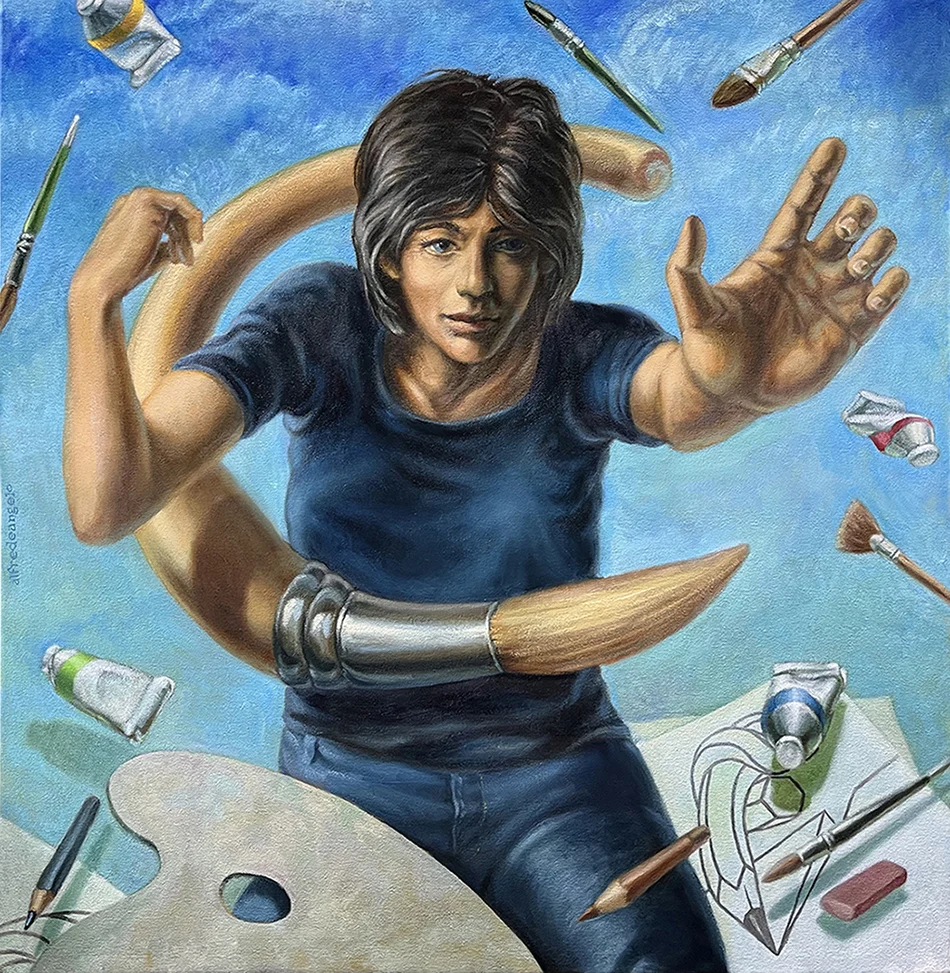
In an era increasingly defined by the sterile precision of digital algorithms and the rapid-fire consumption of ephemeral media, the work of Alfred De Angelo emerges as a profound counterpoint. A master of the surrealist tradition, De Angelo does not merely paint; he constructs doorways. His canvases serve as thresholds into a sensual, provocative world where the boundaries of reality are blurred by a remarkable technical fluency. As the art world grapples with the integration of artificial intelligence and the shifting landscape of human expression, De Angelo’s work stands as a testament to the enduring power of the human psyche and the specialized craft of the classically trained painter.
Main Facts: A Visionary Aesthetic
Alfred De Angelo is not a traditionalist in the restrictive sense, but his work is grounded in a level of expertise that demands attention. His paintings are characterized by what critics describe as a "provocative beauty"—a term that captures the tension between the aesthetic allure of his images and the unsettling, often bewildering nature of their subject matter.
De Angelo’s primary objective is to lure the viewer out of their "well-worn patterns of thought." In a psychological context, humans rely on cognitive shortcuts and familiar narratives to navigate the world. De Angelo’s art intentionally disrupts these pathways. By presenting imagery that is simultaneously "beguiling and bewildering," he forces a confrontation with the limits of understanding. This is the hallmark of high-tier surrealism: the ability to grant the viewer "permission to be amazed, confused, and delighted" all at once.
The artist’s work is currently gaining renewed traction as part of a broader resurgence in surrealism—a movement often revitalized during times of global uncertainty. Through his private website, artistpainter.ws, and features in leading contemporary art journals like Surrealism Today, De Angelo has established a "private vocabulary of images" that seeks to embody the "essential mystery of existence."
Chronology: From Academic Rigor to Surrealist Mastery
The technical brilliance of De Angelo’s work is no accident; it is the result of a rigorous academic journey through two of the most prestigious art institutions in the United States.
The Foundational Years: Massachusetts College of Art
De Angelo’s formal journey began at the Massachusetts College of Art (MassArt), where he earned his Bachelor of Fine Arts (BFA). Founded in 1873, MassArt has a long-standing reputation for fostering independent thinkers and technically proficient artists. It was here that De Angelo likely honed the fundamental skills of delineation and composition that allow his current work to feel so "fluent." During this period, the artist would have been immersed in the history of Western art, learning to master the physical properties of paint before beginning to subvert them.

The Refinement of Vision: Rhode Island School of Design
Following his undergraduate success, De Angelo moved to the Rhode Island School of Design (RISD) to pursue his Master of Fine Arts (MFA). RISD is globally recognized as a premier institution for the arts, known for its intense, critique-heavy environment that pushes artists to find their unique voice.
It was during his time at RISD that De Angelo’s work likely transitioned from the representational toward the surreal. The MFA program at such an institution requires an artist to defend their "vocabulary" and justify their aesthetic choices. This period was crucial in developing the philosophical depth found in his current artist statement: the realization that life experiences are localized and subjective, and that the role of the artist is to bridge the gap between the personal scale and the universal mystery.
Supporting Data: The Mechanics of "Provocative Beauty"
To understand the impact of De Angelo’s work, one must analyze the specific elements that comprise his "private vocabulary." Unlike many modern surrealists who rely on shock value or grotesque imagery, De Angelo utilizes "sensual beauty" as a Trojan horse.
The Fluency of Delineation
Technical analysis of De Angelo’s paintings reveals a high degree of "fluency"—a term used by art historians to describe the seamless execution of complex forms. His brushwork is deliberate, avoiding the jagged edges of amateur abstraction. This expertise is what allows the viewer to trust the artist; because the rendering of the objects is so convincing, the "impossible" nature of the scenes becomes more psychologically impactful.
The Subjective vs. The Essential
In his artist statement, De Angelo notes: “Our experiences in life are usually localized and subjective, creating a series of impressions on a personal scale.”
This reflects a sophisticated understanding of phenomenology—the study of consciousness and the objects of direct experience. By creating a "private vocabulary," De Angelo is not just painting dreams; he is painting the structure of how we remember and process those dreams. His goal to look "through" outward appearances suggests a rejection of superficial realism in favor of an "essential mystery."
Comparison with Contemporary Peers
When placed alongside other contemporary artists featured in Surrealism Today, such as Christian Quintin or Jacob Holster, De Angelo’s work occupies a specific niche. While Quintin focuses on the "feeling before words" and Holster explores the "human terrain" through painterly AI aesthetics, De Angelo remains firmly rooted in the tradition of the "essential mystery." His work is less about the digital interface and more about the raw, unmediated connection between the artist’s hand and the viewer’s subconscious.
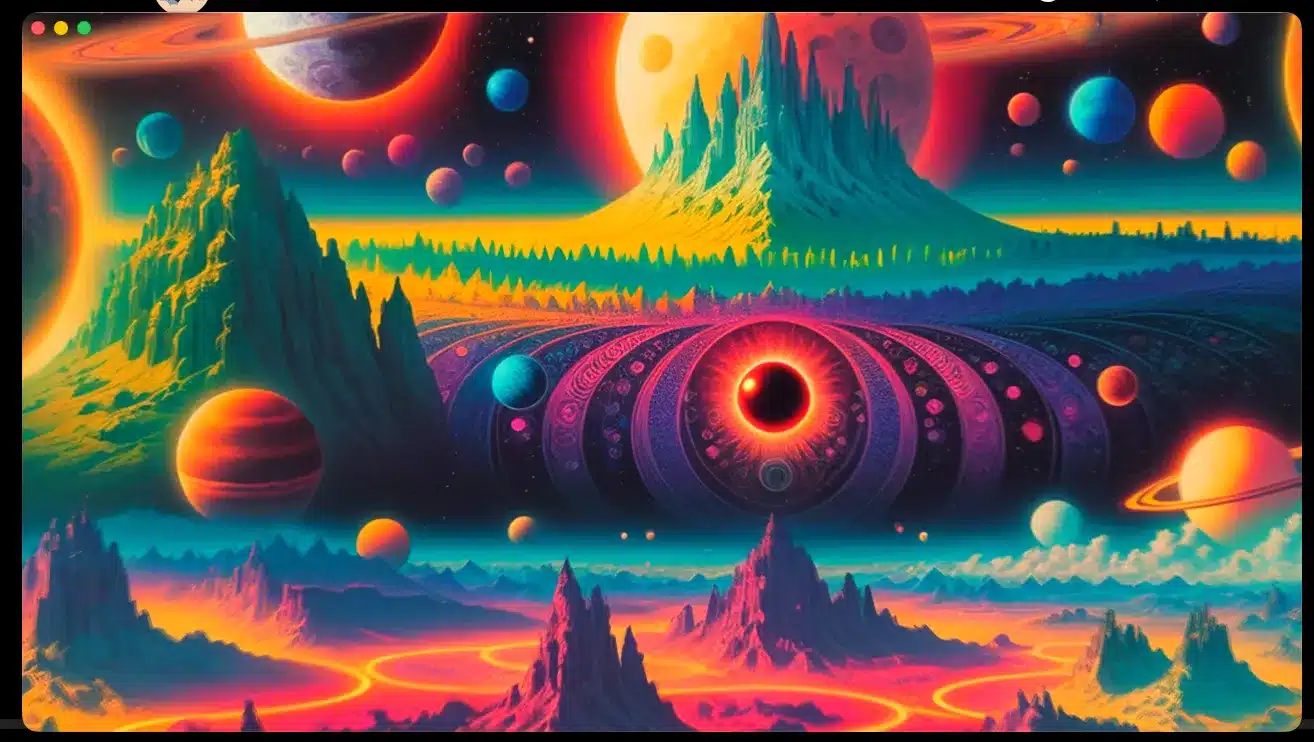
Official Responses: Critical Reception and Curatorial Perspectives
While De Angelo maintains a degree of enigmatic privacy, his work has been met with significant acclaim within the surrealist community. Curators often point to his work as a bridge between the mid-century surrealism of Salvador Dalí and René Magritte and the contemporary "New Weird" movement.
The Curatorial View
Curators at Surrealism Today have noted that De Angelo’s paintings "never fail to impress" due to their dual nature of being both inviting and challenging. In a 2024 editorial review, his work was described as "essential viewing for those who believe that painting is a dead medium." The review highlighted his ability to make the viewer "press against the limits of their understanding," a feat that is increasingly difficult in a world where we are desensitized by a constant stream of visual information.
Philosophical Critique
Art philosophers have drawn parallels between De Angelo’s "private vocabulary" and the concept of the Uncanny (Das Unheimliche), as defined by Sigmund Freud. By presenting objects and figures that are almost—but not quite—familiar, De Angelo triggers a deep-seated psychological response. The "official" response from the academic community suggests that his work is a successful exploration of the "sublime"—that which is beautiful but also overwhelming or terrifying in its vastness.
Implications: Surrealism in the Age of Artificial Intelligence
The emergence of Alfred De Angelo’s recent work comes at a pivotal moment for the art world. With the rise of tools like Infinidream.ai—which turns idle displays into living AI paintings—the question of what constitutes "true" art has never been more relevant.
The Human Element
The primary implication of De Angelo’s continued success is the validation of the human perspective. While AI can generate surreal imagery based on prompts, it lacks the "localized and subjective" life experience that De Angelo cites as his primary inspiration. AI can mimic the look of surrealism, but De Angelo’s work embodies the experience of it. His paintings are not the result of a probability matrix; they are the result of a human mind trying to "embody the essential mystery of existence."
The Future of the Surrealist Tradition
De Angelo’s work suggests that the future of surrealism lies in its ability to remain "sensual" and "provocative" in a physical sense. As we spend more time in digital spaces, the value of a hand-painted canvas that "lures the viewer out of their well-worn patterns" becomes an act of rebellion.

Furthermore, his influence on the next generation of artists from MassArt and RISD cannot be understated. By maintaining a high standard of technical fluency, he provides a roadmap for how contemporary artists can utilize classical training to explore avant-garde concepts.
Conclusion: The Doorway Remains Open
Alfred De Angelo’s paintings are more than just art; they are philosophical inquiries. They challenge us to accept confusion as a form of delight and to recognize that our understanding of the world is often just a thin veil over a much deeper, more essential mystery. As he continues to develop his private vocabulary, the art world watches with bated breath, ready to be beguiled, bewildered, and ultimately, transformed.
For those seeking to experience this world firsthand, De Angelo’s portfolio remains a vital resource for anyone interested in the intersection of beauty, mystery, and the human soul. In his own words, he will continue to look "through" the outward, ensuring that the doorway to the surreal remains wide open for all who dare to enter.