The Tusks of Tragedy: How the Global Ivory Trade Ravaged Africa
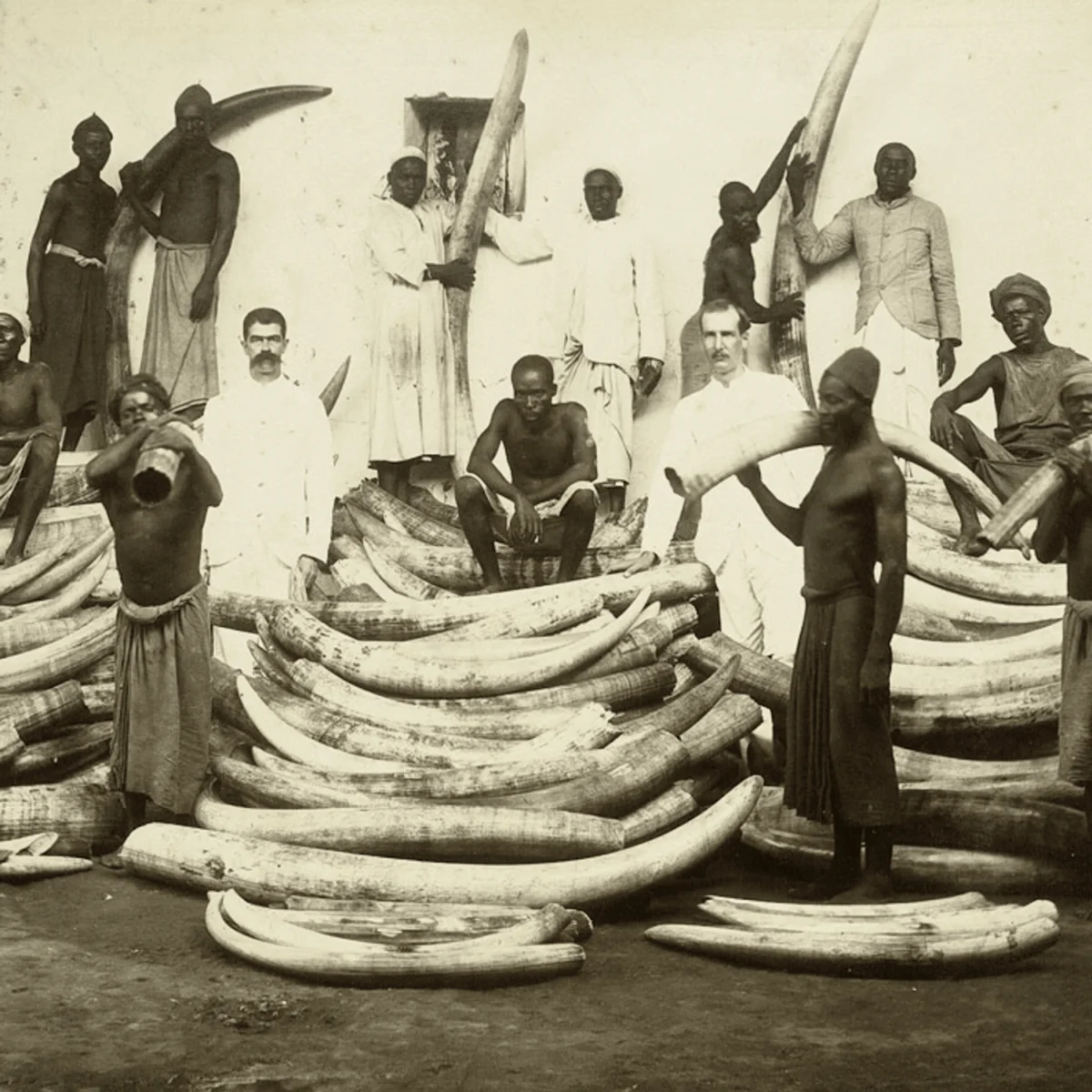
London, UK – From the 15th century onwards, the vast continent of Africa became a focal point for external powers seeking to exploit its abundant natural resources. While Arab traders had long established routes in North and East Africa during the Middle Ages, the 17th century marked a pivotal shift as European traders began to aggressively penetrate the continent’s interior. Driven by a relentless quest for high-value commodities, these ventures ushered in an era of profound transformation, leaving an indelible mark on Africa’s societies, ecosystems, and political landscape. Among the most coveted of these resources was ivory, a material whose global demand fueled an industry with devastating consequences, including widespread cultural upheaval, violent conflicts, the imposition of colonial rule, and the systematic decimation of Africa’s majestic elephant populations.
A Legacy of Extraction: The Main Facts
The history of Africa’s engagement with global trade is deeply intertwined with the exploitation of its raw materials. Gold, palm oil, rubber, and the horrific trade in human beings—slaves—all played significant roles, but ivory held a unique allure, particularly for markets in India and Europe. In India, ivory was essential for jewellery, especially the bangles worn by brides, a tradition ensuring continuous demand. In 18th-century Europe, its versatility made it a luxury staple, transforming everything from decorative boxes and intricate figurines to essential components like piano keys and billiard balls. This insatiable appetite for ivory drove traders deeper into the continent, often guided by the reconnaissance of explorers and missionaries who charted new territories and identified rich resource zones.
The consequences of this lucrative trade were far-reaching and overwhelmingly destructive. It led to the forced construction of rudimentary transport systems, primarily designed to extract resources efficiently rather than to benefit local communities. It ignited and exacerbated inter-tribal warfare, as competition for control over trade routes and hunting grounds intensified. Ultimately, the quest for resources like ivory became a significant catalyst for the "Scramble for Africa" in the late 19th century, leading to widespread European colonisation and the imposition of foreign rule. Ecologically, the impact was catastrophic: tens of thousands of elephants were slaughtered annually, pushing entire populations towards the brink of extinction. The story of the ivory trade is thus a stark illustration of how external demand can drive internal conflict, environmental devastation, and geopolitical restructuring on a massive scale.
A Chronology of Exploitation
The pursuit of ivory in Africa is a saga spanning centuries, evolving from ancient exchanges to a brutal colonial enterprise.
Ancient and Medieval Roots
The trade in African ivory is not solely a modern phenomenon. Historical records indicate that ivory moved between Africa and Europe in ancient times. The Romans, for instance, sourced ivory from North and Central Africa, transporting it across the vast Sahara Desert via the well-established camel caravans. This early trade, though significant, operated on a scale far removed from the intensity of later periods.
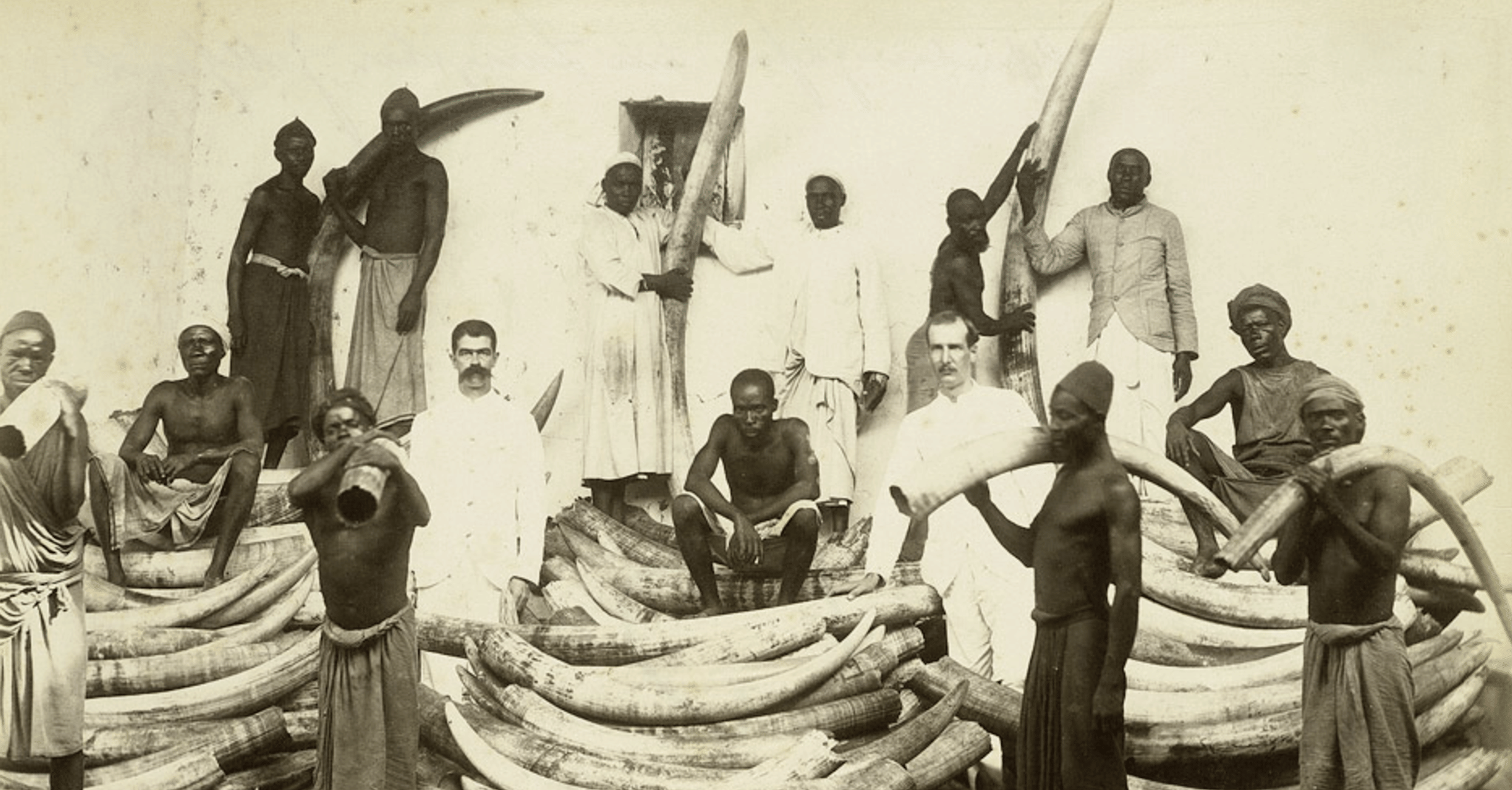
During the Middle Ages, Arab traders emerged as dominant players in North and East Africa. They founded vital trade centres, most notably on the island of Zanzibar and along the Swahili Coast. These hubs were specifically designed to profit from the ivory trade, alongside other goods. However, their political influence generally remained confined to coastal enclaves, leaving the interior largely under indigenous control.
The Advent of European Powers (15th-16th Century)
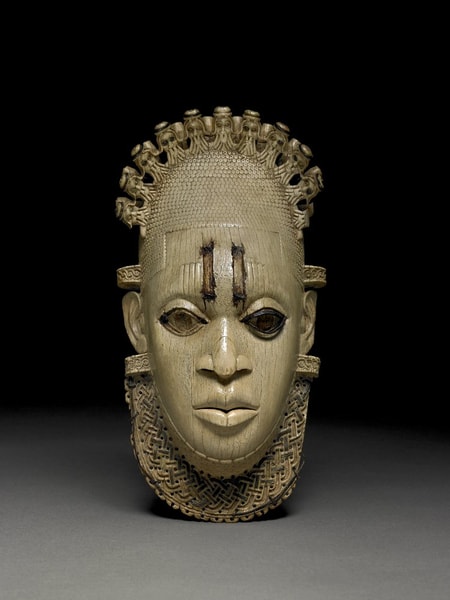
The arrival of Portuguese traders in the 15th and 16th centuries marked a new chapter. Establishing trade centres along the West African coast, from Upper Guinea to Portuguese Angola, they actively sought out ivory. The Portuguese also extended their reach to the Swahili Coast, acquiring tusks in Portuguese Mozambique. Interestingly, they often commissioned African artisans to carve ivory into finished products – such as exquisite salt cellars, walking canes, and cutlery handles – tailored for the discerning European market. The sculptors of Benin, in particular, were renowned for their unparalleled skill in ivory artwork, their creations highly prized abroad.
Penetration of the Interior and Imperial Scramble (17th-19th Century)
By the 17th century, while the abhorrent slave trade and the pursuit of gold dominated African exports, ivory remained the third most coveted commodity. The modern period witnessed a dramatic escalation as European imperial powers, including France and Britain, began actively seeking new, untouched sources of ivory. For the first time, trading stations were established not just on the coast but deep within Africa’s uncharted interior.
This push inland was heavily influenced by the accounts of European explorers and missionaries. Figures like David Livingstone, whose travels across Africa in the 1850s captivated European audiences, explicitly highlighted the economic potential of the interior. As he noted, "If it is profitable for those who are engaged in in the coast trade to pass along in their ships and and pick up ivory, bees wax &c., those who may have enterprise enough to push into the interior and receive the goods at first hand would surely find it more profitable." His observations, and those of others, fueled the ambition of European merchants and states.
Lieutenant Verney Lovett Cameron, writing in the 1870s, further cemented these tales of immense wealth. Describing the Katanga region, now part of the Democratic Republic of Congo, he stated: "To the eastward of Lovalé ivory is marvellously plentiful. The price among the Arab traders at Nyangwé was 7 1/2 pounds of beads, or 5 pounds of cowries, for 35 pounds of ivory; and the caravans that went out from there for ivory would obtain tusks, irrespective of weight, for an old knife, a copper bracelet, or any other useless thing which might take the fancy of the natives." Such reports of readily available, cheaply acquired ivory ignited a feverish desire among European rulers.
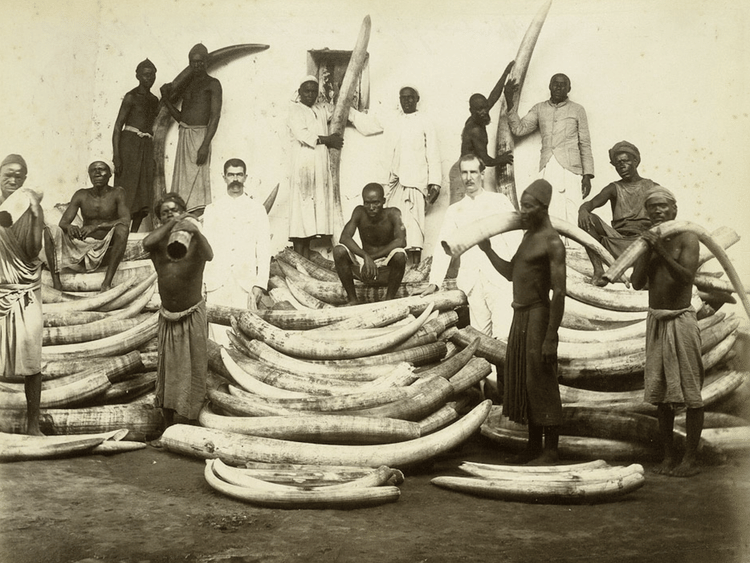
These glowing accounts of unparalleled riches directly inspired acts of colonial expansion. King Leopold II of the Belgians, for instance, driven by the prospect of vast profits, established the Congo Free State in 1885 – a personal domain that would later become the Belgian Congo, though it was ultimately rubber, not ivory, that made him his notorious fortune. Similarly, the lure of ivory played a significant role in imperial Germany’s decision to establish the colonies of German South West Africa (1884) and German East Africa (1885). The British, too, were enticed by the promise of ivory, expanding their influence deeper into Southern Africa throughout the 1880s and 1890s. The pursuit of ivory, therefore, became a powerful economic justification for the wider colonial project.
The Logistics of Extraction: Caravans and Infrastructure
As easily accessible ivory sources became depleted, traders were compelled to venture further and further into Africa’s interior, pushing the trading frontier into increasingly remote areas. Even in the 16th century, prior to the widespread use of firearms, an estimated 4,000 to 5,000 elephants were killed annually in the Mutapa Kingdom alone. With the advent of modern weaponry supplied by Europeans, these figures skyrocketed. During the latter half of the 19th century, at the peak of the ivory trade, a staggering 65,000 elephants were slaughtered each year across tropical Africa. This insatiable demand, particularly for the highly prized, softer ivory from East Africa, led to a steep rise in prices, which quadrupled between 1823 and 1873.
To meet this demand, vast caravans of camels or donkeys were organised, particularly in East Africa from the 1810s. These expeditions journeyed up to 1,000 miles (1,600 km) to reach Africa’s Great Lakes region, often combining the ivory trade with the abhorrent trade in slaves. In more challenging, forested terrains, human porters carried the heavy tusks on foot. The synergy between the slave and ivory trades was tragically efficient: elephant hunters often became hunters of men, rounding up slaves to serve as unpaid porters, drastically reducing transport costs for the Europeans and Arabs.
While African peoples had long used ivory for their own cultural purposes – creating jewellery, intricate carvings, statuary, and ceremonial masks – they were increasingly tempted to trade it for goods they could not produce themselves. Europeans offered relatively low-value manufactured items such as cotton cloth, silk, knives, beads, and brass rods in exchange for the precious tusks. Negotiations, however, could be complex and involved elaborate customs. In Kenya, for example, the Embu hunters would bring their entire family to bargain with coastal ivory traders. As historian P. Curtin recounts, "In the final stages of bargaining, each relative would sit on the ivory in sorrow at its loss. The trader could take the ivory only after paying each one to agree to the trade. The hunter’s important relatives were paid more, the minor ones less."
The movement of these caravans also had unforeseen consequences. European explorers, such as Richard Francis Burton who documented a voyage in 1857, often followed these routes, inadvertently contributing to the spread of diseases previously unknown to certain regions, such as smallpox. Furthermore, as the trade frontier shifted, areas once prosperous due to ivory found themselves economically devastated, with no resources left to trade. In response, some African chiefs whose territories were bypassed by the shifting frontier began to levy tolls on passing caravans, desperately trying to retain a share of the diminishing wealth.
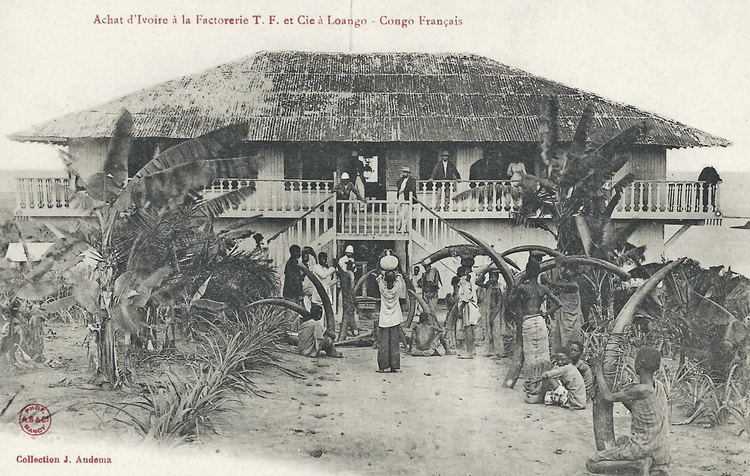
The opening of Central Africa, facilitated by its vast inland waterways like the Nile, Niger, Zambezi, and Congo rivers, further accelerated the trade. European trading companies rapidly established permanent stations across the continent, connected by small steamships navigating these great rivers. This initial investment soon garnered support from European governments, who funded larger infrastructure projects like railways, drastically cutting the cost of transporting ivory and other goods to the coast. Improved harbours were also constructed to accommodate larger cargo ships. This infrastructure development was quickly followed by the deployment of professional soldiers and the construction of forts to defend these assets, directly leading to the process of colonisation and the forceful displacement of indigenous peoples through wars of territorial expansion. The intensified competition also led to conflicts between European and Arab traders, and even between European powers themselves, as the "Scramble for Africa" reached its frantic peak in the mid-1880s.
Decline and Prohibition
By the 1880s, the ivory trade, while still active, began to decline in its overall importance relative to other African exports. Gold, diamonds, rubber, beeswax, and foodstuffs like coffee and sugar – often cultivated on purpose-built plantations – superseded ivory as the continent’s primary commodities. Nevertheless, the trade continued on a smaller scale, frequently supplied by poachers illegally killing elephants, even within newly established game reserves. The widespread ecological damage and the dramatic decline in elephant populations eventually led to international recognition of the crisis. The trade in ivory was finally prohibited by the Convention on International Trade in Endangered Species of Wild Fauna and Flora (CITES), a multilateral treaty signed in 1989, aiming to halt the destruction of this iconic species.
Official Responses and Justifications
The official responses to the African ivory trade evolved significantly over centuries, reflecting shifting economic priorities, moral standards, and geopolitical ambitions.
Initially, during the Portuguese era, "official" involvement meant establishing trading posts and securing exclusive rights through treaties or coercion with local rulers. European powers viewed these ventures as legitimate commercial enterprises, justified by the principles of mercantilism and the pursuit of national wealth. The crafting of ivory by African artisans for European markets highlights an early form of colonial economic integration, where indigenous skills were leveraged for foreign profit.
As European powers sought to penetrate the interior, the "official response" took on a more assertive, often aggressive, character. Explorers like Livingstone, though presented as humanitarian figures, served as intelligence gatherers, their reports on accessible resources becoming blueprints for exploitation. His observations explicitly encouraged deeper penetration for greater profit, implicitly justifying the disruption and violence that would follow.
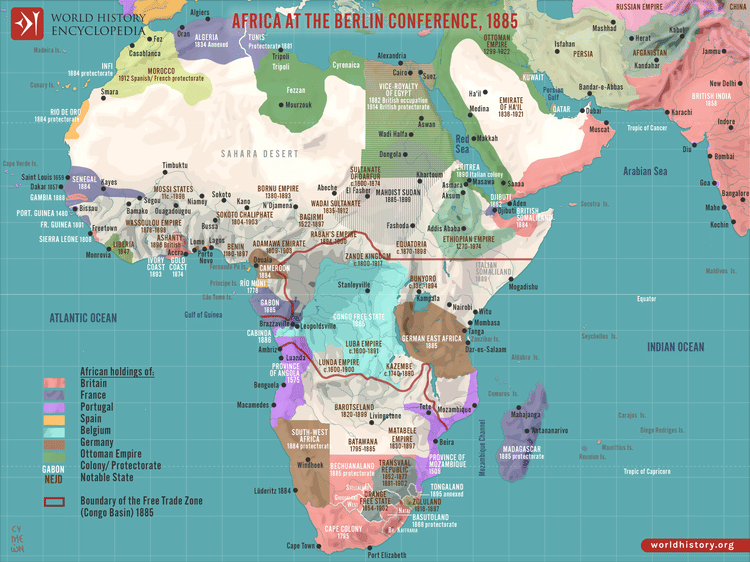
The tales of immense, cheap ivory, such as Cameron’s account from Katanga, provided the economic rationale for formal colonisation. European governments, no longer content with mere trading posts, began to assert direct political and territorial control. Leopold II’s establishment of the Congo Free State exemplifies this, where the pursuit of resources, including ivory, was initially presented as a civilising mission but quickly devolved into a brutal regime of forced labour and extraction. The subsequent scramble for territories, culminating in the Berlin Conference of 1884-1885, was an "official" partitioning of Africa among European powers, effectively legalising their claims over vast territories and their resources, including the remaining ivory reserves. This conference, while not directly about ivory, solidified the framework within which the ivory trade would be intensified and systematised under colonial administration.
Colonial administrations then implemented policies to facilitate the extraction of ivory. This included investing in infrastructure—steamships, railways, and improved harbours—which, while presented as development, primarily served to transport raw materials to European markets. The deployment of professional soldiers and the construction of forts were official acts of military control, designed to protect these assets and enforce colonial authority, often leading to violent suppression of indigenous resistance.
The shift in global "official responses" only came much later, driven by growing environmental awareness and the stark reality of elephant extinction. The 1989 CITES ban represented a monumental, unified international response, acknowledging the devastating ecological implications of the trade and moving to criminalise it globally. This marked a profound shift from centuries of state-sanctioned exploitation to international cooperation aimed at conservation.
Far-Reaching Implications
The African ivory trade left a complex and deeply damaging legacy, the implications of which reverberate to this day across ecological, socio-political, and economic spheres.
Ecological Catastrophe
Perhaps the most immediate and visible implication was the catastrophic decline of African elephant populations. From a thriving species numbering in the millions, the relentless hunting for ivory pushed them to the brink of extinction in many regions. The scale of the slaughter – 65,000 elephants annually at its peak – represents one of the most severe examples of human-induced megafauna extinction in history. Entire ecosystems were disrupted by the loss of these keystone species, affecting vegetation, water sources, and other animal populations. Even with the CITES ban, the lingering threat of poaching and illegal trade continues to challenge conservation efforts, highlighting the long-term vulnerability created by centuries of exploitation.
Socio-Political Upheaval and Entrenched Violence
The ivory trade profoundly destabilised African societies. It fueled intense competition and often violent warfare between tribes, as control over hunting grounds and trade routes became synonymous with power and wealth. The formation of powerful kingdoms like Maravi and Mutapa was partly a response to the need to monopolise this lucrative trade, yet this often came at the cost of older social groupings and led to widespread raiding and disruption, as historian A. E. Atmore observed: "The pursuit of ivory was generally destructive and often violent. It involved the organisation of hunting bands, which even when developed locally, were disruptive of older social groupings. Too frequently, it involved raiding across the countryside by alien gangs."
The trade also deeply entrenched and expanded the practice of slavery. The use of enslaved people as porters to transport heavy ivory tusks to the coast was a cost-cutting measure that linked two heinous trades, devastating countless communities and reinforcing cycles of violence and dehumanisation. Furthermore, the introduction of European firearms in exchange for ivory tipped the balance of power, giving some groups a destructive advantage over others and further exacerbating conflicts.
Culturally, the trade caused significant disruption. While African peoples had their own traditions of ivory use, the overwhelming external demand often overshadowed these, turning a culturally significant material into a mere commodity for foreign markets. The spread of diseases like smallpox, carried along trade routes by explorers and caravans, further decimated populations, adding to the immense human cost.
The Colonial Legacy and Economic Distortion
The ivory trade was a significant precursor and driver of European colonisation. The infrastructure built – railways, steamship routes, and harbours – was primarily designed for the efficient extraction of resources, including ivory, and not for balanced local development. This laid the foundation for economies structurally dependent on exporting raw materials, a pattern that persists in many African nations today. The arbitrary borders drawn during the Scramble for Africa, often influenced by resource distribution, continue to be a source of conflict and administrative challenge.
Economically, the trade created boom-and-bust cycles. Regions that once prospered from ivory found themselves in economic ruin once the elephants were hunted out, leaving communities with little alternative for sustenance or trade. The exchange of high-value ivory for relatively low-value manufactured goods from Europe also created an unequal economic relationship that favoured the colonial powers, hindering the development of diversified local industries.

Global Consumption and Moral Reckoning
The global demand for ivory, driven by consumer preferences in Europe, India, China, and the United States, highlights the interconnectedness of global economies and the ethical responsibility of consumers. The shift from ivory to alternative materials for items like piano keys and billiard balls, spurred by diminishing supply and growing awareness, eventually paved the way for the international ban. The story of the ivory trade serves as a powerful historical precedent for understanding the devastating impact of unchecked resource exploitation and the long, arduous path towards conservation and environmental justice. It stands as a stark reminder of the profound and often brutal consequences when economic greed supersedes ecological stewardship and human dignity.