The Enduring Mystery of Authorship: Re-examining Homer and the Collective Genesis of Ancient Epics
The concept of the solitary genius, particularly in the realm of creative arts, often overlooks the complex, collaborative tapestry from which great works emerge. This is acutely true when we delve into the ancient world, where the notion of a singular "author" becomes increasingly elusive, especially when examining foundational texts like Homer’s epics, The Iliad and The Odyssey. While the name "Homer" has become synonymous with these monumental poems, modern scholarship increasingly posits that this name represents not a single individual, but a vast, evolving tradition, a collective consciousness that shaped these narratives over centuries.
The Elusive Author: From Film to Ancient Texts
The modern discourse surrounding authorship is often dominated by the "auteur theory," a concept prevalent in film criticism that attributes a film’s primary vision to its director. This theory, while valuable for identifying distinct artistic styles in cinema, can sometimes elevate directors to near-mythic status, overshadowing the contributions of the thousands of individuals – writers, cinematographers, editors, stunt performers, special effects artists, and producers – who are integral to bringing a film to life. Even in Hollywood blockbusters, let alone art-house cinema championed by figures like Wes Anderson or David Lynch, the director’s name often eclipses the collaborative effort.
This tendency to ascribe creative output to a single mind is not a recent phenomenon. It echoes the traditional view of authorship in literature, where a work is often seen as the singular product of an individual intellect. However, this very notion has been challenged by influential thinkers. Post-structuralist theorists like Michel Foucault and Roland Barthes, in their examinations of authorial intent and the "death of the author," have cast doubt on the idea of a singular, identifiable author for many works, particularly those originating from manuscript eras that predate modern notions of copyright and individual attribution. When dealing with texts hundreds or even thousands of years old, pinpointing a definitive author becomes a monumental, often impossible, task.
The "Homeric Question": A Legacy of Anonymity
Many ancient works have come down to us labeled "Anonymous," their origins lost to the mists of time. Even for the most celebrated Greek epics, The Iliad and The Odyssey, the name "Homer" functions more as a placeholder than a confirmed biographical entity for many classical scholars. As a University of Cincinnati classics site notes, "Homer" could represent "a group of poets whose works on the theme of Troy were collected."
While written references to Homer date back to the 6th century B.C., lending credence to the existence of a legendary blind poet, it’s more likely that this figure, if he existed as an individual, acted more as a compiler or editor than a sole creator. His role might have been to synthesize and structure the oral traditions of countless storytellers, bringing disparate tales into a coherent, epic whole. Historian Adam Nicolson, author of Why Homer Matters, argues strongly against viewing Homer as a singular person. He posits, "it’s a mistake to think of Homer as a person. Homer is an ‘it.’ A tradition. An entire culture coming up with ever more refined and ever more understanding ways of telling stories that are important to it. Homer is essentially shared." This perspective suggests that the poetic narratives attributed to Homer could have roots stretching back a millennium before any supposed transcription onto papyrus.
The Evolution of Epic: From Oral Tradition to Papyrus
The prevailing orthodoxy among scholars for over a century has been that The Iliad evolved over centuries before its eventual written form, likely around 700 B.C. This understanding is not particularly novel, as Daniel Mendelsohn points out in The New Yorker. However, the physical evidence we possess offers crucial insights into this long evolutionary process.
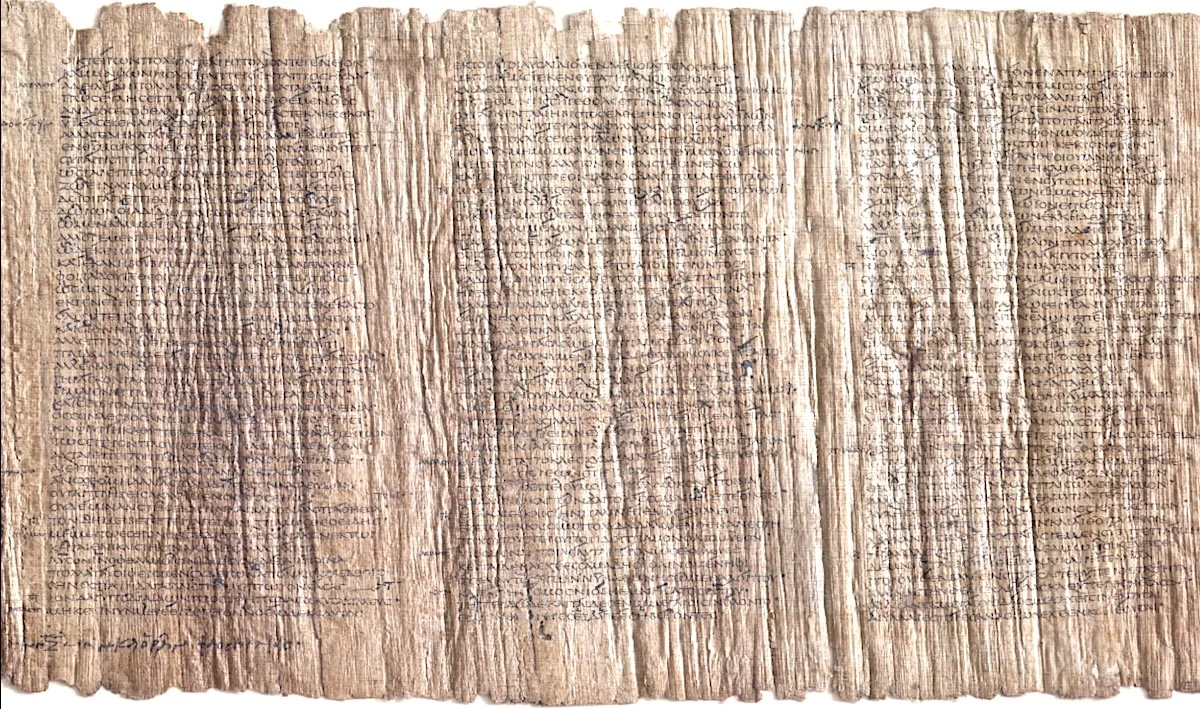
We lack manuscripts from that earliest period, and the extent to which the poems transformed through scribal errors and transmission over centuries remains a subject of ongoing inquiry. This is one of the many questions literary historians grapple with when examining ancient papyri, such as the remarkable "Bankes Homer." This particular papyrus, considered the best-preserved specimen of a portion of The Iliad, contains Book 24, lines 127-804, and dates to approximately 150 C.E.
The Bankes Homer: A Tangible Link to the Past
The Bankes Homer papyrus, acquired in Egypt in 1821 by Egyptologist William John Bankes from an adventurer named Giovanni Finati on the island of Elephantine, provides a concrete, albeit later, manifestation of this epic tradition. The scroll, which can be viewed in its entirety and high resolution on the British Library’s website, was created through a process typical of "literary papyri" that were produced for centuries.
As the British Library describes the meticulous process: "Professional scribes made copies from exemplars at the request of clients, transcribing by hand, word by word, letter by letter. Until around the 2nd century CE these manuscript books took the form of rolls composed of papyrus sheets pasted one to the other in succession, often over a considerable length." This method highlights the importance of professional scribes in preserving and disseminating ancient texts.
Beyond the Text: The Role of the Diorthotes
Beyond the verses of The Iliad, the Bankes Homer manuscript holds additional scholarly value. According to the History of Information website, the manuscript contains "breathing marks and accents made by an ancient diorthotes or ‘corrector’ to show correct poetic pronunciation." This practice of "correcting" was a pedagogical technique employed to train students in the proper recitation of the text.
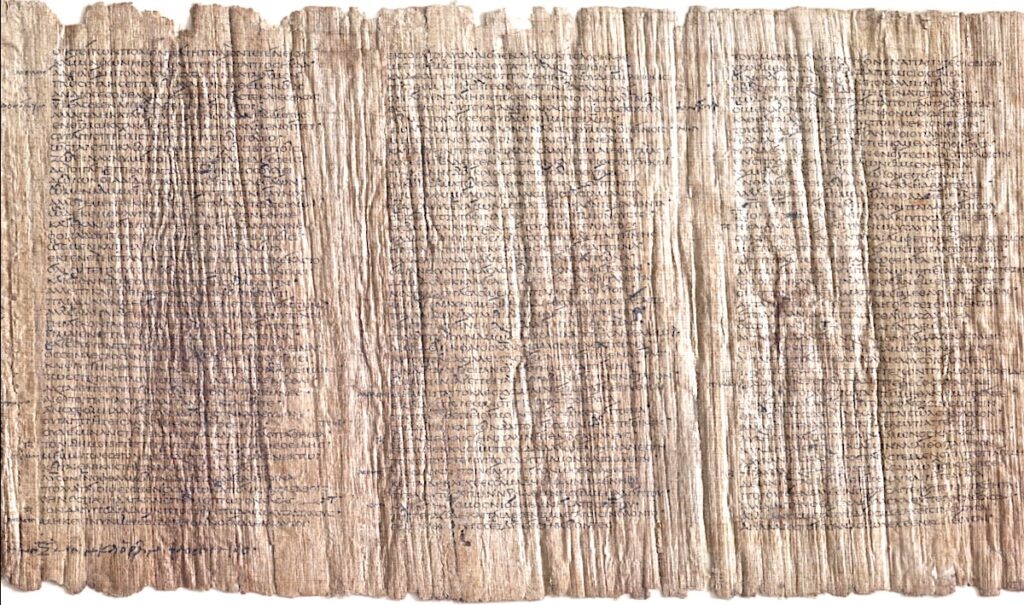
This detail underscores the deeply ingrained oral nature of ancient literature. For hundreds of years before the text was committed to papyrus, epic poems like those attributed to Homer would have been memorized and recited by anonymous bards across the Greek-speaking world. It is highly probable that these recitations evolved over time, adapting to the tastes and biases of different audiences. The question of how many of these ancient bards might have borne the name "Homer," or if the name was even in common use at that stage, remains a tantalizing mystery.
Supporting Data and Scholarly Consensus
The understanding of Homeric epics as products of a long oral tradition, rather than the singular work of one individual, is supported by a wealth of scholarly research. Linguists have identified linguistic strata within the poems, suggesting a development over time. The consistency of themes, epithets, and narrative structures across vast stretches of the epics points to a shared oral formulaic composition technique, a hallmark of oral poetry.
Archaeological evidence, while not directly proving Homer’s existence, provides context for the world depicted in the epics. The Bronze Age setting of The Iliad, for instance, has been a subject of intense debate, with some scholars arguing for a later composition reflecting a memory of the past, while others see evidence of a genuine, albeit embellished, historical core.
The Bankes Homer, as a tangible artifact, offers a glimpse into the textual transmission of these epics. Its existence in the Roman period (circa 150 C.E.) demonstrates that The Iliad was still actively copied and studied centuries after its presumed composition. The presence of diorthotes marks further attests to the care taken in preserving and teaching the text, highlighting its continued cultural significance.
Official Responses and Ongoing Research
Institutions like the British Library, which houses the Bankes Homer, play a crucial role in making these ancient texts accessible to researchers and the public. Their digitization efforts allow for detailed study and comparative analysis of different manuscript fragments. Museums and universities worldwide continue to fund and conduct research into ancient Greek literature, employing a range of disciplines, from philology and textual criticism to archaeology and computational linguistics, to shed light on the origins and transmission of these foundational works.
The academic community largely accepts the "Homeric Question" as an ongoing area of inquiry. While the debate over the precise nature of Homeric authorship continues, the consensus leans heavily towards a collective, evolving tradition. The focus has shifted from trying to definitively identify a single "Homer" to understanding the complex social, cultural, and linguistic processes that gave rise to these enduring epics.
Implications for Understanding Creativity and Legacy
The re-examination of Homeric authorship has profound implications for how we understand creativity and legacy, not just in ancient times but also in our contemporary world. It challenges the romanticized notion of the isolated genius and emphasizes the power of collective storytelling, cultural memory, and the gradual refinement of narrative through communal engagement.
The Bankes Homer, a fragment of a vast tradition, serves as a powerful reminder that what we often perceive as singular creations are, in fact, the culmination of countless voices, hands, and minds working across generations. It encourages a more nuanced appreciation of the collaborative nature of art and the enduring power of shared cultural heritage. The mystery of Homer, far from diminishing the epics, only enhances their mystique and underscores their remarkable journey from the realm of oral tradition to the enduring written word, a testament to the collective spirit of human storytelling.
Related Content:
- Hear What Homer’s Odyssey Sounded Like When Sung in the Original Ancient Greek
- Emily Wilson Is the First Woman to Translate Homer’s Odyssey into English: The New Translation Is Out Today
- Explore 5,300 Rare Manuscripts Digitized by the Vatican: From The Iliad & Aeneid, to Japanese & Aztec Illustrations
Josh Jones is a writer and musician based in Durham, NC.