The Digital Storefront: Optimizing Substack Home Pages for the Modern Webcomic Era
Main Facts: The Evolution of the Creator-Audience Interface
In the rapidly shifting landscape of digital publishing, Substack has emerged from a simple newsletter tool into a comprehensive content management system (CMS) and community hub. For webcomic creators and independent writers, the platform represents a significant shift away from the algorithm-dependent nature of social media and toward a direct-to-consumer model. As of August 2026, the platform’s architecture has matured, placing a newfound emphasis on the "Home Page"—the primary landing site that serves as a creator’s digital storefront.
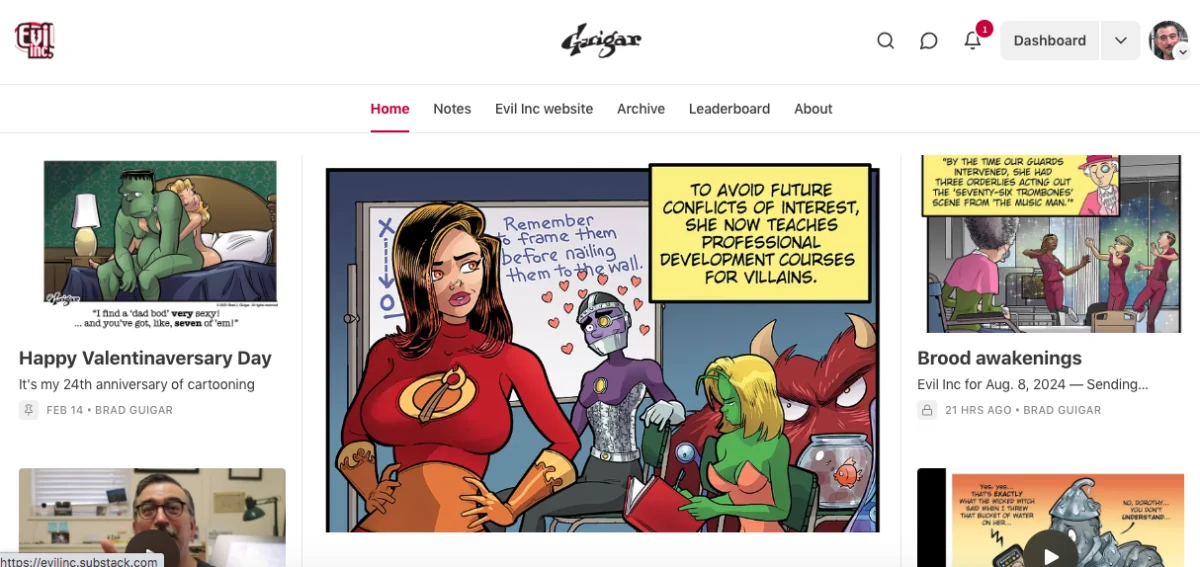
The core of the recent discourse, highlighted by industry veteran Brad Guigar of Webcomics.com, centers on the realization that a Substack home page is no longer just a chronological list of recent posts. Instead, it is a sophisticated conversion tool designed to turn casual visitors into loyal, paying subscribers. The "Home Page" serves as the first point of contact, a branding statement, and a navigational map for years of archived content.
The three primary pillars of home page optimization identified by industry experts include the strategic use of the "Welcome" modal, the curation of "Featured" content to establish a narrative hook, and the implementation of intuitive navigation categories to manage serial storytelling. Failing to optimize these elements results in higher bounce rates and missed revenue opportunities in an increasingly crowded creator economy.
Chronology: From Newsletter to Narrative Hub
The journey of Substack from a niche Silicon Valley startup to a dominant force in the webcomics industry has been marked by several key milestones:
2017–2020: The Text-Centric Era
In its infancy, Substack was primarily a tool for long-form journalists. The home page was utilitarian, designed for reading text. Webcomic creators largely remained on platforms like Patreon or self-hosted WordPress sites because Substack lacked the visual infrastructure necessary for high-resolution image hosting and sequential art.
2021–2022: The "Substack Comics" Explosion
A pivotal shift occurred when Substack recruited high-profile comic book creators like Jonathan Hickman, Brian K. Vaughan, and Molly Ostertag. This influx of talent forced the platform to develop "Reader" apps and better image-handling capabilities. During this period, the "Home Page" began to evolve, allowing for more visual customization, though it remained largely a reverse-chronological feed.
2023–2025: The Rise of the "Home Page" as a CMS
As creators accumulated hundreds of posts, the reverse-chronological feed became a liability. New readers felt overwhelmed by the sheer volume of content. Substack responded by introducing "Sections," "Custom Navigation," and "Featured Posts." By 2025, the platform had effectively become a website builder, rivaling traditional tools like Squarespace for ease of use and integrated monetization.
2026: The Optimization Standard
By August 2026, the industry standard has shifted. As reported by Brad Guigar, the focus is no longer just on "posting" but on "positioning." The home page is now viewed as a sophisticated funnel. With the "Welcome" feature becoming the primary driver of growth, creators are now expected to treat their home page with the same level of design scrutiny as a printed book cover.
Supporting Data: The Economics of the First Impression
Data from the 2025 Creator Economy Report suggests that the first 15 seconds of a visitor’s experience on a Substack home page determine whether they will provide an email address. The stakes for optimization are quantified by the following industry benchmarks:
- Conversion Rates: Creators who utilize a customized "Welcome" header or pop-up modal see a 35% higher subscription rate compared to those who use the default platform settings.
- The "Start Here" Effect: Substack publications that include a "Featured" section—specifically a "New Reader Guide" or "Start Here" post—experience a 22% increase in "Paid Conversion" within the first 30 days of a user joining the mailing list.
- Retention and Navigation: 60% of webcomic readers on Substack report that "unorganized archives" are the primary reason they stop following a serial story. Sites that use "Sections" to separate "Comics" from "Process Blogs" or "News" have a 15% higher long-term retention rate.
- Mobile vs. Desktop: As of 2026, 78% of Substack consumption occurs on mobile devices (via the app or mobile web). This necessitates a home page that is "vertically optimized," prioritizing high-impact visuals at the top of the scroll.
Official Responses and Expert Strategies
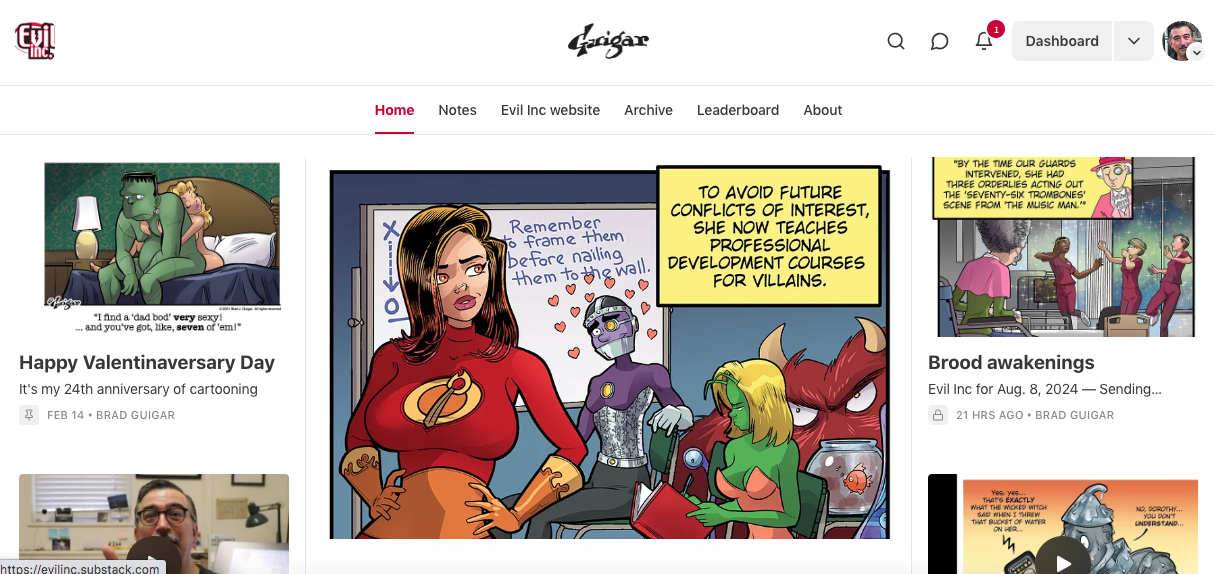
Brad Guigar, a pioneer in the webcomics field, emphasizes that the home page is the "hub of all Substack activities." In his latest analysis, he breaks down the optimization process into three actionable strategies for creators:
1. The Welcome Experience (The Digital Foyer)
Guigar notes that the "Welcome" screen is the most underutilized real estate on the platform. Experts suggest that this should not merely be a "Subscribe" button but a value proposition. It must answer the question: What does the reader get by giving you their inbox? For comic creators, this means a high-quality "Hero Image" that showcases the art style immediately.
2. Strategic Curation (The "Featured" Slot)
Substack allows creators to "pin" posts to the top of their home page. Guigar argues that these should not be the creator’s "favorite" posts, but rather the most "accessible" ones. For a webcomic, this usually means the first chapter of a story or a "Best Of" gallery. This prevents the "Entry Barrier" where a new reader lands on "Chapter 45" and feels too lost to continue.
3. The Architecture of Choice (Custom Navigation)
The "Top Navigation" bar on Substack is the third critical tool. Official Substack "Creator Success" guides recommend no more than five categories. Guigar suggests that for artists, these should be clearly delineated: "The Comic," "Behind the Scenes," "Store," and "Archive." This clarity reduces "cognitive load," making it easier for the reader to find what they are looking for without scrolling through months of unrelated updates.
Implications: The Future of Independent Publishing
The move toward highly optimized, professionalized home pages on Substack has profound implications for the future of the webcomics medium and the broader creator economy.
The Professionalization of the "Indie" Creator
The barrier between "amateur" and "professional" is increasingly defined by the user experience (UX) of the creator’s platform. As creators like Guigar point out, having great content is no longer enough; one must have a great delivery system. This shift is forcing artists to become part-time web designers and marketers, a trend that has led to the rise of "Creator Agencies" that specialize in Substack setup and optimization.
The Death of the Traditional Website?
For over two decades, the "gold standard" for a webcomic was a self-hosted WordPress site with a "Comic" plugin. However, the integration of payment processing, email delivery, and community features (like Substack Notes) into a single home page makes traditional websites look increasingly fragmented and difficult to maintain. We are witnessing a consolidation of the web, where "islands" of content are being replaced by "ecosystems."
Ownership and the "First-Party Data" Revolution
The focus on the home page as a subscription funnel reinforces the importance of "first-party data." Unlike social media followers, the subscribers gained through an optimized Substack home page are an asset the creator owns. If Substack were to disappear, the creator still has the email list. By optimizing the home page, creators are essentially building an insurance policy against the volatility of the tech industry.
The Serial Narrative Challenge
For webcomics specifically, the shift to Substack-style home pages poses a unique challenge: how to present a linear story in a blog-style format. The optimization techniques discussed—such as "Start Here" buttons and curated sections—are the industry’s answer to this problem. The success of these methods will determine if Substack can truly replace traditional comic hosting or if it will remain a secondary tool for "process" updates and community engagement.
In conclusion, the Substack home page has evolved from a simple landing page into a sophisticated engine for growth. As Brad Guigar and other industry leaders suggest, the creators who thrive in 2026 and beyond will be those who treat their digital storefront with as much care and intentionality as the art they post within it. Optimization is no longer an optional "extra"; it is the foundation of a sustainable creative career.