Tangled Identities: Loubie’s The Roots of My Hair and the Global Evolution of the Black Hair Narrative
The graphic novel medium has long served as a fertile ground for the exploration of the "liminal space"—that uncomfortable, often invisible boundary between cultures, races, and identities. In recent years, a specific subgenre has emerged with significant force: the "Black hair origin story." From Jamila Rowser and Robyn Smith’s celebratory Wash Day Diaries to Ebony Flowers’ anthropologically sharp Hot Comb, the ritual of hair care has been repositioned from a niche concern to a central pillar of contemporary graphic memoir.
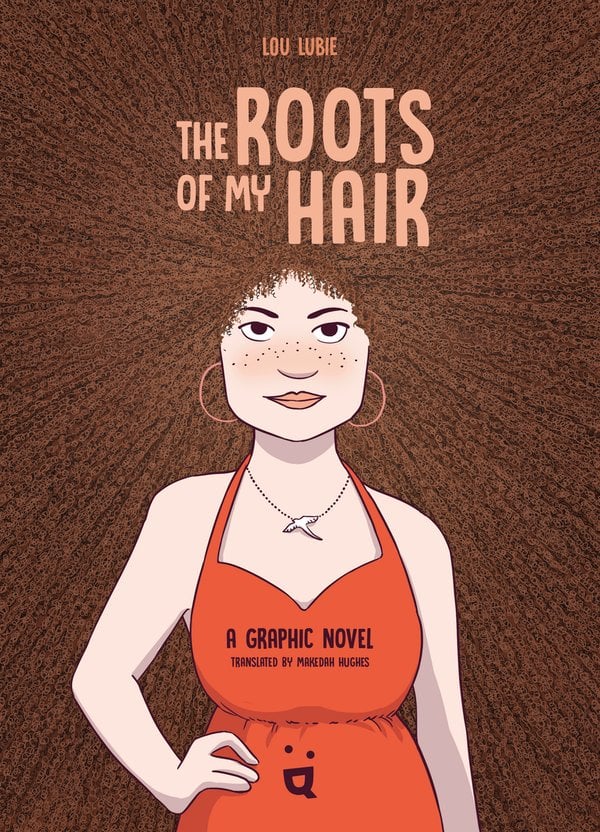
The latest contribution to this canon is The Roots of My Hair (originally published in French as La racine de mes cheveux) by the cartoonist Loubie. Hailing from Reunion Island, a French overseas department in the Indian Ocean, Loubie offers a perspective that is both intimately familiar to the African Diaspora and strikingly distinct in its navigation of French colonial legacies. Through the fictionalized journey of her protagonist, Rose, Loubie deconstructs the psychological and systemic pressures that dictate how textured hair is perceived, managed, and ultimately, reclaimed.
Main Facts: A Story of Kinks, Curls, and Colonialism
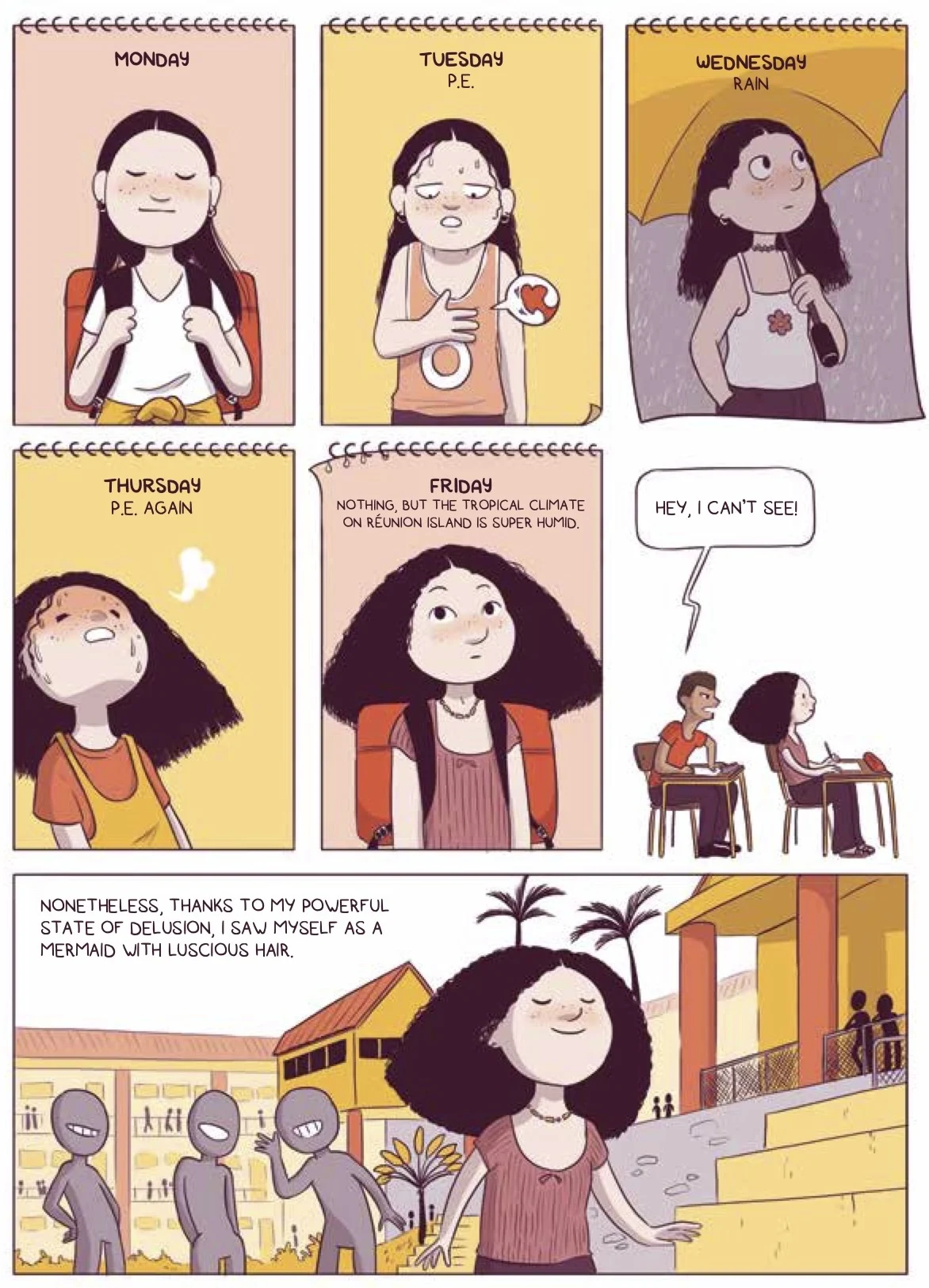
The Roots of My Hair is a hybrid work, blending a fictional coming-of-age narrative with didactic, non-fiction interludes. The story follows Rose, a "White Creole" girl growing up in the multiracial but hierarchical society of Reunion Island. Despite her light skin, Rose possesses "kinky" or highly textured hair—a trait inherited from her mother’s "Black Creole" lineage.
The book’s central conflict is not merely aesthetic but existential. In a society where "white beauty" remains the unspoken gold standard for professionalism and desirability, Rose’s hair becomes a site of constant negotiation. Loubie explores how the simple act of wearing one’s hair natural can be interpreted as an act of rebellion, a sign of "unprofessionalism," or a marker of "otherness."
The work is significant for its geographical setting. Reunion Island’s history—shaped by French colonialism, the slave trade, and subsequent indentured servitude from India and China—creates a unique "Creolized" environment. Here, the North American "one-drop rule" does not apply in the same way, yet the colorism and hair-texture hierarchies remain potent vestiges of the colonial "Code Noir."
Chronology: The Lifecycle of a Hair Journey
The narrative arc of The Roots of My Hair follows Rose through several distinct phases of life, each marked by a different relationship with her scalp:
- Childhood Innocence and Early Erasure: In her earliest years, Rose’s hair is managed by family members who lack the tools or knowledge to care for it. It is kept in a perpetual braid, a method of containment rather than style. The trauma begins early, not through overt violence, but through the "invisibility" of her natural texture in the media she consumes and the dolls she plays with.
- The "Profession of Faith" and the First Straightening: A pivotal moment occurs during Rose’s "Profession of Faith" (a Catholic rite). For the first time, her hair is chemically or thermally straightened. The influx of compliments from her family provides a damaging lesson: she is "beautiful" only when her natural self is suppressed. This sets the stage for years of dysmorphia.
- Adolescent Crisis: The tension reaches a breaking point when a classmate sticks gum in Rose’s hair. Forced to shave her head, Rose experiences a paradoxical sense of liberation. For the first time, she has control. However, this control is met with societal backlash; she is mocked for looking "masculine" or "lesbian," proving that the policing of women’s hair is inextricably linked to the policing of their gender and sexuality.
- Adulthood and the "Out of Culture" Experience: As an adult, Rose navigates the professional world and the dating scene. She observes how white men exotify her natural hair while traditional professional spaces demand "neatness" (a euphemism for straightness). Her journey concludes not with a magical transformation, but with a weary, enlightened acceptance of the "complexity of a liminal existence."
Supporting Data: The Socio-Economics of Texture
Loubie enriches the narrative by stepping away from Rose’s story to provide readers with hard data and historical context. These non-fiction sections serve as an essential "Users’ Guide" to the politics of hair.
- The Morphology of Hair: Loubie explains the biological differences between hair types, from Type 1 (straight) to Type 4C (kinky/coily). She illustrates how the elliptical shape of the hair shaft in Type 4 hair makes it more prone to dryness and breakage, requiring specific, often expensive, care.
- The "Pink Tax" and Economic Exploitation: The book highlights the "Pink Tax"—the inflated cost of products marketed to women—and further narrows it down to the "Texture Tax." Specialized products for Afro-textured hair are often significantly more expensive than standard drugstore brands. Furthermore, Loubie touches on the exploitation of African and Caribbean stylists in metropolitan France, who often work in precarious conditions to provide services that the mainstream beauty industry ignores.
- Health Implications: A sobering section of the book discusses the health risks associated with long-term hair alteration. The use of chemical relaxers (caustic soda) has been linked in various longitudinal studies to increased risks of uterine fibroids and hormonal disruptions. Additionally, "traction alopecia" caused by overly tight braiding or heavy weaves is presented as a physical manifestation of the pressure to conform.
Official Responses and Critical Context
The reception of The Roots of My Hair and similar works occurs against a backdrop of a heated debate within the comics industry. On one side, critics of "identity-led" narratives argue that the medium is being "neutered" by "woke" storytelling that prioritizes social messaging over the "raunchy, underground" spirit of classic indie comix.
However, the response from the literary community and readers within the Diaspora has been overwhelmingly positive. Critics note that Loubie’s work does not sacrifice artistry for its message. Her "clean" visual style—characterized by refined linework and a restrained color palette—allows the emotional weight of the story to breathe. Stylistically, her work has been compared to Daryl Seitchik’s Missy, utilizing simple character designs to convey complex internal states.
Furthermore, the book serves as a vital cultural bridge. For North American readers, Rose’s identification as "White Creole" despite her Black heritage challenges the rigid racial binaries of the United States. It forces a confrontation with the nuances of the French colonial identity, where "Republican Universalism" often masks deep-seated racial inequities by refusing to collect data on race, thereby making the struggles of people like Rose officially "invisible."
Implications: The Future of the "Hair Comic"
The proliferation of stories like The Roots of My Hair suggests that the "Black hair origin story" is not a trend, but a necessary correction to decades of omission. The implications of Loubie’s work stretch into several spheres:
1. Legislative Momentum:
In the United States, the CROWN Act (Creating a Respectful and Open World for Natural Hair) has been passed in various states to prohibit discrimination based on hair texture and protective hairstyles. Loubie’s book provides the emotional and historical "why" behind such legislation, illustrating that hair discrimination is a global phenomenon rooted in colonial history.
2. The De-centering of the "White Gaze":
By asking "Who is this work made for?", Loubie challenges the assumption that all comics must be "relatable" to a white, male audience. While the book is accessible to all, its primary resonance is with those who have lived the "fish out of water" experience. It validates the "out of culture" feeling many mixed-race individuals face—being too Black for white spaces and too "white" or "assimilated" for Black spaces.
3. The Evolution of Graphic Medicine and Memoir:
The Roots of My Hair fits into the expanding field of "Graphic Medicine" by detailing the physical and psychological toll of beauty standards. It treats hair care not as a vanity, but as a component of mental health and bodily autonomy.
Conclusion
Loubie’s The Roots of My Hair is a masterclass in using the specific to touch the universal. By focusing on the unique "Creolized" landscape of Reunion Island, she uncovers the universal threads of the African Diaspora’s struggle for self-definition. The book is an invitation to sit with the "complexity of a liminal existence"—to understand that for many, a hairstyle is never just a hairstyle. It is a map of history, a statement of politics, and, ultimately, a journey back to the roots of the self. In an industry often accused of favoring "feelings over artistry," Loubie proves that when the artistry is this refined, the feelings are not just valid—they are essential.