The Architecture of Self-Sabotage: Why We Secretly Prefer Our Own Misery
In the landscape of modern self-improvement, the narrative is almost always one of linear progress. We are told we are "works in progress," inherently good individuals merely hindered by external stressors or a lack of "mindfulness." Yet, a persistent paradox remains: if we truly desired success, health, and happiness as much as we claim, why are we so remarkably consistent at undermining them?
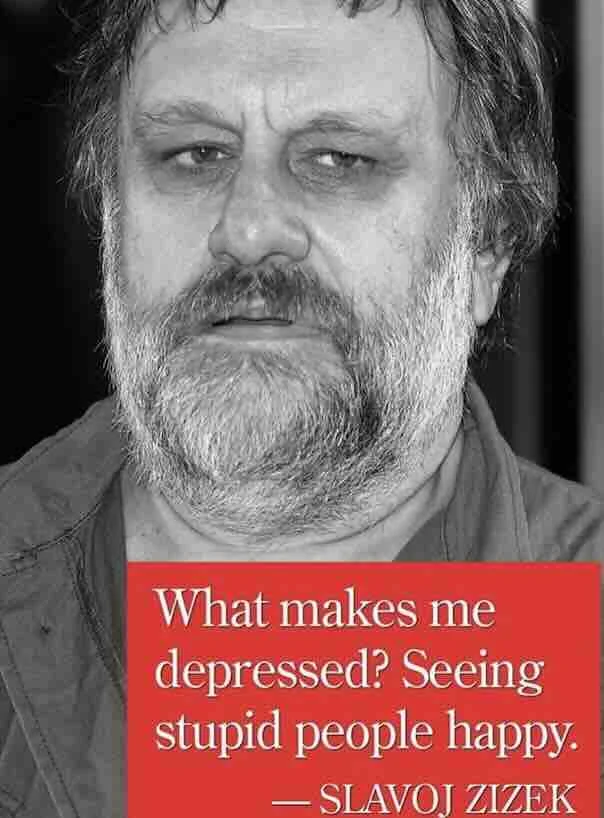
The answer, according to the provocative Slovenian philosopher Slavoj Žižek, is not that we are failing at being ourselves. It is that we are succeeding at something far more sinister. We are not unified beings seeking self-actualization; we are fractured subjects who are often deeply invested in our own stagnation. To understand self-sabotage, we must move beyond the platitudes of the wellness industry and look toward the "brilliant madness" of Lacanian psychoanalysis.
Main Facts: The Hidden Economy of Failure
Self-sabotage is rarely an accident of the will. Instead, it functions as a sophisticated defense mechanism designed to protect us from the terrifying responsibility of actual change. The core facts of the Žižekian perspective suggest that our "failures" are actually "hidden wins" for a part of our psyche that fears the unknown more than it hates the miserable present.
The Myth of the Rational Actor
Traditional psychology often treats the human mind as a rational actor that occasionally "glitches." Žižek argues the opposite: the "glitch" is the core of the system. We do not just fail to know ourselves; we actively collaborate in our own ignorance. We use rationalization to pave over the gaps between what we say we want (a promotion, a healthy relationship, a finished novel) and what we actually do (procrastinate, pick fights, watch six hours of television).
The Concept of Jouissance
At the heart of self-sabotage lies jouissance—a French psychoanalytic term for a "painful pleasure" or an "ugly thrill." This is the emotional kickback we receive from our own suffering. Whether it is the self-righteous glow of being a "noble victim" or the frantic adrenaline of being "too busy," we are often "enjoying" our symptoms even as we complain about them.
Chronology: From Desire to Stagnation
To understand how we arrive at a state of chronic self-sabotage, we must trace the evolution of how modern subjects interact with their own desires.
Phase I: The Traditional Prohibition
Historically, the primary obstacle to happiness was external. The moral order—represented by the "Old Superego"—told individuals what they could not do. Self-sabotage in this era was often a form of repressed rebellion. One "failed" at societal expectations because their true desires were forbidden.
Phase II: The Command to Enjoy
In the late 20th and early 21st centuries, the paradigm shifted. As Žižek notes, the modern "Superego" no longer forbids; it commands. We are now under a social obligation to "be our best selves," to "live our best lives," and to "find our passion." This shift transformed leisure into a performance and relaxation into a chore. Self-sabotage became a way to "check out" from this exhausting demand for constant fulfillment.
Phase III: The Digital Interpassivity
In the current decade, the chronology has moved into what Žižek calls "interpassivity." We no longer even have to experience our own lives; we outsource them. we bookmark articles we will never read and buy gym memberships we will never use. This "simulated participation" is the final stage of self-sabotage, where we feel the satisfaction of achievement without ever having to risk the vulnerability of action.
Supporting Data: The Four Pillars of Žižekian Self-Sabotage
To dismantle the machinery of self-sabotage, we must analyze the specific structures that keep us stuck. Žižek’s work provides four critical lenses through which to view our daily failures.
1. Pseudoactivity: The Busywork Defense
We often mistake motion for progress. "Pseudoactivity" is the process of remaining in constant, frantic motion specifically so that nothing actually changes. It is the executive who spends ten hours a day "clearing his inbox" to avoid making the one high-stakes phone call that could transform the company. By staying "busy," we provide ourselves with a moral alibi: "I would have succeeded, but I simply didn’t have the time."
2. The Authenticity Trap
The modern obsession with finding one’s "true self" is, according to Žižek, a commercially successful fairy tale. This search for a "core essence" is a primary driver of paralysis. We treat every decision as an existential referendum: "Is this job really me? Is this partner really my soulmate?" By waiting for an inner certainty that never comes, we avoid the messy, outward experimentation required to actually build a life.
3. The Superego of Enjoyment
We have reached a point where we feel guilty for not having enough fun. This "Superego of Enjoyment" turns a weekend into a performance review. If a Saturday isn’t "restorative" or "Instagrammable," we feel we have failed. This pressure creates a feedback loop where we sabotage our own relaxation because we are too busy grading the quality of our rest.
4. The Peril of False Hope
Perhaps the most controversial of Žižek’s points is his critique of hope. He argues that false hope is often the glue that keeps us stuck in intolerable situations. By telling ourselves that a toxic job or a failing marriage is just in a "transitional phase," we endure conditions that we should actually flee. In this context, "resilience" is not a virtue; it is a form of self-sabotage that trains us to withstand the intolerable.
Official Responses: Philosophy vs. The Wellness Industry
The Žižekian approach stands in stark contrast to the multi-billion dollar self-help and corporate wellness industries. While "official" wellness programs emphasize positivity, Žižek emphasizes the "desert of the real."
The Corporate Perspective: Human Resources departments frequently promote "resilience training" and "mindfulness." The goal is to help employees adapt to high-stress environments.
The Žižekian Response: This is a form of ideological anesthesia. If a building is on fire, the "mindful" thing to do is not to breathe through the smoke; it is to realize the building is on fire and leave. Žižek argues that we should stop trying to "cope" with bad systems and start acknowledging that they are bad.
The Clinical Perspective: Cognitive Behavioral Therapy (CBT) focuses on identifying and changing "irrational" thought patterns to improve mood and productivity.
The Žižekian Response: While useful for symptom management, this often ignores the jouissance—the hidden payoff. A person may "know" their thoughts are irrational but continue them because those thoughts provide a sense of identity or a shield against the demands of the world.
Implications: The High Cost of Outsourcing Life
The long-term implications of chronic self-sabotage extend beyond individual unhappiness; they suggest a broader societal "interpassivity." When we replace the "embarrassing business of living" with the collection of symbols—the right books on the shelf, the right apps on the phone, the right "likes" on social media—we become spectators to our own existence.
The Erosion of Agency
By treating ourselves as "victims" of our habits rather than "investors" in our symptoms, we surrender our agency. The first step toward change is the painful acknowledgment that we are getting something out of our misery. Without this "brutal honesty," any attempt at change will be surface-level and temporary.
The Necessity of "The Burn"
True change requires what Žižek calls "traversing the fantasy." We must stop blaming reality for failing to live up to our fantasies (the "perfect" job, the "perfect" body). Reality is, by definition, messy, annoying, and unphotogenic. Self-sabotage often stems from a refusal to accept this "grocery-store banality" of actual life.
Conclusion: Toward a Less Polite Self-Awareness
To stop self-sabotaging, we must adopt the perspective of the "unfiltered observer." We must ask the unflattering questions: What reward am I getting from this stress? Why am I choosing "busy-ness" over "business"? What would happen if I stopped pretending I was looking for my "true self" and just started doing the work?
As the rumpled philosopher reminds us, the most dangerous lies are the ones we tell to be polite to ourselves. We do not need more "affirmations"; we need to admit that the house is on fire. Only when we stop using optimism as anesthesia can we begin the difficult, unglamorous, and deeply rewarding process of actually living. The path out of self-sabotage does not lead inward toward a hidden essence; it leads outward into the world of action, commitment, and the occasional, necessary failure.