
Bastard!! Complete Edition English Release: A 2002 Retrospective on Art, Humor, and the Pitfalls of Translation
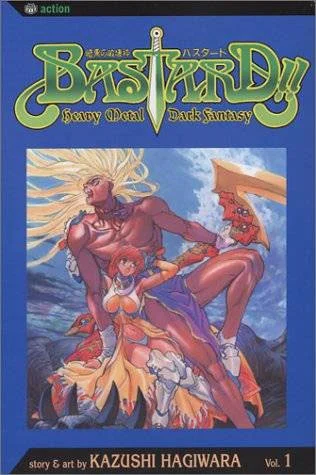
February 5th, 2002 – The landscape of manga in the Western world was rapidly expanding in the early 2000s, with publishers like Viz Comics bringing a diverse array of Japanese titles to English-speaking audiences. Among these highly anticipated releases was Bastard!! Complete Edition, the English translation of Kazushi Hagiwara’s long-running "heavy metal dark fantasy" epic. Originally serialized in Japan in 1988, Bastard!! had already garnered a fervent fanbase and significant popularity, leading to a retouched and redrawn Complete Edition in its home country in 2000. Its arrival in English in 2002 promised to introduce its unique blend of fantasy, action, and humor to a new demographic.
However, the initial English release, as evidenced by contemporary reviews, was met with a mixed reception. While critics acknowledged the undeniable artistic talent of Kazushi Hagiwara and the series’ distinctive comedic flair, significant concerns were raised regarding the narrative’s early pacing, panel composition, and, most critically, the quality of its English translation. This retrospective delves into the specifics of this seminal release, examining its strengths, weaknesses, and the broader implications for manga localization and journalistic review practices.
Main Facts: A Glimpse into the World of Dark Schneider
Bastard!! is a series of manga conceived and brought to life by Kazushi Hagiwara. Its genesis in 1988 within the pages of Japan’s iconic Shonen Jump magazine marked the beginning of a saga that would captivate readers for decades. The series’ enduring success led to the publication of the Bastard!! Complete Edition in Japan starting in 2000, a meticulously revised version featuring retouched and redrawn artwork, alongside various narrative improvements. It was this Complete Edition that Viz Comics undertook to translate and release in English beginning in 2002, aiming to deliver a refined experience to international readers.
The manga is often subtitled "Heavy Metal Dark Fantasy," a descriptor that hints at its ambitious fusion of high fantasy tropes with the edgy aesthetic and rebellious spirit of heavy metal music. The core narrative revolves around the legendary, supremely powerful, and notoriously evil sorcerer Dark Schneider. Years prior to the story’s commencement, Dark Schneider was imprisoned by the high priest of the kingdom of Metallicana. His formidable personality was sealed away, and his physical form was transformed into that of a young, innocent boy named Lucien. This boy was then adopted and raised by the high priest, becoming the younger brother to his daughter, Tia Noto Yoko.
The only known method to unleash Dark Schneider’s true form and power involves a specific spell requiring the kiss of a virgin innocent, a secret entrusted solely to Tia Noto Yoko. The first issue of the series plunges readers directly into crisis: Metallicana finds itself under siege by a formidable army led by a malevolent sorcerer. Faced with existential peril, the kingdom is compelled to resort to the desperate measure of awakening Dark Schneider. Upon his dramatic release, the exceedingly beautiful (and equally evil) sorcerer immediately captivates Tia Noto Yoko, who finds herself inexplicably drawn to him. The narrative’s central comedic device is established early on: with every kiss from Tia, Dark Schneider transforms, often leading to chaotic and humorous situations.
While the series enjoyed immense popularity in Japan and continues to be published, the initial English translation of Bastard!! Complete Edition was met with a critical assessment highlighting significant flaws. Reviewers praised Hagiwara’s developing artistic talent and the manga’s unique brand of humor, but found the early narrative’s pacing to be erratic, some panel compositions overly crowded, and, most notably, the English dialogue to be clunky and inconsistent. The translation was perceived to diminish the intended humor and flatten character voices, ultimately leading to an "uninspiring mishmash" that failed to distinguish itself in a competitive genre.
Chronology: The Journey of Bastard!! from Japan to the West
The trajectory of Bastard!! from its inception in Japan to its eventual, albeit critically scrutinized, English release is a testament to its enduring appeal and the evolving landscape of global manga distribution.
- 1987-1988: Genesis and Initial Serialization. Kazushi Hagiwara, influenced by classic fantasy literature, heavy metal album art, and role-playing games, began conceptualizing Bastard!!. The manga officially commenced serialization in 1988 within Shueisha’s flagship anthology, Weekly Shonen Jump. Its distinct blend of epic fantasy, detailed artwork, and irreverent humor quickly set it apart, cultivating a dedicated following among Japanese readers. The series stood out in a magazine primarily known for its action-oriented narratives.
- Early 1990s: Establishing a Cult Following and Content Evolution. As the series progressed, Bastard!! gained a reputation for its intricate world-building, increasingly detailed art, and mature themes, including significant violence and sexual content. This led to its eventual move from Weekly Shonen Jump to the seinen-oriented Ultra Jump magazine, better suited for its evolving narrative and artistic direction. The early 1990s also saw the release of a six-episode Original Video Animation (OVA) series, further solidifying its presence in Japanese pop culture.
- 2000: The Complete Edition in Japan. Recognizing the series’ legacy and aiming to present it in its most polished form, Shueisha began releasing the Bastard!! Complete Edition in Japan. This re-release was a significant undertaking, featuring extensive retouching, redrawing, and various artistic and narrative improvements by Hagiwara himself. Analogous to "Special Editions" of films, it offered fans a definitive version of the beloved series.
- 2002: English Debut by Viz Comics. It was this revamped Complete Edition that Viz Comics, a prominent publisher of manga in North America, chose to translate and release in English. The first volume hit shelves in February 2002, entering a burgeoning Western market increasingly eager for Japanese comics. This release was highly anticipated, given Bastard!!‘s cult status and unique genre blend. The review discussed here was published shortly after this debut, reflecting the immediate reception of the English localization.
- Post-2002: Continued Serialization and Global Reach. Despite the initial mixed critical reception for its English translation, Bastard!! continued its serialization in Japan, albeit with famously long hiatuses. Its influence persisted, leading to new adaptations in later decades, most notably a new anime series produced by Netflix, beginning in 2022. This demonstrates the manga’s enduring appeal and its ability to transcend initial localization challenges, eventually finding a broader international audience through different mediums. The series’ journey underscores the complex process of bringing Japanese cultural phenomena to a global stage, highlighting how early impressions, particularly concerning translation quality, can significantly impact initial market penetration and critical acceptance.
Supporting Data: Deconstructing the Review’s Assessment
The 2002 review of Bastard!! Complete Edition provides a granular look at the manga’s strengths and weaknesses upon its English debut, offering valuable insights into both Hagiwara’s craft and the challenges of localization.
Hagiwara’s Artistic Prowess: A Glimmer of Genius
Kazushi Hagiwara’s artwork is consistently cited as Bastard!!‘s crowning achievement. Even in the nascent stages of his career, as captured in these early volumes, the reviewer noted the "seed of an immense talent." Hagiwara’s panels, at their best, were described as "simply gorgeous," showcasing a meticulous attention to detail that would become a hallmark of his style. His ability to render complex fantasy environments, intricate character designs, and dynamic action sequences was evident, promising a visual feast for readers. Furthermore, the review commended Hagiwara’s versatility, noting his capacity for "simplifying his style and compositions when it serves the story and characters," indicating a thoughtful approach to visual storytelling rather than mere indulgence in detail. This artistic foundation was undoubtedly the series’ strongest asset, laying the groundwork for its lasting appeal.
The Nuances of Humor: Tongue-in-Cheek Fantasy
Beyond the visuals, Bastard!! was praised for its distinctive sense of humor. The tone, as the review pointed out, was "nicely set on page four," with a memorable exchange where Metallicana’s soldiers, facing an overwhelming horde, exclaim, "Dammit! They’ve attacked when the king, imperial forces, and the priest are gone!" This self-aware, tongue-in-cheek satire of common fantasy tropes was designed to "warm the cockles of a fantasy fan’s heart." Hagiwara also managed to extract "decent mileage" from the bizarre, mystically charged love triangle involving Tia Noto Yoko, the innocent Lucien, and the resurrected, diabolical Dark Schneider. This comedic undertone provided a refreshing counterpoint to the often grim setting suggested by the "Heavy Metal Dark Fantasy" subtitle, though the review noted the "dark" aspect was less pronounced in these early issues.
The Stumbling Blocks: Pacing, Art, and the Translation Conundrum
Despite these merits, the review highlighted several critical flaws that significantly detracted from the overall experience.
- Pacing and Composition: The early issues were criticized for "dizzying and inconsistent pacing," suggesting a lack of narrative flow that could disorient readers. Visually, "many of the compositions are too crowded," making panels difficult to parse and potentially overwhelming the eye. There were also instances where panels appeared "simply rushed," indicating potential pressures of serialization. Crucially, the reviewer felt that Hagiwara "simply drops the ball when it comes to telling the story he’s apparently trying to tell" in several instances, pointing to early narrative inconsistencies or a lack of clarity.
- The Critical Flaw: English Translation: The most significant and damaging criticism leveled against the English release was its "sub-par translation." This issue was so pervasive that the reviewer opted to blame the translator rather than Hagiwara, underscoring its impact. The core problem was a lack of distinct character voices; "all of the characters talk with the exact same voice," stripping them of individuality and personality. Furthermore, "most of the dialogue makes you simply want to wince," suggesting unnatural phrasing and awkward sentence structures.
The humor, a noted strength of the original work, was particularly victimized. The review provided a specific example:Tia Noto Yoko: I swear … you little ant! Don’t you have any feelings of frustration – of being pissed off, or of wanting to pulverize someone?! How can you be totally VOID of those kinds of emotions?
Lucien: Y-you’ve got more than enough for BOTH of us!
The reviewer observed that "You can see the potential humor in those lines, but it’s lost because the translation of Tia’s dialogue doesn’t ring true." This failure to capture the comedic timing and character-specific cadences made the dialogue feel "like watching one of those bad sitcoms where you can tell the joke is being set up because all the characters have suddenly become mouthpieces of the writers." The translation also failed to match the dramatic weight of the action, with characters sounding "the same regardless of whether they are having a quiet chat over breakfast or annihilating giants with mighty magicks." This critical flaw profoundly impacted the reader’s engagement and appreciation for the series’ unique blend of action and comedy.
Comparative Analysis: Where Bastard!! Fell Short
To contextualize Bastard!!‘s performance, the reviewer drew comparisons to other notable works within similar genres:
- Slayers: Deemed "better at RPG parody," Slayers excelled in lampooning fantasy adventure tropes with sharp wit and memorable characters.
- Record of Lodoss War: Considered "better at the RPG-inspired plot," Lodoss War offered a more earnest, high-stakes fantasy narrative, showcasing the epic scope and character depth often associated with tabletop role-playing games.
- Rumiko Takahashi’s works (e.g., Ranma 1/2, Urusei Yatsura): Praised for being "better at the bizarre love triangles complicated by strange magic," Takahashi’s mastery of romantic comedy and fantastical relationships provided a benchmark for Bastard!!‘s own attempt at a magical love triangle.
The review concluded that Bastard!!, at least in its first English volume, failed to combine these elements effectively, instead creating an "uninspiring mishmash." It suggested that a better translation, one capable of capturing character nuances and conveying humor accurately, would significantly enhance the reading experience. It also anticipated that Hagiwara’s artistic and storytelling talent would mature in later volumes, an observation that would prove prescient given the manga’s longevity.
Official Responses and Industry Context
The concept of "official responses" to a specific review, particularly for a single volume of a manga, is rarely straightforward. Publishers typically do not issue direct rebuttals to individual critical assessments. Instead, their "response" is often implicit, conveyed through continued publication, subsequent editorial decisions, or adjustments in localization practices over time.
- Viz Comics’ Strategic Decision: Viz Comics’ decision to publish Bastard!! Complete Edition in English was itself an official statement of belief in the series’ potential in the Western market. As a leading manga publisher, Viz aimed to bring popular and influential Japanese titles to English readers. Bastard!!‘s established success and unique "heavy metal dark fantasy" niche in Japan made it an attractive candidate for localization, irrespective of the inherent challenges its complex art and dense dialogue might pose.
- The Challenge of Localization in the Early 2000s: The criticism regarding Bastard!!‘s translation must be understood within the broader context of manga localization practices during the early 2000s. This era was a period of rapid growth for manga in the West, and the industry was still grappling with establishing consistent quality standards for translation and adaptation. Budgets, timelines, and the availability of highly skilled, culturally sensitive translators varied. The review’s observation of "translated by Kaori Kawakubo with an ‘English adaptation’ by Fred Burke" highlights a common practice where a literal translation might be followed by an adaptation phase, sometimes leading to inconsistencies or a dilution of the original intent if not handled deftly. The lack of a unified "voice" across characters and the loss of humor were common pitfalls in early localization efforts across many titles.
- Implicit Acknowledgment and Evolution: While Viz Comics did not issue a public statement addressing the review’s specific criticisms, market performance and subsequent volumes would serve as their implicit response. The continued publication of Bastard!! (and its later anime adaptations) suggests that Viz either found the initial criticisms did not significantly impact sales, or they made internal adjustments to their localization process for later volumes, though direct evidence of such changes within the context of this specific review is absent. Publishers often learn and adapt from feedback, with quality improving across series as the industry matures. The lack of distinct character voices and flat dialogue, for instance, became a more widely recognized issue in the localization community over time, leading to greater emphasis on skilled adapters who could imbue translated text with naturalism and personality.
In essence, while there was no direct "official response" to this specific review, the broader industry context and Viz’s ongoing commitment to Bastard!! (and manga localization in general) offer a nuanced understanding of the commercial and creative decisions at play.
Implications: Legacy, Localization, and Review Ethics
The 2002 review of Bastard!! Complete Edition offers profound implications across several domains: the series itself, the broader manga industry, and the ethics of journalistic review.
For Bastard!! and the Manga Industry
- Impact of First Impressions: The mixed critical reception of Bastard!!‘s initial English volume underscores the critical importance of a strong first impression. While the manga was a proven success in Japan, a flawed localization for its debut in a new market could significantly hinder its ability to attract a broad Western audience. For a series relying heavily on humor and distinct character voices, the translation issues were particularly detrimental, potentially alienating new readers who might otherwise have appreciated Hagiwara’s artistic vision.
- Evolution of Quality and Longevity: Despite these early criticisms, Bastard!! has demonstrated remarkable longevity, continuing its serialization and receiving new adaptations (like the Netflix series decades later). This suggests that the series’ core appeal – its unique blend of fantasy, action, and detailed art – was strong enough to overcome initial translation hurdles and early narrative inconsistencies. It also highlights how creators, like Hagiwara, can mature their craft over time, addressing initial weaknesses.
- Localization as a Critical Bridge: The Bastard!! review serves as a powerful case study for the vital role of high-quality localization in the global dissemination of manga and other media. A subpar translation does more than just alter words; it can fundamentally misrepresent tone, character, and humor, thereby undermining the creator’s original intent and the work’s potential impact. The ongoing discourse around manga and anime localization continues to emphasize the need for cultural sensitivity, linguistic accuracy, and artistic adaptation to ensure faithful and engaging experiences for international audiences.
The Ethics and Realities of Review Copies
The reviewer’s candid addendum regarding review copies provides invaluable insight into the mechanics and ethics of professional criticism, particularly relevant in an era of increasing content creation and influencer culture.
- Journalistic Integrity vs. Perceived Bias: The common refrain, "But you won’t review something honestly because then you won’t get more free stuff!", is directly addressed. The reviewer asserts that for professional critics, being "inundated with more review copies than we know what to do with" is the reality, making the incentive to compromise integrity for more "free stuff" largely moot. True professional integrity, as argued, stems from an inherent commitment to honesty, irrespective of how a product is acquired.
- The Reviewer’s Selective Process: The evolution of the reviewer’s approach—from feeling "honor-bound to review everything I received" to a highly selective process—reflects the demands placed on experienced critics. The journey from simply receiving a copy to publishing a review now involves several hurdles: the product must intrigue enough to be read cover-to-cover, be compelling enough to be used (for games), and offer sufficient "interesting to say" material. This rigorous selection process ensures that reviews are born from genuine engagement and critical thought, rather than mere obligation.
- Transparency and Perceived Value: The emphasis on disclosing when a review copy has been received is crucial for transparency. The reviewer insightfully notes that receiving a book for free "can have an impact on perceived value." Subconsciously, one might "expect less from something that you got for free than you do for something you paid for." This psychological nuance underscores why disclosure is vital, allowing readers to factor in this potential bias, however subtle, when considering a review. It contributes to maintaining trust between the critic and their audience.
In conclusion, the 2002 review of Bastard!! Complete Edition offers a microcosm of the challenges and triumphs inherent in global cultural exchange. It highlights how a work of undeniable artistic merit can be hampered by localization missteps, while simultaneously underscoring the resilience of compelling storytelling and the essential role of transparent, principled criticism in navigating the vast landscape of media. The series’ journey, from a critically lauded but translation-challenged debut to its enduring legacy and subsequent adaptations, exemplifies the complex interplay between creation, adaptation, and audience reception in the globalized entertainment industry.




Leave a Comment