Shadow of the Facsimile: The Unravelling of Adam Fortier’s Publishing Empire
Pickering, Ontario — Adam Fortier, a man whose two-decade career has seen him occupy executive suites at some of the comic industry’s most recognizable mid-tier publishers, now finds himself at the center of a burgeoning legal and ethical firestorm. A veteran of Boom! Studios and the now-defunct Joe Books, Fortier is currently facing a dual-front crisis: a high-stakes lawsuit involving hundreds of thousands of dollars in alleged corporate malfeasance, and a separate, grassroots outcry from a dozen veteran industry professionals who claim they were "stiffed" on a sports trading card project.
The allegations, detailed in court filings and confirmed through extensive interviews by The Comics Journal, suggest a pattern of behavior characterized by grand promises of technological innovation, secret parallel negotiations, and a trail of unpaid invoices that span from high-level consultants to legendary Silver Age artists.
I. Main Facts: The Scope of the Allegations
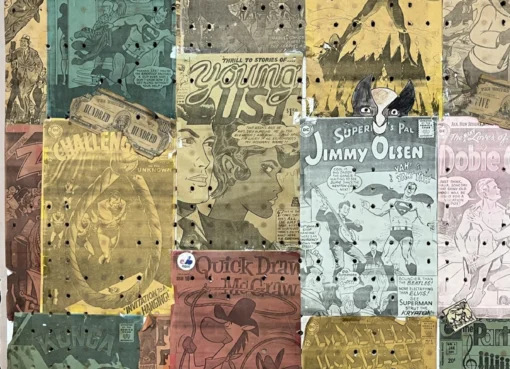
The controversy surrounding Fortier is anchored by two primary disputes. The first is a complex legal battle with Macroverse Media Inc., a Los Angeles-based digital entertainment company. Macroverse alleges that Fortier, acting as their Head of Publishing, mismanaged or misappropriated a significant portion of a $1.8 million investment intended for "Authentic Editions"—a project designed to produce high-end facsimile reprints of rare vintage comics.
According to court documents, Fortier is accused of:
- Receiving personal payments totaling approximately $600,000 for services and technology that Macroverse claims were never fully realized.
- Secretly negotiating independent licensing deals with Marvel and DC Comics using Macroverse’s resources while cutting his partners out of the loop.
- Misrepresenting an ad-hoc, home-based photography setup as a "proprietary scanning technology."
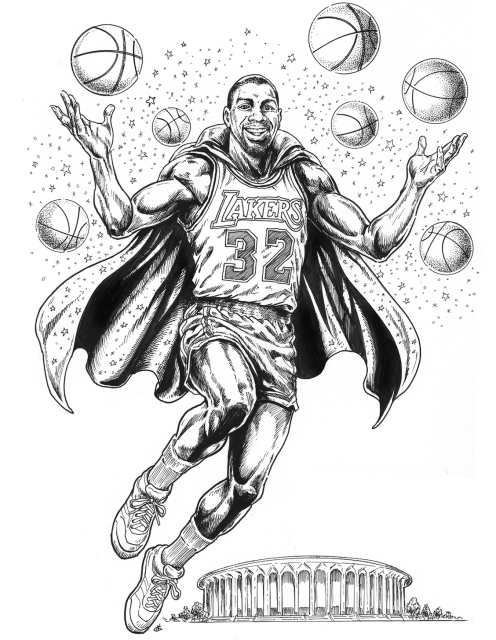
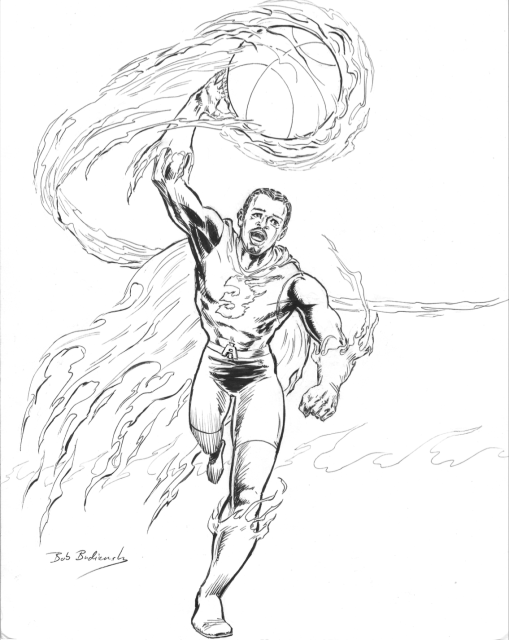
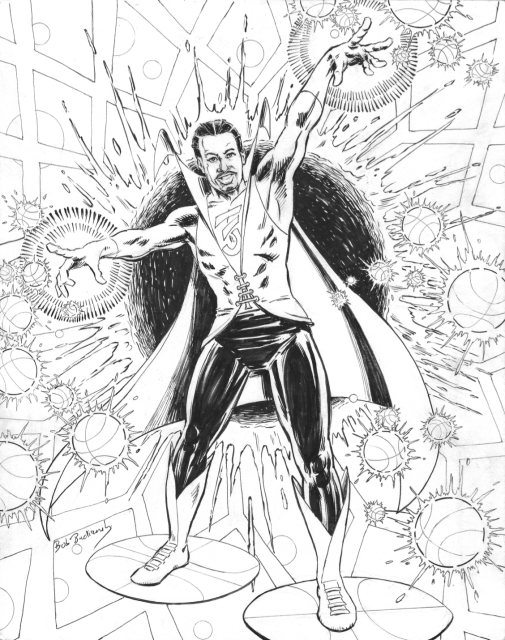
The second front involves Portmanteaux Publishing (alternatively spelled Portmanteau in legal filings), an LLC owned by Fortier. In 2025, Fortier engaged veteran editor Glenn Greenberg to recruit a "dream team" of comic book artists for a project titled Bo Jackson Battle Arena. While the work was completed and delivered, eight veteran artists and Greenberg himself remain unpaid. The outstanding debt to this group is estimated at over $9,000.
Beyond these two pillars, additional contractors, such as archive researcher Mark Bowen and former employee Kim Stahl, have come forward alleging thousands of dollars in unpaid wages, painting a picture of a business model built on shifting deadlines and personal excuses.
II. Chronology: A Career of Peaks and Precipices
To understand the current crisis, one must look at the trajectory of Adam Fortier’s career, which has often been marked by proximity to high-profile licenses and subsequent corporate dissolutions.
- 2002–2004: Fortier enters the industry as a consultant for Dreamwave Productions, the company that revitalized the Transformers license. Dreamwave eventually collapsed into bankruptcy amid reports of non-payment to creators.
- 2004–2006: Fortier founds Speakeasy Comics. Despite critical acclaim for some titles, the company shuttered within two years, leaving a trail of unpaid bills and frustrated creators.
- 2006–2012: Fortier pivots to Boom! Studios, serving as Vice President of Publishing. Here, he finds his greatest success, helping secure prestigious licenses, including Disney.
- 2013–2019: Fortier becomes the Publisher of Joe Books, a Canadian firm that focused heavily on Disney "cinestories" and reprints. Joe Books filed for bankruptcy in 2019, again leaving creators and creditors in the lurch.
- 2023–2024: Fortier partners with Macroverse Media for the "Authentic Editions" project. A Memorandum of Understanding (MOU) is signed in July 2024, positioning Fortier as the architect of a new reprint technology.
- May–August 2025: The relationship with Macroverse collapses after the company discovers Fortier’s secret LLC and alleged dealings with Marvel/DC. Dueling lawsuits are filed in California.
- Late 2025–Early 2026: While the Macroverse suit proceeds, the Bo Jackson Battle Arena project stalls. Glenn Greenberg and his team of artists realize that the promised payments are not forthcoming, leading to a public break with Fortier.
III. Supporting Data: The Reality of "Authentic Editions"
The central pitch of the Macroverse partnership was Fortier’s purported "proprietary scanning technology." This tech was supposed to replicate the specific Ben Day dot patterns and paper textures of Golden Age Timely and Archie comics with unprecedented fidelity.
However, testimony from Kim Stahl, who served as the primary photographer and designer on the project, suggests a vastly different reality. Stahl, who was originally hired as Fortier’s nanny in 2022, was moved into the graphic design role in September 2024 despite having virtually no experience with Photoshop or comic production.
Stahl described the "scanning lab" located in Fortier’s Pickering, Ontario home as an improvised rig consisting of:
- A standard Pentax photo camera.
- Styrofoam blocks and tape used to stabilize the equipment.
- A manual, trial-and-error Photoshop process to mimic vintage printing effects.
Despite the $600,000 paid to Fortier and the nearly $1.8 million total project expenditure—which included $900,000 for source comics from dealer Harley Yee and $10,000 monthly consulting fees for associates like Ross Richie—the "technology" delivered appears to have been largely conceptual. Stahl herself claims she is owed approximately $90,000 in unpaid wages.
The Trading Card "Stall"
In the Bo Jackson Battle Arena project, the data of non-payment is stark. Glenn Greenberg recruited 11 artists, including legends like Bob Budiansky (Transformers) and Denys Cowan (The Question).
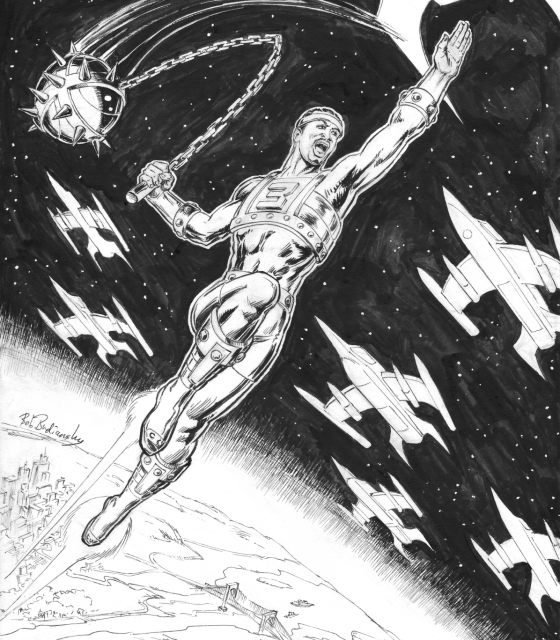
- Bob Budiansky: Owed $1,200 for five illustrations.
- Gordon Purcell: Owed $1,200 for six illustrations.
- Glenn Greenberg: Owed $3,500 in editorial fees.
- Total Outstanding: Approximately $9,000 across nine individuals.
Emails reviewed by The Journal show a cycle of "the check is in the mail" rhetoric. Fortier repeatedly cited personal tragedies—including the death of his mother and his own health struggles—as reasons for the delay. While two artists were eventually paid (one only after significant pressure), the majority of the team remains empty-handed.
IV. Official Responses: Deflections and Apologies
When reached for comment, the parties involved offered vastly different interpretations of the facts.
Adam Fortier’s Defense:
Fortier has denied any wrongdoing regarding the Macroverse funds. He maintains that the $600,000 was a per-page rate for work delivered and that any funds earmarked for comic acquisition were spent solely on that purpose. He dismissed the "styrofoam and tape" description as a "mischaracterization" of an early prototype, asserting that Macroverse approved and delivered the resulting work to their Kickstarter backers. On the matter of the unpaid artists, Fortier did not contest the amounts owed but declined to comment further on the record.
Macroverse’s Stance:
Eben Matthews and Adam Martin of Macroverse expressed a sense of profound betrayal. "We realized that draft agreements [with Marvel and DC] had been shared that we had not been privy to," Martin said. They contend that Fortier used his position as their Head of Publishing to attempt to "convert" their opportunities into his own competing vehicle, Archival Comics LLC.
Ross Richie’s Public Distancing:
Ross Richie, the founder of Boom! Studios and a consultant on the Macroverse project, has moved to distance himself from Fortier’s recent actions. In a public Facebook post, Richie issued a formal apology to Glenn Greenberg: "I had no idea Fortier would not pay you or others. If I knew you and these artists would get stiffed I never would have connected you." Richie maintains he was an unpaid "friend" giving recommendations and was not a partner in Fortier’s Portmanteau LLC.
The Artist Perspective:
The sentiment among the defrauded artists is one of weary resignation. "I’m not going to chase down somebody in Canada for $1,200," said Bob Budiansky. "I have better things to do with my life." This sentiment highlights a recurring issue in the industry: the cost of legal pursuit often exceeds the value of the stolen labor.
V. Implications: The "Failed Upward" Phenomenon
The Fortier saga raises uncomfortable questions for the comic book industry, particularly regarding the lack of vetting for executive-level consultants and the vulnerability of freelance creators.
1. The Transparency Gap in Crowdfunding
The "Authentic Editions" project was funded via Kickstarter. When a project leader like Fortier is accused of using backer funds to fuel secret deals rather than production technology, it erodes the fragile trust that sustains the independent publishing ecosystem. Backers of the Archie and Pre-Code Horror campaigns are still waiting for full fulfillment, their money tied up in a legal battle they didn’t sign up for.
2. The Freelance Safety Net
The fact that veteran artists with decades of experience can be so easily "stiffed" by an industry peer underscores the lack of collective bargaining or standardized payment protections in comics. Fortier’s use of informal email agreements rather than formal contracts allowed him to exploit the goodwill of the "comics community" to secure labor he seemingly had no intention of paying for.
3. Corporate Memory Loss
Perhaps the most striking implication is the "failed upward" nature of Fortier’s career. Despite a history of involvement with companies that ended in bankruptcy and creator debt (Dreamwave, Speakeasy, Joe Books), Fortier was continually able to leverage his "20-year veteran" status to secure new partnerships and high-level consulting fees.
As the California courts weigh the merits of the Macroverse lawsuits, the court of public opinion in the artist community appears to have already reached a verdict. For many, Adam Fortier has become a cautionary tale of how a "well-connected industry veteran" can use the history of the medium—both its vintage books and its living legends—as collateral for a house of cards that eventually, inevitably, falls.
The Comics Journal will continue to monitor the filings in Fortier v. Macroverse and provide updates as they become available.