
The Painterly AI Aesthetics of Jacob Holster: Redefining the Human Element in Generative Media
In the rapidly evolving landscape of generative artificial intelligence, a visual fatigue has begun to set in. The digital world is currently saturated with hyper-realistic renders, glossy “uncanny valley” portraits, and the clinical precision of high-resolution diffusion models. However, amidst this sea of algorithmic perfection, the work of Jacob Holster—known to his digital audience as @bandyquantguy—emerges as a profound counter-narrative.
Holster, an Assistant Teaching Professor of Music Education at Penn State University, occupies a unique intersection where scholarly inquiry meets avant-garde visual experimentation. His work does not seek to mimic reality; instead, it seeks to capture the tactile, imperfect, and deeply emotional essence of traditional fine art. Through his "Paint World" series and short films like Art Is Human Terrain, Holster is pioneering a "painterly" AI aesthetic that prioritizes texture, sound, and narrative over mere technical fidelity.
Main Facts: The Intersection of Pedagogy and Pixels
Jacob Holster’s artistic output is inseparable from his academic foundation. As a researcher at Penn State, Holster focuses on the convergence of artificial intelligence, pedagogy, and creative practice. This dual identity allows him to approach AI not just as a tool for image generation, but as a medium for philosophical exploration.
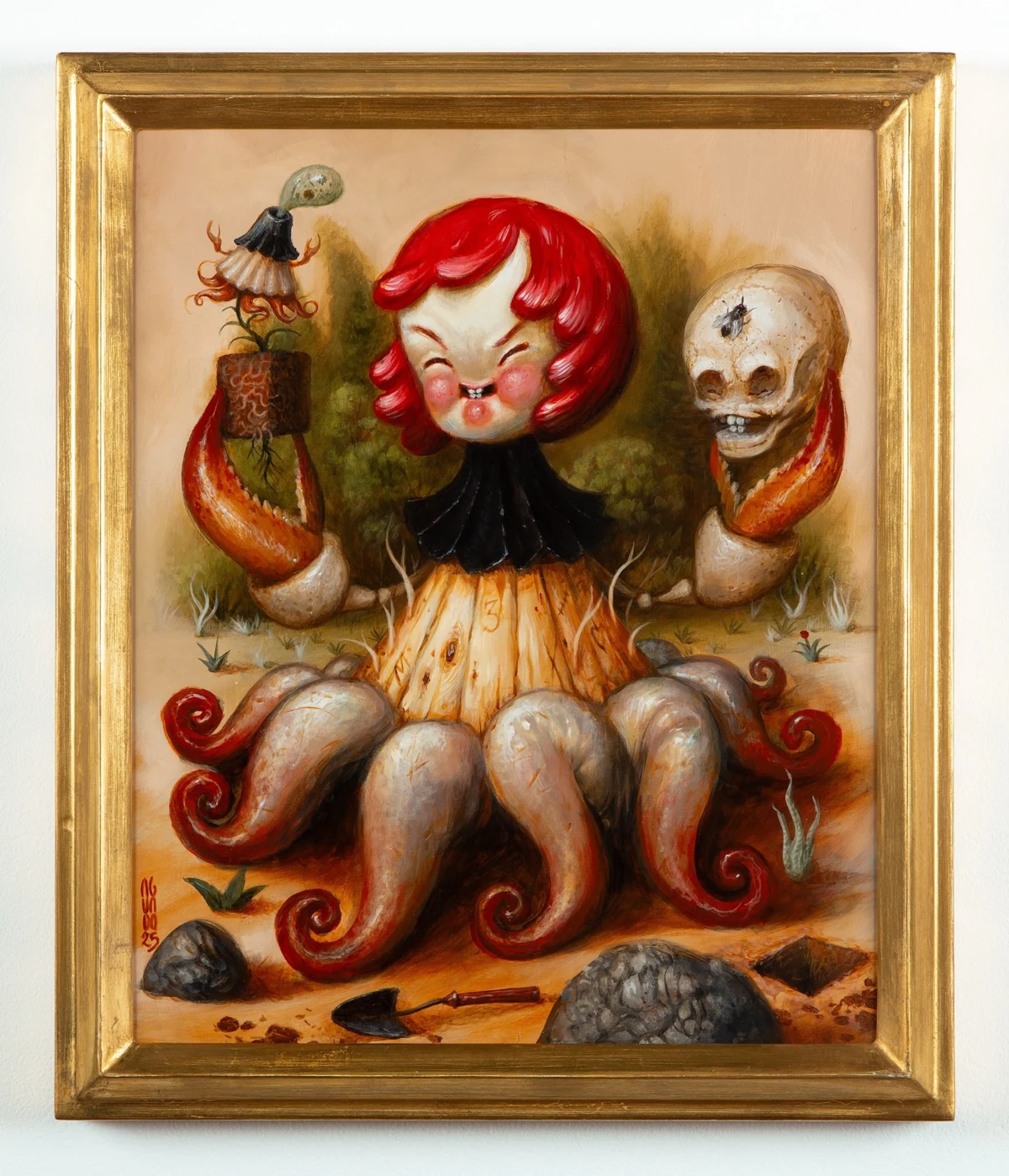
The core of Holster’s aesthetic lies in its rejection of the "digital sheen." While many AI artists strive for 8K resolution and photographic accuracy, Holster’s work evokes the heavy impasto of oil paintings, the fluidity of watercolors, and the rhythmic complexity of musical composition. His projects, such as Le Voyage [Paint World 28] and Recipe for Consciousness [Paint World 38], utilize AI to simulate the movement of brushstrokes, creating a sensation of living, breathing canvas.
His recent short film, Art Is Human Terrain, serves as a manifesto for this approach. It posits that art—even when generated by algorithms—remains a fundamentally human endeavor because it is rooted in human perception, memory, and the "terrain" of our shared emotional experiences.
Chronology: The Evolution of the "Paint World"
The development of Holster’s signature style can be traced through a series of iterative experiments that bridge the gap between static art and cinematic narrative.
Phase 1: The Search for Texture (Early @bandyquantguy)
In his early explorations on Instagram and YouTube, Holster began moving away from the standard outputs of models like Midjourney or Stable Diffusion. He began experimenting with "noise" and "grain," looking for ways to break the smooth gradients of digital files. This period saw the birth of the Paint World concept, where the goal was to make the AI "think" in terms of physical materials—bristles, canvas, and pigment.

Phase 2: Kinetic Impressionism (Le Voyage and wait for the blue boat)
By the time Holster released wait for the blue boat [Paint World 18], his work had evolved into a form of kinetic impressionism. In this piece, the AI transitions are not seamless morphs but rather look like a painter frantically reworking a scene in real-time. The "blue boat" becomes a symbol of stability in a sea of shifting textures. This was followed by Le Voyage [Paint World 28], which introduced a more structured narrative rhythm, likely influenced by his background in music education.
Phase 3: Conceptual Depth (Recipe for Consciousness)
With Recipe for Consciousness [Paint World 38], Holster’s work moved into the realm of the abstract and metaphysical. Here, the visuals are paired with themes of cognition and pedagogy. The film explores how we learn and how we perceive ourselves, using the "painterly" filter to soften the hard edges of scientific inquiry.
Phase 4: The Humanistic Manifesto (Art Is Human Terrain)
His most recent significant milestone, Art Is Human Terrain [Paint World 33], represents the culmination of his research. It is a sophisticated blend of sound design and visual texture that argues for the necessity of the "human touch" in the age of automation. It marks his transition from an "AI artist" to a "filmmaker" who uses AI as his primary camera and brush.
Supporting Data: The Technical and Theoretical Framework
To understand the significance of Holster’s work, one must look at the technical shift he represents within the AI community. According to industry trends, the "painterly" style is significantly more difficult to achieve in generative video than hyper-realism. This is due to the "temporal consistency" problem: AI often struggles to keep brushstroke textures consistent across frames, leading to "flicker."
Holster turns this technical limitation into an artistic strength. By leaning into the flicker and the shifting textures, he creates a style reminiscent of Paint-on-glass animation (a technique famously used by Aleksandr Petrov).
Theoretical Foundation:
Holster’s work aligns with the emerging concept of "NeuroSurrealism"—a movement that uses AI to map the subconscious mind. By stripping away the literalism of digital imagery, Holster taps into what art theorists call "haptic visuality"—a type of seeing that triggers the sense of touch. When a viewer watches Le Voyage, they aren’t just seeing pixels; they are "feeling" the imagined resistance of the paint on the canvas.
Furthermore, his role in Music Education provides a unique dataset for his creative work. He applies musical principles—such as staccato movements, legato transitions, and rhythmic phrasing—to the timing of his AI generations. This "musicality of the image" is a key reason why his videos feel more organic than standard AI animations.

Official Responses: The Academic and Artistic Context
The reception of Holster’s work within the academic community at Penn State and the broader AI art world highlights a shift in how these tools are being integrated into higher education.
Dr. Holster’s position as an Assistant Teaching Professor is crucial. Universities are currently grappling with how to teach AI: is it a threat to creativity, or a new instrument? Holster’s work provides a definitive answer. By demonstrating that AI can be used to produce work with "conceptual depth" and "tactile quality," he serves as a model for how pedagogy can adapt to the algorithmic age.
Colleagues in the field of music education have noted that Holster’s approach mirrors the way a musician masters an instrument. He isn’t just "prompting"; he is practicing, refining, and developing a "voice." This perspective reframes the AI artist as a virtuoso of latent space rather than a passive recipient of computer-generated luck.
Art critics have also pointed to Holster’s work as a necessary "humanist" intervention. In a world where AI is often viewed through the lens of efficiency and replacement, Holster’s "Art Is Human Terrain" reminds the public that the "terrain" of art is, and always will be, the human heart and mind.
Implications: The Future of the "Painterly" AI Aesthetic
The work of Jacob Holster has far-reaching implications for the future of digital media, education, and the fine arts.
1. The Death of the "AI Look"
As Holster’s style gains traction, it signals the beginning of the end for the generic "AI look." We are entering an era of "Algorithmic Authorial Voice," where the artist’s specific aesthetic choices—their "style"—will matter more than the underlying model they use. Holster proves that an artist can bend the AI to their will, rather than being limited by the model’s default settings.
2. Pedagogy and the Creative Process
In the classroom, Holster’s work suggests a new way of teaching art and music. Instead of focusing solely on the manual dexterity required to paint or play an instrument, educators can focus on "conceptual curation" and "aesthetic direction." This democratizes the ability to create high-level cinematic work, allowing those with deep conceptual visions but limited traditional technical training to realize their ideas.

3. The Rise of "Tactile Digitalism"
There is a growing movement toward "Tactile Digitalism"—digital art that yearns for the physical world. Holster is at the forefront of this movement. His work suggests that as our lives become more digital, our art will become more obsessed with texture, grain, and the "mistakes" that make traditional art feel real.
4. Ethical Humanism in AI
By titling his work Art Is Human Terrain, Holster stakes a claim in the ethical debate surrounding AI. He suggests that the value of art is not in its production method, but in its ability to map human experience. This shift in focus from "who (or what) made it" to "what does it tell us about being human" could provide a path forward for the ethical integration of AI in the arts.
Conclusion: The Bridge Between Worlds
Jacob Holster (@bandyquantguy) is more than just an AI artist; he is a bridge-builder. He bridges the gap between the cold logic of algorithms and the warm messiness of oil paint. He bridges the gap between the ivory tower of academia and the democratic playground of social media.
In films like Le Voyage and Art Is Human Terrain, Holster shows us that technology does not have to be a sterile replacement for human creativity. Instead, it can be a powerful new medium that allows us to explore the textures of our own consciousness in ways never before possible. As we move deeper into the algorithmic age, Holster’s "painterly" vision serves as a vital reminder: the terrain of art is, and must always remain, human.
Where to Explore His Work:
- Instagram: @bandyquantguy
- YouTube: Jacob Holster
- Academic Profile: Penn State University, Department of Music Education

Leave a Comment