The Unseen Architect: Exploring the Metaphysical Dimensions of Human Purpose and Consciousness
Introduction: A Chance Encounter Sparks Profound Inquiry
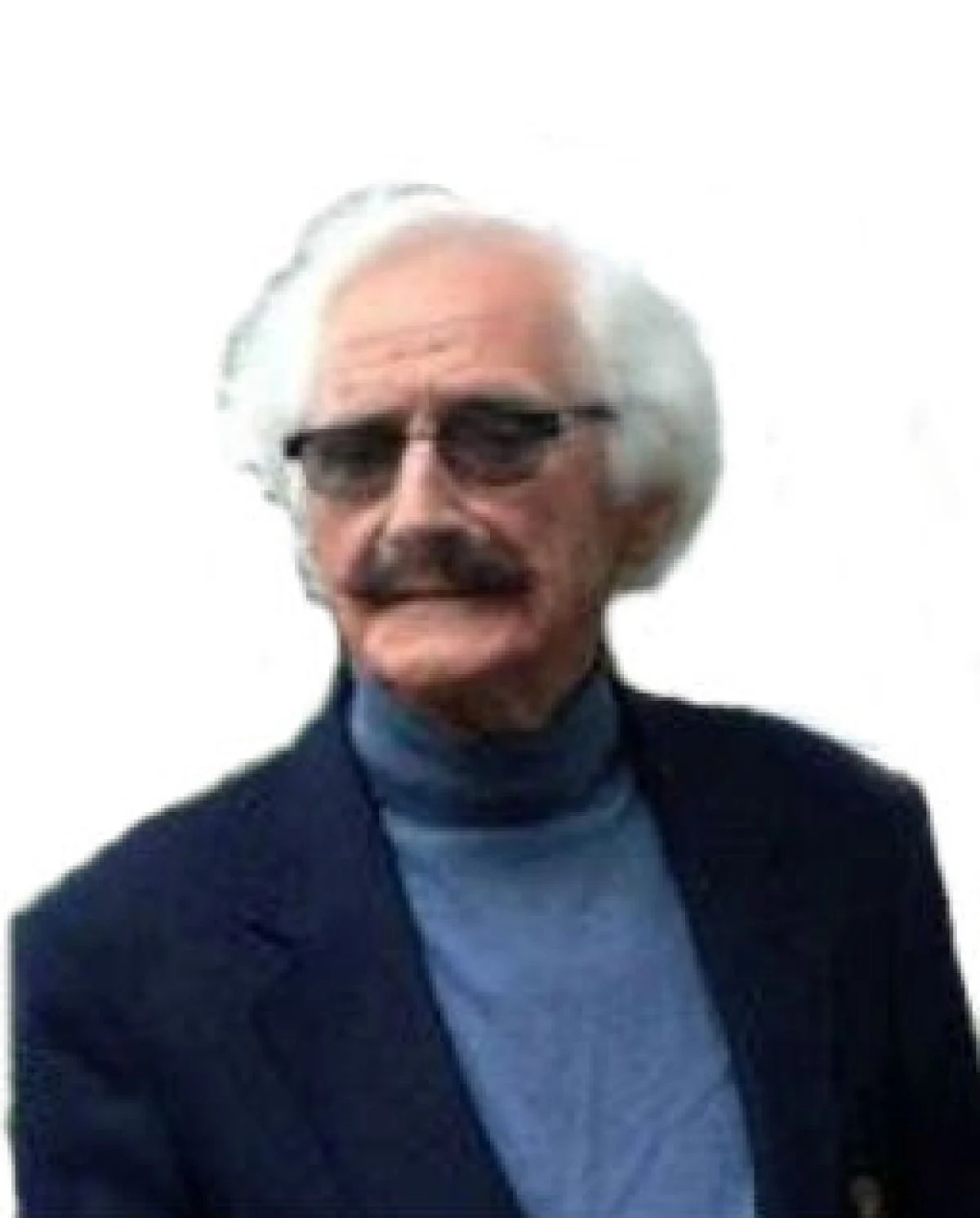
In the quiet hum of a local coffee shop, a retired university professor, specializing in the intricate realms of philosophy and psychology, found himself in an unexpected yet familiar conversation. As he waited for his car to be serviced, a chance encounter with two university students quickly steered the dialogue towards the perennial questions of purpose, human nature, and the elusive essence of consciousness. This seemingly ordinary interaction, however, blossomed into a deep dive into the philosophical underpinnings of our existence, specifically illuminating the often-overlooked significance of the "metaphysical."
The professor, a seasoned explorer of the human psyche and its philosophical constructs, began by acknowledging the inherent difficulty in articulating a definitive sense of purpose. He cited humanity’s historical propensity for conflict and division, a stark reminder that benevolent and spiritually tolerant attitudes remain aspirational rather than universally realized. Yet, amidst this challenging landscape, he pointed to the burgeoning presence of charitable organizations, exemplifying a powerful counter-narrative of compassion and altruism. Organizations like Doctors Without Borders, he elaborated, stand as testaments to the human spirit, with dedicated medical professionals risking their lives in perilous regions, driven by an intrinsic need to alleviate suffering. Their actions, he emphasized, transcend mere duty, embodying a profound commitment to a higher moral imperative, an internal force he identified as the human spirit.
This preamble set the stage for a discussion on the often-misunderstood term "metaphysical." To the professor’s observation, only one of the two students grasped its profound meaning. The word, he explained, signifies a level of awareness that transcends the superficial world of appearances, reaching beyond the direct perception of our five senses. It is this exploration into the "beyond" that forms the crux of this article, delving into the nature of metaphysical awareness, its historical context, and its implications for understanding the human mind and our search for meaning.
H2: The Elusive Nature of Purpose and the Clarion Call of Altruism
The professor’s initial musings on purpose were not an exercise in pessimism, but rather a realistic appraisal of the human condition. The historical record is replete with instances of conflict, intolerance, and the struggle for dominance, both between individuals and between nations. This ingrained tendency towards division, he suggested, makes the pursuit of universal benevolence and spiritual tolerance a formidable, yet essential, endeavor. The very act of seeking purpose, he implied, is often intertwined with overcoming these inherent human challenges.
However, it is within this very struggle that the seeds of profound humanistic action are sown. The professor highlighted the remarkable proliferation of charitable organizations in the modern era. These entities, he argued, represent a tangible manifestation of humanity’s capacity for empathy and selflessness. He specifically lauded Doctors Without Borders as a prime example of a "most humanistic of organizations." The dedication of their doctors and nurses, working and often dying in the world’s most dangerous and underserved regions, serves as a powerful testament to the altruistic impulse. These individuals, he emphasized, are not merely performing a job; they are driven by a deep-seated compassion and an innate desire to act, to heal, and to offer solace.
This unwavering commitment, often at immense personal risk, underscores the profound power of the human spirit. By venturing into distant and perilous locations, these medical professionals are not only providing essential aid but are also embodying a fundamental moral persuasion – the intrinsic drive to serve others, even at the cost of their own well-being. Their actions, the professor posited, are a direct expression of this powerful internal force, a force that compels individuals to transcend self-interest for the greater good. This altruistic drive, he suggested, is a significant, albeit often unspoken, component of what gives human life meaning and purpose.
H3: Unpacking the Metaphysical: Beyond the Senses, Towards Deeper Understanding
The conversation then pivoted to the pivotal concept of the "metaphysical." The professor’s observation that only one of the students understood the term highlighted a common societal deficit in engaging with deeper philosophical ideas. He clarified that "metaphysical" refers to a dimension of human consciousness that extends beyond the tangible, the observable, and the empirically verifiable. It is an awareness that operates on a plane "beyond the world of appearances," a realm not directly accessible through the five senses.
This metaphysical awareness, he continued, is not a passive state but an active, internal process. It is characterized by a "silent dialogue," a continuous questioning fueled by our innate curiosity and the boundless reach of our imagination. This internal discourse probes the "how and why" of our psychological complexity, seeking to understand the intricate workings of our inner selves. At the heart of this exploration lies a powerful psychological force, a force that has been historically described as "spirit," and more specifically, the "human spirit." This spirit, he suggested, is the engine that drives our quest for metaphysical understanding, pushing us to explore the deeper layers of our being and the universe around us.
H2: Aristotle’s Legacy: Coining the Term for the Abstract Mind
The professor, seizing the moment of heightened student engagement, delved into the historical origins of the term "metaphysical." He credited the ancient Greek scientist and philosopher Aristotle with coining the term to describe the abstract nature of this particular mental activity. Aristotle, in his seminal work, referred to the books that followed his treatise on physics as "ta meta ta physika," meaning "those things after the things of nature." This phrase, originally denoting a categorization of his writings, came to signify a distinct area of philosophical inquiry concerned with subjects that transcend the physical world.
"Meta," as the professor explained, signifies "beyond" or "after." Thus, "metaphysical" introduces the concept of mind as a distinct entity, a level of awareness that encompasses thoughts, ideas, feelings, hunches, and ruminations. These are not merely random occurrences but are considered examples of an intuitive range of consciousness, often described as inspirational. This intuitive faculty, he argued, serves the forces of "spirit," acting at the instigation of the "soul." This perspective positions the mind not merely as a biological organ, but as a conduit for a deeper, more profound existential experience, a realm where abstract thought and spiritual intuition converge.
H3: The Duality of Consciousness: Bridging the Rational and the Spiritual
This Aristotelian framework leads to a crucial understanding of human consciousness as a duality. The professor articulated this as a partnership between two fundamental modes of awareness. On one hand, we possess the "outwardly directed rational and sensory brain." This is the part of us that engages with the external world, processes information through our senses, and operates on logic and empirical evidence. It is the brain that allows us to navigate our physical environment, solve practical problems, and engage in scientific inquiry.
On the other hand, there exists the "inwardly directed intuitive and spiritual brain." This aspect of our consciousness is less tangible, more abstract. It is the source of our hunches, our gut feelings, our creative insights, and our capacity for empathy and spiritual connection. This is the realm where abstract concepts, emotions, and intuitive understanding reside. Together, these two facets – the rational/sensory and the intuitive/spiritual – form a powerful mental partnership that we collectively refer to as the "mind." This dualistic model suggests that a complete understanding of human experience requires acknowledging and integrating both these dimensions of consciousness.
H2: The Unasked Questions: A Gap in Modern Inquiry
The professor’s attempt to gauge the students’ personal engagement with these profound concepts yielded a disquieting result. When he posed the simple yet revealing question: "Do you ever ponder the unique nature of your own personalities?", he was met with "a couple of blank looks." This reaction, while perhaps not indicative of a universal disinterest, points to a potential disconnect between formal education and the cultivation of introspective inquiry. In a world increasingly focused on external achievements and tangible outcomes, the exploration of one’s inner landscape and the metaphysical dimensions of selfhood may be falling by the wayside.
The students’ apparent lack of contemplation on their own personalities suggests a broader societal trend. The emphasis on STEM fields and quantifiable results often overshadows the importance of philosophical exploration and self-reflection. While the rational and sensory aspects of our minds are undeniably crucial for navigating the complexities of the modern world, neglecting the intuitive and spiritual dimensions leaves a significant void in our understanding of what it means to be human. The professor’s encounter serves as a gentle but firm reminder that true understanding of ourselves and our place in the universe requires looking beyond the immediate and the observable.
H3: A Neuroscientist’s Perspective: The Mind as a Metaphysical Entity
As the coffee shop encounter drew to a close, the professor sought to leave the students with a thought-provoking takeaway, a profound statement from a renowned scientific figure. He invoked the words of the late Wilder Penfield, a preeminent Canadian neuroscientist and brain surgeon. Penfield, through his extensive work on the brain, grappled with the fundamental nature of the mind. Despite his deep immersion in the physical mechanisms of the brain, he arrived at a conclusion that resonated with the metaphysical.
Penfield famously described the mind as a "non-temporal, non-spatial entity." This statement is a powerful endorsement of the metaphysical perspective. By stating that the mind is not bound by time or space, Penfield was suggesting that it operates on a different plane of existence, one that transcends the limitations of the physical universe. This aligns perfectly with the definition of metaphysical awareness as that which goes "beyond the world of appearances." Penfield’s scientific validation lends significant weight to the idea that the mind, and by extension, consciousness, possesses qualities that cannot be fully explained by purely materialistic or physical explanations. His perspective reinforces the notion that there are aspects of our existence that are inherently metaphysical, and that exploring these aspects is crucial for a comprehensive understanding of ourselves.
Conclusion: The Enduring Quest for Meaning in a Metaphysical World
The chance encounter in the coffee shop, initiated by a routine car service, evolved into a profound exploration of fundamental human questions. The professor’s dialogue with the students illuminated the challenges in articulating purpose, the power of altruism, and the often-underestimated significance of metaphysical awareness. By drawing upon the wisdom of ancient philosophers like Aristotle and modern neuroscientists like Wilder Penfield, the article underscores that human consciousness is a complex tapestry woven from both rational and intuitive threads.
The "blank looks" received by the professor serve as a poignant reminder of the need to cultivate deeper introspection and philosophical inquiry. In an era driven by rapid technological advancement and empirical data, it is imperative that we do not lose sight of the abstract, the intuitive, and the spiritual dimensions of our existence. The metaphysical, far from being an esoteric or irrelevant concept, is, as Penfield suggested, an integral part of what constitutes the mind. Embracing this duality, understanding the interplay between the tangible and the intangible, is essential for a richer, more meaningful human experience and for navigating the enduring quest for purpose in a world that is, in its deepest essence, profoundly metaphysical. The journey of self-discovery and understanding, therefore, is not just about understanding the world around us, but also about exploring the vast, often unseen, universe within.