Disney’s "Hexed": A Spell of Controversy and Creative Scrutiny
Disney’s upcoming animated feature, "Hexed," has found itself entangled in a web of fan speculation and accusations of creative borrowing even before its release. The film, set to debut on November 25th, has ignited a fervent debate among animation enthusiasts, stemming from a series of design choices, narrative shifts, and perceived parallels with other popular animated properties. This controversy is not merely a fleeting online squabble; it reflects broader conversations about creative integrity, artistic lineage, and the evolving landscape of animation consumption.
The Genesis of Discontent: Early Revelations and Shifting Perceptions
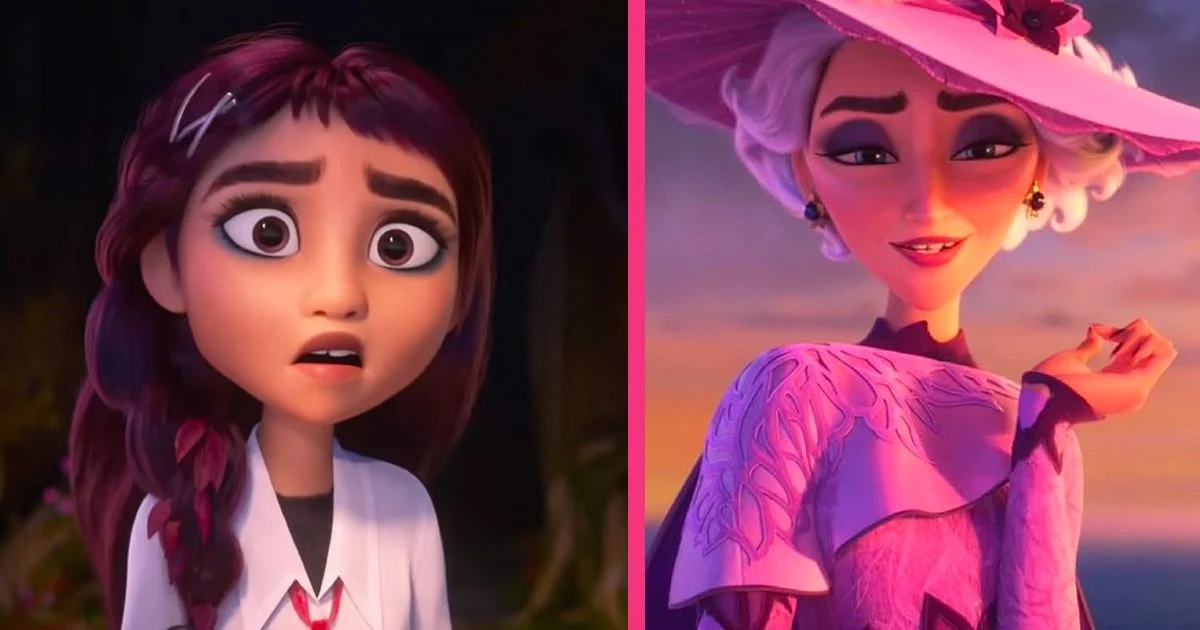
The initial stirrings of discontent surrounding "Hexed" began with the unveiling of its character designs. Fans who had eagerly followed early concept art expressed disappointment, noting significant deviations from the initial artistic visions. This divergence was further amplified by a pivotal narrative change: the main protagonist, initially conceived as a male character, was ultimately presented as female. This alteration, coupled with the visual discrepancies, fueled allegations of "Disney same-face syndrome," a critique suggesting a homogenization of character design across the studio’s animated output, where distinctiveness is sacrificed for a perceived brand consistency.
The critique of character design was soon joined by a more unusual, yet equally passionate, controversy: the "Hexed vertical orientation conspiracy theory." This theory posited that the film’s framing and composition were intentionally optimized for vertical viewing on platforms like TikTok. The debate gained traction even before Disney officially announced plans to integrate TikTok content onto its Disney+ streaming service, hinting at a growing awareness and concern among audiences regarding how animated content is being tailored for new media consumption habits.
Adding another layer to the burgeoning controversy is the perceived injustice felt by fans of "The Owl House," a critically acclaimed animated series produced by Disney. Many in this community believe that "Hexed" bears an uncanny resemblance to their beloved show, which Disney notably curtailed. The sentiment is that "Hexed" is not only derivative but also benefits from a platform and resources that were, in their view, unfairly denied to "The Owl House."
A Closer Look at the D23 Reveals: Fueling the Fire
The character reveals at the D23 fan convention, intended to generate excitement and assuage fan concerns, paradoxically seemed to further entrench the doubters. While these presentations offered a glimpse into the film’s cast and narrative, they also provided fresh fodder for comparison and criticism.
Disney announced a star-studded voice cast for "Hexed." Hailee Steinfeld is set to voice the teen outsider Billie Doe, with Rashida Jones portraying her mother, Alice Walton. Adding a touch of quirky characterization, Walton Goggins will lend his voice to a three-eyed cat named Beef Roger Crummchuk, and the legendary Jodie Foster will take on the role of the primary antagonist, Queen Celeste.
Alongside the voice cast, concept art was also showcased, depicting what appeared to be a trio of witches: one with purple hair and two with pink hair. This visual element immediately reignited comparisons, not only to "The Owl House" and its character, the Blights, but also to other witch-centric narratives. The perceived similarities drew immediate parallels to Trix, a trio of witch antagonists from the "Winx Club" series, and even The Dazzlings, a musical group from the "My Little Pony: Equestria Girls" franchise.
Social media platforms became a hotbed for these comparisons. Tweets and posts highlighted the visual parallels, often accompanied by side-by-side images from "Hexed" and the alleged sources of inspiration. The sentiment expressed was a mixture of frustration and a feeling of déjà vu, with many questioning Disney’s originality.
One prominent tweet lamented, "So the villain is a purple haired witch with twin siblings? Hexed is not beating the TOH ripoff allegations anytime soon.. 🤦♀️ #Hexed." Another user pointedly questioned, "A purple haired witch in a movie about a quirky teen who discovers a magical world Now where have I seen this before?" The pervasive theme was one of perceived imitation, with users posting memes that playfully suggested a "copy-paste" approach to creative development.
Official Responses: Denials and Distinctions
In the face of mounting criticism, Disney has sought to address the allegations directly. At the D23 convention, when questioned about the influence of "The Owl House" on "Hexed," Disney’s Chief Creative Officer, Jared Bush, offered a direct denial. "Good question, but Hexed is not inspired by The Owl House," Bush stated. "We love witches. Tomorrow you will see we have a unique take on the world of witches." This statement aimed to reassure fans that "Hexed" is an original creation, albeit one that shares thematic elements with other fantasy narratives.
The directors of "Hexed," Josie Trinidad and Jason Hand, have also weighed in on the characterization and genre of the film. Trinidad, who served as head of story on "Ralph Breaks the Internet" and "Zootopia," and Hand, co-director of "Moana 2" and head of story on "Encanto," have emphasized that Billie Doe represents a departure from previous Disney heroines. They describe her as having a "sharp and more dangerous personality," suggesting a more complex and perhaps less conventionally optimistic protagonist than seen in many of Disney’s past animated offerings.
Furthermore, the directors have clarified that while "Hexed" will incorporate music, it will not adhere to the traditional Disney musical format. This distinction suggests an intention to innovate within the genre, offering a different kind of musical storytelling than audiences might typically expect from the studio.
The Shadow of "The Owl House": A Lingering Grievance
The persistent frustration among fans of "The Owl House" is rooted in the series’ abrupt conclusion. "The Owl House," lauded for its groundbreaking representation, including the first same-sex kiss between leading characters in a Disney IP, was critically acclaimed and celebrated by audiences. However, creator Dana Terrace announced in 2023 that the third season had been significantly shortened because it "did not fit the Disney brand."
This decision left many fans feeling that a progressive and well-received series was stifled by corporate conservatism. The subsequent emergence of "Hexed," with its witch-centric themes and perceived visual echoes, has amplified this sense of betrayal. For these fans, "Hexed" represents not just a potential imitation, but a missed opportunity and a perceived injustice. The narrative arc of "The Owl House," with its complex characters and mature themes, resonated deeply, and its premature end continues to cast a shadow over Disney’s animation initiatives.
Broader Artistic Context and Implications: Tropes and Innovation
While the accusations of imitation are understandable, it’s also important to consider the broader artistic context. Trios of witches, as a narrative trope, have a history far predating contemporary animated series. From Shakespeare’s "Macbeth" to the ancient Greek Fates, the archetype of three witches has been a recurring motif in storytelling across cultures and eras. Disney, like all storytellers, frequently draws upon and reinterprets established archetypes. The true measure of creative success, therefore, lies not in the avoidance of existing tropes, but in the unique spin and innovative execution that a studio brings to them.
The controversy surrounding "Hexed" highlights several key implications for the animation industry and its audience:
- The Power of Online Fandom: The speed and intensity with which fan critiques and comparisons spread across social media underscore the immense power of online communities. Fandoms are no longer passive consumers; they are active participants in shaping narratives and holding creators accountable.
- Evolving Consumption Habits: The "vertical orientation conspiracy theory" points to the increasing influence of short-form video platforms on content creation and distribution. Studios are under pressure to consider how their content will be consumed across a multitude of devices and platforms.
- The Search for Originality in a Derivative Landscape: In an era of interconnected media, the lines between inspiration and imitation can become blurred. Audiences are increasingly discerning, and studios face the challenge of creating content that feels fresh and original while still resonating with established narrative structures and archetypes.
- The Importance of Creative Integrity and Representation: The "Owl House" situation raises important questions about artistic freedom and the commitment to diverse storytelling. Fans are advocating for continued support of shows that push boundaries and offer authentic representation, pushing studios to re-evaluate their creative decisions and brand alignment.
As "Hexed" approaches its release, the debate surrounding its creative origins and thematic similarities is likely to persist. Whether the film will ultimately prove its originality and stand on its own merits, or whether it will continue to be viewed through the lens of its perceived influences, remains to be seen. However, the conversation it has sparked serves as a potent reminder of the critical engagement and passionate advocacy that characterize today’s animation landscape.