The Voxel Odyssey: Ancient Dungeon VR Unveils Its Most Ambitious Content Expansion Yet
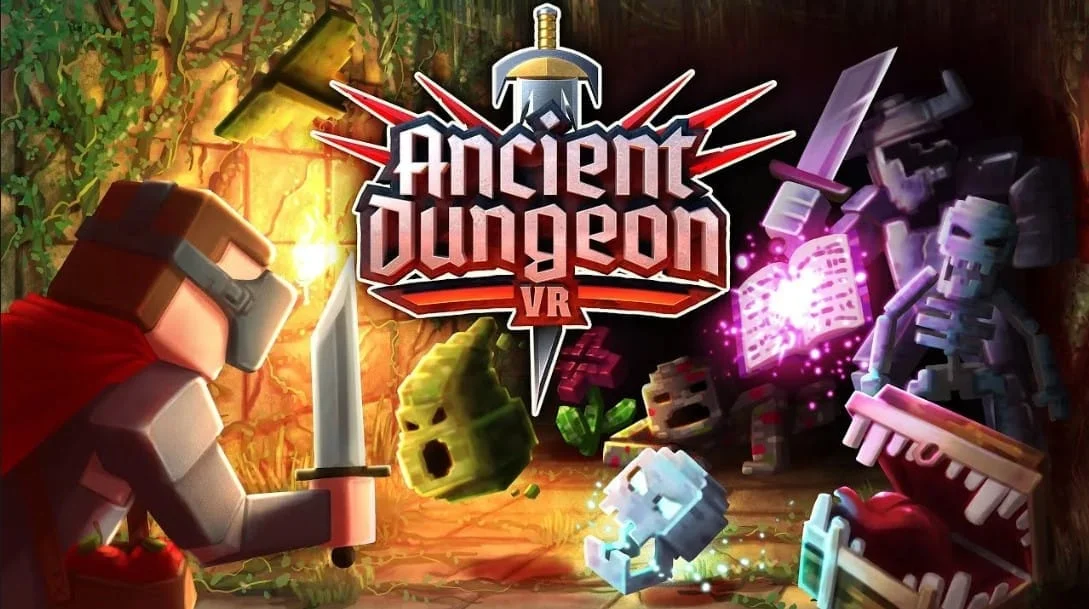
The landscape of Virtual Reality (VR) gaming is often characterized by fleeting experiences—short, tech-demo-like titles that provide a few hours of novelty before fading into the digital ether. However, standing in stark contrast to this trend is Ancient Dungeon VR, a title that has redefined the "roguelite" genre for the medium. Recently, the development team released a comprehensive developer blog via their official YouTube channel, signaling the arrival of what is being described as the game’s largest update since its inception.
After five years in the crucible of Early Access, the developer has detailed a massive influx of content, including a brand-new floor, a menagerie of fresh enemies, and a significant expansion of the game’s itemization system through new relics and augments. This update not only promises to deepen the gameplay loop for veteran delvers but also signals a new era of procedural complexity for the title.
Main Facts: A Massive Expansion on the Horizon
The latest update for Ancient Dungeon VR is not merely a patch; it is a fundamental expansion of the game’s core ecosystem. The developer blog, titled with a hint of self-deprecating humor as "We Accidentally Keep Adding Content to Our VR Game," outlines several key additions that will soon be available to players on Meta Quest, Steam, and PlayStation VR2.
A New Layer of the Abyss
The centerpiece of the update is the introduction of a completely new floor. In the hierarchy of Ancient Dungeon, floors act as distinct biomes, each with unique environmental hazards, aesthetic themes, and progression difficulties. While the specific thematic name of the floor remains shrouded in a degree of mystery, the developer preview suggests a departure from the mossy, stone-heavy corridors of earlier levels, leaning into more intricate, perhaps more ancient or technologically arcane, architectures.
Expanding the Bestiary and Arsenal
Accompanying the new environment is a host of new enemy types. Ancient Dungeon has long been praised for its physics-based combat, where the weight of a sword and the tension of a bowstring feel tangible. The new enemies are designed to challenge these mechanics, forcing players to adapt their combat rhythms.
To counter these threats, the update introduces:
- New Relics: These are the backbone of the game’s "roguelite" progression, providing passive buffs and game-altering abilities.
- Augments: A newer system designed to further customize the player’s build, allowing for deeper synergies between items.
The Mystery of the New Dungeon Generator
Perhaps the most significant technical revelation in the dev blog was the tease of a "New Dungeon Generator." Procedural generation is the heart of any roguelite, and a total overhaul or significant upgrade to this system implies that the very "logic" of the dungeon’s layout is being rewritten. This promises more varied room shapes, better flow between encounters, and perhaps a solution to some of the repetition that can plague long-term play in procedural titles.
Chronology: Five Years of Procedural Evolution
To understand the weight of this update, one must look at the history of Ancient Dungeon VR. Developed primarily by Eric Thullen, the game began as a passion project that sought to marry the addictive "one-more-run" loop of The Binding of Isaac with the immersive, first-person physics of VR.
- 2019-2020: The Foundation. The game first appeared as a demo on platforms like Itch.io and later Meta’s App Lab. It immediately garnered a cult following due to its unique voxel art style—a choice that allowed for high-performance physics and destructible environments without taxing VR hardware.
- 2021: Steam and Quest Launch. The game moved into a more formal Early Access phase. During this time, the developer focused on "The Library" and "The Overgrown" updates, which expanded the lore and the variety of items.
- 2022-2023: Platform Expansion. Ancient Dungeon made the jump to the PlayStation VR2, leveraging the headset’s haptic feedback and eye-tracking capabilities to enhance the immersion of dungeon crawling. The "Multiplayer Beta" also became a major focus during this period, allowing friends to delve together—a feature that transformed the game’s community dynamics.
- 2024: The "Accidental" Expansion. The current update represents a culmination of five years of feedback. The developer’s admission that they "accidentally" kept adding content reflects a development philosophy rooted in perfectionism rather than strictly adhering to a corporate roadmap.
Supporting Data: The Mechanics of the Deep
The success of Ancient Dungeon VR is rooted in its data-driven design. Unlike many VR games that rely on "canned" animations, Ancient Dungeon utilizes a robust physics engine. When a player swings a mace at a skeleton, the damage is calculated based on the velocity of the swing and the point of impact.
Synergy and the Power Gap
The introduction of new relics is crucial because of the "Synergy Index." In roguelites, the player’s power doesn’t just grow linearly; it grows exponentially based on how items interact. For example, a relic that adds fire damage to a blade might synergize with a new augment that causes burned enemies to explode upon death. By adding "a plethora" of new items, the developer is effectively increasing the number of possible build combinations by the thousands, significantly extending the game’s "shelf life."
Technical Optimization
One of the reasons Ancient Dungeon can afford to add more enemies and complex floors is its voxel-based rendering. Unlike traditional polygonal models, voxels (3D pixels) are highly efficient for procedural destruction. This update reportedly optimizes how the game handles light and shadow within these voxel environments, ensuring that even as the dungeon grows more complex, the frame rate—vital for preventing motion sickness in VR—remains stable at 72Hz, 90Hz, or 120Hz depending on the hardware.
Official Responses: The Developer’s Philosophy
In the latest developer blog, Eric Thullen provided insight into the studio’s mindset. The tone of the video was one of transparency and genuine enthusiasm for the project’s growth.
"We didn’t necessarily plan for this update to become this large," the developer noted in the video, "but as we worked on the new floor, we realized that the existing enemies didn’t quite fit the new aesthetic or the difficulty curve we wanted to establish. One thing led to another, and suddenly we were looking at a total refresh of several core systems."
This "scope creep," which is often a death knell for indie projects, has been managed in Ancient Dungeon through a modular approach to development. By focusing on one floor at a time and ensuring the "feel" of the combat remains consistent, the team has been able to expand the game’s breadth without sacrificing its stability.
The developer also addressed the community’s anticipation regarding the release date. While a specific day was not provided, the message was clear: quality takes precedence over speed. The team is currently in a "polishing and bug-fixing" phase, ensuring that the new dungeon generator doesn’t produce "impossible" or "broken" seeds that could ruin a player’s run.
Implications: Setting a Standard for VR Longevity
The upcoming update for Ancient Dungeon VR has implications that reach far beyond the game itself. It serves as a case study for the "Long-Tail" model of VR development.
1. The Viability of the VR Roguelite
Roguelites are perfectly suited for VR because they offer high replayability with relatively low asset requirements compared to a linear 20-hour AAA epic. Ancient Dungeon’s success proves that players are hungry for deep, mechanically complex experiences rather than just "experiences." As the market for headsets like the Meta Quest 3 grows, this update positions Ancient Dungeon as a must-have "evergreen" title.
2. Community Trust and Early Access
In an era where "Early Access" is often used as an excuse for unfinished or abandoned products, this five-year journey builds immense brand equity. By consistently delivering free, high-quality updates, the developer has fostered a community that is willing to wait for a polished product rather than demanding a rushed release.
3. The Future of Procedural VR
The tease of a "New Dungeon Generator" suggests a shift toward more "intelligent" procedural design. If successful, this could influence how other VR developers approach level design, moving away from static "rooms" and toward more fluid, organic environments that feel less like a series of boxes and more like a cohesive world.
4. The PSVR2 and PCVR Revitalization
While the Quest is the volume leader, the updates for Ancient Dungeon continue to support high-end PCVR and PSVR2 features. This ensures the game remains a benchmark for cross-platform VR development, proving that a single vision can scale from a mobile processor to a high-end gaming PC.
Conclusion
Ancient Dungeon VR continues to be a beacon of indie success in the virtual reality space. The upcoming update, with its new floors, enemies, and overhauled generation systems, represents more than just "more content"—it represents the refinement of a formula that has been five years in the making. As players prepare to dive back into the depths, the "accidental" growth of the game stands as a testament to the power of iterative design and a deep understanding of what makes the dungeon-crawling fantasy so timeless.
While the wait for a release date continues, the detailed breakdown provided by the developer blog ensures that the anticipation is backed by substance. For those who have yet to step into its voxelated corridors, there has likely never been a better time to prepare for the descent.