Beyond the Impassable Wilderness: Laika’s Meticulous Six-Year Journey to ‘Wildwood’
Main Facts: A New Milestone in Stop-Motion Animation
After more than half a decade in the making, Laika—the Portland-based animation studio that redefined the boundaries of stop-motion with Coraline and Kubo and the Two Strings—has officially unveiled the first comprehensive look at its sixth feature film, Wildwood. Directed by Laika President and CEO Travis Knight and written by Chris Butler, the film represents the most ambitious undertaking in the studio’s twenty-year history.
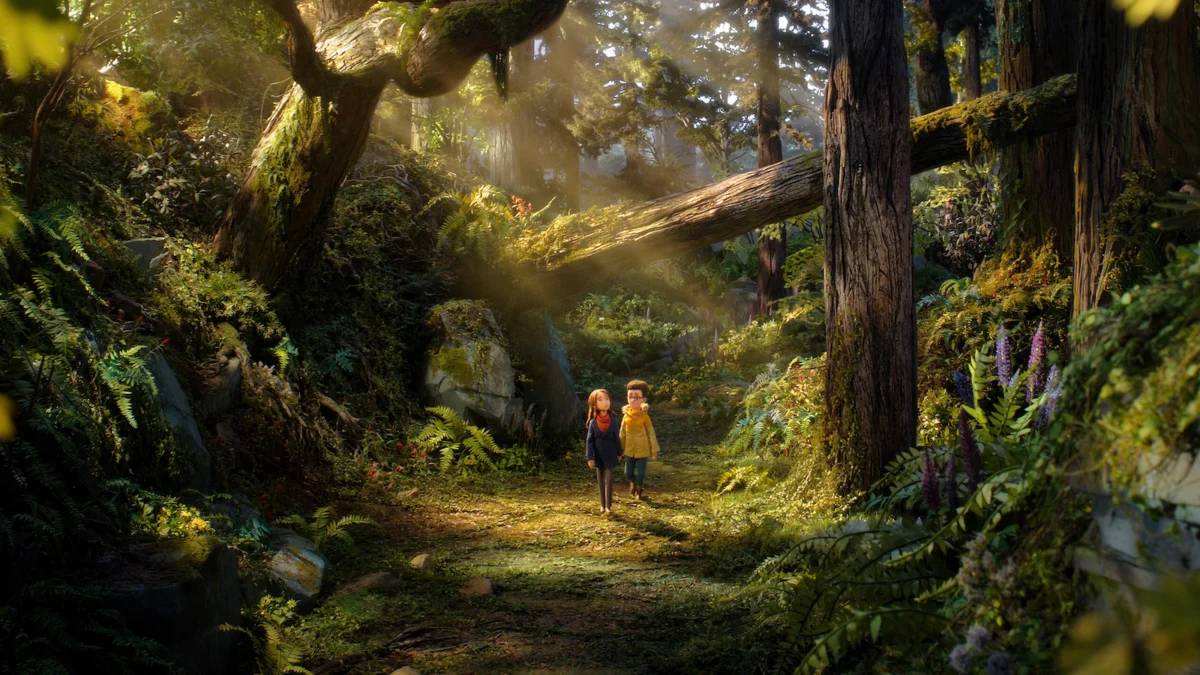
Set against the lush, rain-drenched backdrop of Portland, Oregon, Wildwood is a dark contemporary fantasy adapted from the 2011 bestselling novel by Colin Meloy, lead singer of the indie-folk band The Decemberists, and illustrated by Carson Ellis. The story follows Prue McKeel, a young girl who must venture into the "Impassable Wilderness"—a magical, hidden realm on the outskirts of Portland—to rescue her infant brother after he is abducted by a murder of crows.
The film is scheduled for a nationwide theatrical release on October 23, distributed by Fathom Entertainment. This partnership marks a significant shift in the industry, as Fathom—traditionally known for limited "event" screenings—moves into the realm of wide, non-event theatrical distribution for a major studio tentpole. Boasting a staggering ensemble voice cast that includes Academy Award winners Mahershala Ali and Angela Bassett, alongside Carey Mulligan, Jacob Tremblay, and Awkwafina, Wildwood is positioned not just as a children’s film, but as a sophisticated piece of cinematic art designed to push the technical limits of the stop-motion medium.
Chronology: From the Page to the Impassable Wilderness
The journey of Wildwood from a literary concept to a cinematic spectacle spans over a decade, mirroring the slow, deliberate pace of the stop-motion craft itself.
2011–2012: Literary Origins and Acquisition
In 2011, Colin Meloy released Wildwood, the first installment of his Wildwood Chronicles. The book was a love letter to the Pacific Northwest, blending the rugged geography of Forest Park with a Narnia-esque sense of high-stakes fantasy. Almost immediately upon its release, Laika—headquartered in Hillsboro, just outside Portland—optioned the rights. For Travis Knight, the project was personal; it offered a chance to animate the very landscape where the studio operates.
2016–2018: Pre-Production and Technical R&D
Following the critical success of Kubo and the Two Strings (2016) and during the production of Missing Link (2019), Laika began the quiet work of "world-building" for Wildwood. Unlike previous films that took place in stylized or distant lands, Wildwood required a unique blend of "Portland realism" and "forest fantasy." The studio invested years into Research and Development, specifically focusing on how to animate massive battle scenes and complex natural environments—such as moving rivers and rustling leaves—using physical puppets and 3D-printed facial replacements.
2019–2024: The Six-Year Production Cycle
Production on Wildwood officially ramped up in late 2018 and early 2019. However, the sheer scale of the project, coupled with the global disruptions of the COVID-19 pandemic, extended the production timeline to six years. During this period, Travis Knight balanced his duties as CEO with the granular demands of directing. The studio utilized its proprietary Rapid Prototyping (RP) technology to create thousands of unique 3D-printed faces for the characters, allowing for a level of emotional nuance previously unseen in the medium.

2025: Post-Production and Marketing
By early 2025, the film moved into the final stages of visual effects integration and scoring. The release of the first trailer, featuring a haunting cover of Avicii’s "Wake Me Up," signaled the beginning of a massive marketing push leading toward the October release date.
Supporting Data: The Craft of the Miniature Epic
The scale of Wildwood is best understood through the lens of the technical data that defines Laika’s workflow. Stop-motion is a notoriously slow process, often yielding only one to two seconds of usable footage per animator per week.
The Technical Ensemble
- Cinematography: The film features the work of Caleb Deschanel, a six-time Academy Award nominee known for The Passion of the Christ and The Lion King (2019). Deschanel’s involvement marks a rare instance of a legendary live-action cinematographer applying their eye to a miniature world, bringing a sense of "naturalistic lighting" to the stop-motion sets.
- The Score: Dario Marianelli, who previously collaborated with Knight on Kubo and the Two Strings, composed the music. The score is designed to bridge the gap between Meloy’s folk-rock roots and the epic requirements of a fantasy adventure.
- The Cast: The voice roster is one of the most decorated in modern animation:
- Peyton Elizabeth Lee as Prue McKeel
- Jacob Tremblay as Curtis
- Carey Mulligan as Alexandra, the Dowager Ivy
- Mahershala Ali as Brendan
- Awkwafina as Cherry
- Angela Bassett as Iphigenia
Technological Innovation
Laika continues to lead the industry in the hybrid use of physical puppets and CGI. While the characters and immediate environments are hand-crafted, the studio uses "set extensions" to give the magical forest of Wildwood an infinite feel. The film reportedly features some of the largest stop-motion sets ever constructed, some spanning the length of entire soundstages to accommodate the "epic" scale of the forest battles.
Official Responses: A Commitment to the "Human Touch"
In various statements regarding the film’s development, Travis Knight has emphasized that Wildwood is the culmination of everything the studio has learned since its inception with Coraline.
"At Laika, we are always trying to find the balance between the hand-crafted beauty of the past and the technological possibilities of the future," Knight stated during a recent studio presentation. "With Wildwood, we are telling a story about the place we call home. It’s a story about the transition from childhood to adulthood, and the sacrifices we make to protect the ones we love. It required a level of detail that we simply weren’t capable of ten years ago."
Screenwriter Chris Butler, who also directed ParaNorman, highlighted the tonal complexity of the project. "Colin Meloy’s world isn’t a ‘soft’ fantasy. It has teeth. It has stakes. We wanted to honor that by making a film that feels visceral and real, even though it’s played out by puppets twelve inches tall."
The distribution partner, Fathom Entertainment, also expressed optimism about the film’s unconventional release strategy. By moving away from the "event-only" model, Fathom is betting that Laika’s devoted fanbase and the prestige of the Wildwood brand will drive sustained box-office performance throughout the autumn season.

Implications: The Future of Independent Animation
The release of Wildwood carries significant implications for the animation industry and the broader cinematic landscape.
1. The Viability of High-Budget Stop-Motion
In an era where most major studios have pivoted almost exclusively to CG animation (Disney, Pixar, DreamWorks), Laika remains a lone sentinel for the physical craft. If Wildwood achieves commercial success, it will validate the "boutique studio" model, proving that there is a significant market for painstakingly crafted, auteur-driven animation that appeals to both children and adults.
2. The Fathom Entertainment Experiment
The decision to release Wildwood through Fathom Entertainment is a litmus test for the industry. If a non-major distributor can successfully manage a nationwide theatrical rollout for a film of this caliber, it could open the door for other independent studios (such as A24 or Neon) to bypass traditional "Big Five" distributors for their animated or high-concept properties.
3. A New "Portland Mythos"
Culturally, Wildwood solidifies Portland’s burgeoning reputation as a hub for dark, creative storytelling. Following the success of Guillermo del Toro’s Pinocchio (also partially produced in Portland) and the ongoing legacy of Laika, the city is now firmly established as the global capital of stop-motion animation. Wildwood serves as the definitive cinematic representation of the city’s unique aesthetic—a blend of Victorian charm, rugged wilderness, and hipster sensibilities.
4. Setting the Stage for ‘Masters of the Universe’
The collaboration between Travis Knight and Chris Butler on Wildwood also served as a creative dry run for their next major project: the live-action Masters of the Universe film. The industry is watching closely to see how Knight’s meticulous, puppet-based direction translates to a massive live-action production. The success of Wildwood’s world-building will likely build confidence in Knight’s ability to handle the complex lore of Eternia.
As the October 23 release date approaches, Wildwood stands as a testament to the power of patience. In a world of "fast content," Laika’s six-year devotion to a single story is a reminder that some magic can only be captured one frame at a time.