The State of Speculative Fiction: Analyzing the November Locus Bestseller Lists
The speculative fiction landscape is currently undergoing a period of significant transition, marked by the arrival of highly anticipated sequels from genre titans and the continued dominance of "LitRPG" crossovers. According to the latest data released for the November bestseller period (compiled from sales in May 2026), the industry is seeing a consolidation of power among a few key authors while simultaneously witnessing a slight contraction in the total number of nominated titles.
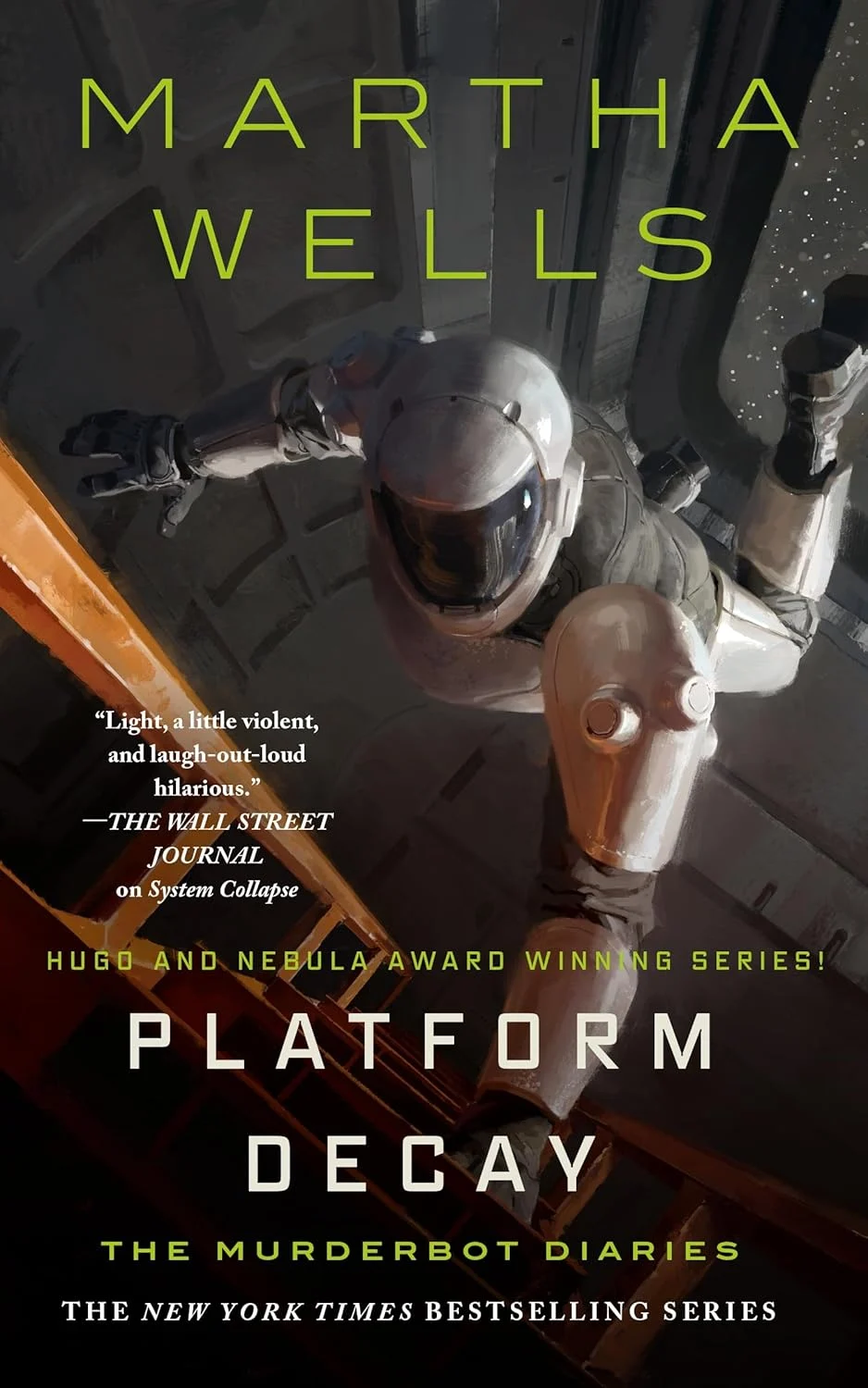
The headline results from the Locus Bestseller list highlight a narrow victory for Martha Wells, whose latest Murderbot Diaries entry, Platform Decay, secured the top spot in the Hardcover category. Close on her heels is Matt Dinniman, whose Dungeon Crawler Carl series has become a bona fide commercial juggernaut, occupying multiple spots across the charts. Meanwhile, in the Trade Paperback arena, Andy Weir’s Project Hail Mary continues its unprecedented reign, proving that "hard" science fiction remains a perennial favorite among the general reading public.
Main Facts: A Tripartite Dominance
The November charts reveal a clear hierarchy within the Science Fiction, Fantasy, and Horror (SFFH) genres. Three primary takeaways emerge from the data provided by independent booksellers across North America:

- The "Murderbot" Momentum: Martha Wells’ Platform Decay (Tor) debuted at number one in hardcover. As the eighth installment in the Murderbot Diaries, its success reaffirms the marketability of character-driven, cynical-yet-hopeful AI narratives. Wells managed to edge out the competition by a razor-thin margin, illustrating the intense loyalty of her fanbase.
- The Matt Dinniman Sweep: Perhaps the most striking feature of the November report is the ubiquity of Matt Dinniman. Published by Ace, Dinniman’s Dungeon Crawler Carl series held four of the top ten spots in the Hardcover list (A Parade of Horribles, Carl’s Doomsday Scenario, The Dungeon Anarchist’s Cookbook, and The Butcher’s Masquerade) and the number two spot in Trade Paperback. This performance signals a major shift in the industry, as LitRPG—a subgenre once confined to self-publishing platforms—now dominates traditional retail spaces.
- Enduring Classics and Standalone Success: While series titles dominate, standalone works and long-term bestsellers maintain a firm grip on the market. Andy Weir’s Project Hail Mary (Ballantine) has now spent 19 months on the list, while Sarah J. Maas’s A Court of Thorns and Roses (Bloomsbury) has reached a staggering 46 months. Additionally, Fonda Lee’s The Last Contract of Isako (Orbit US) performed strongly as a runner-up, appearing on both the Hardcover and Trade Paperback charts simultaneously.
Chronology: The Evolution of the 2026 SFFH Market
To understand the current rankings, one must look at the trajectory of these titles over the preceding months. The data, collected in May 2026, reflects a spring publishing "surge" where major houses release their heavy hitters to capture the early summer reading market.
In early 2026, the market was characterized by a high volume of new releases, with 54 titles nominated for the hardcover list in the previous month. However, by May, that number had dipped to 45. This suggests a "settling" of the market, where readers have moved from broad exploration of new debuts to focused purchasing of established series.
The rise of Platform Decay represents the culmination of a multi-year branding strategy by Tor Books. Since the release of All Systems Red in 2017, the Murderbot series has transitioned from novellas to full-length novels, with each release climbing higher on the charts. Its arrival at number one in November is the chronological peak of this growth.

Conversely, the Trade Paperback list shows remarkable stability. Andy Weir and Pierce Brown (Red Rising) have become fixtures of the list, with Brown’s space opera maintaining its position for 14 months. This stability suggests that while the Hardcover list is driven by "event" publishing and new releases, the Trade Paperback list is driven by "word-of-mouth" longevity and the "backlist" effect, where new readers discover a series years after its initial debut.
Supporting Data: By the Numbers
The Locus Bestseller list is unique because it relies on a curated selection of specialty and independent bookstores, providing a "purer" look at what genre enthusiasts are buying compared to the broader, often algorithm-driven Amazon charts.
Hardcover Breakdown
- Total Nominations: 45 (down from 54).
- New Entries in Top 10: 5 (Platform Decay, A Parade of Horribles, The Ballad of Falling Dragons, Radiant Star, The Tapestry of Fate).
- The Dinniman Factor: 40% of the top 10 hardcover books were from a single author (Matt Dinniman), a rare occurrence in SFFH publishing history.
Trade Paperback Breakdown
- Total Nominations: 63 (steady with the previous month).
- Longevity Leaders: A Court of Thorns and Roses (46 months), A Court of Mist and Fury (36 months), and The Martian (23 months).
- Top Performer: Project Hail Mary maintained its #1 spot for the second consecutive month, beating out newer titles.
Media and Gaming Breakdown
- Total Nominations: 15 (down from 16).
- The Winner: Warhammer 40,000: Horus Rising by Dan Abnett. Despite being a foundational text for the franchise, its re-emergence at the top of the list underscores the cyclical nature of "legacy" gaming fiction.
- The Runner-up: Magic: The Gathering: Strixhaven: Omens of Chaos by Seanan McGuire, a title that blends the star power of a Hugo-winning author with a massive gaming IP.
The data was gathered from a diverse array of influential North American retailers, including Bakka-Phoenix (Toronto), Borderlands (San Francisco), Mysterious Galaxy (San Diego), and McNally Robinson (Winnipeg/Saskatoon).

Official Responses and Publisher Strategy
While authors rarely issue formal statements regarding monthly bestseller lists, the internal strategies of the "Big Five" publishers are evident in these results.
Tor and the "Boutique" Hardcover: Tor’s success with Martha Wells demonstrates a commitment to high-production-value hardcovers for established "prestige" authors. By positioning Wells as the leader of the list, Tor continues to cement its status as the premier destination for literary science fiction.
Ace and the LitRPG Revolution: Ace (an imprint of Penguin Random House) has clearly pivoted toward capturing the "Internet-native" audience. By signing Matt Dinniman, they have successfully bridged the gap between Kindle Unlimited success and physical bookstore sales. Industry analysts note that Ace’s strategy of releasing multiple books in a series in quick succession (as seen with the multiple Dungeon Crawler Carl entries) mimics the rapid-release schedule of self-published authors, thereby keeping the author’s name constantly in the "New Arrivals" section.

Orbit and the Multi-Format Release: Orbit US’s strategy with Fonda Lee’s The Last Contract of Isako—releasing hardcover and trade paperback versions simultaneously—paid off by allowing the book to appear on two different bestseller charts. This "shotgun" approach maximizes visibility and ensures the book is accessible to different price-point demographics on day one.
Implications: The Future of the Genre
The November Locus Bestseller list offers several omens for the future of speculative fiction publishing.
1. The Death of the "Mid-List"?
The concentration of the charts around a few names (Wells, Weir, Dinniman, Maas) suggests a "winner-take-all" dynamic. As the number of nominated titles decreases, it becomes harder for debut authors or mid-list writers to break into the top rankings. Publishers may become increasingly risk-averse, focusing their marketing budgets on "sure bets" and established franchises.

2. The Institutionalization of LitRPG
The presence of four Matt Dinniman books in the top 10 is a watershed moment. It signifies that LitRPG—stories involving video game mechanics, leveling up, and digital environments—is no longer a niche subculture. It is now a primary driver of revenue for major publishers. This will likely lead to a wave of new acquisitions in the "Progression Fantasy" space as publishers scramble to find the next Dungeon Crawler Carl.
3. The Power of Independent Bookstores
Despite the dominance of major publishers, the fact that these lists are compiled from independent bookstores like Borderlands and Bakka-Phoenix shows that "tastemaker" shops still hold significant sway. These stores act as the frontline of the genre, and their ability to move physical copies of books like Christopher Buehlman’s Between Two Fires (which has spent 3 months on the list) proves that local recommendations can sustain a book’s life cycle long after its initial marketing push.
4. The "Evergreen" Backlist
The continued presence of The Martian and Red Rising indicates that the SFFH community has a long memory. Unlike thrillers or contemporary romance, which often see a sharp drop-off after the first few months, science fiction and fantasy titles have an "evergreen" quality. For authors, the implication is clear: building a deep, interconnected world or a unique voice is the key to long-term financial stability in an increasingly crowded market.

In conclusion, the November Locus Bestseller list paints a picture of a genre that is both deeply traditional—relying on the pull of names like Dan Abnett and Martha Wells—and radically evolving, as seen in the meteoric rise of Matt Dinniman. As we move further into 2026, the industry will be watching closely to see if the "Dinniman Effect" can be replicated, or if the old guard of space opera and high fantasy will reclaim their undisputed throne.