From California Country Clubs to Seoul Spas: The Technical and Narrative Evolution of ‘Beef’ Season 2
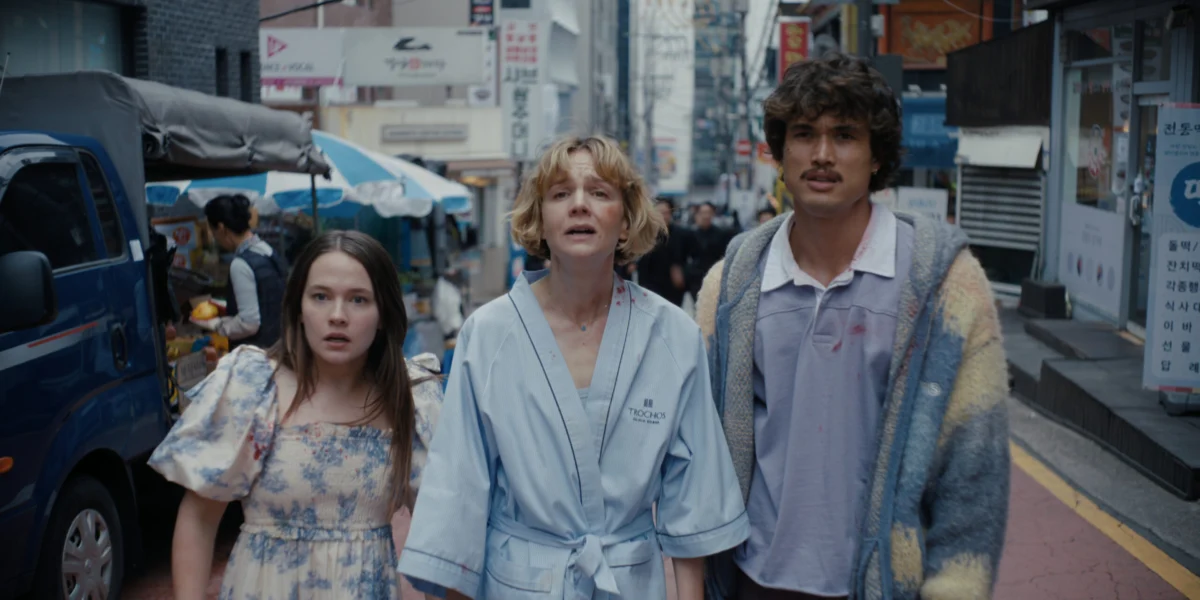
The second season of Netflix’s critically acclaimed anthology series Beef marks a significant departure from its predecessor, not only in its cast and specific grievances but in its sweeping geographic and cinematic ambition. While the first season explored the claustrophobic tensions of Los Angeles suburbs, Season 2 culminates in the neon-lit, high-texture environment of Seoul, South Korea. For director Jake Schreier, who balanced the production with the post-production demands of Marvel’s *Thunderbolts**, the opportunity to film Seoul as itself—rather than a stand-in for another metropolis—became a cornerstone of the season’s creative identity.
Main Facts: A Transcontinental Escalation of Conflict
The narrative arc of Beef Season 2 follows a quartet of characters—Lindsay (Carey Mulligan), Ashley (Cailee Spaeny), Austin (Charles Melton), and Josh (Oscar Isaac)—who find themselves entangled in the web of a high-end California country club. This "White Lotus"-style environment serves as the initial pressure cooker, but the stakes escalate when the characters are flown to South Korea.
The move to Seoul is driven by the season’s primary antagonist, the Chairwoman (played by Academy Award winner Youn Yuh-jung), who seeks to silence the group before they can expose a medical malpractice scandal involving her husband, a prominent doctor (played by Parasite star Song Kang-ho). This transition from the curated luxury of California to the clinical, high-stakes atmosphere of a Korean medical compound provides the backdrop for the season’s most ambitious technical achievement: a bravura, one-take fight sequence in a skin clinic.
Director Jake Schreier and creator Lee Sung Jin utilized the authentic locations of Seoul to inform the season’s visual language. By moving away from the "disguised" locations common in modern Hollywood—where Budapest often doubles for London or Cape Town for Los Angeles—the production team embraced the specific textures, colors, and architectural contrasts of the South Korean capital.

Chronology: The Journey from MCU Edit Bays to Seoul Scouts
The development of Season 2’s final act was a marathon of logistics and creative synchronicity. The timeline of the production reveals a rigorous commitment to authenticity:
The Scouting Phase
While Jake Schreier was deep in the "Void" of post-production for the Marvel Cinematic Universe film *Thunderbolts*, he spent his weekends engaged in a different kind of world-building. Schreier, Lee Sung Jin, and the Beef* locations team conducted intensive scouting trips around Seoul. These weekend excursions were not merely about finding backdrops; they were instrumental in shaping the script. The physical layout of the city—its blend of sleek glass skyscrapers and intimate, traditional spaces—informed the "escape" logic of the final episodes.
The Birth of the "Skin Clinic" Concept
The idea for the season’s centerpiece action sequence—a one-take fight modeled after the visceral intensity of Park Chan-wook’s Oldboy—originated during one of Lee Sung Jin’s previous visits to Seoul. The concept centered on a Korean skin clinic, a setting that allowed the production to play with the juxtaposition of clinical perfection and physical "messiness."
Pre-Visualization and Rehearsal
Before the cameras rolled in Korea, the groundwork was laid in Los Angeles. Stunt coordinator Chris O’Hara worked with an LA-based team to block out a rough version of the Episode 8 fight. This "pre-viz" focused on maintaining a subjective camera—keeping the audience tethered to the characters’ panic rather than creating a stylized, objective action scene.

Once the production moved to Korea, O’Hara collaborated with a local Korean stunt team to refine the choreography. The actors—Melton, Mulligan, and Spaeny—rehearsed in a small warehouse where the set was reconstructed out of cardboard boxes. This allowed them to master the complex movements required for a "oner" (one-take shot) during their limited down hours.
The Shoot
The climactic "oner" was filmed on a stage with significant cinematic history: the same facility where Bong Joon-ho filmed the iconic street-flooding sequence for Parasite. Despite the complexity of the shot, which involved Song Kang-ho physically throwing himself into doors and the cast navigating through fluids and broken glass, Schreier notes that the team "had it by lunch," a testament to the meticulous planning involved.
Supporting Data: The "Unbalanced" Cinematography of Perspective
The visual power of Beef Season 2 relies on a specific cinematographic philosophy described by Schreier as "unbalanced" coverage. This technique is designed to mirror the psychological instability of the protagonists.
The Subjective Lens
In Season 1, the "unbalanced" feel was achieved by keeping Amy (Ali Wong) and Danny (Steven Yeun) in separate worlds. In Season 2, with four main characters often occupying the same space, the challenge was to maintain a singular perspective. Schreier and Lee Sung Jin achieved this by:

- Focal Length Disparity: Picking a "perspective character" for a scene and filming them with clean, close-up shots.
- Dirtying the Reverse: The person they are interacting with is often filmed with a slightly longer lens or with "dirty" foreground elements, making the protagonist’s view the only clear one for the audience.
- The Multiplicity of Perspectives: In Episode 1, a meeting between Josh (Isaac) and Ashley (Spaeny) is edited to "judder" between their two perspectives—Josh believing he is being "cool" while Ashley perceives him as an intimidating threat.
The Philosophy of the "Oner"
The use of the one-take shot in Episode 8, titled "It Will Stay This Way and You Will Obey," serves a thematic purpose. Unlike generic action movies that use long takes to show off technical prowess, Beef uses them to trap the viewer.
- No Stitches: Schreier emphasized that the Episode 8 spa fight contains no "stitches" or hidden cuts. "At the point you’re doing a stitch, go ahead and cut," Schreier told IndieWire. The lack of editing upholds the tension, forcing the audience to experience the "grossness and chaos" in real-time.
- Character-Driven Action: The movement is designed to make the characters look human and desperate rather than like "action stars." The escape is fueled by the messiness of the clinic—fluids, blotchy skin, and the physical struggle of opening a door.
Official Responses: Insights from the Director
In interviews regarding the production, Jake Schreier highlighted the creative liberation that came from filming in Seoul. He noted that the location itself "inspired" and "altered" the scenes, providing a level of detail that a studio set could never replicate.
Regarding the collaboration with Korean cinema legends, Schreier expressed a deep sense of responsibility. Working with Song Kang-ho, whom he described as a "national treasure," required a balance between capturing the actor’s intense physicality and ensuring his safety. "We had to make sure—I mean, he was really throwing himself into that door—that he didn’t hurt his shoulder," Schreier remarked.
Schreier also reflected on the evolving nature of camera technology, which has made long takes more common but also more prone to feeling "flattened out." His goal for Beef was to ensure that the technical work never overshadowed the "magic at the center"—the performances of the cast and the emotional truth of their frustration.

Implications: The Future of Globalized Television Production
The success of Beef Season 2’s Seoul-based finale has broader implications for the television industry and the "prestige" limited series format:
1. The Demand for Authenticity
As audiences become more sophisticated, the "Budapest-for-everywhere" model of production is facing diminishing returns. Beef demonstrates that transporting a production to an authentic location—and allowing that location to inform the narrative—results in a more engrossing and textured final product. This suggests a shift toward more "place-based" storytelling in high-budget streaming series.
2. The Integration of International Talent
By casting Academy Award winners like Youn Yuh-jung and icons like Song Kang-ho in pivotal roles, Beef continues to bridge the gap between Hollywood and the powerhouse of South Korean cinema. This is not merely "stunt casting" but a deep integration of different cinematic traditions, as seen in the Oldboy-inspired choreography.
3. Technical Mastery as Narrative Device
The "oner" in Beef serves as a blueprint for how technical innovations should be used: not as a gimmick, but as a way to express character interiority. The feeling of being "trapped" in a shot mirrors the characters’ feeling of being trapped in their own escalating bad decisions.

4. The Anthology Evolution
The shift from the specific "road rage" incident of Season 1 to the "medical malpractice and country club" conspiracy of Season 2 shows the flexibility of the Beef brand. It suggests that the series can survive and thrive by focusing on the universal theme of human "beef"—resentment, anger, and the desire for retribution—regardless of the setting or the scale of the conflict.
As Beef Season 2 continues to stream on Netflix, it stands as a testament to the power of meticulous planning, technical bravery, and the willingness to let a location speak for itself. Through the "unbalanced" lenses of Jake Schreier and the visionary writing of Lee Sung Jin, the series has transformed a chaotic skin clinic in Seoul into a profound stage for human emotion.