The Algorithmic Gavel: Uber Hit with Record €825 Million GDPR Fine Over Automated Driver Suspensions
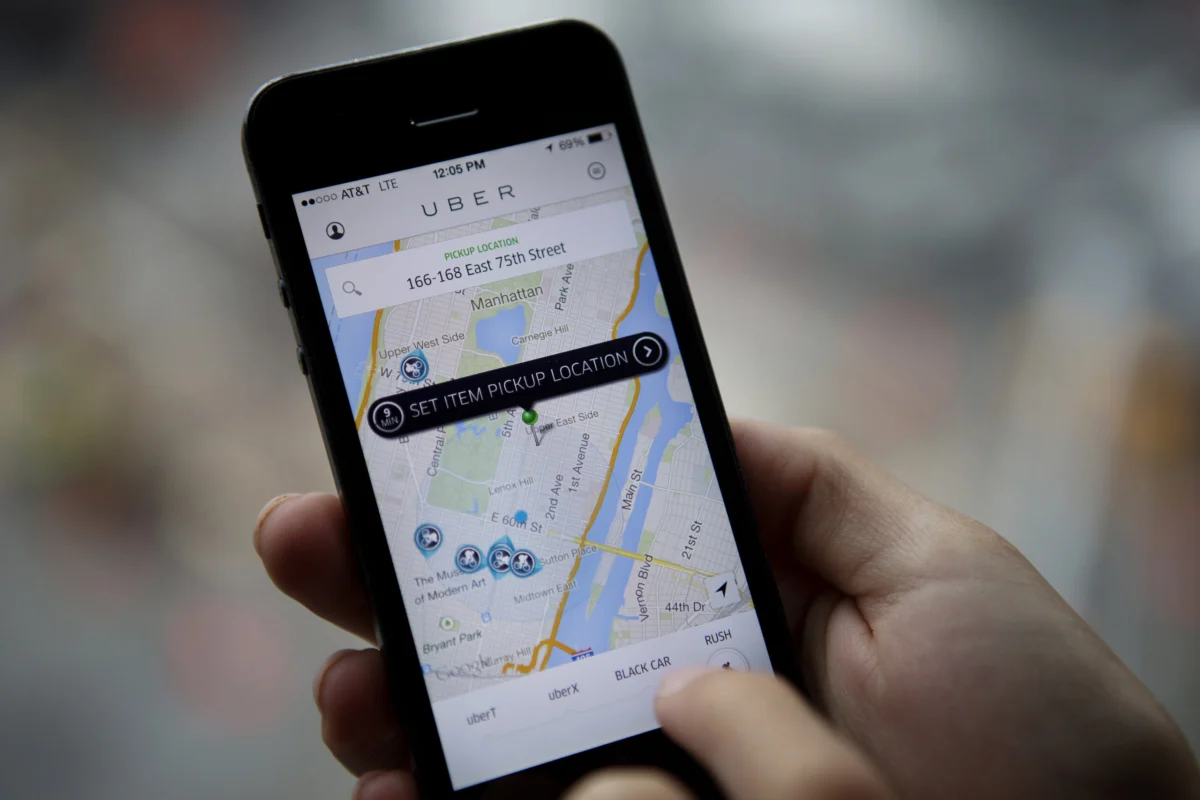
In a landmark ruling that sends shockwaves through the global "gig economy," the Dutch Data Protection Authority (DPA) has imposed a staggering €825 million (approximately $966 million) fine on Uber Technologies Inc. The penalty—the second-largest ever issued under the European Union’s General Data Protection Regulation (GDPR)—stems from allegations that the ride-hailing giant utilized automated systems to terminate driver accounts without sufficient human intervention or transparency.
The decision marks a pivotal moment in the ongoing legal battle over "algorithmic management," a practice where software, rather than human managers, monitors, evaluates, and ultimately fires workers. For Uber, the fine represents more than just a financial blow; it is a fundamental challenge to the technological architecture that allows the company to manage millions of drivers across the globe with minimal administrative overhead.
Main Facts: The Anatomy of a Record Penalty
The Dutch DPA’s investigation centered on Article 22 of the GDPR, which protects individuals from being subject to decisions based solely on automated processing—including profiling—which produce legal effects or similarly significant impacts. In the eyes of the Dutch regulator, deactivating a driver’s account is the digital equivalent of a summary dismissal, an act with profound consequences for an individual’s livelihood.
The Scale of the Fine
At €825 million, this penalty is surpassed only by the €1.2 billion fine levied against Meta in 2023. It significantly exceeds previous actions against big tech firms, signaling that European regulators are moving beyond data breach notifications into the more complex territory of how AI and algorithms govern human labor.
The Core Infringement
The Dutch DPA, led by Deputy Chair Monique Verdier, concluded that Uber’s system for identifying "fraudulent" or "non-compliant" behavior was insufficiently overseen by human staff. Drivers reported being locked out of their accounts—effectively losing their jobs—based on triggers identified by software, often with no clear explanation and no immediate path to speak with a human representative to rectify errors.
"A computer should not make decisions on its own that have such major consequences," Verdier stated in a press release. The regulator argued that while automation is necessary for scale, the "serious infringements" committed by Uber denied drivers their basic right to a fair review.
Chronology: From a Single French Driver to a Global Precedent
The road to this billion-dollar fine began not in a corporate boardroom, but in the car of a single driver in France.
2019: The Spark of Resistance
Brahim Ben Ali, a former Uber driver in France, found his account deactivated in 2019. According to reports, the catalyst for his investigation was a dispute involving something as trivial as a disposable wipe, which eventually spiraled into a permanent suspension. Recognizing that he was not alone, Ben Ali began collecting testimonies from other drivers who had faced similar "robo-firing" scenarios.
2020–2022: Building the Coalition
Ben Ali eventually gathered a group of 170 drivers. To take on a tech titan like Uber, they sought the expertise of PersonalData.io, a Swiss nonprofit focused on digital rights. Founder Paul-Olivier Dehaye helped the drivers exercise their "Subject Access Requests" under GDPR to see exactly what data Uber was using to justify their terminations.
Because Uber’s European headquarters are located in Amsterdam, the legal battleground shifted to the Netherlands. Under the GDPR’s "one-stop-shop" mechanism, the Dutch DPA became the lead supervisory authority for the entire European Union regarding Uber’s data practices.
2023–2024: A Pattern of Penalties
This €825 million fine is the culmination of a series of escalating actions by the Dutch regulator:
- The €10 Million Fine: An initial penalty related to general transparency and data access rights.
- The €290 Million Fine: Issued earlier in 2024, this penalty addressed Uber’s illegal transfer of European driver data to servers in the United States, which the regulator deemed a breach of EU privacy protections following the "Schrems II" ruling.
- August 2026: The current €825 million fine is announced, specifically targeting the automated suspension process. (Note: Per current reporting cycles, this represents a peak in a multi-year enforcement strategy).
Supporting Data: The "Black Box" of Algorithmic Management
To understand the regulator’s severity, one must look at the data surrounding how Uber’s "Real-Time ID Check" and fraud detection systems operate.
The Problem of False Positives
Internal data and driver testimonies suggest that Uber’s algorithms are designed to be highly sensitive to protect passenger safety and prevent fraud. However, this sensitivity often leads to "false positives." For example, a driver might be flagged for "account sharing" simply because they changed their glasses or grew a beard, causing the facial recognition software to fail.
The Burden of Proof
In a traditional employment setting, the burden of proof for termination typically lies with the employer. Under Uber’s automated system, the burden is effectively reversed. Paul-Olivier Dehaye noted that a driver "can complete a thousand journeys with satisfied passengers, but if just one person reports a very serious problem, the consequences can be enormous." Without a human in the loop to weigh the driver’s history against a single outlier report, the algorithm defaults to deactivation to mitigate risk for the platform.
Financial Context
Uber’s most recent quarterly earnings show a company that has finally reached consistent profitability. However, a near-billion-dollar fine represents a significant percentage of its annual net income. For investors, the concern is not just the cash outflow, but the potential requirement to hire thousands of human "reviewers" to oversee automated decisions, which would drastically increase operational costs and erode the "lean" marketplace model that Uber’s valuation is built upon.
Official Responses: A Clash of Philosophies
The reaction to the fine has exposed a deep rift between tech proponents and labor advocates regarding the role of software in the workplace.
Uber’s Defense
Uber has vowed to appeal the decision, maintaining that its processes are both legal and necessary for safety.
"We strongly disagree with this decision and disproportionate fine," an Uber spokesperson stated. The company argues that:
- Most suspensions are temporary and "brief."
- Permanent deactivations are reviewed by humans.
- An appeals process exists for all drivers.
Uber contends that the Dutch DPA is overreaching and that its interpretation of the law would make it impossible to protect riders from scammers or dangerous drivers in real-time.
The "Time Clock" Argument
Prominent tech commentator John Gruber of Daring Fireball criticized the ruling, suggesting the regulator is confusing policy with technology. He argued that blaming "the computer" for a firing is like blaming a "time clock" when an employee is fired for being late. Managers set the rules; the computer simply measures compliance.
The Counter-Argument: Accountability
Paul-Olivier Dehaye of PersonalData.io countered this by pointing out that Uber wants the benefits of being a "marketplace" (avoiding employment taxes and benefits) while exercising the control of an "employer" (firing people via algorithm).
"Uber is free to use humans to punish drivers who scam," Dehaye said, "but then it has to take responsibility for this decision-making." He argues that by automating the process, Uber attempts to wash its hands of the legal responsibilities that come with being a boss.
Implications: The End of the "Wild West" for Gig Platforms?
The repercussions of this €825 million fine will likely be felt far beyond Uber’s Amsterdam headquarters.
1. The Rise of "StartClaims" and Class Actions
The legal victory has emboldened advocates. Dehaye is launching a new company, StartClaims, designed to streamline the process for gig workers to seek compensation for algorithmic errors. This indicates a shift from regulatory fines (which go to the state) to mass litigation (where money goes to the workers). A class-action suit is already being prepared, which could potentially cost Uber billions more in settlements.
2. A Precedent for the AI Act
This ruling arrives as the European Union begins implementing the AI Act, the world’s first comprehensive framework for artificial intelligence. The Dutch DPA’s stance on Uber serves as a "test case" for how "High-Risk AI" (which includes AI used in employment and worker management) will be treated. Companies using AI to hire, fire, or monitor employees are now on notice: "human-in-the-loop" is no longer a suggestion; it is a legal requirement.
3. Structural Changes to Gig Work
If Uber is forced to provide human oversight for every suspension, the very nature of the "app-based work" model changes. To afford the necessary human staff, platforms may have to raise prices or limit the number of drivers on the road. Alternatively, they may be forced to reclassify drivers as employees to justify the level of control and monitoring they wish to exert.
4. Global Regulatory Ripple Effects
While this is a European ruling, regulators in the United States (specifically the FTC and the Department of Labor) and the UK are watching closely. The "California model" of gig work—which has largely favored platforms—is increasingly at odds with the "European model" of data protection and labor rights.
Conclusion
The Dutch DPA’s €825 million fine against Uber is a landmark assertion of human agency in the age of automation. It challenges the notion that efficiency and scale are valid excuses for bypassing due process. As Uber prepares its appeal, the case stands as a warning to every company that manages people via dashboard: in the eyes of the law, the "Delete" button is a legal instrument, and it cannot be pressed by a machine alone.