The Battle for Authenticity: Pangram and the Quest to Secure the Internet’s “Trust Layer”
In an era where the boundary between human creativity and algorithmic output is increasingly blurred, the digital landscape is facing an unprecedented crisis of confidence. The proliferation of generative artificial intelligence has ushered in a flood of "AI slop"—a term used to describe the low-quality, automated content saturating social media feeds, search engine results, and professional platforms. As this tide rises, a new sector of the technology industry is emerging to act as the "trust layer" of the internet.
At the forefront of this movement is Pangram, an AI detection startup that recently secured $9 million in funding to bolster its defensive technologies. With high-profile partnerships, including a landmark deal with the newsletter platform Substack, Pangram is attempting to provide the tools necessary to distinguish the synthetic from the authentic. However, as AI models become more sophisticated, the mission of Pangram and its peers is evolving from a simple game of "cat and mouse" into a fundamental debate over the future of human communication.
Main Facts: The Rise of Pangram and the $9 Million Injection
The current state of the internet is often described by researchers as the "Dead Internet Theory" brought to life—a scenario where the majority of online activity and content is generated by bots rather than humans. To combat this, Pangram has positioned itself as a critical infrastructure provider for the generative AI age.
Funding and Strategic Growth
Pangram recently announced a $9 million investment round aimed at scaling its detection capabilities. This capital injection comes at a pivotal moment as enterprises and platforms realize that "unfiltered" AI adoption carries significant reputational and operational risks. The funding is slated for research and development, specifically focusing on the increasing difficulty of detecting content produced by "frontier" models like GPT-4o, Claude 3.5, and Gemini 1.5 Pro.
The Substack Partnership
Perhaps the most significant validation of Pangram’s technology is its new partnership with Substack. As a platform built on the value of individual voice and direct writer-to-reader relationships, Substack faces a unique threat from AI. If readers begin to suspect that their favorite "human" authors are merely prompting a machine, the platform’s subscription-based economy could collapse.
Under the new agreement, Substack is integrating Pangram’s detection tools to provide transparency. These tools allow the platform to signal to readers which newsletters have been written with the assistance of AI, or are entirely AI-generated. This move marks a shift in platform philosophy: rather than banning AI, the focus is on disclosure and the preservation of the "human premium."
Multimodal Expansion: From Text to Images
While Pangram began with a focus on text, the startup has recently launched a sophisticated AI image detection tool. This expansion addresses the growing threat of deepfakes and AI-generated imagery in insurance claims, product reviews, and news media. By moving into the multimodal space, Pangram aims to provide a comprehensive "authenticity suite" that covers the various ways AI can be used to deceive.
Chronology: From the Generative Explosion to the Detection Arms Race
The need for companies like Pangram did not exist in a vacuum; it is the direct result of the rapid acceleration of Large Language Models (LLMs) over the past three years.
- Late 2022 – The Catalyst: The public release of ChatGPT triggered a gold rush in generative AI. Within months, the internet saw an explosion of AI-generated blog posts, social media updates, and student essays.
- 2023 – The Trust Erosion: By mid-2023, the consequences of unregulated AI content became apparent. "Content farms" began using AI to churn out thousands of SEO-optimized articles per day, drowning out legitimate journalism. Simultaneously, recruiters reported a surge in AI-written resumes, and insurance companies began seeing AI-altered photos in damage claims.
- Early 2024 – The Failure of First-Gen Detectors: Early AI detection tools, including those briefly offered by OpenAI itself, were criticized for high false-positive rates and an inability to keep up with newer model iterations. OpenAI eventually pulled its own detector, citing "low accuracy."
- Mid-2024 to Present – The Professionalization of Detection: Startups like Pangram emerged to fill the vacuum left by the AI labs. Unlike early tools that looked for simple statistical patterns, Pangram developed more robust linguistic and cryptographic approaches.
- July 2026 (Projected/Current Context): Pangram hits major milestones with its $9 million raise and the Substack integration, signaling that the "detection industry" has reached a level of maturity where it is now an essential part of the social media and publishing ecosystem.
Supporting Data: The Magnitude of the "AI Slop" Problem
The demand for Pangram’s services is driven by staggering statistics regarding the prevalence of synthetic content.
- Web Content Saturation: Recent studies by data provenance researchers suggest that upwards of 50% of text on the internet is now either AI-generated or AI-translated. This has led to a "model collapse" concern, where future AI models are trained on the output of previous AI models, leading to a degradation in quality.
- The Fraud Factor: In the insurance sector, some firms have reported a 20% increase in suspicious claims involving digital manipulation. AI image generators can now create convincing "evidence" of car accidents or property damage that never occurred.
- The Hiring Crisis: A survey of HR professionals found that nearly 70% of job applications now contain some form of AI-generated content. While using AI for spell-checking is accepted, the use of AI to fabricate cover letters and experience has made it difficult for recruiters to identify genuine talent.
- Detection Accuracy: Pangram claims its system operates with a significantly higher precision rate than the industry average of 60-70%, though the company acknowledges that detection is an "asymptotic goal"—one can get closer to 100% accuracy, but in a world of evolving models, the target is always moving.
Official Responses: Insights from the Front Lines
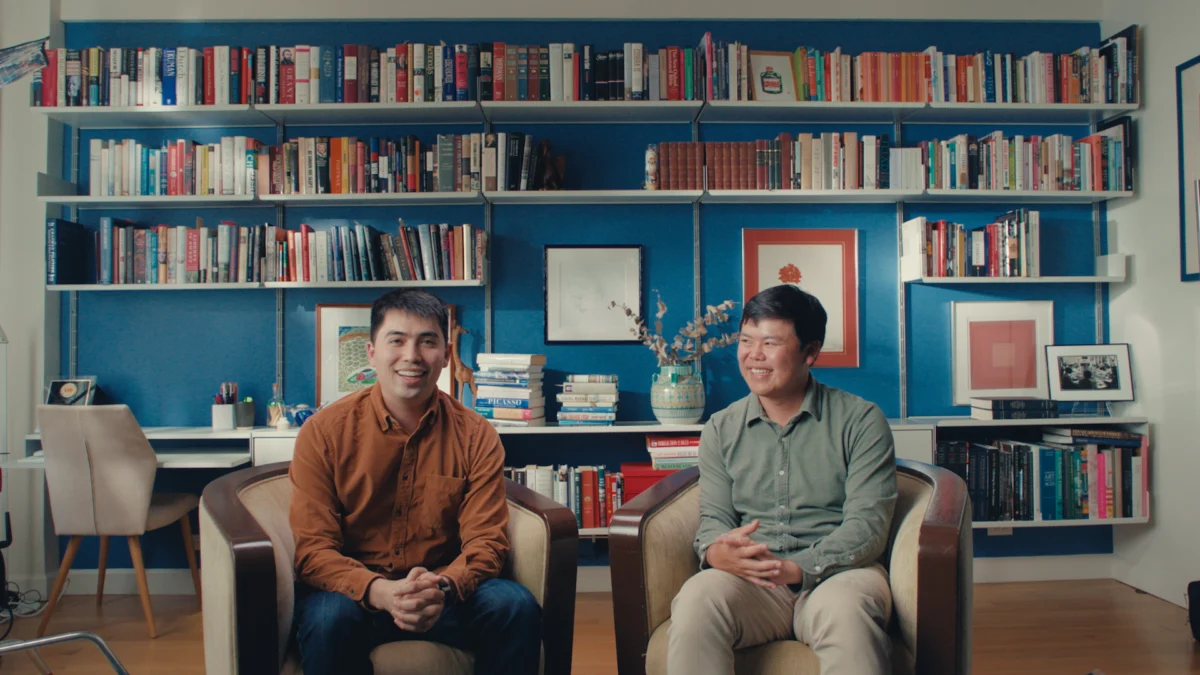
Max Spero, co-founder and CEO of Pangram, recently discussed the complexities of this landscape on TechCrunch’s Equity podcast. His insights provide a window into the philosophy behind "the trust layer."
On the "Assisted" vs. "Generated" Debate
One of the primary challenges Pangram faces is where to draw the line. "There is a massive difference between a writer using AI to brainstorm an outline and a bot-farm generating 500 articles to manipulate search rankings," Spero noted. Pangram’s goal is not necessarily to "catch" people, but to provide a nuance that allows platforms to decide what level of AI involvement is acceptable for their specific community.
On the "Arms Race"
Spero acknowledges the inherent difficulty of his company’s mission. As LLMs become better at mimicking human quirks, slang, and errors, detection becomes harder. "We aren’t just looking for ‘robotic’ language anymore," Spero explained. "We are looking at the underlying structures of how information is organized. Humans and machines organize thoughts differently, even if the surface-level prose looks identical."
The Platform Perspective
Substack’s decision to integrate Pangram signals a broader trend among "creator-first" platforms. In an official capacity, platform leaders have suggested that transparency is the only way to maintain the value of human-centric content. By flagging AI usage, they are effectively creating a "Certified Human" badge, which may become more valuable than the content itself in the coming years.
Implications: The Future of the Human-AI Relationship
The success or failure of companies like Pangram will have profound implications for the structure of society and the economy.
1. The Devaluation of Information
If detection fails, the "marginal cost of content" drops to zero. When information is infinite and free, its value plummets. This could lead to a future where only "verified human" sources—those behind paywalls or with established physical reputations—are trusted, while the "open web" becomes a wasteland of synthetic noise.
2. The Legal and Regulatory Landscape
Regulators in the EU and the US are increasingly looking at "provenance" requirements. The EU AI Act, for instance, mandates that certain types of AI-generated content must be labeled. Pangram’s technology provides the technical means to enforce these legal mandates. Without reliable detection, AI regulations remain "paper tigers" with no way to verify compliance.
3. The Evolution of Fraud
As Pangram moves into image and video detection, the stakes rise from "who wrote this newsletter?" to "is this video of a world leader real?" The ability to detect synthetic media is becoming a matter of national security. The "trust layer" Pangram is building may eventually need to be integrated into web browsers and operating systems as a standard security feature, similar to how antivirus software or HTTPS protocols operate today.
4. Redefining "Human" Work
The existence of Pangram forces a societal conversation about what we value in work. If an AI can write a product review that is indistinguishable from a human’s, does the "human-ness" of the review still matter? For Substack readers, the answer seems to be yes—they are paying for a connection to a person. Pangram’s role is to protect that connection from being commoditized by algorithms.
Conclusion
The $9 million funding for Pangram is more than just a successful seed round for a Silicon Valley startup; it is a barometer for the anxiety currently gripping the digital world. As AI slop threatens to overwhelm our digital institutions, the "trust layer" represents a desperate but necessary attempt to reclaim the internet for human users.
Whether Pangram can stay ahead of the rapidly evolving AI models remains to be seen. However, its partnership with Substack and its expansion into multimodal detection suggest that the battle for authenticity is only just beginning. In the future, the most important question we ask when clicking a link may not be "is this interesting?" but rather, "is there a human on the other side of this?" Pangram is betting $9 million that we will always want to know the answer.