A Somber Orbit: Ridley Scott’s ‘The Dog Stars’ and the Inertia of the Post-Apocalypse
The cinematic legacy of Sir Ridley Scott is one defined by scale, visceral intensity, and an almost restless productivity. From the Napoleonic precision of his 1977 debut The Duellists to the blood-soaked sands of Gladiator II, Scott has remained a titan of the industry. However, with the release of his 30th feature film, The Dog Stars, the veteran director enters a territory that is uncharacteristically stagnant. Adapted from Peter Heller’s acclaimed 2012 post-apocalyptic novel, the film—distributed by 20th Century Studios—presents a vision of the end of the world that, while handsomely mounted, struggles to justify its own existence in an overcrowded genre.
Main Facts: The Production and Release of ‘The Dog Stars’
The Dog Stars arrived in theaters on Friday, August 28, 2026, marking a significant milestone in Ridley Scott’s career as his 30th feature-length project. The film is a somber, introspective "thriller" that pivots away from the grand historical epics Scott has favored in recent years, opting instead for a localized, character-driven study of isolation in the wake of a global catastrophe.
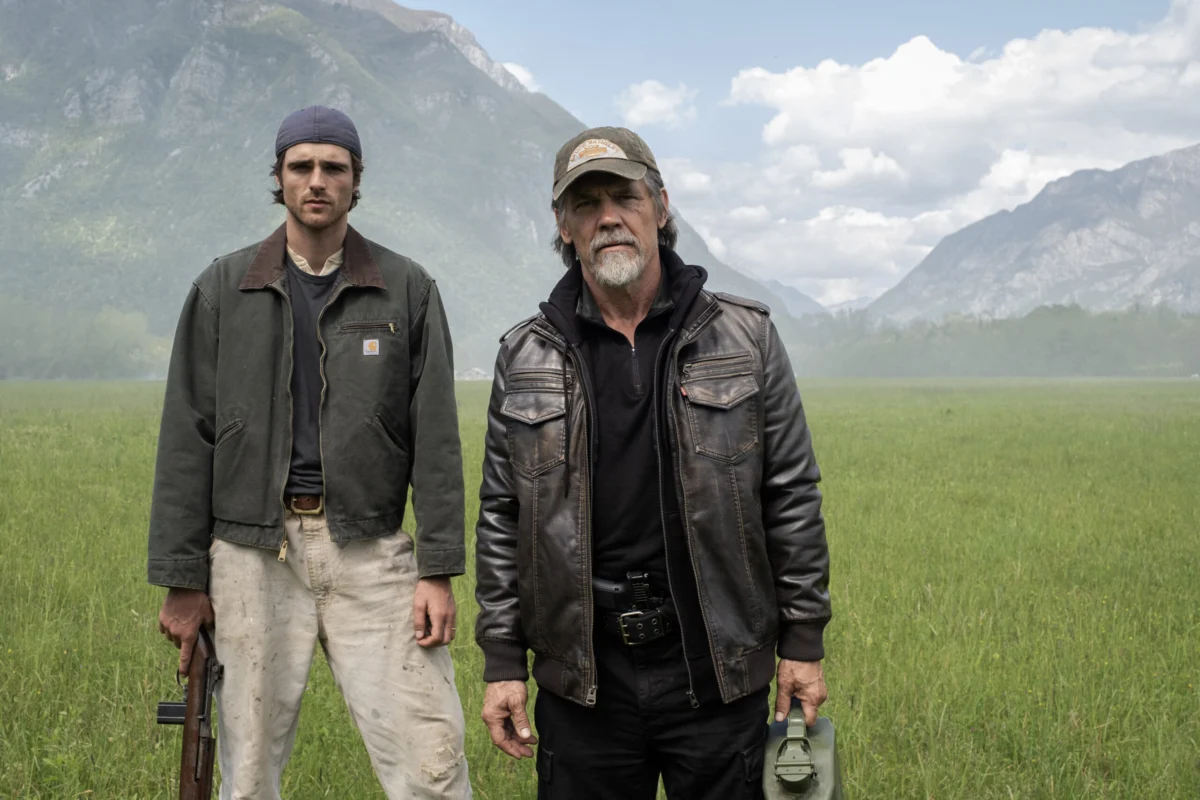
The film stars Jacob Elordi as Hig, a pilot and survivor navigating the remnants of the American Mountain West. Elordi, who stepped into the role after the departure of Paul Mescal, is joined by a high-caliber supporting cast including Academy Award-nominee Josh Brolin, Margaret Qualley, Guy Pearce, and Allison Janney. The screenplay was penned by Mark L. Smith, known for his work on The Revenant and the upcoming The Mosquito Bowl.
Despite the pedigree of the talent involved, early critical reception has been lukewarm. The film currently holds a "C" grade from leading critics, with the consensus pointing toward a "phoned-in" technical execution and a lack of narrative tension that fails to distinguish it from contemporary post-apocalyptic media like HBO’s The Last of Us.

Chronology: From Page to Screen
The journey of The Dog Stars to the big screen began shortly after the publication of Peter Heller’s novel. The book was a bestseller, praised for its lyrical prose and its focus on the psychological toll of survival rather than the mechanics of the apocalypse itself. For years, various producers attempted to package the project, but it wasn’t until Ridley Scott took an interest following the completion of Napoleon and Gladiator II that the film gained momentum.
The production faced its first major hurdle during the casting phase. Initially, Paul Mescal was attached to play the lead role of Hig. However, due to scheduling conflicts—likely stemming from the expansive press tours and production cycles of other high-profile projects—Mescal exited the film. Jacob Elordi, whose star has risen meteorically following Euphoria and Priscilla, was brought in as a replacement. Critics have noted that this recasting may have been a blessing in disguise, as Elordi’s "quiet watchfulness" aligns well with the "sad-boy" aesthetic the film ultimately adopted.
Filming took place largely on location in Colorado, specifically around the Erie and Telluride regions. The production sought to capture the "lushly overgrown" aesthetic of a world reclaimed by nature. Cinematographer Erik Messerschmidt, an Oscar winner for Mank, was tasked with capturing this desolation. However, as the film moved into post-production, reports began to surface of a narrative that felt increasingly "inert," leading to a final cut that leans heavily on mood over momentum.
Supporting Data: Narrative and Technical Analysis
The Plot: Scavenging the Scraps of Erie
The story finds Hig (Elordi) living in an abandoned airplane hangar in Erie, Colorado. The world has been decimated by a viral plague, leaving a fractured society in its wake. Hig’s only companions are his Australian cattle dog, Jasper, and Bangley (Josh Brolin), a paranoiac, heavily armed ex-Marine. While Bangley is content to spend his days defending their perimeter with lethal force, Hig is haunted by the memory of his late, pregnant wife Melissa (Sai Bennett).

Hig’s primary connection to the old world is a yellow Cessna plane, which he uses to scout the perimeter. The film explores the tension between Bangley’s cold survivalism and Hig’s desperate need for human connection—a need that eventually drives him to fly toward a mystery voice on the radio emanating from Grand Junction.
The Antagonists: The Reapers and the Mennonites
The film attempts to inject conflict through "The Reapers," a group of postverbal, face-painted mercenaries from the south. However, these set pieces have been criticized for their "perverse lack of tension." Despite Scott’s history of choreographing legendary battle scenes, the skirmishes in The Dog Stars feel "gallingly random," serving as brief, gory interruptions rather than essential plot drivers.
A more interesting, though underutilized, element is the local Mennonite community. Led by a character played by Benedict Wong, the Mennonites live without electricity and maintain a unique, almost spiritual relationship with the infection that has wiped out the rest of the world.
Technical Credits
- Director: Ridley Scott
- Screenplay: Mark L. Smith
- Cinematography: Erik Messerschmidt
- Score: Harry Gregson-Williams
- Production Design: The film succeeds in its visual world-building, particularly the "retro-futurist" airport in Grand Junction, which evokes the sterile, eerie atmospheres found in the works of Stanley Kubrick.
Official Responses and Industry Reception
While 20th Century Studios has marketed the film as a "visceral survival thriller," the critical community has been less convinced. Industry insiders have noted that the film feels like a "stop-gap" project for Scott—a somber mood piece produced between more ambitious, high-budget endeavors.

Critics have specifically pointed to the lack of chemistry between the leads. The romantic subplot involving Elordi and Margaret Qualley (who plays Cima, the daughter of Guy Pearce’s "Pops") has been described as "blunted." Reviewers have noted the irony of a screenplay that seems to suggest "the heterosexuals will save us" while failing to provide a spark between the two actors tasked with carrying that torch.
Furthermore, the work of Erik Messerschmidt has come under fire. While his previous collaborations with David Fincher were praised for their precision, his work on The Dog Stars has been described as "lacking a lively spirit." Some analysts suggest this was a deliberate choice to reflect the "dispirited masses," but others view it as a "phoned-in" effort from a high-caliber team.
In response to the "C" grade consensus, representatives for the production have emphasized the film’s "meditative nature." They argue that The Dog Stars is not intended to be a traditional action film, but rather a study of "what remains when everything you love has been obliterated."
Implications: The Ridley Scott Trajectory and the Genre’s Future
The release of The Dog Stars raises significant questions about the current state of post-apocalyptic cinema. In a post-2020 landscape, the "viral plague" subgenre faces a high bar for relevance. By leaning into the "sad-boy" tropes and avoiding the more fantastical elements of its competitors (such as the fungus monsters of The Last of Us), The Dog Stars risks becoming "totally unnecessary."

For Ridley Scott, this film represents a rare moment of creative inertia. At 88 years old (in 2026), Scott’s productivity is unmatched, yet The Dog Stars suggests a director who may be occasionally coasting on his reputation. The film’s reliance on "plaintive, platitudinous reflections" and "mawkish blasts to the past" stands in stark contrast to the muscular, forward-moving storytelling of his best work.
However, the film’s final act—set in a Grand Junction airport overseen by a stewardess named Darlene (Allison Janney)—offers a glimpse of what the movie could have been. With its "toothy" supporting characters and "Stanley Kubrick-esque" bar, this sequence introduces a dash of body horror and surrealism that briefly wakes the film from its lethargy.
Conclusion
The Dog Stars is a film of silhouettes and shadows. Jacob Elordi remains a captivating screen presence, able to convey a "towering sadness" with minimal dialogue, and Josh Brolin provides a necessary grit to the proceedings. Yet, the film is ultimately weighed down by a script that resists the very clichés that might have given it life. As it enters the theatrical market, The Dog Stars stands as a testament to the fact that even the greatest directors can occasionally produce a "misfire"—not because the film is incompetent, but because it feels fundamentally uninspired.
For audiences seeking a quiet, mournful look at the end of the world, Scott’s 30th feature may provide some solace. For those looking for the "muscle" and "spring" of a Ridley Scott joint, The Dog Stars may be a journey that leads exactly where its protagonist fears: into a pit of "obvious-from-space disaster."