From Ink to Emotion: How ‘Tangles’ Reimagines the Alzheimer’s Narrative Through Adult Animation
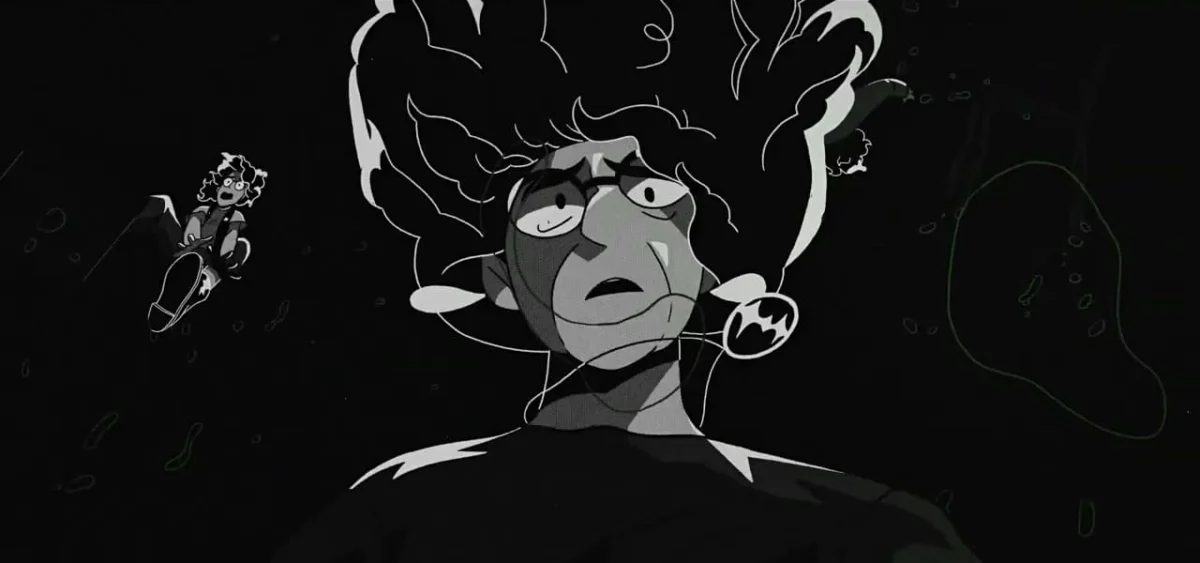
The landscape of adult animation is undergoing a profound transformation, moving beyond the boundaries of satirical sitcoms and high-concept sci-fi to embrace the raw, often painful realities of the human condition. At the forefront of this movement is Tangles, an animated feature that is set to make its competitive debut at the 2026 Annecy International Animation Film Festival. Adapted from Sarah Leavitt’s critically acclaimed graphic memoir, Tangles: A Story About Alzheimer’s, My Mother and Me, the film is a stark, black-and-white exploration of a family’s slow-motion collision with neurodegenerative disease.
Directed and co-written by Leah Nelson, Tangles arrives with a pedigree that commands attention. Boasting a voice cast that reads like a "Who’s Who" of contemporary prestige comedy and drama—including Julia Louis-Dreyfus, Bryan Cranston, Abbi Jacobson, Seth Rogen, and Sarah Silverman—the film seeks to find the "dark comedy" within the tragedy of memory loss. As the animation community prepares for its screening in the Contrechamp competition, Tangles stands as a testament to the power of the medium to visualize the internal psyche in ways live-action cannot.
Main Facts: A Convergence of Talent and Personal History
At its core, Tangles is the story of Sarah (voiced by Abbi Jacobson) as she navigates the decline of her mother, Midge (Julia Louis-Dreyfus). Midge is portrayed not merely as a patient, but as a vibrant, politically active, and sharp-witted woman whose identity is slowly eroded by Alzheimer’s. The film’s production is a collaborative effort involving Vancouver-based animation studio Giant Ant and producers including Seth Rogen, Evan Goldberg, and Lauren Miller Rogen via their production banners.
The project is notable for several reasons:
- Source Fidelity: It maintains the stark, monochrome aesthetic of Leavitt’s original graphic novel while expanding the narrative for the screen.
- The "Lylas" Influence: Produced in part by LYLAS Pictures, the film benefits from the expertise of Lauren Miller Rogen, who has been a vocal advocate for Alzheimer’s awareness through her charity, Hilarity for Charity.
- Naturalistic Performance: Unlike many animated features where actors record in isolation, Tangles utilized ensemble recording sessions to foster improvisation and authentic family chemistry.
Chronology: The Journey from Page to Screen
The path to bringing Tangles to the screen began not in a boardroom, but at a social gathering in Vancouver. Leah Nelson, the co-founder of the animation house Giant Ant, was handed Leavitt’s graphic novel by a producer friend who sensed a connection. At the time, Nelson was privately dealing with dementia within her own family, making the read a "cathartic" but difficult experience.
The development process was a multi-year endeavor that required balancing the memoir’s episodic nature with the requirements of a feature-film narrative. Nelson collaborated closely with the original author, Sarah Leavitt, and screenwriter Trev Renney. Early drafts were often critiqued for being too "vignette-heavy," a common hurdle when adapting memoirs. Under the guidance of seasoned writers like Rogen and Goldberg, the team refined the script into a linear narrative that retained the "quirky, dynamic world" of the protagonist’s mind.
Production took place primarily in Vancouver, leveraging the city’s robust animation talent. The decision to keep the film in black and white was made early on, serving as a stylistic bridge to the source material and a way to emphasize the "raw and immediate" emotions of the characters.
Supporting Data: The Visual Language of Memory
Animation provides a unique toolkit for depicting cognitive decline. In Tangles, the medium is used to visualize Sarah’s psyche, moving beyond a literal depiction of events to show how emotions "spill over."
While the film is primarily monochrome, Nelson uses color sparingly and intentionally. When Sarah’s emotional state becomes overwhelmed, color bleeds into the frame, signaling a break in her internal defenses. This visual strategy highlights the fragility of memory and the "tangles" of the brain that give the story its name.
The film also addresses a specific historical context, setting Sarah’s personal journey against the backdrop of late-1990s and early-2000s San Francisco. This period serves as a secondary narrative thread—a queer coming-of-age story where Sarah finds her community and politics even as her primary maternal bond begins to fray. This duality ensures the film isn’t solely defined by illness, but by the life that continues to happen alongside it.
Official Responses: Insights from Director Leah Nelson
In a comprehensive discussion regarding the film’s production, Leah Nelson detailed the complexities of directing a high-profile cast and maintaining the story’s delicate tonal balance.
On Directing Iconic Talent
Nelson admitted to initial intimidation when stepping into the booth with actors of the caliber of Bryan Cranston and Julia Louis-Dreyfus. "This is my first feature, and these are some of the most accomplished actors in the business," Nelson noted. However, she found that the "scheduling Tetris" required to get them in the room together paid off in the final product.
One standout moment involved Bryan Cranston, who plays Rob, the father struggling with denial. Nelson recalled a session where Cranston delivered a "Walter White-level" performance of grief and anger, only to immediately break character with a warm smile to ask for feedback. "He is an incredibly generous actor," Nelson said. "It was surreal to be in that position."
On the Character of Midge
A central challenge was ensuring the audience fell in love with Midge before the disease took hold. "We needed to feel the cruel and unfair nature of the disease," Nelson explained. By curating specific memories—such as the "knife soup" scene where Midge struggles to remember a basic recipe—the film establishes Midge as a "hero mom" whose loss is felt acutely by the viewer.
On the Role of Humor
Perhaps the most striking aspect of Tangles is its insistence on humor. Nelson describes the film as a "dark comedy," arguing that laughter is a necessary tool for survival in caregiving. "It is innately human to see and seek humor in hard times," she said. "You need to find humor and laugh together because otherwise it’s just too depressing."
Implications: A New Benchmark for Adult Animation
The premiere of Tangles at Annecy 2026 carries significant implications for the animation industry and for the representation of neurodegenerative diseases in popular media.
1. The Evolution of the "Celebrity" Voice Cast
Tangles challenges the notion that star-studded casts are reserved for big-budget family comedies. By casting actors known for their comedic timing in a heavy drama, the production taps into the inherent link between comedy and tragedy. This suggests a growing trend where "funny people" are sought out for their ability to navigate complex, bittersweet narratives, providing a level of relatability that elevates the material.
2. Animation as a Tool for Health Advocacy
Following in the footsteps of films like Persepolis and Flee, Tangles reinforces animation’s role as a powerful medium for non-fiction storytelling. By visualizing the "messiness" of caregiving and the internal world of the patient, the film offers a level of empathy that can be difficult to achieve in live-action, where the physical reality of the actors can sometimes distract from the internal experience of the disease.
3. The Intersectionality of Grief
By maintaining the queer narrative of Sarah Leavitt’s life, the film avoids the "tragedy porn" trope where a character’s entire existence is subsumed by a family member’s illness. Tangles presents a holistic view of a woman’s life—her politics, her sexuality, and her career—making the impact of her mother’s Alzheimer’s feel more grounded and authentic. It portrays the "juggling of life" that occurs over the decade-long decline typical of the disease.
Conclusion: Shining a Light in Dark Corners
As Tangles prepares for its festival run, it stands as a bold experiment in tone and technique. It is a film that refuses to look away from the "grit and rawness" of death, yet insists on finding the warmth in the wreckage. For Leah Nelson and her team, the goal was always to provide a sense of community for those navigating similar paths.
"Caregiving is messy and hard, but you’re not alone," Nelson concluded. "With this film, we are trying to shine a light into those dark corners of grief." For audiences at Annecy and beyond, Tangles promises to be a poignant reminder that while memory may fade, the messy, funny, and principled spirit of those we love can be preserved through the art of storytelling.