The Rise of the Iron Workforce: How Chinese Automakers are Pivoting to Humanoid Robotics
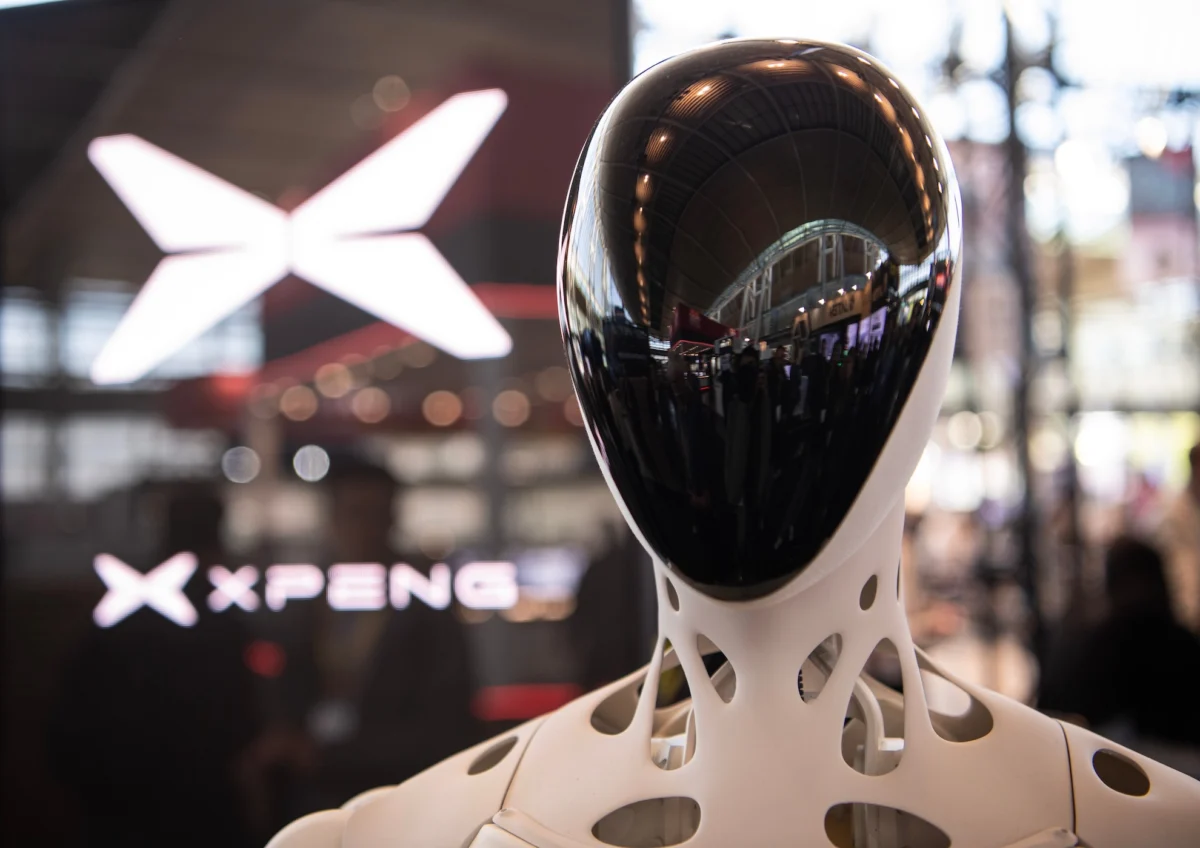
The long-standing fascination with humanoid robots has transitioned from the realm of science fiction and viral laboratory videos into a high-stakes industrial arms race. While the public imagination has been captured by Elon Musk’s Tesla Optimus and the acrobatic displays of Boston Dynamics’ Atlas, a more profound shift is occurring beneath the surface. Today, the world’s leading automakers—particularly those in China—are no longer viewing robotics as a side project, but as the next frontier of profitable enterprise.
The catalyst for this shift is "Embodied AI," the integration of sophisticated large language models (LLMs) into physical machines. This technological leap promises to move robots beyond repetitive factory tasks and into roles requiring complex reasoning and adaptability. As profit margins in the global electric vehicle (EV) market face unprecedented pressure, the pivot toward humanoid robotics represents both a strategic hedge and a bold bet on the future of labor.
Main Facts: The $900 Million Milestone
The most significant recent development in this sector comes from Xpeng, the Chinese EV manufacturer often cited as the closest rival to Tesla in terms of autonomous software integration. Xpeng’s dedicated robotics unit recently announced a massive funding injection, raising more than $900 million in a single round. This capital raise has propelled the unit to a post-money valuation of approximately $6.3 billion.
The funding round was led by IDG Capital, with significant participation from a "who’s who" of Chinese tech giants and venture capital firms, including Gaorong Ventures, Tencent, and Alibaba. Xpeng described this as the largest single-round private financing ever recorded in China’s embodied AI industry. Notably, the commitment is shared by the company’s leadership; Xpeng founder He Xiaopeng and co-president Brian Gu reportedly contributed $100 million of their own capital to the round, signaling a deep personal conviction in the project’s success.
Xpeng’s primary focus is a robot named "Iron." Unlike earlier experimental models, Iron is designed with a realistic human shape specifically for commercial deployment. The goal is to integrate these units into manufacturing and service environments where they can operate alongside humans, utilizing the same tools and navigating the same spaces designed for the human form.
Chronology: From Viral Videos to Industrial Deployment
To understand the current surge in investment, one must look at the evolution of the humanoid sector over the last decade.
The Era of Research (2013–2020)
For years, Boston Dynamics, originally a spin-off from MIT and later owned by Google, SoftBank, and eventually Hyundai, dominated the headlines. Their Atlas robot became a YouTube sensation, demonstrating backflips and parkour. However, these were largely research-based achievements with little immediate commercial application. The hardware was prohibitively expensive, and the software was based on traditional, rigid control engineering.
The Tesla Pivot (2021–2022)
The landscape shifted dramatically in 2021 when Elon Musk announced the "Tesla Bot" (later renamed Optimus). Musk’s proposition was different: he intended to use the same AI "brain" developed for Tesla’s Full Self-Driving (FSD) cars to power a robot. By treating a robot as a "car on legs," Tesla signaled to the automotive industry that their existing expertise in sensors, batteries, and AI inference could be directly applied to robotics.
The Chinese Surge (2023–Present)
Following Tesla’s lead, Chinese automakers began a rapid diversification. In 2024 and early 2025, the pace reached a fever pitch.
- August 2024: AiMOGA, the robotics affiliate of Chery Automobile, began preparing for an IPO with targets for overseas expansion by 2026.
- Late 2024: BYD, the world’s largest EV producer by volume, unveiled "Xiao Di," its entry into the humanoid space.
- Early 2025: Xpeng’s record-breaking $900 million round set a new benchmark for private investment in the sector.
Today, nearly every major Chinese automotive player—including SAIC, Geely, Changan, GAC, and Li Auto—has either established a robotics division or invested heavily in a humanoid startup.
Supporting Data: The Economics of the Pivot
The move toward robotics is driven by cold, hard economic data. The global automotive industry is currently embroiled in a brutal price war, particularly in China, where overcapacity has led to what analysts describe as "razor-thin" profit margins.
Diminishing Returns in EVs
While EV adoption continues to grow, the commoditization of battery technology and hardware has made it difficult for manufacturers to maintain the high margins seen in the early days of the transition. According to Michael Dunne, CEO of Dunne Insights, the pivot is a survival strategy. "He [He Xiaopeng] sees razor-thin profit in cars on the near horizon," Dunne noted. "Robots look much more promising."
The Valuation Gap
The valuation of AI-driven robotics companies often dwarfs that of traditional manufacturing firms when measured by price-to-earnings ratios. By positioning themselves as "Embodied AI" companies rather than just carmakers, firms like Xpeng and Tesla are attempting to capture the high-multiple valuations typically reserved for software and Big Tech firms.
The Technical Tailwind
The convergence of three technologies has made this moment possible:
- Energy Density: Advances in EV battery technology allow humanoid robots to operate for several hours without being tethered to a power source.
- Actuation: High-torque electric motors and precision gearboxes, developed for automotive steering and braking systems, are now light and powerful enough for robotic joints.
- Neural Networks: The shift from "if-then" programming to "end-to-end" neural networks allows robots to learn by watching human demonstrations, a process known as imitation learning.
Official Responses and Strategic Alliances
The race for humanoid supremacy is not just a battle of individual companies, but one of strategic ecosystems.
The Hyundai-Google Alliance:
Hyundai, which owns Boston Dynamics, is moving toward the "Robot Metaplant" concept. In partnership with Google’s DeepMind, they are working to infuse Atlas with advanced reasoning capabilities. Hyundai’s official roadmap includes deploying Atlas robots to its Georgia factory by the end of this year, with a full-scale rollout for parts sequencing and logistics by 2028.
The Xpeng Perspective:
Xpeng’s leadership has been vocal about the synergy between their two product lines. During the funding announcement, Xpeng executives emphasized that the "Iron" robot shares the same "XNGP" (Xpeng Navigation Guided Pilot) architecture as their vehicles. This allows for a unified development pipeline where improvements in automotive vision systems directly benefit the robot’s ability to navigate a warehouse.
Mobileye and the Acquisition Strategy:
Not every company is building from scratch. Intel-owned Mobileye recently acquired the humanoid startup Mentee Robotics for $900 million. Mobileye’s leadership stated that the acquisition is a natural extension of their "EyeQ" chip technology, asserting that the computer vision required to navigate a busy street is fundamentally similar to the vision required for a robot to navigate a household or factory.
Implications: A Global Competition for the Future of Labor
The emergence of a robust humanoid robotics industry carries profound implications for global manufacturing, geopolitics, and the labor market.
The Manufacturing Edge: China vs. The World
While the United States remains a leader in high-level AI research (through firms like OpenAI, NVIDIA, and Figure AI), China holds a significant advantage in the "physical" side of the equation. China’s existing supply chain for electric motors, sensors, and rare-earth magnets—honed by a decade of EV dominance—means they can likely produce humanoid hardware at a much lower cost than Western competitors. The challenge for Chinese firms, as Michael Dunne points out, is whether they can bridge the gap on the software side to match Tesla’s AI capabilities.
Solving the Labor Shortage
Both the U.S. and China are facing aging populations and shrinking manufacturing workforces. Humanoid robots are increasingly viewed not as a replacement for existing workers, but as a necessary solution to a labor vacuum. If a $30,000 robot can perform the work of one person for five years, the return on investment becomes undeniable for logistics and assembly industries.
The "Body" vs. The "Brain"
The industry is currently split into two philosophies. One group, led by companies like Rivian (through its Mind Robotics spinout), argues that robots don’t need to look like humans to be effective. They believe form should follow function. The other group, including Tesla and Xpeng, argues that because our entire world—from door handles to staircases—is designed for the human form, a humanoid shape is the most "general-purpose" solution possible.
Conclusion: The New Industrial Revolution
The massive investments from Xpeng and its peers signal that the humanoid robot is moving out of the "hype" phase and into the "deployment" phase. As automakers leverage their massive balance sheets and manufacturing prowess to scale these machines, the distinction between a "car company" and a "robotics company" is rapidly blurring.
In the coming decade, the success of these firms may not be measured by the number of vehicles they deliver, but by the number of "Iron" or "Optimus" units they have working on their assembly lines. The $900 million bet by Xpeng is just the beginning of a multi-billion dollar scramble to build the workforce of the twenty-first century.