
Microsoft Build 2026: The Dawn of the Agentic Era and the Strategic Pivot to San Francisco
Microsoft’s flagship developer conference, Build, is undergoing its most significant transformation in a decade. Scheduled for June 2 and 3, 2026, the event will relocate to the Fort Mason Center in San Francisco, marking the first time the conference has left its traditional home in the Pacific Northwest since 2016. This move is more than geographical; it is a symbolic pivot to the heart of the global AI revolution.
With a streamlined attendance cap of 2,500 developers and a premium ticket price of $1,099, Build 2026 is designed to be a high-density, technical summit focused on a singular, industry-defining theme: AI Agents. As Microsoft shifts from "Copilots" to autonomous "Agents," the company is positioning itself not just as a tool provider, but as the foundational infrastructure for the next generation of software.
Main Facts: A Single-Minded Focus on Agentic AI
The core thesis of Build 2026 is that the era of specialist AI research is over, and the era of mainstream agentic deployment has begun. Satya Nadella’s opening keynote is expected to bridge the gap between generative AI—which assists users—and agentic AI, which performs multi-step tasks autonomously on behalf of users.
Key Highlights of the 2026 Agenda:
- The Rise of the Agent: The session catalog focuses on the transition from Large Language Models (LLMs) to agentic frameworks. This includes the general availability of the Azure AI Foundry Agent Service.
- Unified Developer SDKs: A major technical milestone is the formal merging of Semantic Kernel and AutoGen into a singular, unified developer SDK, simplifying the orchestration of multi-agent systems.
- GitHub’s "Fleet Mode": GitHub COO Kyle Daigle will showcase "fleet mode" and "autopilot" capabilities within the Copilot CLI, allowing AI to manage multi-step coding tasks across entire codebases without constant human intervention.
- Windows as an Inference Platform: Microsoft is repositioning Windows 11 as the premier environment for on-device AI, utilizing NPU (Neural Processing Unit) hardware to run agents locally via the new Windows AI Runtime.
Chronology: From Windows-Centricity to the AI Frontier
To understand the weight of Build 2026, one must view it through the lens of Microsoft’s 15-year evolution.
- 2011–2013 (The Ballmer Era): Build launched in 2011 in Anaheim, California, primarily as a vehicle for Windows 8. At the time, Microsoft was struggling to remain relevant in a world dominated by iOS and Android. The focus was strictly on the Windows ecosystem.
- 2014–2017 (The Nadella Shift): Satya Nadella’s appointment as CEO brought a "Cloud First, Mobile First" mantra. Build became the stage for Microsoft’s embrace of open source. The open-sourcing of .NET and the launch of VS Code signaled a new, developer-friendly Microsoft.
- 2018–2022 (The GitHub and Cloud Era): Following the $7.5 billion acquisition of GitHub in 2018, Build shifted toward DevOps and Azure. The focus was on scale, Kubernetes, and the early iterations of Azure OpenAI services.
- 2023–2025 (The Copilot Years): After the launch of ChatGPT, Build became "AI-central." Every session was dedicated to integrating LLMs into existing software. Build 2025, titled "The Age of AI Agents," set the stage for the autonomous systems we see today.
- 2026 (The Agentic Realization): Today, Build has moved to San Francisco to compete directly for the talent and mindshare of the AI startup scene, moving away from being a "corporate" event to a "cutting-edge" technical summit.
Supporting Data: 50 Free Tools to Master the Ecosystem
Microsoft’s strategy for Build 2026 is built on accessibility. To encourage developers to adopt their agentic frameworks, the company offers an extensive suite of free and freemium tools. These are categorized into eight essential pillars:
1. Developer Tools (The Foundation)
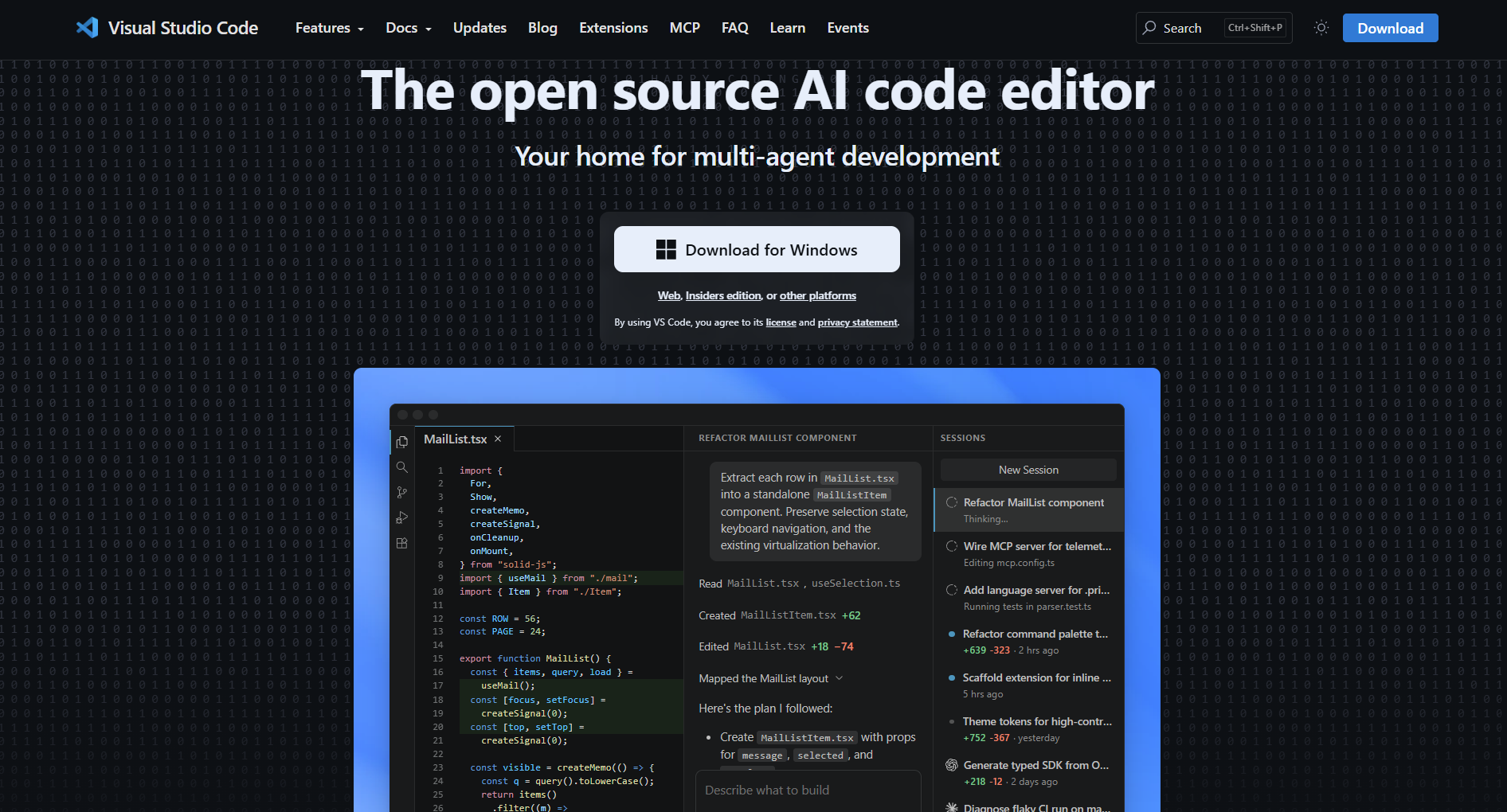
- Visual Studio Code: The world’s most popular open-source editor with native AI integration.
- GitHub Free: Unlimited repositories and basic CI/CD for individual developers.
- GitHub Copilot Free: A tier offering 2,000 inline completions per month to lower the barrier to entry.
- .NET SDK: The cross-platform framework for building agentic backends.
- Windows Terminal: A modern, tabbed interface for managing CLI-heavy AI workflows.
- WSL (Windows Subsystem for Linux): Essential for running Linux-native AI toolchains on Windows.
- Dev Home: A centralized dashboard for monitoring NPU and GPU performance.
- WinGet: The official Windows package manager for rapid environment setup.
- PowerShell: The automation backbone for Azure and Windows management.
- Playwright: An open-source framework now being used to drive browser-based agent interactions.
2. AI and Multi-Agent Systems
- Microsoft Copilot (Free): The consumer-facing entry point for testing model capabilities.
- AutoGen: A research-backed framework for creating collaborating AI agents.
- Semantic Kernel: The SDK that connects LLMs to conventional code (C#, Python, Java).
- Phi-4: Microsoft’s 14-billion parameter small language model (SLM) optimized for NPUs.
- Azure AI Foundry (Free Tier): A portal to test models from OpenAI, Meta, and Mistral.
- ONNX Runtime: The engine for running cross-platform AI inference.
- Responsible AI Toolbox: Open-source tools for debugging model bias and fairness.
- Prompt Flow: A visual tool for developing and testing LLM orchestration pipelines.
3. Cloud Infrastructure (Azure)
- Azure Free Account: $200 in initial credit plus 12 months of popular services.
- Azure Functions: Always-free tier (1M executions/month) for event-driven agents.
- Azure Static Web Apps: Free hosting for AI-powered frontends with built-in CI/CD.
- Azure Container Apps: Serverless container hosting for scaling agent runtimes.
- Azure DevOps: Free for teams of up to five, managing the agentic lifecycle.
- Azure Cosmos DB: Always-free tier (25GB) now supporting vector search.
- Azure AI Search: The retrieval layer for RAG (Retrieval-Augmented Generation) architectures.
4. Productivity and Collaboration
- Microsoft 365 Online: Free web versions of Word and Excel with basic AI features.
- OneDrive: 5GB of free storage for document grounding.
- Microsoft Teams (Free): The primary deployment surface for enterprise agents.
- Outlook.com: A testing ground for AI-driven email automation.
- Microsoft Loop: Collaborative workspaces for multi-agent output.
- Microsoft To Do: A simple API-driven target for agentic task management.
- Microsoft Forms: Useful for collecting human-in-the-loop feedback.
- Microsoft Designer: Generative AI for creating visual assets for documentation.
5. Data and Analytics
- Power BI Desktop: Free tool for visualizing agent performance metrics.
- Azure Data Studio: Cross-platform SQL management with notebook support.
- SQL Server Express: A free, lightweight relational database for local development.
- Microsoft Clarity: Free behavioral analytics to see how users interact with AI features.
- Microsoft Fabric (Trial): A 60-day window into the unified data lakehouse.
6. Security and Identity
- Microsoft Entra ID Free: Identity management for up to 500,000 objects.
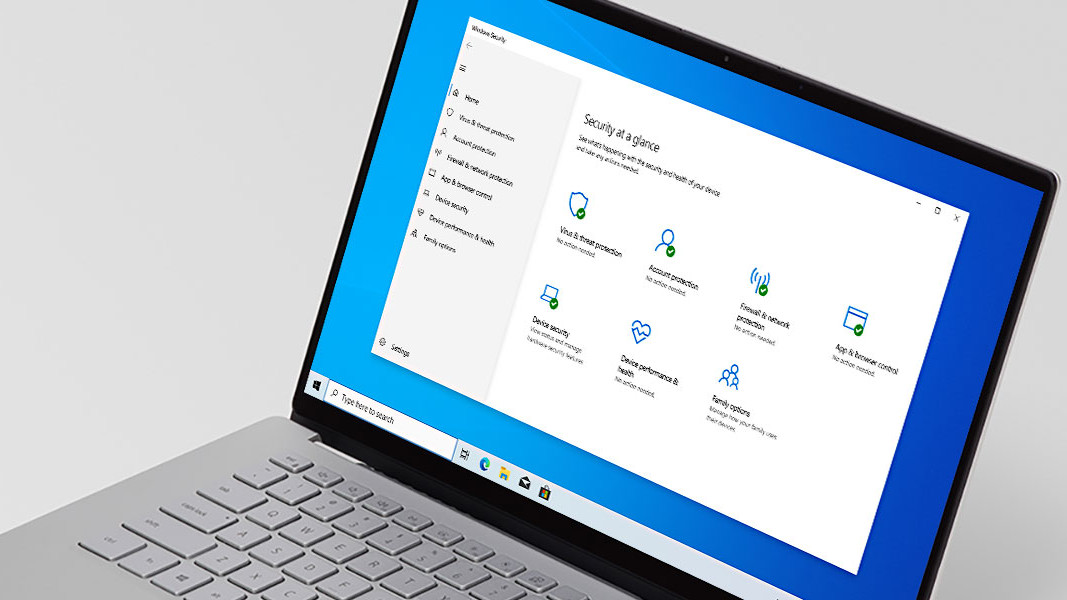
- Windows Defender: Built-in endpoint protection for developer machines.
- Sysinternals Suite: Deep diagnostic tools for monitoring agent behavior.
- Security Compliance Toolkit: Baselines for hardening AI environments.
- Microsoft Authenticator: Passwordless sign-in for secure developer access.
7. IT Administration
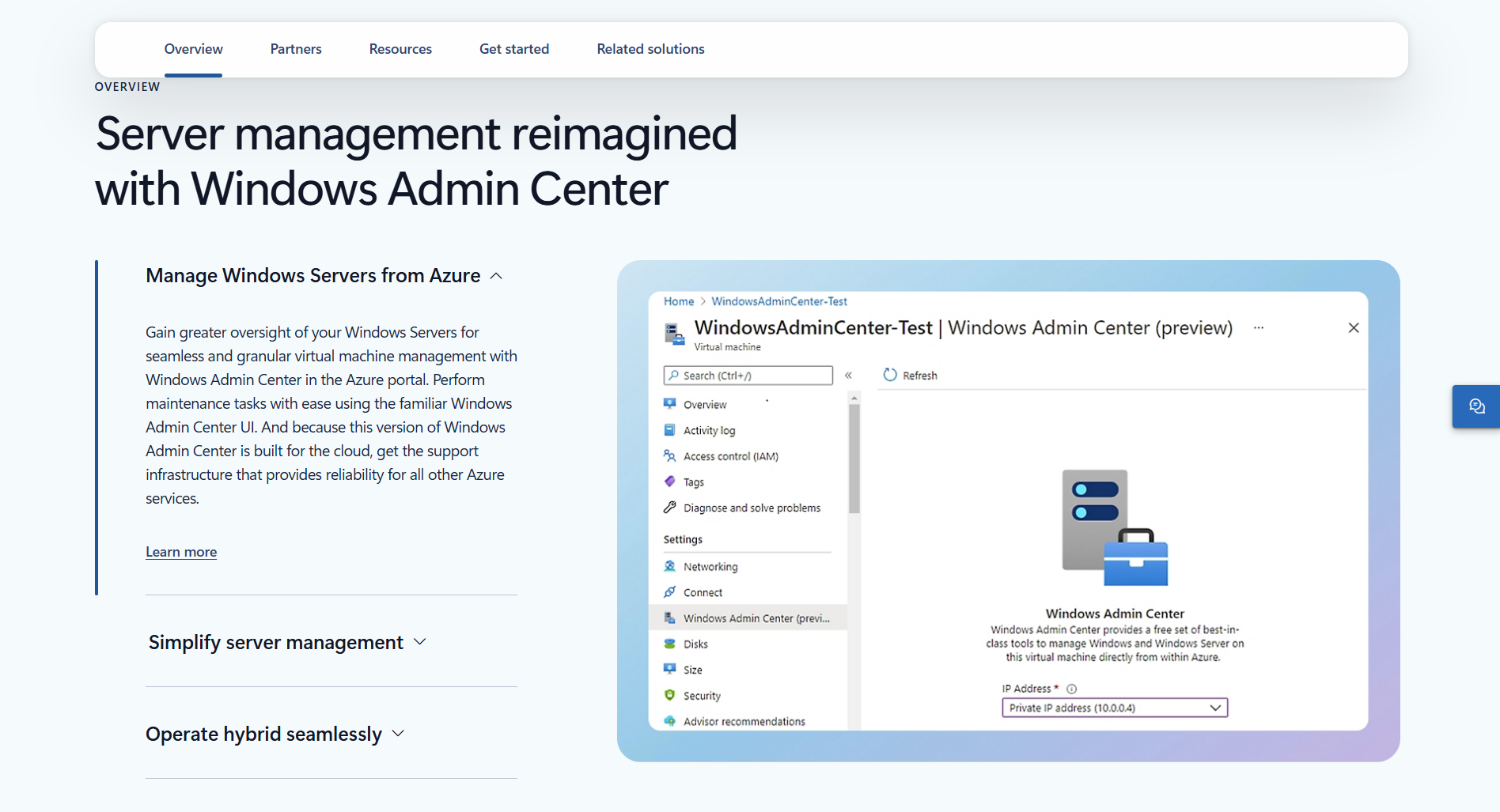
- Windows Admin Center: Browser-based management for local and remote servers.
- Azure CLI: The primary tool for scripting agentic infrastructure.
- Bicep: A human-readable language for declaring Azure resources as code.
- SQL Server Management Studio (SSMS): The gold standard for SQL administration.
8. Low-Code and Automation
- Power Automate Desktop: Free on Windows 11 for automating legacy UI tasks.
- Power Apps Developer Plan: A free sandbox for building low-code AI interfaces.
- Copilot Studio (Trial): A 60-day trial for building no-code autonomous agents.
Official Context: The Competitive Landscape
Microsoft’s strategic shift is a direct response to a tightening market. While Microsoft enjoyed a "first-mover" advantage through its OpenAI partnership, competitors have caught up. Amazon Web Services (AWS) has expanded its Bedrock model catalog, and Google’s "Antigravity" platform has pitched itself as a more developer-centric alternative for agentic infrastructure.
Microsoft’s "official response" to this competition, as evidenced by the Build 2026 session tracks, is to leverage its Enterprise Distribution Advantage. By integrating agents directly into the 300-million-user Microsoft 365 ecosystem and the billion-device Windows install base, Microsoft is arguing that "deployment" is as important as "intelligence."
Furthermore, the dedicated Responsible AI track is a strategic move to reassure enterprise customers. Following a series of high-profile security incidents in 2025 and new regulations in the EU, Microsoft is positioning its safety frameworks as a key differentiator against more "open" but less governed alternatives.
Implications: The Future of the Developer Role
The implications of the announcements at Build 2026 are profound. For over a decade, developers have been the "creators" of logic. In the agentic era, the developer’s role is shifting toward that of an Orchestrator and Governor.
- From Code to Context: With GitHub’s "fleet mode" handling multi-step coding, developers will spend less time writing syntax and more time defining the intent and context for AI agents.
- The Edge vs. The Cloud: By introducing NPU passthrough in WSL 3 and the Windows AI Runtime, Microsoft is decentralizing AI. This allows developers to build agents that are private, low-latency, and cost-effective by running on local hardware rather than expensive cloud GPUs.
- Agent-to-Agent Economies: The focus on the Model Context Protocol (MCP) and agent communication suggests a future where software isn’t a monolithic application, but a swarm of specialized agents from different vendors working together.
Conclusion: Preparing for the Keynote
Build 2026 represents the moment Microsoft attempts to turn the "AI hype" into "Industrial AI." For developers, the message is clear: the tools are now free and mature. The challenge is no longer how to build an agent, but what that agent should be allowed to do. As the industry gathers in San Francisco this June, the focus will be squarely on the practical, production-ready systems that will define the next decade of computing.



Leave a Comment