The Engineer of Life: Vijay Pande’s Radical Shift from Venture Titan to Boutique Bio-Architect
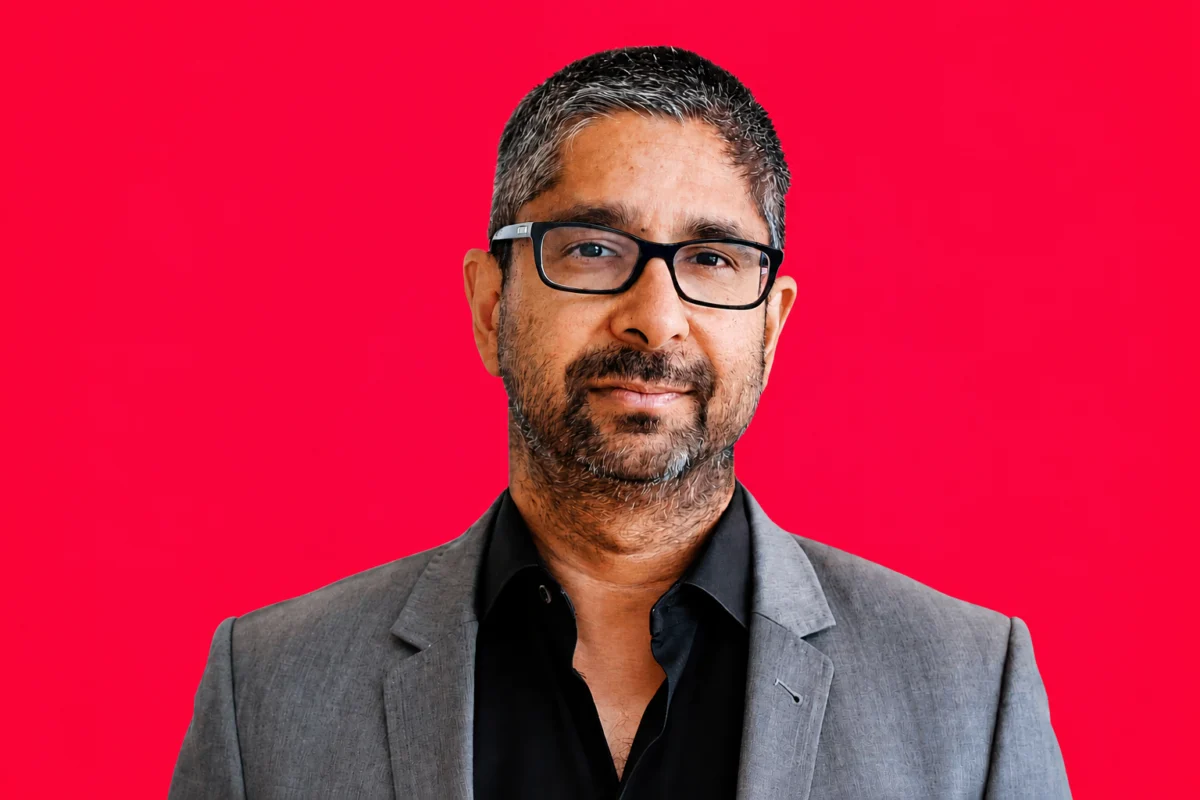
The landscape of Silicon Valley venture capital is often defined by the "bigger is better" mantra—larger funds, massive teams of associates, and broad portfolios designed to capture every possible unicorn. However, one of the industry’s most influential figures is currently charting a diametrically opposite course. Vijay Pande, the man who spent a decade building Andreessen Horowitz’s (a16z) healthcare practice into a $4 billion powerhouse, has stepped away from the machinery of mega-funds to launch VZVC.
This new venture, co-founded with veteran investor Zach Werner, represents a fundamental rethinking of how technology, biology, and capital intersect. By moving from a "science of discovery" to a "science of engineering," Pande is betting that a leaner, AI-augmented, and highly concentrated approach will define the next era of biotechnology.
Main Facts: The Genesis of VZVC and a New Investment Thesis
In June 2023, Vijay Pande transitioned from his role as a General Partner at a16z to establish VZVC. The move was met with surprise across the industry, given that Pande had successfully led a16z into the life sciences sector—a category the firm’s founders, Marc Andreessen and Ben Horowitz, had famously avoided for their first five years of operation.
VZVC is not a traditional venture firm. It is built on three radical pillars:
- Extreme Concentration: Unlike typical funds that might back dozens of startups annually, VZVC intends to make roughly five "concentrated bets" per year. Pande likens the commitment to a new portfolio company not to "adding a Facebook friend," but to "having another child."
- Lean Operations through AI: The firm employs no associates. Instead, Pande and Werner rely on proprietary AI agents to handle the research, due diligence, and day-to-day operational tasks typically delegated to junior staff.
- Engineering-First Biology: The firm’s core thesis is that biology has transitioned from a series of fortuitous discoveries to a predictable engineering discipline. This shift is powered by machine learning, which allows researchers to navigate the immense complexity of human biology with a level of precision previously reserved for software development.
Chronology: From Distributed Computing to Venture Dominance
To understand Pande’s current pivot, one must look at the trajectory of his career, which has consistently sat at the edge of what is computationally possible.
The Stanford Years and Folding@home
Before entering the world of venture capital, Pande was a distinguished Professor of Chemistry at Stanford University. He gained international acclaim for founding Folding@home, one of the world’s most successful distributed computing projects. By leveraging the idle processing power of millions of personal computers globally, Pande created a "virtual supercomputer" dedicated to simulating protein folding. This work provided critical insights into diseases like Alzheimer’s, Huntington’s, and various cancers, proving that massive computational power could solve biological mysteries that traditional lab work could not.
The a16z Era (2012–2023)
In 2012, Andreessen Horowitz recognized that the "software is eating the world" thesis was beginning to apply to healthcare. They tapped Pande to lead their foray into bio and health. Over the next eleven years, Pande transformed a skeptical firm into a dominant force in the sector. He oversaw the growth of a practice that eventually managed nearly $4 billion in assets, proving to the market that the "tech-bio" crossover was not just viable, but essential.
The Birth of VZVC (2023–Present)
Despite the success of the a16z platform, the sheer scale of modern venture capital can often dilute the "hands-on" nature of investing. In mid-2023, Pande and Zach Werner launched VZVC to return to a more intimate model of company building. The firm focuses on AI for healthcare delivery and AI for clinical trials, seeking founders who prioritize long-term integrity over short-term "wins."
Supporting Data: The Economic Imperative for AI in Biotech
The move toward an AI-driven engineering model for biology is driven by the staggering inefficiency of the current drug development pipeline. Pande’s thesis is supported by several critical data points that highlight the "broken" nature of traditional pharmaceutical R&D:
- The 80% Failure Rate: Currently, the probability of a drug successfully navigating from Phase I clinical trials to final FDA approval is approximately 20%. This means 8 out of 10 drugs fail, often after hundreds of millions of dollars have been invested.
- The Cost of Clinical Trials: A single Phase III clinical trial can cost between $100 million and $400 million. When amortized across the high failure rate, the cost of bringing a single new drug to market is often estimated at over $2 billion.
- The "Mouse Model" Problem: Historically, drug candidates were tested on animal models (like mice) that are poor predictors of human biological responses. AI models, while not yet perfect, are beginning to surpass animal models in predictive accuracy, potentially saving billions in wasted clinical trial expenditures.
- The Shift to Proteomics: While genomics (the study of DNA) was the focus for the last two decades, DNA is merely a blueprint. Pande points out that proteomics (the study of proteins) and other "omic" layers provide a real-time view of a body’s state, offering a much richer dataset for AI to analyze.
Official Responses: Insights from Vijay Pande
In recent discussions regarding his new direction, Pande has provided a candid look at the challenges and opportunities facing the "Tech-Bio" sector.
On the "Go-to-Market" Challenge
One of Pande’s most significant admissions is a shift in his own perspective on what makes a company successful. "It took me some time to really appreciate that as seductive as the coolest technologies are, it really always comes back to go-to-market," Pande noted. He now urges scientist-founders to apply the same level of "brilliance and creativity" to their sales and distribution strategies as they do to their laboratory experiments.
On the Data Silo Problem
A major hurdle for AI in medicine is that biological data, unlike text or images, cannot simply be "scraped" from the internet. It is often trapped in hospital silos or proprietary corporate databases. Pande acknowledges this "walled garden" problem but sees a solution in the rise of biological "atlases" and open-source foundation models. He believes that just as open-source Large Language Models (LLMs) are challenging proprietary ones, open-source biological models will eventually democratize access to medical breakthroughs.
On Personalized (Precision) Medicine
Pande is a vocal advocate for moving away from "population averages" in healthcare. "If you go to a doctor… they give you a drug—and if that doesn’t work, they give you another drug," he explained. VZVC is looking for technologies that can determine the "right drug for me" on the first attempt, comparing an individual’s blood tests to their own historical baseline rather than a statistical average of the general public.
Implications: A New Paradigm for Venture and Medicine
The emergence of VZVC and Pande’s refined focus suggest several long-term implications for the venture capital industry and the future of healthcare.
1. The "Boutique" VC Resurgence
Pande’s move signals a potential trend where elite investors move away from "mega-funds" to regain the ability to be "hands-on." By using AI to replace the traditional associate layer, VZVC demonstrates a path where senior partners can maintain high-conviction, concentrated portfolios without the overhead of a massive firm. This model prioritizes depth of involvement over breadth of market coverage.
2. The End of "Discovery" by Luck
As biology becomes an engineering discipline, the timeline for drug development could shrink from decades to years. By using AI to identify targets and simulate trials, the industry may move away from the "fortuitous" discovery of drugs toward a more intentional, design-based approach. This would not only lower the cost of medicine but also allow for the treatment of "orphan" diseases that were previously too expensive to research.
3. AI as the "Ultimate Specialist"
The fragmentation of modern medicine—where oncologists and endocrinologists often fail to sync—is a systemic weakness. Pande suggests that AI can act as a "specialist in everything," synthesizing data across medical disciplines to see patterns that no single human doctor could perceive. This could lead to a revolution in healthcare delivery, where AI-driven diagnostic tools provide a holistic view of patient health.
4. The Ethical and Data Frontier
The "walled-off" nature of biological data remains the primary bottleneck. If VZVC and its peers succeed, they will likely do so by fostering environments where data sharing (through foundation models) becomes more valuable than data hoarding. The "winners" in this new era will be those who can navigate the complex ethics of medical data while proving that AI-driven results are safer and more effective than traditional methods.
In conclusion, Vijay Pande’s transition from a16z to VZVC is more than just a career change; it is a strategic bet on the future of how we solve the most complex puzzle in existence: the human body. By combining the precision of engineering with the power of AI, and backing it with a concentrated, "family-style" investment model, Pande is attempting to turn the "art" of medicine into a scalable, predictable science.