
The Intelligent Page: E Ink and MediaTek Unveil the Future of AI-Powered Color E-Readers
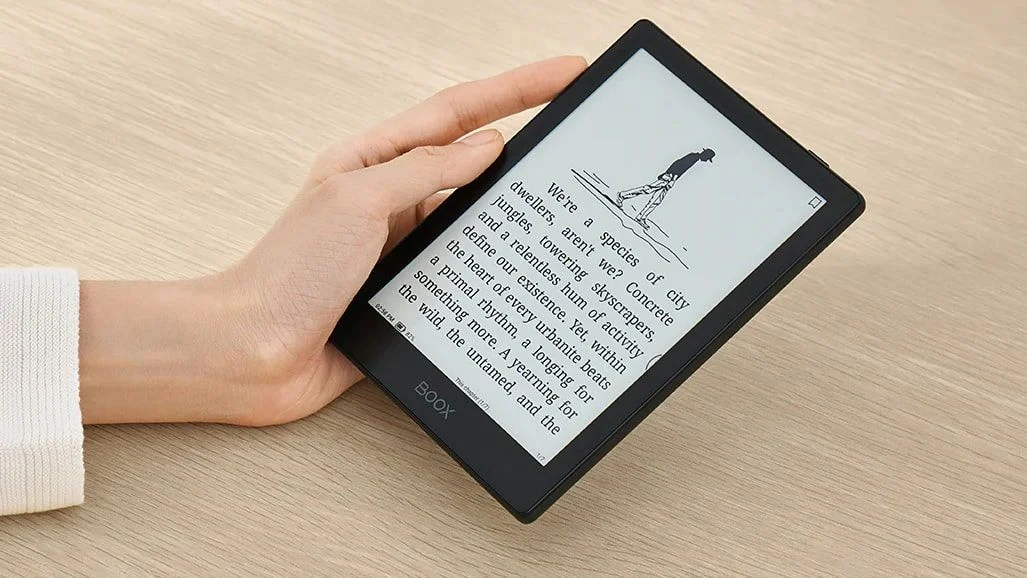
The landscape of digital reading is standing on the precipice of its most significant transformation since the transition from physical paper to E Ink. At the recent Computex industry event, two titans of the technology sector—E Ink, the pioneer of electronic paper technology, and MediaTek, a global leader in semiconductor innovation—announced a deepened strategic partnership. This collaboration aims to redefine the e-reader not merely as a passive consumption device, but as a sophisticated, AI-driven "smart device."
By integrating MediaTek’s cutting-edge System-on-Chips (SoCs) with E Ink’s sophisticated color display technologies, the partnership promises to address long-standing performance bottlenecks while introducing a suite of generative AI features that could fundamentally alter the user experience. However, as the industry pushes toward a more "connected" and "intelligent" reading experience, a philosophical debate is emerging: does the inclusion of AI enhance the act of reading, or does it destroy the very "digital sanctuary" that makes e-readers popular?
Main Facts: A Convergence of Hardware and Intelligence
The core of the announcement centers on the integration of MediaTek’s MT8115 and MT8126 SoCs into the next generation of e-readers. These processors are specifically designed to handle the unique demands of electronic paper—which requires high power efficiency and specialized refresh logic—while packing enough computational "muscle" to run localized artificial intelligence applications.
The AI Feature Set
Unlike cloud-based AI, which requires a constant internet connection and raises privacy concerns, the MediaTek-powered e-readers will focus on "Edge AI"—tasks performed directly on the device. Key features include:
- Real-Time Language Translation: Users reading foreign language texts can receive instantaneous translations without leaving the page.
- Multi-Speaker Voice Recognition: Designed for "e-note" devices, this allows the hardware to distinguish between different voices during meetings, providing accurate, speaker-attributed transcriptions.
- Automated Summarization: The AI can analyze lengthy documents or academic papers, producing concise summaries to help users digest information faster.
- Voice-to-Text Integration: This feature allows for seamless conversion of spoken notes into digital text, ideal for students and professionals.
Display Innovations
Beyond the "brain" of the device, the partnership focuses on the "eyes." The collaboration leverages E Ink Gallery and E Ink Kaleido technologies. The goal is to support displays up to 13.3 inches with a resolution of 300 PPI (pixels per inch). This resolution is widely considered the "gold standard" for digital text, as it matches the crispness of high-quality offset printing.
Chronology: The Road to the Smart E-Reader
To understand the weight of this announcement, one must look at the evolution of the e-reader market over the last two decades.
The Monochrome Era (2007–2019): For over a decade, the e-reader market was dominated by black-and-white displays. Devices like the Amazon Kindle and Kobo focused on "E Ink Carta" technology. The goal was simple: mimic paper and maximize battery life. During this time, MediaTek began establishing itself as a provider of efficient, low-cost chips that powered entry-level tablets and readers.
The Color Revolution (2020–2023): The introduction of E Ink Kaleido marked the first viable consumer-grade color e-paper. While revolutionary, these early color screens often suffered from "ghosting" (remnants of previous pages) and lower refresh rates compared to their monochrome counterparts. E Ink and MediaTek began collaborating more closely during this period to optimize the hardware-software bridge, attempting to make color transitions smoother.
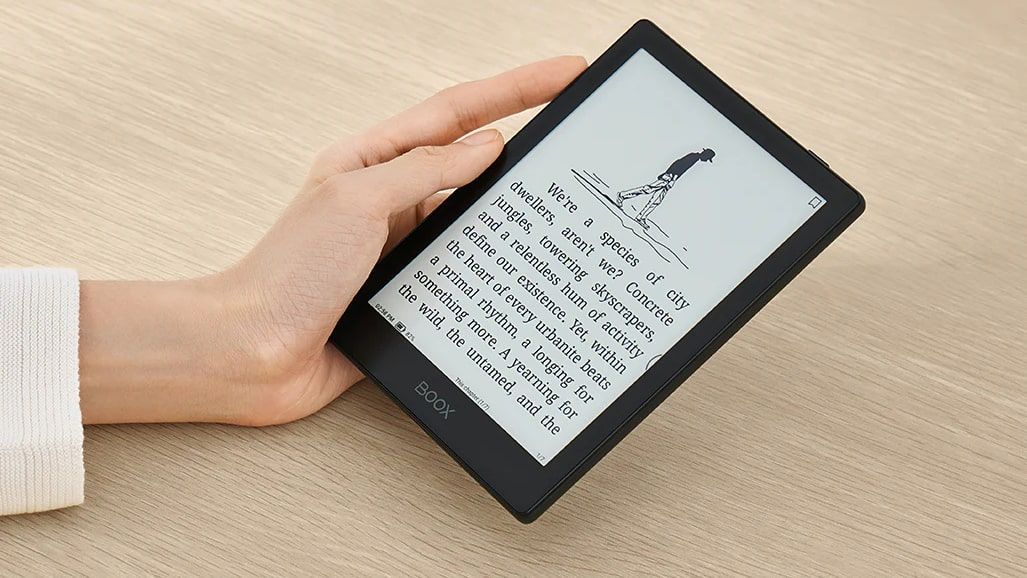
The AI Integration (2024 and Beyond): The latest announcement at Computex represents the third phase of this evolution. We are moving away from the "passive screen" era into the "active device" era. The focus has shifted from simply displaying content to interacting with it, driven by the global surge in generative AI.
Supporting Data: Enhancing the Visual Experience
The technical specifications of the new MediaTek-powered devices aim to solve the two biggest complaints regarding color E Ink: vibrancy and speed.
Color Rendering and PPI
Traditional color E Ink (Kaleido) uses a Color Filter Array (CFA) over a monochrome layer. While effective, it often reduces the effective resolution. The new partnership promises to maintain a 300 PPI density even in color modes for devices up to 13.3 inches. This is a significant leap, as many current color e-readers drop to 150 PPI when displaying color, leading to a "grainy" appearance.
Refresh Rates and Hardware Acceleration
One of the primary roles of the MediaTek MT8115 and MT8126 chips is to manage the "waveform"—the electrical pulses that move the physical ink particles inside the screen. By using dedicated AI logic to predict which pixels need to change, the new chips can significantly reduce full-page refreshes (the "black flash" seen on older Kindles). This results in smoother scrolling and faster page turns, making the devices feel more like modern tablets while retaining the eye-comfort of paper.
Energy Efficiency
Despite the added AI capabilities, the SoCs are built on a low-power architecture. E Ink remains a bi-stable technology, meaning it only consumes power when the image changes. MediaTek’s chips are designed to enter a "deep sleep" state between page turns, ensuring that the "weeks of battery life" synonymous with e-readers are not sacrificed for the sake of intelligence.
Official Responses: The Corporate Vision
Leadership from both organizations expressed a shared vision of transforming the e-reader from a niche hobbyist tool into an essential productivity device.
JM Hung, Vice President of the Business Center at E Ink, emphasized the long-standing nature of their work with MediaTek. "Building on our longstanding partnership with MediaTek, we continue to optimize the ePaper display experience," Hung stated. He noted that the goal is to bring a more "vibrant and seamless" experience to educational and professional sectors.
Adam King, Vice President at MediaTek, highlighted the transformative power of the new silicon. "As generative AI reshapes the industry, we are combining MediaTek’s edge AI compute capabilities with E Ink’s full-color ePaper displays to evolve the digital reader into a true smart device," King said. His comments suggest that MediaTek sees the e-reader market as a vital frontier for "Edge AI," where the benefits of local processing are most apparent.
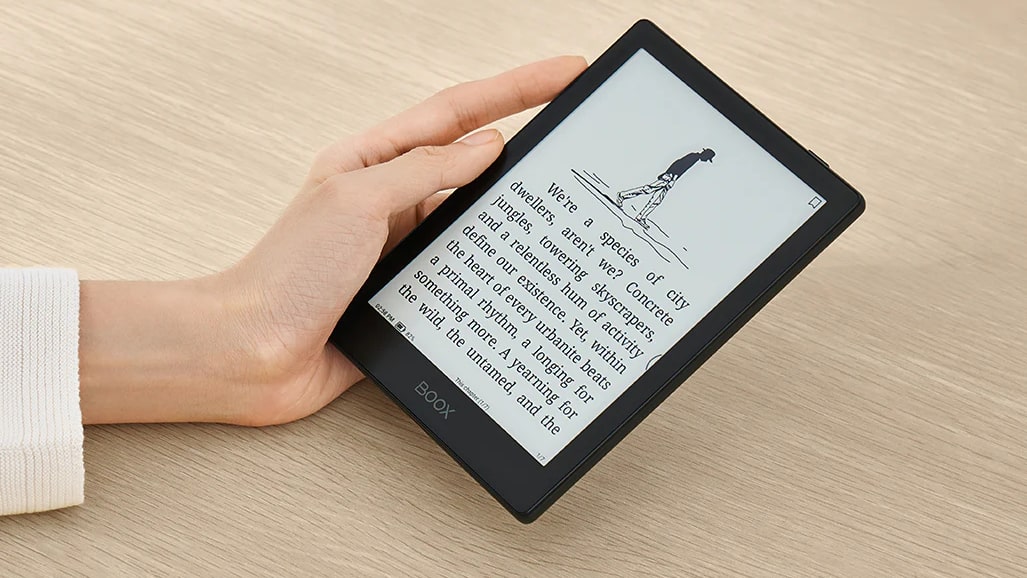
Implications: The Death of the "Digital Sanctuary"?
While the technical achievements are impressive, the move toward AI-integrated e-readers is not without controversy. The announcement has sparked a heated debate within the "bibliophile" community regarding the future of reading.
The Case for AI: Accessibility and Education
For students and researchers, these advancements are a boon. The ability to summarize a 50-page white paper or translate a technical manual in real-time on a screen that doesn’t cause eye strain is a game-changer. It positions the e-reader as a powerful educational tool that could eventually replace heavy, expensive physical textbooks in schools.
The Case Against AI: The Loss of Escapism
For many, the primary appeal of an e-reader is what it cannot do. In an age of constant notifications, social media pings, and algorithmic "noise," the e-reader has served as a digital sanctuary—a place where the user is alone with the text.
Critics argue that by adding AI summaries, voice recognition, and "smart" features, the device becomes just another tablet. There is a fear that "feature creep" will lead to a more distracted reading experience. If a device can summarize a book for you, does the incentive to actually read the prose diminish?
The "Amazon" Factor
The industry is now looking toward Amazon. As the market leader with the Kindle, Amazon has traditionally been conservative with hardware changes, prioritizing battery life and price over "cutting-edge" features. However, with E Ink and MediaTek making these technologies available to other manufacturers (such as Boox, PocketBook, and Bigme), Amazon may be forced to integrate AI into future Kindle Paperwhite or Oasis models to remain competitive.
Conclusion: A New Chapter for E-Paper
The partnership between E Ink and MediaTek signals the end of the "basic" e-reader era. By bridging the gap between the low-power, eye-friendly nature of electronic paper and the high-performance world of artificial intelligence, they are creating a new category of device: the "Intelligent Paper."
Whether this evolution is welcomed by all or shunned by purists, the technological trajectory is clear. The e-readers of 2025 and beyond will be faster, more colorful, and significantly smarter than the devices currently in our hands. As we move forward, the challenge for manufacturers will be to balance these powerful new tools with the simple, quiet joy of reading that made the e-reader a success in the first place.




Leave a Comment