The Dawn of Tabloid Terror: Danny Boyle’s ‘Ink’ Electrifies Opening Night at the 2026 Venice Film Festival
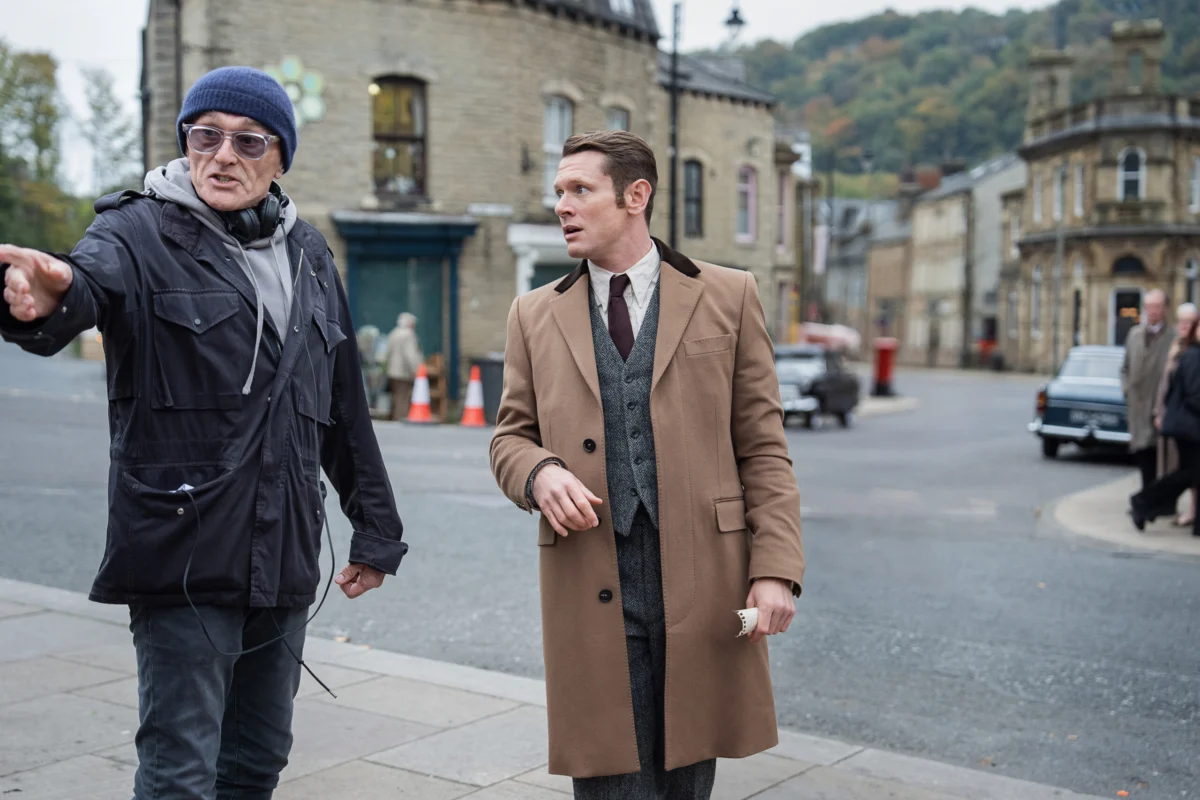
VENICE — As the sun dipped below the Adriatic horizon, casting a golden hue over the Palazzo del Cinema, the 83rd Venice International Film Festival commenced not with a whisper, but with the rhythmic, violent thrum of a printing press. The world premiere of Ink, directed by Academy Award winner Danny Boyle, has officially ignited the 2026 awards season, offering a visceral, high-octane look at the birth of modern tabloid journalism.
Adapted by James Graham from his own 2017 stage play, Ink marks a ferocious return to form for Boyle. Eschewing the polished, Shakespearean boardroom machinations of contemporary media dramas like Succession, Boyle delivers a gritty, soot-stained period piece that chronicles Rupert Murdoch’s 1969 acquisition of The Sun and his subsequent disruption of Fleet Street. The film, produced by Studiocanal and slated for U.S. distribution via Netflix, is already being hailed as a technical marvel and a powerhouse acting showcase, specifically for lead Jack O’Connell.
I. Main Facts: A New Breed of Media Origin Story
Ink is not merely a biopic; it is an autopsy of the moment British culture shifted. The narrative centers on a young, ambitious Rupert Murdoch (played by Guy Pearce) who, in a move widely mocked by the London elite of the late 1960s, purchases a failing broadsheet known as The Sun. To transform the "laughably failing" tabloid into a populist juggernaut, Murdoch recruits Larry Lamb (Jack O’Connell), a former editor at The Daily Mirror with a chip on his shoulder and a radical vision for what the "common man" actually wants to read.
The film meticulously reconstructs the high-stakes environment of Fleet Street, where the traditional "gentleman’s agreement" of journalism was unceremoniously slaughtered in favor of sensationalism, celebrity gossip, and the infamous Page 3. While Pearce provides a chillingly restrained portrayal of Murdoch, the film’s heartbeat is O’Connell’s Lamb. Supported by a stellar ensemble including Claire Foy, Brian Gleeson, and a cohort of character actors playing the ragtag editorial team, the film explores the moral erosion required to build an empire.
Technically, the film is a departure from the "prestige drama" aesthetic. Boyle, reuniting with cinematographer Alwin H. Küchler, utilizes experimental camera techniques—including what Boyle calls "poor man’s bullet time" and 360-degree rotational shots—to mimic the chaotic energy of a newsroom under a deadline.
II. Chronology: From Fleet Street to the Global Stage
The timeline of Ink is tightly wound, focusing on the pivotal months between the acquisition of the paper and its rise to the top of the circulation charts.

1. The Acquisition (1969)
The film opens with Murdoch as an outsider, an Australian "upstart" viewed with suspicion by the British establishment. His purchase of The Sun is framed as a desperate gamble. The early scenes establish the stark contrast between the dusty, stagnant offices of the old guard and Murdoch’s cold, calculated efficiency.
2. The Recruitment of Larry Lamb
The narrative shifts gears when Murdoch meets Larry Lamb. The two form a Faustian pact: Murdoch provides the capital and the ruthlessness, while Lamb provides the editorial "common touch." The mid-section of the film follows the recruitment of a "suicide squad" of journalists—many of whom, like Claire Foy’s character, are disillusioned by the rigid class structures of 1960s London.
3. The Reinvention
The film’s climax revolves around the launch of the "new" Sun. Boyle captures the frenetic energy of the first few weeks of publication, as Lamb pushes the boundaries of taste and privacy. The introduction of more scandalous content leads to a circulation war with The Daily Mirror, culminating in the realization that the world of news has been irrevocably changed.
4. The Moral Aftermath
The final act of the film deals with the personal and societal cost of this victory. As the circulation numbers climb into the millions, the film pauses to reflect on the "excavation of the soul" that Lamb undergoes to achieve Murdoch’s goals.
III. Supporting Data: Technical Artistry and Production Pedigree
Despite its relatively modest budget for a period piece, Ink feels expansive due to its innovative production design and soundscape. Boyle emphasized during the Venice press conference that the limitations of the budget forced the crew to be more creative.
- Cinematography: Alwin H. Küchler employs a "violent" use of the 360-degree camera, creating a sense of vertigo during the most intense editorial debates. This is complemented by the "poor man’s bullet time," a low-budget riff on The Matrix’s iconic visual style, used here to freeze moments of high-tension decision-making.
- Sound Design: The film features a layered, industrial soundscape by Oscar winners Simon Hayes (Sound Mixer) and Johnnie Burn (Sound Editor). Rather than focusing solely on clean dialogue, the audio design incorporates the clatter of typewriters, the roar of printing presses, and the ambient noise of 1970s London to create an immersive, claustrophobic atmosphere.
- Music: Composer Daniel Pemberton provides what Boyle describes as "invisible music." The score hums beneath the surface for much of the runtime, only swelling into a "huge, extraordinary" piece during the film’s epilogue, which serves as a haunting coda to the rise of the Murdoch empire.
- Editing: Fin Oates, the film’s editor, is credited by Boyle for bringing a crucial "female perspective" to a male-dominated story, ensuring that the human cost of the tabloid wars remains front and center.
IV. Official Responses: Insights from the Venice Press Conference
The Venice premiere was accompanied by a candid press conference where the cast and director discussed the challenges of portraying living (or recently living) figures of such polarizing influence.

Danny Boyle on the "Godfather" Inspiration:
Boyle made waves by comparing Jack O’Connell’s performance to Al Pacino in The Godfather Part II. "He’s got that ability to take you into dark places with him," Boyle stated. "I told the production designers to make his office feel like Michael Corleone’s. I wanted that sense of a man slowly losing his humanity as he gains power."
Guy Pearce on the "Stuffy" Murdoch:
Pearce, who recently garnered acclaim for The Brutalist, noted that his Murdoch is intentionally different from the bombastic portrayals seen in recent television. "He’s buttoned-up, he’s stuffy. He’s the businessman who provides the platform for the chaos," Pearce explained. He also shared a surreal anecdote: "Murdoch’s daughter Elizabeth told me, ‘Dad’s very happy that you’re playing him.’ It adds a layer of responsibility—and perhaps a bit of irony—to the performance."
Jack O’Connell on the Ethics of Larry Lamb:
O’Connell, an alum of the British series Skins who has spent years on the verge of A-list superstardom, spoke deeply about the character’s arc. "It was about the cost of what happens when you forfeit morals and standards—somebody’s privacy—just to sell a product. The film looks at the excavation of that on a person. I think it eventually catches up with him."
V. Implications: The Oscar Race and the Legacy of "Ink"
The arrival of Ink has immediately shifted the 2026 Oscar prognostications. While the film faces a crowded field, its impact on the acting and directing categories is undeniable.
The Best Actor Clash
Jack O’Connell enters a Best Actor race that is already being described as a "clash of the titans." He faces stiff competition from:
- Ryan Gosling in the sci-fi epic Project Hail Mary.
- Matt Damon in the historical drama The Odyssey.
- Tom Cruise in the gritty character study Digger.
Interestingly, all three of O’Connell’s primary competitors are industry veterans who have never won an acting Oscar. O’Connell, as the "younger" contender, carries the momentum of a breakout performance that could mirror the career trajectories of his Skins co-stars Dev Patel and Daniel Kaluuya.

Supporting and Directing Prospects
Guy Pearce is a formidable contender for Best Supporting Actor, though some analysts suggest his momentum might be split between Ink and the "afterglow" of The Brutalist. Claire Foy, despite another "value-add" performance, may face the same "overlooked" fate she met with Women Talking and All of Us Strangers, as her role in Ink is somewhat secondary to the Murdoch-Lamb dynamic.
For Boyle, Ink represents a "return to form" that the Academy—often averse to the horror elements of his recent work like 28 Years Later—is likely to embrace. It is a film about the power of the image and the word, themes that traditionally resonate with Oscar voters.
Cultural Significance
Ultimately, Ink serves as a celebration of division. As Boyle concluded in Venice, the film is "hugely entertaining about a controversial subject." In an era of "fake news" and social media echo chambers, Ink reminds audiences that the war for the public’s attention didn’t start with an algorithm—it started with ink, paper, and a man willing to give the people exactly what they wanted, no matter the cost.
While Ink may not be the "automatic" Best Picture frontrunner in a year dominated by big-budget spectacles, its visceral energy and timely subject matter ensure it will remain at the center of the cinematic conversation well into the new year. As the Venice Film Festival continues, Boyle’s latest has set a high bar for everything that follows.