Taking Flight in Paradise: The Launch of Lou’s Lagoon and the Evolution of the Cozy Exploration Genre
The indie gaming landscape has undergone a seismic shift over the last five years, moving away from high-stress, competitive environments toward what has been affectionately dubbed "cozy gaming." Within this flourishing niche, a new title has emerged to capture the imagination of players seeking both tranquility and purpose. Lou’s Lagoon, an open-world adventure that blends seaplane aviation with environmental restoration and mystery-solving, has officially transitioned from a highly anticipated Gamescom demo to a full release on Steam.
Developed with an eye for vibrant aesthetics and low-stress gameplay loops, Lou’s Lagoon invites players into a tropical archipelago reeling from the aftermath of a devastating storm. As players navigate the azure waters and lush islands, they are tasked with more than just sightseeing; they must rebuild a community, manage resources, and solve the unsettling disappearance of the titular character, Uncle Lou.
Main Facts: The Core of Lou’s Lagoon
At its heart, Lou’s Lagoon is a multi-genre hybrid. It successfully integrates flight simulation, resource management, crafting, and social simulation into a cohesive package. The game’s premise is straightforward yet engaging: players inherit a seaplane and a legacy of island stewardship from their Uncle Lou, who has mysteriously vanished following a massive tropical storm.
The primary gameplay loop revolves around three pillars:
- Aviation Exploration: Navigating a customizable seaplane across a vast, open-world archipelago.
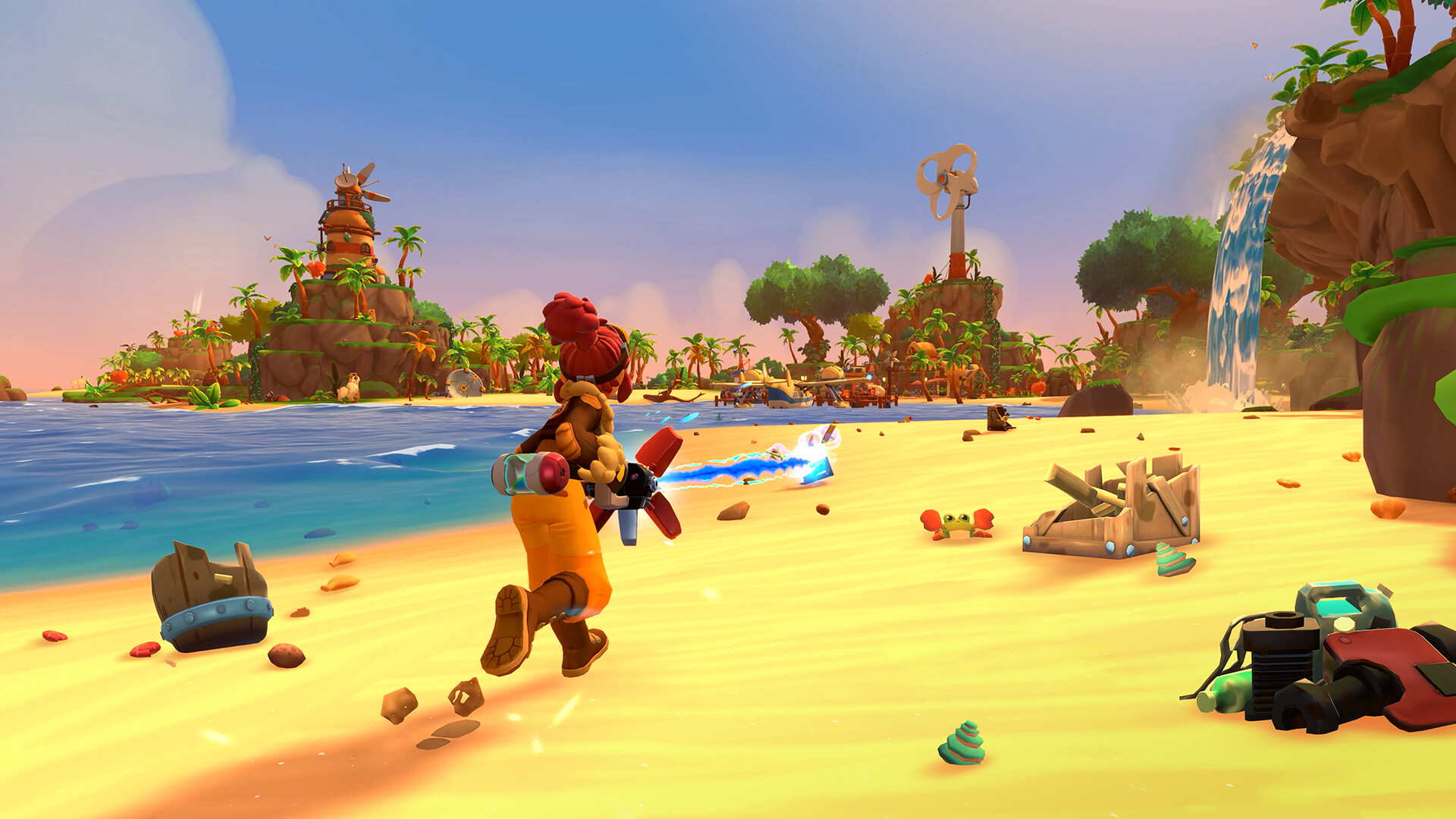
- Environmental Restoration: Using specialized tools to clear storm debris and "suck up" trash to reclaim the natural beauty of the islands.
- Community Rebuilding: Utilizing collected resources to repair infrastructure, assist non-player characters (NPCs), and construct a personalized home base.
The game distinguishes itself by removing the "combat" element often found in open-world adventures. There are no enemies to defeat in the traditional sense; instead, the "antagonist" is the chaos left behind by the storm and the ticking clock of the central mystery.
Chronology: From Gamescom Sensation to Steam Release
The journey of Lou’s Lagoon to the public eye began in earnest during the global gaming circuit, most notably at Gamescom. During the event, early builds of the game were showcased to critics and enthusiasts, garnering praise for its fluid flight mechanics and its "clean-up" mechanic, which many compared to the satisfying, meditative qualities of titles like PowerWash Simulator.
Following the positive reception at Gamescom, the development team entered a period of refinement. Feedback from the demo indicated a strong desire for deeper customization and more varied island biomes. The developers spent the subsequent months expanding the crafting trees and ensuring that each island in the lagoon felt distinct, both in terms of geography and the specific needs of its inhabitants.
In late 2024, the game reached its "Gold" status, leading to its official launch on the Steam platform. The transition from demo to full release saw the addition of the "Uncle Lou Mystery" narrative arc, which provides a structured endgame for players who desire a story-driven experience alongside the sandbox exploration.
Supporting Data: Mechanics and World-Building
To understand the appeal of Lou’s Lagoon, one must look at the data-driven design of its mechanics. The game utilizes a sophisticated flight model that is accessible enough for casual players but offers enough depth for those who enjoy the nuances of takeoff and landing on water.
The Seaplane as a Character
The seaplane is not merely a vehicle; it is the player’s primary tool and mobile base. It can be upgraded with better fuel efficiency, larger cargo holds, and cosmetic enhancements. The ability to engage in "little races" between islands serves as a skill-based mini-game that rewards players with rare blueprints and currency, encouraging mastery of the flight controls.
The Restoration Economy
The game’s economy is built on a "circular" model. Unlike games where resources are simply harvested from nature, Lou’s Lagoon emphasizes recycling.
- Debris Collection: The storm has scattered various types of trash—plastics, metals, and broken wood—across the islands.
- Processing: Using Uncle Lou’s specialized equipment, players "suck up" this trash.
- Crafting: These raw materials are then processed into building blocks for repair projects. This mechanic serves a dual purpose: it provides a satisfying "cleaning" gameplay loop and reinforces an underlying message of environmental stewardship.
Social and Personal Progression
The archipelago is populated by a diverse cast of NPCs, ranging from stranded tourists to local shopkeepers. Helping these characters—finding separated children or repairing a broken lighthouse—increases the player’s "Reputation Level." High reputation unlocks new islands and more complex crafting recipes. Furthermore, the "Beach Hut" system allows players to invest their hard-earned resources into a permanent residence, offering a high degree of interior and exterior decoration.
Official Responses: Creative Vision and Player Feedback
The developers of Lou’s Lagoon have been vocal about their desire to create a "non-violent sanctuary." In official statements following the Steam launch, the creative lead noted that the goal was to capture the feeling of a "working vacation."
"We wanted to create a world where the player feels productive but never pressured," the studio stated. "The disappearance of Uncle Lou provides the ‘why’ for the adventure, but the islands themselves provide the ‘how.’ We saw at Gamescom that players enjoyed the simple act of landing the plane and clearing a beach. We leaned into that satisfaction."
Player feedback upon the Steam release has highlighted the game’s "Tactile TLC" (Tender Loving Care) mechanics. Early reviews frequently mention the "zen-like" quality of the game’s sound design—the hum of the engine, the splashing of waves, and the satisfying ‘pop’ of debris being collected. While some players initially expressed concern that the game might lack challenge, the consensus has shifted to appreciate the "internal challenge" of organizing and optimizing one’s own restoration efforts.
Implications: Redefining the Open-World Adventure
The success and release of Lou’s Lagoon have broader implications for the indie gaming industry and the "Wholesome Games" movement.
The Rise of "Cleanup" Gameplay
Lou’s Lagoon reinforces a growing trend where "work-based" tasks are transformed into recreational play. By gamifying the act of cleaning up a storm-damaged environment, the game taps into a psychological desire for order and restoration. This suggests that future open-world games may move away from traditional "fetch quests" in favor of "restoration quests" that have a visible, permanent impact on the game world.
Environmental Consciousness in Gaming
While Lou’s Lagoon is primarily an entertainment product, its focus on cleaning up trash and rebuilding communities carries an inadvertent environmental message. It positions the player as a healer of the ecosystem rather than an exploiter of it. As climate-related themes become more prevalent in global discourse, games that allow players to engage with these themes in a hopeful, proactive way are likely to see increased demand.
The "Cozy" Market Expansion
The transition of a game like Lou’s Lagoon from a niche Gamescom demo to a mainstream Steam release proves that there is a significant market for high-production-value cozy games. No longer relegated to simple 2D farming sims, the genre is expanding into 3D open-world exploration with sophisticated physics and narrative depth. This evolution will likely encourage larger studios to look toward "low-stress" mechanics when designing their own titles.
Conclusion: A Bright Future for the Lagoon
Lou’s Lagoon stands as a testament to the power of atmospheric storytelling and mechanical satisfaction. By combining the thrill of flight with the quiet joy of rebuilding, it offers a unique escape for players overwhelmed by the frantic pace of modern gaming.
As players continue to flock to the archipelago to search for Uncle Lou and restore the islands to their former glory, the game’s presence on Steam marks a milestone for its developers. It is more than just a game about a seaplane; it is a vibrant, colorful reminder that even after the most massive storms, there is always a way to rebuild, one piece of trash at a time. Whether you are in it for the aviation, the mystery, or the simple pleasure of building a beach hut, Lou’s Lagoon provides a tropical horizon well worth exploring.