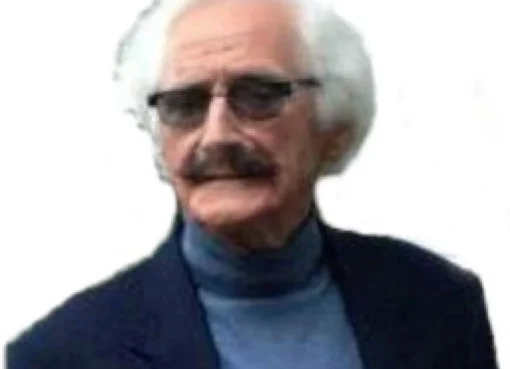
The Unseen Compass: Exploring the Metaphysical Dimensions of Purpose and Human Spirit

A retired philosophy and psychology professor’s chance encounter in a local coffee shop ignites a profound discussion on the nature of purpose, the limits of sensory perception, and the enduring power of the human spirit.
Introduction: A Serendipitous Encounter and a Lingering Question
It began, as many profound insights often do, with the mundane. A routine car service, a familiar local coffee shop, and the comforting ritual of a cappuccino. For Professor Emeritus Alistair Finch, a retired academic whose career spanned the intricate landscapes of philosophy and psychology, these interludes were often more than just a break; they were fertile ground for observation and, occasionally, unexpected intellectual engagement. On this particular day, the usual backdrop of quiet contemplation was disrupted by the arrival of two university students. As is often the case when his academic background is revealed, the inevitable questions began to surface. This time, however, the inquiry wasn’t about grades or career paths, but about something far more elemental: purpose.
The Elusive Nature of Purpose: A Historical and Contemporary Perspective
Professor Finch, accustomed to grappling with life’s grand questions, found himself articulating the inherent difficulty in defining purpose, both for individuals and for larger entities like nations. He acknowledged the stark historical reality: a persistent legacy of conflict and division, where "nations, as well as individuals, have been fighting and killing each other off throughout history." The observation was a sober reminder that the aspiration for "benevolent and spiritually tolerant attitudes" remains a distant ideal, a goal far from fully realized in the complex tapestry of human interaction.
Yet, amidst this sobering assessment, Professor Finch highlighted a counter-narrative, a testament to the enduring capacity for good within humanity. He pointed to the proliferation of charitable organizations worldwide, dedicated to alleviating the suffering of the less fortunate. The example of Doctors Without Borders (Médecins Sans Frontières) served as a powerful illustration. He painted a vivid picture of doctors and nurses operating in "some of the most dangerous places in the world," risking their lives and careers, driven by an innate compassion and the "altruistic need to act." These individuals, he emphasized, embody a profound commitment, venturing into "distant and dangerous locations" propelled by "the greatest of all moral persuasions, that internal force known as the human spirit." This spirit, he suggested, transcends mere self-preservation, embodying a deep-seated drive to serve and alleviate suffering, a force that can inspire extraordinary acts of courage and dedication.
Unpacking "Metaphysical": Beyond the Realm of the Senses
It was at this juncture of the conversation that Professor Finch introduced a term that proved to be a significant point of divergence in understanding: "metaphysical." He noted with a touch of intellectual curiosity that only one of the two students grasped its meaning. This term, he explained, signifies a "level of awareness in human consciousness that goes beyond the world of appearances; beyond the workings of the five senses."
This definition immediately shifts the focus from the observable and empirical to the intangible and abstract. Metaphysical awareness, Professor Finch elaborated, is not a passive state but an active, internal process. It is characterized by a "silent dialogue constantly asking questions raised by one’s always questing imagination." This internal discourse probes the "how and why of the psychological complexity of one’s self," driven by what has historically been described as "spirit, the human spirit." This concept of an inner, driving force, distinct from purely rational or sensory input, is central to understanding the metaphysical dimension of human experience.
Aristotle’s Legacy: The Genesis of Metaphysics
To further illuminate this concept, Professor Finch drew upon the intellectual legacy of the ancient Greek philosopher and scientist, Aristotle. He explained that it was Aristotle who first coined the term "metaphysical" to describe this abstract realm of mental activity. The etymology of the word itself, "meta" signifying "beyond" or "after," introduces the concept of a domain that transcends the physical and material. This intellectual framework allows for the exploration of "mind, a level of awareness, thoughts, ideas, feelings, hunches, and ruminations." These are not merely random occurrences but are seen as manifestations of an "intuitive range of consciousness," which Professor Finch posited as being "inspirational, serving the forces of spirit, which are working at the instigation of a soul, no less." This intricate interplay between the intuitive, the spiritual, and the soul suggests a multifaceted understanding of consciousness that extends beyond the readily quantifiable.
The Duality of Consciousness: Bridging the Rational and the Spiritual
Professor Finch then presented a compelling model of human consciousness, positing a fundamental duality. He described this as comprising "the outwardly directed rational and sensory brain, together with the inwardly directed intuitive and spiritual brain." This framework suggests that our awareness is a sophisticated partnership, a synthesis of two distinct but interconnected modes of processing information and experiencing the world. The rational, sensory brain engages with the external environment, processing data through our five senses and employing logic and reason. In contrast, the intuitive and spiritual brain operates on a deeper, more internalized level, drawing upon hunches, insights, and a sense of interconnectedness. Together, these two aspects form "the mental partnership we call mind," a holistic entity capable of both empirical understanding and profound, often inexplicable, intuition.
A Gap in Awareness: The Unexplored Inner Landscape
Despite the professor’s attempt to articulate these complex ideas, the students’ reaction underscored a perceived disconnect. When Professor Finch posed a seemingly simple yet profound question – "if they ever pondered the unique nature of their own personalities" – he was met with "a couple of blank looks." This response was a poignant indicator of a potential deficit in their intellectual upbringing or societal emphasis, a lack of focus on introspection and the exploration of their inner lives. The external world, with its immediate demands and tangible rewards, seemed to have overshadowed the exploration of their internal landscapes, the very essence of their unique selves.
The Neuroscientific Perspective: Mind as a Metaphysical Entity
As the coffee grew cold and the time for departure neared, Professor Finch sought to leave his young companions with a lasting thought, a bridge between his philosophical musings and the empirical world of science. He invoked the words of the late Wilder Penfield, a celebrated Canadian neuroscientist and brain surgeon. Penfield, renowned for his groundbreaking work on the human brain, famously described mind as a "non-temporal, non-spatial entity." This definition, Professor Finch emphasized, directly aligns with the metaphysical concept, suggesting that the essence of mind transcends the physical constraints of time and space, existing in a realm beyond empirical measurement. This endorsement from a leading figure in neuroscience lends significant weight to the idea that aspects of human consciousness operate beyond the strictly material, further solidifying the relevance of metaphysical inquiry.
Implications and the Path Forward
The encounter, though brief, raises significant questions about the current state of education and societal values. In an era increasingly dominated by technology and empirical data, the exploration of metaphysical concepts, the cultivation of intuition, and the understanding of the human spirit often take a backseat. The blank looks from the students serve as a subtle but powerful reminder that fostering a deeper understanding of ourselves and our place in the universe requires a conscious effort to look beyond the superficial.
The continued work of organizations like Doctors Without Borders underscores the inherent altruism and spirit that drive many to act for the betterment of humanity, often at great personal cost. These actions, Professor Finch implies, are not solely driven by rational calculation but by a deeper, perhaps even spiritual, imperative.
The challenge, then, is to cultivate a more balanced approach to learning and living. This involves not only equipping individuals with the knowledge and skills to navigate the external world but also nurturing their capacity for introspection, imagination, and the understanding of their inner lives. By bridging the gap between the rational and the intuitive, the empirical and the metaphysical, we can foster a more complete and profound understanding of what it means to be human, and perhaps, to more effectively pursue a purpose that resonates with both our individual selves and the collective well-being of humanity. The quest for purpose, it seems, is not solely an intellectual exercise but a journey into the very heart of our metaphysical existence.