Spatial Puzzling Reimagined: Squingle Arcade Expands to SteamVR

The landscape of virtual reality (VR) puzzle games has shifted toward a more kinetic, high-octane experience with the official SteamVR launch of Squingle Arcade. Developed by the award-winning Dr. Benjamin Outram, Squingle Arcade represents the competitive, quickplay evolution of the original Squingle, a title that earned critical acclaim for its "fluid-maze" mechanics and psychedelic aesthetic. Following a successful debut on the Meta Quest platform earlier this year, the SteamVR release brings the game’s unique blend of spatial navigation and rhythmic gameplay to the high-fidelity PCVR market.
Main Facts: A Free-to-Play Revolution in Fluid Mazes
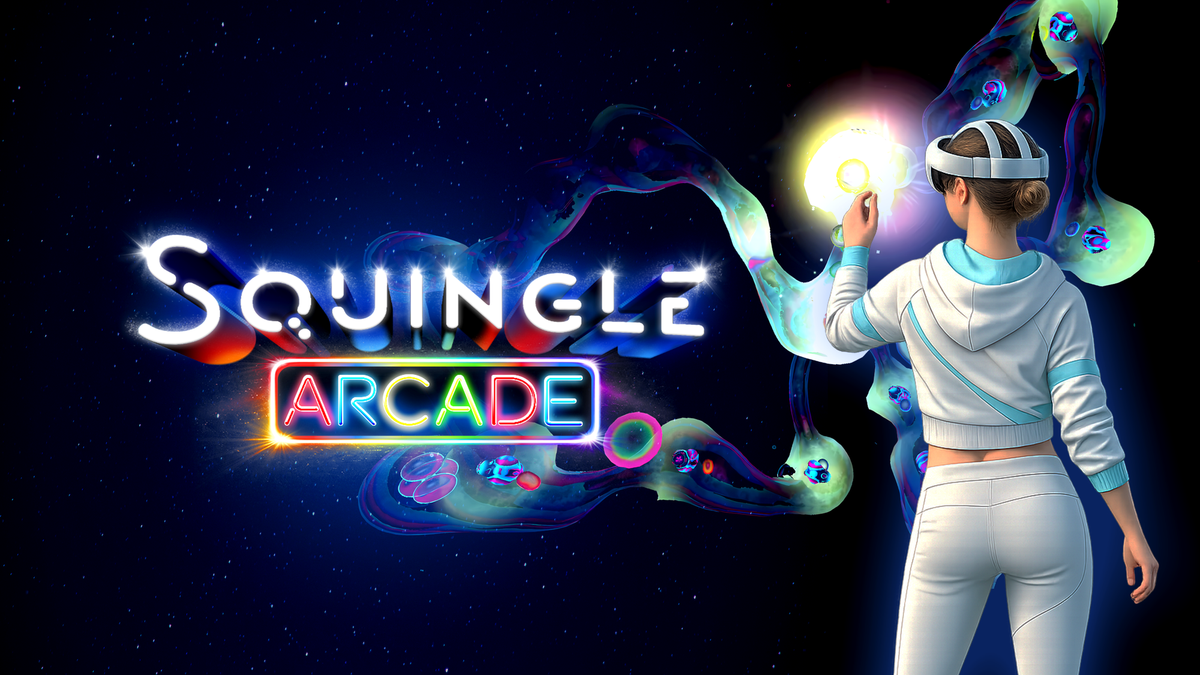
Squingle Arcade is not merely a port of its predecessor but a fundamental reimagining of the core gameplay loop. While the original Squingle focused on a more meditative, atmospheric exploration of its organic environments, Arcade is built for speed, precision, and social competition. Available now for free, the title leverages the immersive capabilities of VR to turn maze navigation into a physical, full-body experience.
At its core, the game tasks players with guiding a pair of glowing, revolving orbs through complex, translucent, gel-like structures. These mazes are not static; they are amorphous, organic, and often hazardous. To succeed, players must collect color pods and navigate narrow passages while avoiding "enemies" and environmental traps that threaten to destabilize the orbs. The game’s transition to SteamVR ensures that PC-based enthusiasts can now experience these visuals with the increased graphical overhead and tracking precision afforded by high-end hardware.
The SteamVR version arrives with over sixty distinct levels, ranging from introductory paths to "master-level" gauntlets that require extreme dexterity. Furthermore, the developer has confirmed that the ecosystem is expanding immediately, with a free DLC pack containing twenty additional levels currently in the final stages of development.
Chronology: From Experimental Art to Competitive Arcade
The journey of Squingle began as an exploration of the intersection between mathematics, biology, and digital art. Dr. Benjamin Outram, a researcher and developer known for his work in "transcendent" digital experiences, released the original Squingle to critical praise, winning awards for its innovative use of VR to simulate organic, fluid movement.
The Quest Launch (Early 2024):
Recognizing a demand for more accessible, "snackable" VR content, Outram developed Squingle Arcade. It launched first on the Meta Quest Store, utilizing the standalone headset’s ease of use to attract a broad player base. The transition to an "Arcade" format involved stripping away the slower narrative elements in favor of a leaderboard-centric model.
The Competitive Shift:
Throughout the first half of 2024, the Quest community embraced the game’s asynchronous multiplayer features. The introduction of "ghost racing"—where players compete against the recorded paths of their friends or world-record holders—turned a solo puzzling experience into a global competition.
The SteamVR Expansion (September 2024):
The release on SteamVR marks the final step in making Squingle Arcade a cross-platform staple. By moving to Steam, the game taps into the enthusiast PCVR market, allowing for potentially higher resolution textures, more stable frame rates on high-refresh-rate headsets (like the Valve Index), and a wider variety of controller configurations.
Supporting Data: Mechanics, Scalability, and Economy
What distinguishes Squingle Arcade from traditional 2D maze games is its sophisticated use of spatial volume. The game employs several technical features that define its "Supporting Data" profile:
1. The Scalable Maze Mechanic
Perhaps the most innovative technical feature is the "Scalable Maze." Unlike traditional VR games that tether the player to a fixed scale, Squingle Arcade allows users to grab the corners of the digital universe and resize the entire maze.
- Room-Scale Mode: Players can expand the maze to fill their entire physical play area. In this mode, the game becomes a physical workout, requiring the player to walk, duck, and lunge to guide the orb through 3D space.
- Desk-Scale Mode: Conversely, the maze can be shrunk to the size of a tabletop puzzle, allowing for a more relaxed, seated experience where navigation is handled via subtle wrist movements.
2. Asynchronous Multiplayer and Ghost Racing
To maintain a high level of engagement without the latency issues of real-time VR networking, Squingle Arcade utilizes a robust "Ghost" system. Every run on the leaderboard is recorded as a spatial path. When a player enters a level, they can choose to see the "ghost" of a rival. This creates a tangible sense of competition, as players can physically see where their opponents took a tighter turn or managed to bypass a hazard more efficiently.
3. The Star Orb Economy
The game employs a non-predatory free-to-play model. By completing mazes and achieving high scores, players earn "Star Orbs." This in-game currency serves multiple purposes:
- Performance Boosts: Players can spend orbs for "Extra Energy" or "Extended Time" to survive particularly difficult sections of a level.
- Customization: Star Orbs unlock various skins for the player’s orbs and the maze structures, allowing for a personalized visual experience.
Official Responses: The Developer’s Vision
Dr. Benjamin Outram has been vocal about the philosophy behind Squingle Arcade. In statements accompanying the SteamVR launch, Outram emphasized that the goal was to create a game that felt "alive."
"The fluid-maze mechanic was always about more than just getting from point A to point B," Outram noted during the development cycle. "It’s about the tactile sensation of moving through a digital liquid. With the Arcade version, we wanted to see how that sensation held up under the pressure of a timer and a leaderboard."
Regarding the upcoming free DLC, the developer expressed a commitment to the community: "We have over twenty new levels in the pipeline. These levels take the feedback we’ve received from the Quest community—specifically the request for more complex, multi-layered hazards—and bring them to life. We want Squingle Arcade to be a living platform that grows with its players."
Industry analysts have noted that Outram’s approach to the SteamVR launch—offering the game for free while maintaining high production values—is a strategic move to build a massive user base before potentially expanding into paid expansions or premium cosmetic content.
Implications: The Future of Spatial Puzzling
The arrival of Squingle Arcade on SteamVR carries several broader implications for the VR industry and the puzzle genre at large.
1. The "Arcade-ification" of VR
We are seeing a trend where successful, deep VR titles are being distilled into "Arcade" versions. This mirrors the early days of mobile gaming, where complex PC IPs were adapted into bite-sized experiences. Squingle Arcade proves that the core physics and "feel" of a premium game can be successfully translated into a free-to-play, competitive format without losing the soul of the original work.
2. Accessibility and Physicality
By offering a scalable play space, Squingle Arcade addresses one of VR’s biggest hurdles: varying user environments. The ability to switch between a high-intensity "walking" puzzle and a seated "desk" puzzle makes the game accessible to users with limited mobility or small living spaces. This "universal design" philosophy is likely to become a standard for spatial applications moving forward.
3. The Viability of Free-to-Play on SteamVR
While the Meta Quest store has a robust ecosystem for free-to-play titles, SteamVR has traditionally been dominated by premium, one-time-purchase games. Squingle Arcade’s success on Steam will serve as a litmus test for whether the "asynchronous competitive" model can thrive on PCVR. If successful, it may encourage other indie developers to adopt similar models, lowering the barrier to entry for new VR users.
4. Visual and Auditory Synergy
The "fluid" nature of the game is not just a gameplay mechanic but a sensory one. The game utilizes spatial audio and haptic feedback to tell the player how "thick" the gel is or how close they are to an edge. This level of sensory integration represents the "gold standard" for VR puzzling, moving away from abstract buttons and toward intuitive, physics-based interactions.
Conclusion
Squingle Arcade is a testament to the evolving maturity of the VR puzzle genre. By combining the psychedelic, organic beauty of the original Squingle with a modern, competitive framework, Dr. Benjamin Outram has created a title that is as demanding as it is beautiful. Its expansion to SteamVR ensures that the "fluid-maze" phenomenon will continue to grow, challenging players to rethink how they navigate three-dimensional space. With free DLC on the horizon and a burgeoning global leaderboard, the "Squingle" journey is only just beginning.