The Seven-Year Ascent: Tesla Signals "Launch" for the Radical Redesign of the Second-Generation Roadster
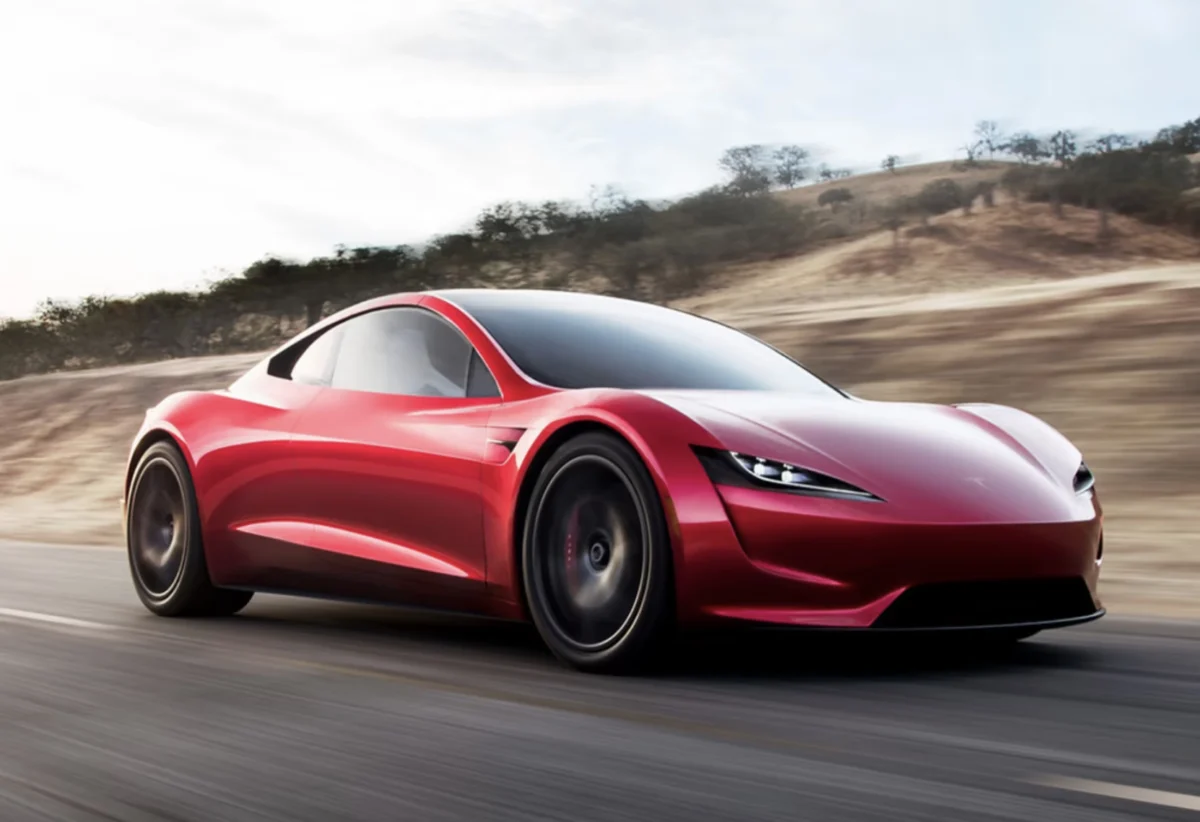
PALO ALTO, CA — In a move that has reignited the fervor of the electric vehicle community and skeptical investors alike, Tesla has officially signaled the impending reveal of its long-delayed second-generation Roadster. After nearly a decade of anticipation, broken deadlines, and radical engineering pivots, the company’s latest communication suggests that the "halo car" intended to deliver a definitive blow to gasoline-powered supercars is finally ready for its second act.
On Saturday, September 12, 2026, Tesla’s official account on X (formerly Twitter) posted a cryptic yet definitive message: “Go for launch.” Accompanying the text was a high-resolution graphic featuring the date “10.01”—October 1, 2026—and visual motifs that strongly suggest the integration of aerospace technology. This announcement marks what many hope will be the final chapter in one of the most protracted development cycles in automotive history.
Main Facts: A New Paradigm for the Electric Supercar
The upcoming October 1 event is expected to be more than a mere production update. According to internal sources and recent reports, the Roadster that will take the stage is fundamentally different from the prototype first unveiled in Hawthorne, California, in 2017.
The primary highlights of the "Launch" announcement include:
- The SpaceX Package: The teaser graphic heavily implies the inclusion of cold gas thrusters. Developed in collaboration with Elon Musk’s aerospace firm, SpaceX, these optional thrusters are designed to improve cornering, braking, and—most controversially—acceleration.
- Radical Redesign: Following a report from The Information, it appears Tesla abandoned the 2017 design entirely. The new iteration is rumored to be a "radical" departure, potentially incorporating "flying" capabilities or short-burst levitation through high-pressure air systems.
- Performance Benchmarks: While the 2017 specs were already industry-leading (0–60 mph in 1.9 seconds), Musk has recently hinted at a sub-one-second 0–60 mph time for the production version, a feat that would require physics-defying traction or external propulsion.
- Production Timeline: Despite the October reveal, Musk has cautioned that production will not commence immediately, estimating a further 12 to 18 months before the first units reach reservation holders.
Chronology: From Surprise Reveal to "Vaporware" Allegations
The journey of the second-generation Roadster is a study in Tesla’s "move fast and break things" philosophy, often resulting in spectacular reveals followed by years of silence.
2017: The Shock Unveiling
In November 2017, during the reveal of the Tesla Semi, Elon Musk famously drove a red Roadster prototype out of the back of a trailer. He promised a 200 kWh battery pack, a 620-mile range, and a top speed exceeding 250 mph. Reservations were opened immediately, with the "Founders Series" requiring a full $250,000 payment upfront.
2020–2023: The Era of Delays
Originally slated for a 2020 release, the Roadster was repeatedly sidelined. Tesla prioritized the Model 3 ramp-up, the construction of Giga Berlin and Giga Texas, and the development of the Cybertruck. Year after year, the Roadster’s production date was pushed back, leading critics to label the vehicle "vaporware."
2024: The Altman Incident
The frustration of high-profile reservation holders reached a boiling point in late 2024. OpenAI CEO Sam Altman publicly commented on the seven-and-a-half-year wait for a car he had placed a $50,000 deposit on. This sparked a public spat with Musk, who claimed Altman had been refunded, highlighting the tension between Tesla and its earliest, most loyal backers.
2025: The Great Reset
By late 2025, reports began to surface that the engineering team had hit a wall with the original design. The 2017 prototype, while impressive, was no longer the "quantum leap" Tesla desired in a market now populated by the Rimac Nevera and the McMurtry Spéirling. Tesla leadership reportedly made the decision to scrap the existing architecture in favor of a "SpaceX-collaboration" model that integrated compressed air tanks into the chassis.
Supporting Data: The Physics of "Flight" and Performance
To understand why the Roadster has taken nearly a decade to reach the "launch" phase, one must look at the extreme engineering targets Tesla has set.
The SpaceX Thruster System
The "SpaceX Package" involves replacing the rear seats with a composite overwrapped pressure vessel (COPV)—similar to those used on Falcon 9 rockets. This tank stores ultra-high-pressure air, which is then vented through roughly ten small rocket thrusters arranged around the car.

- Acceleration: By using thrusters to push the car down (increasing downforce) or directly forward, Tesla aims to overcome the "traction limit" of rubber tires.
- Weight Penalty: The trade-off is significant weight. A 200 kWh battery alone weighs nearly 2,000 lbs. Adding a COPV system and plumbing adds further complexity and mass, necessitating a complete rethink of carbon-fiber structural integrity.
Market Context (2026)
When the Roadster was announced in 2017, its 1.9-second 0–60 mph time was unheard of. Today, the landscape has changed:
- Rimac Nevera: Already holds multiple world records with a 1.74-second 0–60 mph.
- Lucid Air Sapphire: Delivers luxury sedan comfort with a 1.89-second 0–60 mph.
- McMurtry Spéirling: Uses fan-assisted downforce to achieve 0–60 mph in 1.4 seconds.
To maintain its brand as the leader in EV innovation, Tesla’s new Roadster must not just match these figures but exceed them by a margin that justifies its "flying" moniker.
Official Responses: Tesla’s Strategic Silence and Musk’s Teases
Tesla’s official stance has remained characteristically lean. The company, which famously dissolved its PR department years ago, relies on its quarterly earnings calls and Musk’s social media presence for communication.
In the Q2 2026 earnings call, Musk was asked about the Roadster’s contribution to the bottom line. He responded, "The Roadster is the icing on the cake. It’s not going to be a high-volume car, but it will be the most spectacular demonstration of what is possible with electric propulsion and aerospace integration. It’s about the ‘halo’ effect."
Regarding the redesign, Tesla’s engineering lead, Lars Moravy, previously noted that "every delay allowed us to integrate newer battery chemistry and motor cooling tech that simply didn’t exist in 2017." However, the company has not officially commented on the "flight" capabilities beyond Musk’s assertions that the car could "hop" or "hover" for short durations using the thruster system.
Implications: Brand Equity and the Future of the Hypercar
The October 1 reveal carries significant weight for Tesla’s broader market valuation and brand prestige.
Restoring Credibility
After years of Cybertruck delays and the polarizing reception of its design, Tesla needs a "win" that is universally recognized as an engineering triumph. Delivering a car that literally uses rocket technology would silence critics who argue that Tesla has lost its innovative edge to Chinese competitors like BYD or Xiaomi.
Regulatory and Safety Hurdles
A car equipped with high-pressure gas thrusters presents a nightmare for regulators. The National Highway Traffic Safety Administration (NHTSA) has no existing framework for "propulsion-assisted" road vehicles. Issues regarding noise pollution, pedestrian safety (hot or high-pressure air discharge), and the potential for the vehicle to become airborne (intentionally or accidentally) will likely delay the actual road-legal certification of the SpaceX package.
The "Halo Effect" vs. Mass Market
While the Roadster will likely retail for over $200,000, its primary purpose is to drive interest in the Model 3, Model Y, and the upcoming "Model 2" mass-market vehicle. By positioning the Roadster as a "flying" supercar, Tesla reinforces its identity as a technology company rather than just a car manufacturer.
Conclusion: A High-Stakes October
As October 1 approaches, the automotive world remains skeptical but intrigued. The "Go for launch" teaser suggests a level of confidence not seen from Tesla since the early days of the Model S. Whether the Roadster will truly "fly" or simply set a new standard for terrestrial speed remains to be seen. However, one thing is certain: after nine years of waiting, the world is finally ready to see if Elon Musk can deliver on his most ambitious automotive promise yet.
Tesla’s stock (TSLA) saw a 2.4% uptick following the X post, indicating that despite the history of delays, the market still bets on the "Musk Factor" to deliver a spectacle. On October 1, the world will find out if the second-generation Roadster is a moonshot or a missed opportunity.