Fair is Fair: The Resilient Legacy of ‘The Legend of Billie Jean’
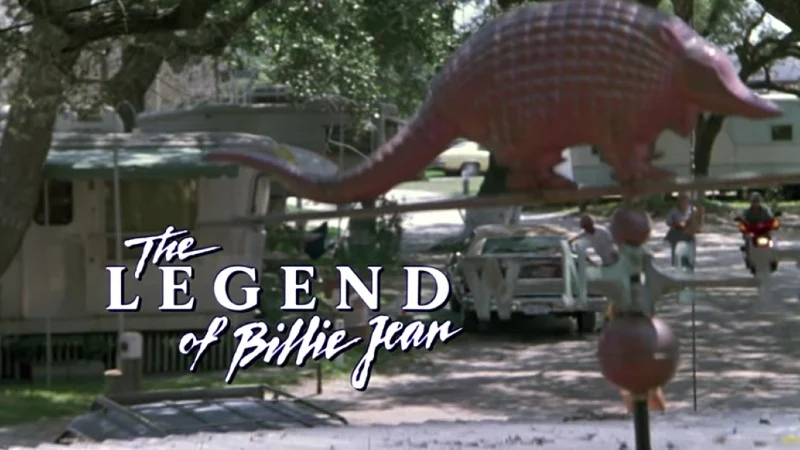
In the pantheon of 1980s cinema, certain titles are etched into the collective consciousness with the permanence of a neon sign. 1985, in particular, was a year of cinematic giants: Back to the Future redefined the sci-fi comedy, The Goonies set the gold standard for childhood adventure, and The Breakfast Club codified teen angst for a generation. Yet, nestled among these blockbusters was a gritty, sun-drenched, and fiercely feminist outlier that failed to find its footing at the box office, only to become a foundational text for the "disenfranchised youth" subgenre on cable television.
The Legend of Billie Jean, directed by Matthew Robbins, remains one of the era’s most curious artifacts—a film that attempted to blend the mythic weight of Joan of Arc with the aesthetics of a Texas trailer park and the energy of an MTV music video. Decades later, its mantra "Fair is Fair" continues to resonate, even as the film itself remains a polarizing example of 80s "bubble-gum mythmaking."
I. Main Facts: A Cult Classic in the Making
Released in July 1985 by TriStar Pictures, The Legend of Billie Jean arrived with a PG-13 rating and a pedigree of rising stars. It featured Helen Slater, fresh off her turn as Supergirl, and marked the cinematic debut of Christian Slater (no relation). The film was produced by Rob Cohen—who would later go on to helm The Fast and the Furious—and featured a screenplay by Mark Rosenthal and Lawrence Konner.
The narrative follows Billie Jean Davy (Helen Slater), a teenager living in a coastal Texas trailer park. After her brother’s motor scooter is trashed by local bullies and the authorities refuse to intervene, Billie Jean takes matters into her own hands. What begins as a quest for $608 in repair money spirals into a state-wide manhunt, transforming a local girl into a folk hero and a symbol of rebellion against a corrupt adult establishment.
Despite its high-energy premise and a chart-topping theme song—Pat Benatar’s "Invincible"—the film was a commercial disaster. It earned less than $4 million against its production budget and was largely dismissed by critics as a derivative attempt to capture the "Brat Pack" magic. However, its subsequent life on HBO and afternoon cable television turned it into a rite of passage for Gen X and Millennial viewers who found truth in its themes of justice and autonomy.
II. Chronology: From India to the Texas Coast
The genesis of The Legend of Billie Jean is as complex as the film’s tonal shifts. According to screenwriter Mark Rosenthal, the story was originally inspired by the life of Phoolan Devi, the "Bandit Queen" of India. Devi’s life—marked by caste-based oppression, sexual assault, and a subsequent career as a revolutionary outlaw—provided the DNA for a story about a woman forced into criminality by a system that refused to protect her.

Development and Script Evolution
The initial script underwent significant transformations. There are lingering reports that Walter Bernstein, the legendary screenwriter once blacklisted during the McCarthy era, contributed to an early draft. Bernstein’s involvement would have aligned with the film’s themes of grassroots uprising and anti-establishment fervor. However, the final credit went to Rosenthal and Konner, who met at the University of Vermont—a biographical detail that explains why Christian Slater’s character, Binx, harbors a strange obsession with moving to the Green Mountain State.
Rosenthal has since expressed dissatisfaction with the production process, claiming that the studio "simplified and dumbed down" the script, stripping away much of the character-driven drama in favor of a more palatable teen-adventure aesthetic.
The Summer of 1985
When the film hit theaters in the summer of 1985, it faced insurmountable competition. Audiences were flocking to see Michael J. Fox travel through time or Sylvester Stallone’s hyper-masculine heroics in Rambo: First Blood Part II. In a summer defined by "bigger and louder," Billie Jean’s relatively low-budget, naturalistic look and its focus on female empowerment felt out of step with the prevailing zeitgeist.
III. Supporting Data: Aesthetics and Performance
While critics at the time mocked the film’s "cheap" appearance, modern retrospectives often cite its visual style as one of its strengths. The cinematography captures the sweltering, oppressive heat of South Texas, where the air seems to shimmer with desperation. This "sunburned naturalism" provides a stark contrast to the neon-lit, idealized versions of suburbia found in John Hughes’ films.
The Cast
The film’s endurance is largely credited to its cast. Helen Slater delivers a performance that navigates the difficult transition from a vulnerable teenager to a hardened revolutionary. Her "Joan of Arc" moment—cutting her hair into a punk-rock crop and donning a sleeveless wetsuit—became an iconic image of 80s rebellion.
The supporting cast was equally vital:

- Christian Slater: In his first film role, the young actor displayed the "nervy, high-wire energy" that would define his career. His portrayal of Binx, the impulsive younger brother, provided the film’s emotional catalyst.
- Keith Gordon: Playing Lloyd, a wealthy kid who voluntarily becomes a hostage out of a romanticized obsession with Billie Jean, Gordon added a layer of meta-commentary on the nature of celebrity and media.
- Richard Bradford: As Mr. Pyatt, the sleazy shop owner, Bradford created a villain who was both pathetic and genuinely dangerous—a representative of the "creepy" adult world that the protagonists are trying to escape.
The Soundtrack
One cannot discuss The Legend of Billie Jean without mentioning Pat Benatar’s "Invincible." The song became a Top 10 hit and served as the film’s heartbeat. Its lyrics—"We can’t afford to be innocent / Stand up and face the enemy"—perfectly encapsulated the film’s "Fair is Fair" philosophy, helping the movie maintain a presence on MTV even as it disappeared from theaters.
IV. Official Responses: The Critical Backlash
At the time of its release, the mainstream critical establishment was almost universally hostile. The film was viewed as an exploitative attempt to market rebellion to teenagers without offering any substantive artistic merit.
Janet Maslin (The New York Times)
Maslin’s review was perhaps the most stinging, calling the film "bankrupt beyond belief." She criticized the logic of the plot and the film’s attempt to turn a mundane dispute over a motor scooter into a grand epic of social injustice.
David Edelstein (The Village Voice)
Edelstein dismissed the movie as "cretinous bit of bubble-gum mythmaking." This sentiment was shared by many who felt the film was trying too hard to be "cool" while failing to provide the polished escapism of its contemporaries.
The Creators’ Perspective
In later years, Mark Rosenthal acknowledged the film’s flaws but defended its spirit. He argued that the studio’s interference removed the "teeth" from the story, leaving a product that was caught between being a serious social drama and a lighthearted teen romp. This tonal inconsistency is likely what alienated 1985 audiences but is exactly what makes it a fascinating "cult" watch today.
V. Implications: A Proto-Viral Manifesto
Re-evaluating The Legend of Billie Jean in the 21st century reveals a film that was remarkably ahead of its time in its depiction of media and gender dynamics.

The Birth of the Viral Celebrity
Long before TikTok and YouTube, Billie Jean Davy understood the power of the image. When the media and the police misrepresent her as a dangerous criminal, she records a videotaped manifesto to tell her side of the story. This act of "taking back the narrative" is a precursor to modern viral activism. Billie Jean doesn’t just run from the law; she weaponizes her infamy to inspire a network of lookalikes who protect her, creating an underground movement of girls who refuse to be ignored.
Pre-dating #MeToo
The film’s central conflict—a teenage girl being sexually harassed by a powerful older man and then being blamed for the fallout—feels incredibly modern. Mr. Pyatt’s attempt to monetize Billie Jean’s image by selling merchandise featuring her photo is a biting critique of how capitalism exploits female trauma. Billie Jean’s refusal to accept a "settlement" that doesn’t include an apology and a restoration of justice ("Fair is Fair") remains a powerful statement on accountability.
The "Fair is Fair" Legacy
Ultimately, The Legend of Billie Jean succeeded where it initially failed. While it didn’t win the box office in 1985, it won the hearts of a generation of "outsiders." It stands as a testament to the idea that some films are not meant for the critics of their time, but for the audiences of the future.
The film’s "B" grade in the retrograde scale reflects its technical imperfections and occasionally clunky dialogue, but its emotional core is an A+. It remains a "sublimely silly, surprisingly real" rebellion that encourages its viewers to dive into the pool, crank the soundtrack, and demand that the world be just a little bit fairer.