The Visual Architecture of Arrakis: How Concept Art Defined Denis Villeneuve’s ‘Dune’
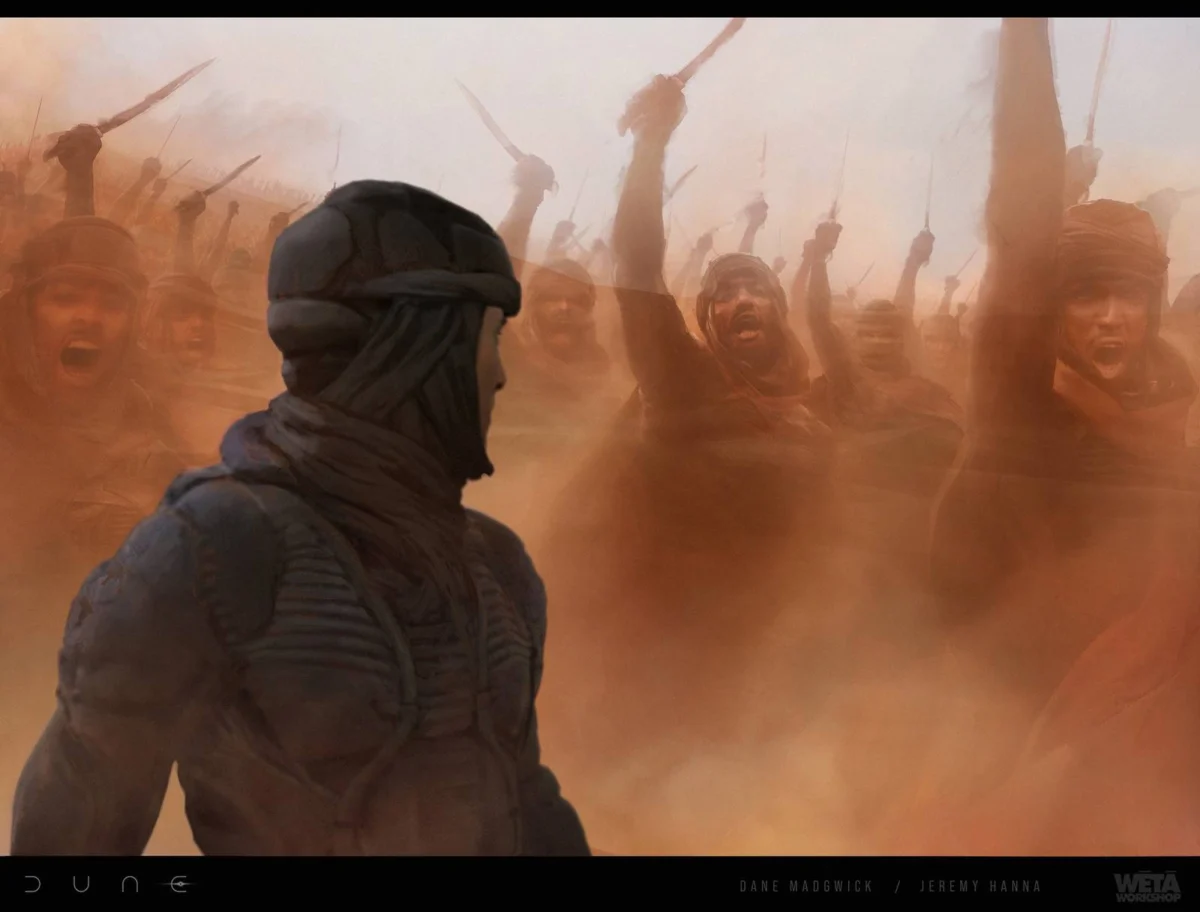
The 2021 release of Denis Villeneuve’s Dune: Part One marked a pivotal moment in contemporary cinema, successfully translating Frank Herbert’s "unfilmable" 1965 masterpiece into a coherent, visually stunning epic. While the performances and direction received immense praise, the film’s true foundation lay in its uncompromising visual language—a blend of monumental brutalism and tactile naturalism. A comprehensive look into the film’s recently showcased concept art reveals the meticulous world-building process led by production designer Patrice Vermette and a global team of elite concept artists.

This collection of work serves as a blueprint for the Imperium, detailing the distinct identities of House Atreides, the Fremen, and House Harkonnen. By examining the sketches, technical explorations, and foundational key art, we gain insight into how the production team synthesized high-concept science fiction with grounded, historical aesthetics to create a world that felt both alien and ancient.

Main Facts: A Multidisciplinary Effort in World-Building
The visual development of Dune: Part One was not the work of a single hand, but a collaborative symphony of specialized artists. The newly highlighted portfolio features contributions from industry veterans such as George Hull, Deak Ferrand, and Jerad S. Marantz, each tasked with a specific pillar of the Dune universe.

The Artistic Roster and Their Contributions
The scope of the project required a diverse range of styles, from industrial design to character costuming:

- Dane Madgwick & Deak Ferrand: Focused on foundational environments, establishing the misty, melancholic shores of Caladan and the oppressive heat of the Arrakeen cityscapes.
- George Hull & Steve Burg: Provided the industrial backbone of the film, designing the iconic "Ornithopters," the massive "Heighliners" of the Spacing Guild, and the "Spice Harvesters."
- Ed Natividad: Explored the granular technology of the desert, from Fremen "Thumpers" and "Sand Compactors" to the elegant blades of the Atreides.
- Jerad S. Marantz, Keith Christensen, & Joseph Cross: Revolutionized the "Stillsuit" and character silhouettes, ensuring that every garment served a functional purpose within the harsh ecology of Arrakis.
- Carlos Huante & Seungjin Woo: Tackled the most daunting task—the design of Shai-Hulud, the Great Sandworm, ensuring the creature felt like a god of the desert rather than a mere monster.
The culmination of this work was recognized globally, with the film winning the Academy Award for Best Production Design and Best Visual Effects, setting a new standard for speculative realism in the 21st century.

Chronology: From Script to Screen
The journey of Dune’s visual identity began long before the first camera rolled. The design process can be broken down into three distinct phases:

Phase I: The Intellectual Foundation (2017–2018)
Upon signing on to direct, Denis Villeneuve insisted that the film should not look like "Star Wars" or previous iterations of Dune. He and Patrice Vermette spent months looking at images of brutalist architecture in the Soviet Union, desert landscapes in Jordan, and the functional designs of World War II bunkers. The goal was "retro-future"—a world where thinking machines are banned, leading to a reliance on analog, mechanical, and human-centric technology.

Phase II: The Concept Explosion (2018–2019)
The artists mentioned in this collection were brought in to "stress-test" the director’s vision. During this period, George Hull spent months iterating on the Ornithopter, moving away from traditional wings toward an insectoid, dragonfly-inspired mechanic. Simultaneously, Keith Christensen and Jerad S. Marantz worked on the Baron Harkonnen’s "spider-like" movement and the specialized fabrication of the Stillsuits, which needed to look like they could actually recycle human moisture.

Phase III: Physical and Digital Integration (2019–2021)
The final stage involved translating these 2D concepts into 3D reality. Vermette’s team built massive physical sets in Budapest to give the actors a sense of scale. The concept art remained the "North Star" for the visual effects team at DNEG, ensuring that the digital extensions of the Arrakeen palace or the vastness of the desert remained consistent with the initial sketches.

Supporting Data: The Three Visual Pillars
The strength of Dune’s world-building lies in its internal consistency. Each major faction was assigned a specific architectural and color palette, which is vividly represented in the concept art collection.

1. House Atreides: The Aesthetic of Duty and Water
On Caladan, the art depicts a world of lush greens and deep blues. The architecture, as seen in Deak Ferrand’s work, is heavy but elegant, suggesting a family with a long history of noble service. When the Atreides move to Arrakis, their aesthetic shifts. Their technology, such as the swords designed by Ed Natividad, remains clean and ceremonial, clashing with the brutal environment of their new home.

2. House Harkonnen: The Architecture of Oppression
The Harkonnen designs are perhaps the most striking. Drawing from H.R. Giger but grounded in industrial realism, Giedi Prime is depicted as a world of obsidian, oil, and shadows. The "Harvesters" designed by George Hull and Steve Burg are not just machines; they are predatory, gargantuan structures that consume the landscape. The Baron’s armor, detailed by Nivanh Chanthara, reflects a body that has transcended natural limits through grotesque wealth and technology.

3. The Fremen: Evolutionary Utility
The Fremen do not fight the desert; they belong to it. The concept art for the Stillsuits (Keith Christensen) and the Crysknife (Joseph Cross) emphasizes survival. Every stitch in the suit and every curve of the bone-blade is a result of thousands of years of adaptation. This "naturalistic" approach ensures that the Fremen feel like an indigenous force rather than a sci-fi trope.

Official Responses: The Philosophy of Speculative Realism
Director Denis Villeneuve has been vocal about the importance of the conceptual phase in his filmmaking. In various press briefings following the film’s release, he noted that the concept art was essential in convincing the studio that a "grounded" Dune was possible.

"I didn’t want the movie to look like a fantasy," Villeneuve stated in a discussion regarding the production design. "I wanted it to look like a documentary of a world that actually exists. We looked at the sun, the wind, and the sand as our primary architects. If a building is in the desert, it must be able to withstand 500-mile-per-hour winds. That dictated the brutalist, sloped shapes of Arrakeen."

Production Designer Patrice Vermette echoed this sentiment, noting that the collaboration with concept artists like George Hull allowed them to solve mechanical problems before they became production headaches. "When you look at the Ornithopter sketches, you aren’t just looking at a cool ship. You’re looking at a machine where we calculated the physics of how those wings would need to vibrate to lift that much weight. The art informed the reality."

Implications: The Legacy of a New Visual Standard
The release of the concept art for Dune: Part One—much of which is preserved in the book The Art and Soul of Dune—has had a profound impact on the industry and the audience’s expectations for science fiction.

A Shift Away from "Clean" Sci-Fi
For decades, science fiction was dominated by either the "lived-in" grit of Star Wars or the sleek, holographic futurism of the Marvel Cinematic Universe. Dune introduced a third path: Monolithic Realism. The film’s success has encouraged other studios to embrace bold, architectural aesthetics and physical set-building over purely digital environments.

The "Dune" Blueprint for Part Two and Beyond
The foundational work seen in these sketches provided the "DNA" for Dune: Part Two (2024). The expansion of the Harkonnen world and the deeper dive into Fremen "Sietch" life were only possible because the first film’s concept art established such a rigorous set of rules. The "Stillsuit" has already become an iconic piece of cinema costume history, rivaling the Darth Vader suit or the Indiana Jones fedora in its recognizability.

Educational Value for Aspiring Artists
For the artistic community, this collection serves as a masterclass in "form following function." The technical explorations by Ed Natividad and the anatomical studies by Jerad S. Marantz demonstrate that concept art is not just about "pretty pictures"—it is about solving problems of logistics, biology, and sociology within a fictional framework.

In conclusion, the concept art of Dune: Part One is more than a supplementary gallery; it is the soul of the film. By merging the brutalist dreams of the mid-20th century with cutting-edge industrial design, Villeneuve’s team did more than just adapt a book—they built a universe that feels as though it has existed for millennia and will continue to haunt the cinematic imagination for decades to come.